⏳ 17 min read · Last updated: August 2026
Disclosure: This post contains affiliate links, so if you buy through one I may earn a small commission at no extra cost to you. I have not personally used the three towers below. These are research picks built from published specifications, and I have said so at every point where it matters. As an Amazon Associate I earn from qualifying purchases.
🔎 Research pick: I have not grown with the products in this post myself, so every pick rests on published specifications and owner reports. How I test and choose products.
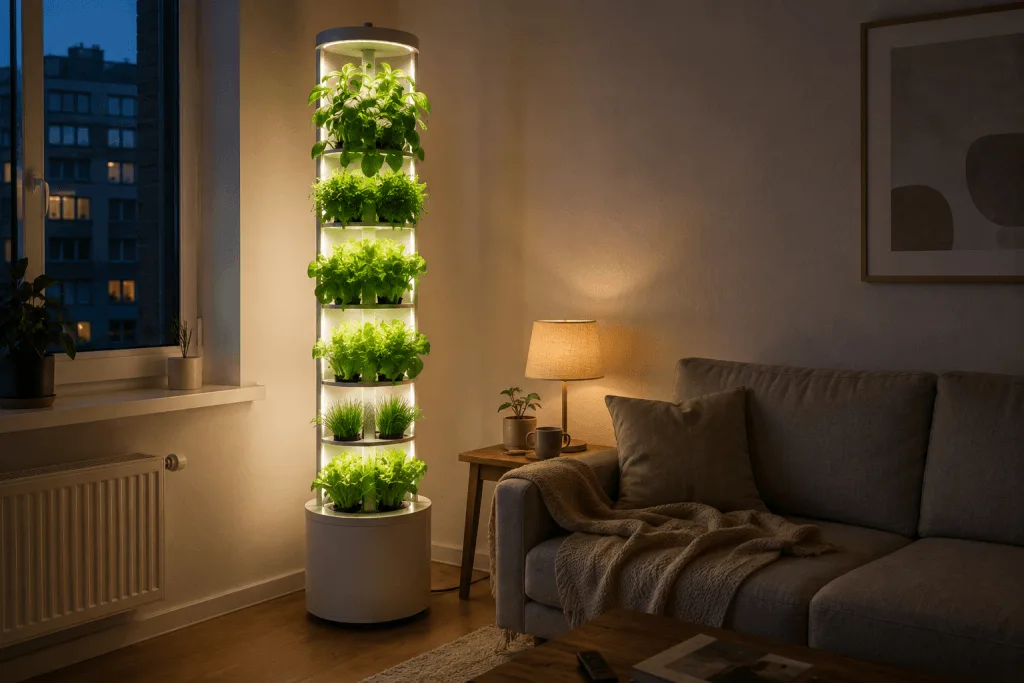
A vertical hydroponic tower is the only sensible way to grow more than a handful of plants in an apartment, because the one thing a small flat never has is floor. What it does have is height. Twenty plants stacked into two square feet is a different proposition to twenty jars spread across a countertop you also need for cooking.
The catch is that most tower roundups are written for people with a garage or a spare room. They measure in plant count and ignore footprint, so you end up ordering something that turns out to be the size of an armchair. Below are three towers that do fit beside a couch, one that does not and why, and a build you can make yourself for the cost of a takeaway.
📏 What Actually Fits Next To A Couch
Footprint is the number that decides everything, although it is the one most listings bury. Before you look at pods or lights, measure the floor you are willing to give up and treat that as a hard limit.
- Two to three square feet is the realistic ceiling for a living room tower.
- A tower is a shared reservoir, so every plant in it feeds at the same strength. Run EC 1.5 and pick crops that agree.
- Light spill matters more than light output when the tower lives where you watch television.
- The cheapest tower on the list ships with no grow light at all, which is fine as long as you know before you order.
- A DIY PVC tower costs a fraction of any of them and takes an afternoon.
📊 The Three Towers Side By Side
Ratings are my editorial assessment from published specifications, not hands-on testing. Where a figure is not published I have written that rather than estimated it. Links are affiliate links. Prices are pulled from Amazon and were last checked on 27 September 2026 at 7:40 am. Amazon prices change often, so check the listing before buying.
- Want everything in one box and no thinking → ALTO GARDEN GX
- Working with a very tight corner → Lettuce Grow Nook
- Spending as little as possible → the DIY PVC build below
- The Three Towers Side By Side
- How I Chose These Three
- ALTO GARDEN GX, Best Overall
- Lettuce Grow Nook, Smallest Footprint
- VEVOR 50-Pod, The Budget Option
- Build Your Own For Far Less
- The Tower I Left Out, And Why
- Running A Tower In A Small Flat
- What To Actually Grow In It
- A Word From Sarah
- Frequently Asked Questions
🔍 How I Chose These Three
Three things decide whether a vertical hydroponic tower works in a flat, and plant count is not one of them. A tower holding fifty pods is worthless if it lights up your bedroom at midnight or covers the only patch of floor you had.
📐 Measure The Floor First, Not The Pods
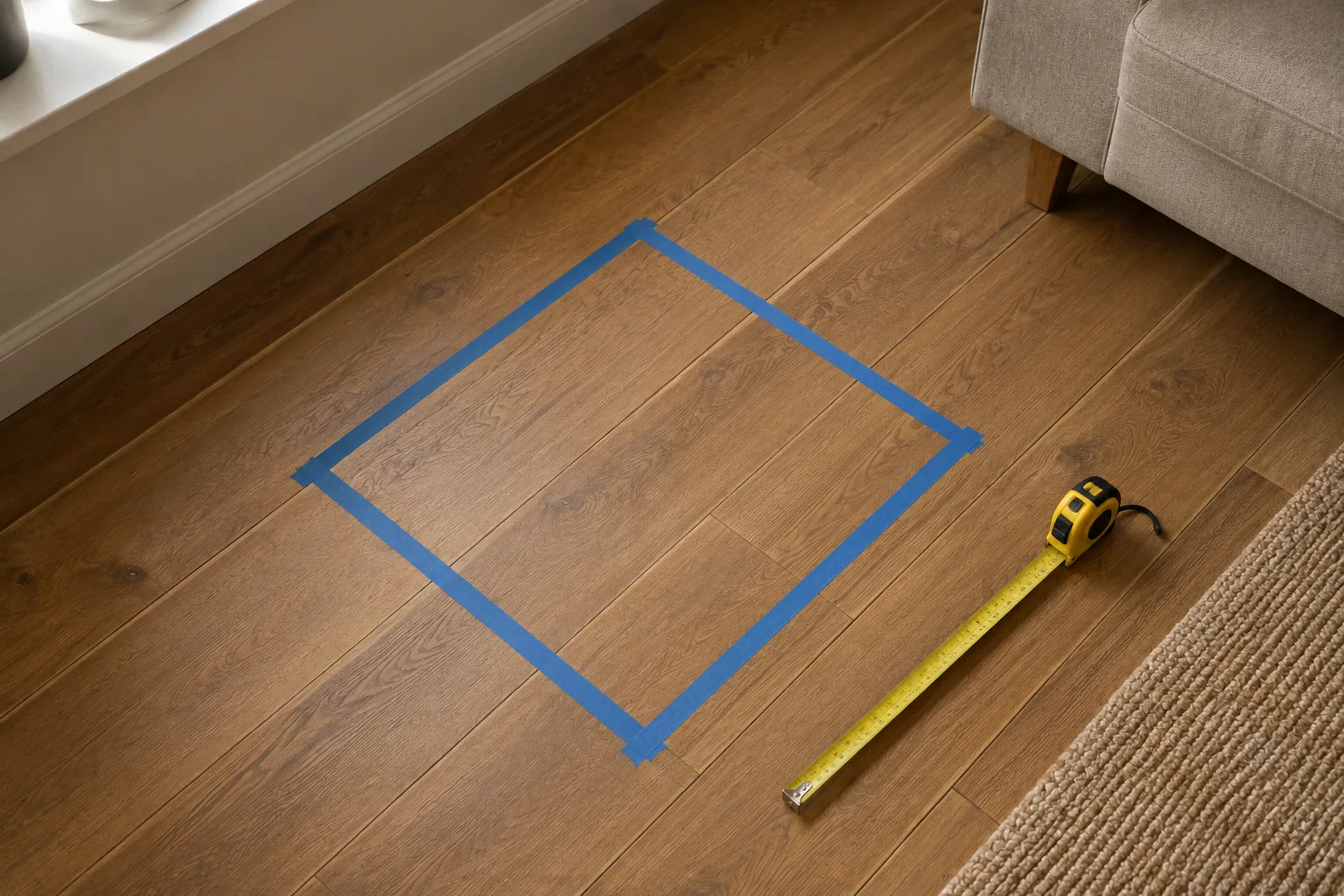
Before you order anything, put masking tape on the floor where the tower would stand. Most listings publish a plant count in the title and hide the dimensions three screens down, which is exactly the wrong way round for anyone shopping from a small flat.
So two square feet is a corner. Three is a noticeable piece of a living room. Anything past that is furniture, and it will feel like furniture every day you walk around it. Add roughly six inches of clearance on the side you will reach in from, since you have to lift plants out to harvest.
🔆 Light Spill Is The Thing Nobody Warns You About
A tower runs 14 hours on and 10 hours off, and in an open-plan flat those 14 hours are shared with you. Side-mounted bars that throw light outward are worse than downward panels, though the difference only becomes obvious once the unit is running in a dark room at nine in the evening.
If the tower will live in a studio or a bedroom, plan the schedule so lights-off lands before bedtime rather than after. A tower on a timer is silent about this problem until you are trying to sleep. The grow light electricity cost guide covers the running side of the same question.
🔊 Pump Noise And The Waterfall Effect
Every tower pumps water to the top and lets it trickle down, so there are two sounds rather than one: the pump itself, and the water falling back into the reservoir. The second is louder in a quiet room and no specification sheet mentions it.
You can cut it substantially by running the pump on a cycle rather than continuously, and by making sure the return water lands against a wall of the reservoir instead of dropping through open air. If pump noise is your main worry, the quiet pump roundup works through the same problem for bucket systems.
🌱 ALTO GARDEN GX, Best Overall
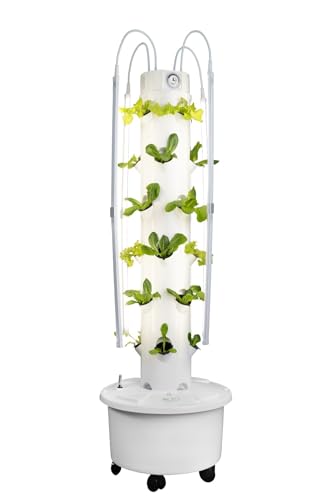
The ALTO GARDEN GX is the one I would tell most people to buy, because it arrives complete. Twenty-four pots in under three square feet. LED lights with a built-in timer, the pump and its own timer, a reservoir on wheels. Then rockwool, two-part nutrients, a digital pH pen, and a small germination light for starting seeds outside the tower.
That last detail matters more than it sounds. Germinating in the tower itself is how beginners lose a whole cycle, so a separate clamp light for the seedling stage removes the most common early failure. The tower walls are 2mm, which is roughly double the usual, and each layer is a single 360 degree moulding rather than joined halves. Leaky joints are the standard complaint about cheap towers and this design does not have any.
- Everything needed to run it is in the box, including a pH pen, which is the tool beginners skip and then regret.
- Under three square feet for 24 plants is an apartment-shaped ratio.
- No subscription. Some tower brands gate features or seed pods behind a monthly fee, and this one does not.
What I would want to know before buying: the listing does not publish a pump decibel figure or the exact tower height, so if you have a low shelf overhead, measure before you order. Check current availability on Amazon. Amazon price right now: $649.00
🏠 Lettuce Grow Farmstand Nook, Smallest Footprint

At four foot seven and around two square feet, the Lettuce Grow Farmstand Nook is the smallest true tower here and the one that best matches the promise in this post’s title. Twenty plants, built-in LED lights, a pump, a Bluetooth smart timer, nutrients and a pH kit.
The app is the real differentiator for a first tower, since it turns “why is this plant unhappy” into a prompt rather than a research project. You can also snooze the lights from your phone, which sounds trivial until you have guests and a glowing tower in the corner.
What I would want to know before buying: twenty plants is the lowest count on this list, so if you want volume rather than a tidy corner, the ALTO holds four more in one extra square foot. Check current availability on Amazon. Amazon price right now: not published
💰 VEVOR 50-Pod Tower, The Budget Option

The VEVOR 50-pod tower costs a fraction of the other two and holds more than twice the plants. Ten tiers. A 20 litre tank the listing says needs refilling roughly monthly. Casters, so you can roll it away from a wall, plus app control for the pump timing.
That single omission is why it sits at three stars rather than four, and it is also why it can be the smartest buy on the page for the right person. If you already own a decent LED panel, or the tower is going in front of a bright window, you are getting fifty growing sites for less than the accessories cost on the premium towers.
Fifty pods on a 20 litre tank is a lot of plants per gallon, so expect the solution to swing faster than it would in a bigger reservoir. Test more often rather than less, and read how to lower EC safely before you need it. If you are pairing it with a light, the grow light calculator will size the panel to the tower. Check current availability on Amazon. Amazon price right now: $99.90
✂️ Build Your Own For Far Less
A 4-inch PVC tower is the cheapest way into vertical growing by a wide margin, and it is an afternoon of work rather than a project. You need a length of pipe, a bucket or tote for the reservoir, net cups, a submersible pump, and a way to cut round holes.
Although the build is simple, the holes are the step people get wrong. Cut them at a slight upward angle so the net cup tilts back into the pipe, because a straight horizontal hole lets water run out of the front rather than down the inside wall.
- Cut 2-inch holes down the pipe in a spiral, spacing them about 8 inches apart so plants do not shade each other.
- Seat the pipe into a lid cut to fit your tote, then seal the joint. This is where leaks happen.
- Drop the submersible pump in the reservoir and run tubing up the inside of the pipe to the top.
- Let the water trickle down the inside wall rather than free-falling, which is quieter and wets the roots more evenly.
- Add a light on a timer set to 14 hours on and 10 hours off.
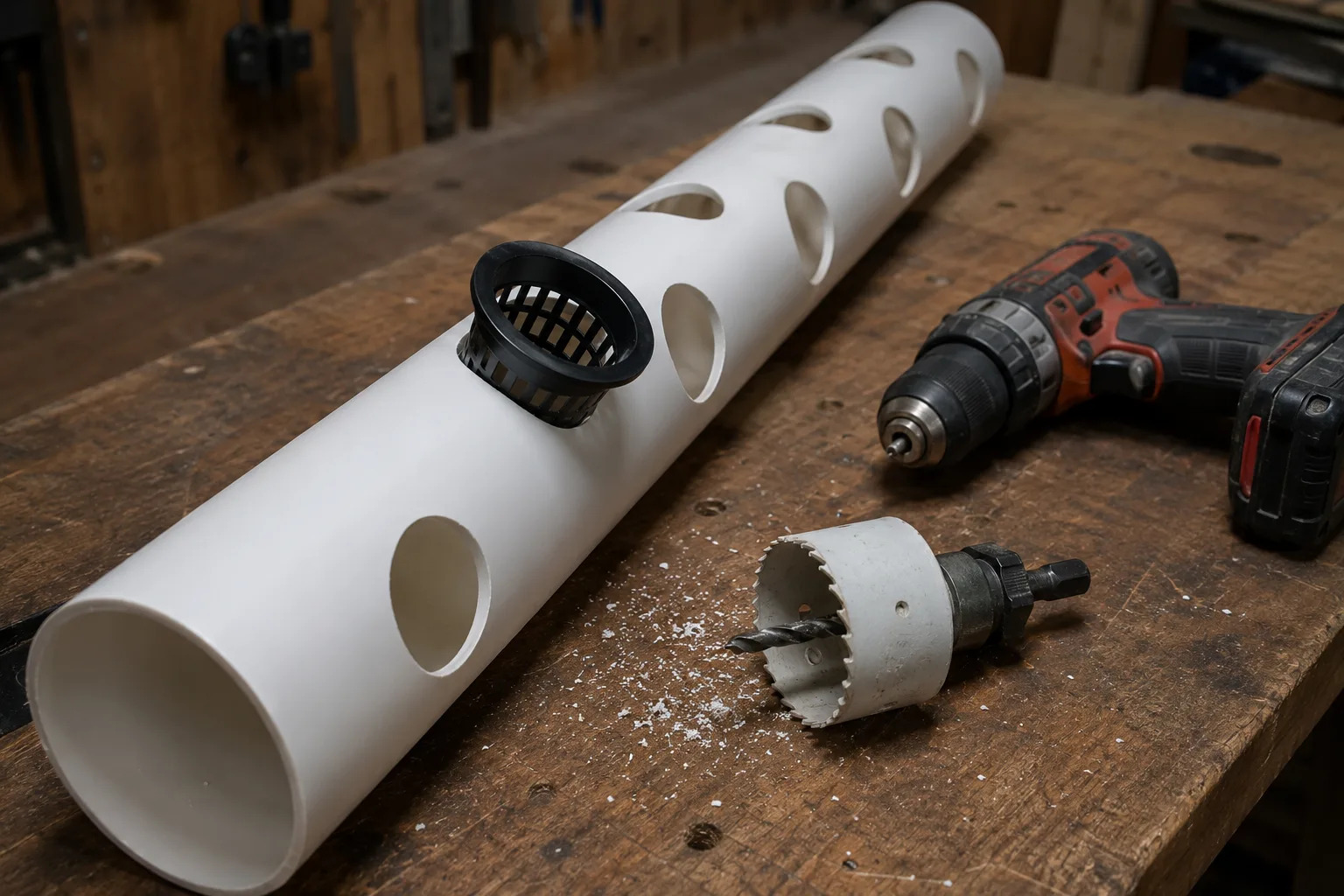
An 8-piece hole saw kit covers the 2-inch cut and costs less than a takeaway. For the net cups, the net cup roundup compares the sizes, and the shopping list builder will total the whole parts list for you.
🚫 The Tower I Left Out, And Why
The Aerospring Indoor 2.0 is a better growing system than anything above it on this page. It runs low-pressure aeroponics and holds 27 plants. It carries 150 watts across six side-mounted bars, delivering 367 PPFD at eight inches. Its pump is a Sicce Syncra Silent 1.5, a named quiet aquarium pump rather than whatever was cheapest. Its 20 gallon reservoir is the largest here by a distance.
It is also 33.5 by 29.1 inches. That is 6.7 square feet of floor, roughly the size of an armchair. That is not a tower you put next to a couch, so it does not belong in a post that promises exactly that.
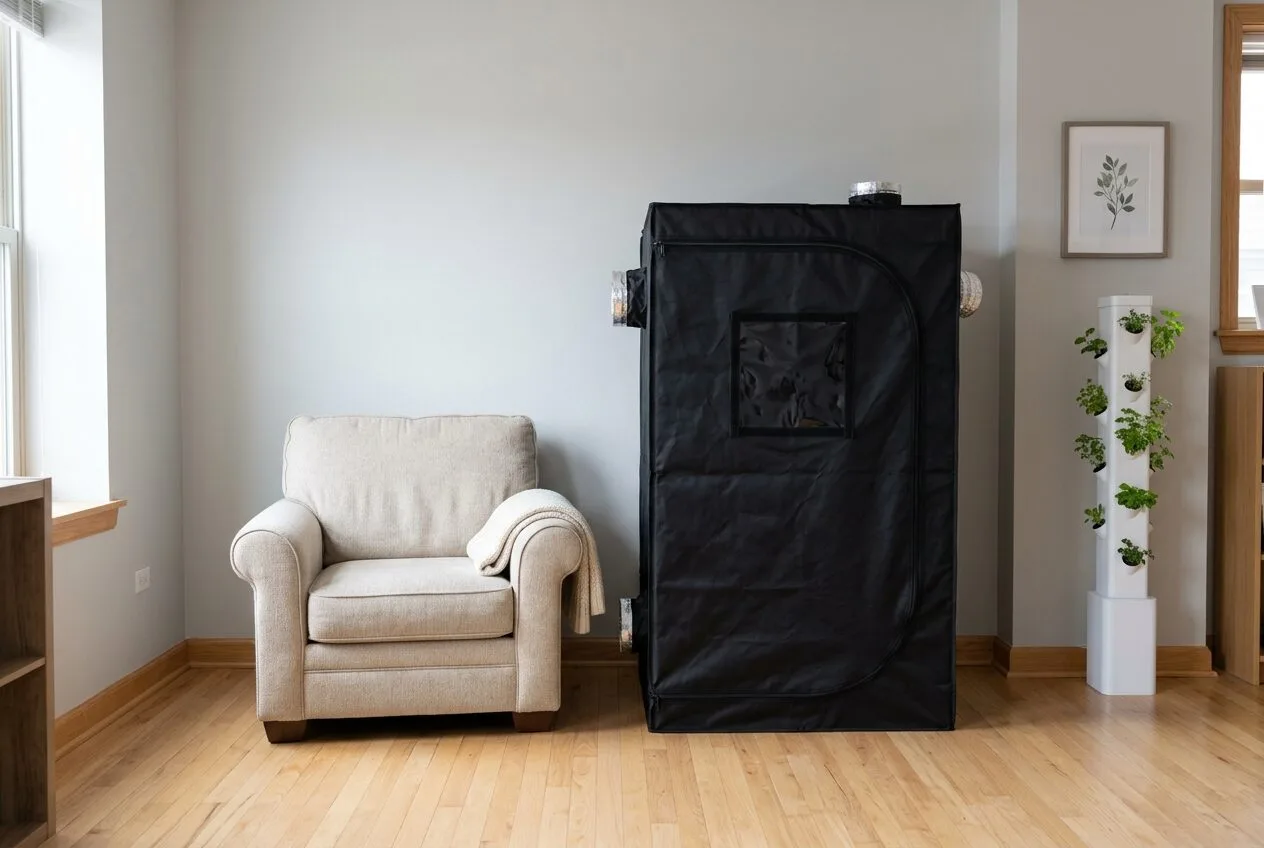
Where it wins outright is light containment. The Oxford D600 tent is reflective inside and stops light seepage, so the unit can run its 14 hours in a room you sleep in without lighting it up. If you have a spare corner, a box room or a wide hallway, that combination is hard to beat. The compact grow tent roundup is the right context for it, and the Aerospring listing is here if that describes your space.
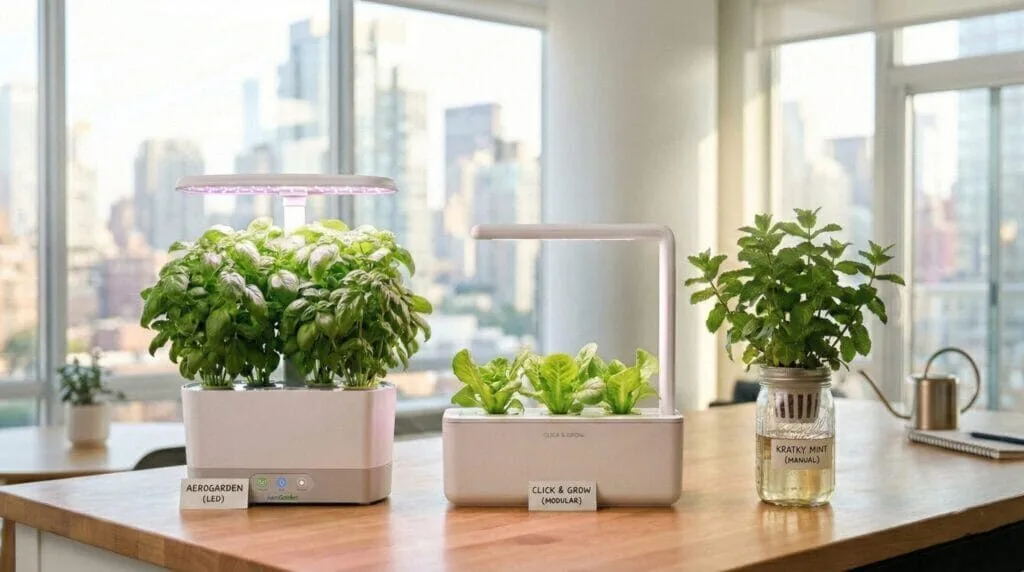
One more exclusion worth naming. Countertop smart gardens are a different category and they already have their own comparison, so I have kept them out entirely. If a plug-in unit on the kitchen counter suits you better than a floor-standing tower, read AeroGarden versus Gardyn versus Click and Grow and the three best countertop systems instead.
⚗️ Running A Tower In A Small Flat
If this is your first hydroponic anything, read the complete apartment hydroponics beginner guide first, because a tower is a demanding place to learn the basics. A tower is one reservoir feeding every plant in it, which is the single most important thing to understand before you fill it. You cannot give the basil a stronger mix than the lettuce, because there is no separate mix to give.
🧪 One Reservoir Means One Compromise
Run a shared tower at EC 1.5. That sits just above what lettuce wants on its own at 1.0 to 1.4 and inside basil’s 1.0 to 1.6, so both do well. Chasing one crop’s ideal number in a shared tank is how people end up with burnt lettuce and hungry basil at the same time.
Keep pH between 5.5 and 6.5 across the whole tower. Since one drifting reservoir affects every plant at once rather than a single jar, a tower is the setup where a pH pen stops being optional. The pH meter roundup and the EC and TDS meter roundup cover the pair, and the pH and nutrient calculator will give you starting doses for a tank that size.
💧 Water Changes On A Bigger Tank
Top off daily with plain pH-adjusted water and do a full reservoir change every 2 weeks, exactly as you would with a jar. The difference is volume, so plan where the old solution goes before you start rather than discovering mid-drain that you are carrying five gallons to a bathroom.
Most towers have a drain hose for exactly this, so use it. The two week rule explained in full covers why stretching the interval costs more than the nutrients it saves, and old solution is fine poured on houseplants.
Clean the tower between crops with diluted hydrogen peroxide, never bleach. A tall pipe holds biofilm in places you cannot see, so the hydrogen peroxide method matters more here than in an open jar. Keep water below 75°F (24°C), because a warm reservoir in a tower takes every plant down together instead of one.
🥬 What To Actually Grow In It
Because every pod shares one tank, the crop list for a tower is shorter than the crop list for a shelf of jars. Group by feed strength and the tower runs itself. Mix a heavy feeder with a light one and you will spend the whole cycle splitting the difference.
| Crop | Target EC alone | First harvest | Tower verdict |
|---|---|---|---|
| Lettuce | 1.0 to 1.4 | 28 to 35 days | Ideal. Happy at 1.5 and forgiving |
| Arugula | 1.4 to 1.8 | 30 to 40 days | Ideal. Sits right on the shared number |
| Basil | 1.0 to 1.6 | 35 to 42 days | Good, since 1.5 sits inside its range |
| Spinach | 1.4 to 1.8 | 35 to 45 days | Good. Cap the light at 12 hours or it bolts |
| Mint | 2.0 to 2.4 | 28 to 35 days | Workable, but it will try to take over |
| Cilantro | 1.4 to 1.8 | 42 to 56 days | Avoid. Bolts within weeks, so it wastes a tower slot |
| Tomatoes | 2.0 to 2.5 | 8 to 12 weeks | Avoid. Too heavy, too hungry, shades everything |
When you fill a tower with leafy greens and one or two herbs, it is close to hands-off. The best herbs for small hydroponics guide covers which ones stay compact, and the lettuce guide is the crop most towers end up mostly full of. Use the seed to harvest calculator to stagger sowing so the whole tower does not finish in the same week.
Light height still applies inside a tower. Side-mounted bars want the leaf canopy roughly 6 to 8 inches from the nearest bar, which on a tower means checking the middle tiers rather than the top. The shelf lighting layout guide explains the same spacing logic for flat setups.
🧴 Mixing For A Bigger Tank
Since mixing for 20 litres is not mixing for a jar, and the most common tower mistake is dosing by eye because the tank is large. Measure, then test, then correct. The two part mixing guide covers the order, and the nutrient roundup compares what to put in it.
If you travel, an automatic top-off system refills the reservoir from a bottle when the level drops, which turns a weekend away from a risk into a non-event. It is the one accessory I would add to a tower before any other.
🩺 When A Tower Goes Wrong
Because everything shares one tank, tower problems announce themselves differently to jar problems, because everything happens to every plant at once. That is the trade you accept for the plant count.
🔎 Quick diagnosis table
| What you see | Most likely cause | Check this first |
|---|---|---|
| 🟡 Every plant yellowing together | Reservoir pH has drifted | Test the tank, not the plants |
| 🌱 Bottom tiers pale, top fine | Light not reaching low | Rotate the tower weekly |
| 💧 Dry pods on one side | Water channelling down one wall | Check the top distributor for blockage |
| 🟤 Brown slimy roots | Tank above 75°F | Move it off the sunny wall |
Rotating the tower a quarter turn each week is the single highest value habit here, since it evens out both light and any pump quirks. If the power goes out while you are away, what to do after a hydroponic power outage covers the recovery, and roots in a tower survive longer than you would expect because the media stays damp.
💬 A Word From Sarah
I want to be straight about something, because it changes how you should read this page. I grow in jars and a small bucket, and I have not owned any of these three towers. What I have done is measure my own flat, badly, more than once. The first grow shelf I bought fit the wall and not the walkway, and I lived with turning sideways to get past it for four months before I admitted it and moved it. That is the mistake this post is built to stop. Tape the footprint on the floor and leave it there for two days before you order anything, because a number in a listing means nothing until it is standing in your room.
❓ Frequently Asked Questions
🩹 Can I put a hydroponic tower on carpet?
Yes, with a tray underneath. A rigid boot tray or a washing machine drip pan catches the spills that happen during a reservoir change, which is when almost all tower water ends up on the floor. Never stand one directly on carpet without something waterproof beneath it.
🔊 How much noise does a vertical hydroponic tower make?
Two sounds: the pump, which is usually a low hum, and water trickling back into the reservoir, which is the one people notice at night. Running the pump on a cycle rather than continuously cuts both, and aiming the return flow at a reservoir wall stops the waterfall effect.
🔌 How much will a tower add to my power bill?
The light dominates, not the pump. A panel running 14 hours a day is the main cost, so multiply its wattage by 14, divide by 1,000, then multiply by 30 and your rate per kWh. A small pump cycling intermittently adds very little on top.
💧 How often do I change the water in a tower?
Top off daily with plain pH-adjusted water and do a full reservoir change every 2 weeks. The interval is the same as a jar, the volume is not, so use the drain hose rather than carrying the tank to a sink.
🥗 Can I grow different plants in the same tower?
Yes, as long as they want similar feed strength. Run the shared tank at EC 1.5 and stick to leafy greens plus one or two herbs. Cilantro is the crop to leave out, since it bolts within weeks and wastes a tower slot.
🍅 Can I grow tomatoes in a vertical tower?
Not well in an apartment tower. Tomatoes want EC 2.0 to 2.5 while the rest of the tower sits at 1.5, they take 8 to 12 weeks, and they shade every pod below them. A leafy tower gives far more food in the same footprint.
💡 Do all hydroponic towers come with a grow light?
No, and the cheapest ones usually do not. Always check the included items list rather than the title. A tower without a light needs a panel added before anything will grow indoors, which changes the real cost considerably.
📐 How much floor space does a tower actually need?
Two to three square feet is realistic for a living room, plus about six inches of clearance on the side you reach in from. Tape the outline on the floor before ordering. Some towers marketed as compact are closer to armchair sized.
🏠 Tower or countertop system for an apartment?
A tower if you want volume and have floor to spare, a countertop unit if you want a few herbs and no floor commitment. Towers grow far more per square foot. Countertop systems are quieter, smaller and easier to ignore.
🌿 Do tower-grown herbs taste the same?
They taste the same or better, since you cut them minutes before eating. Weak flavor in a tower is almost always underfeeding, because a shared tank runs leaner than a single crop reservoir would.
⚠️ What happens if the power goes out?
Less than you fear. The growing media stays damp for hours, so a short outage does nothing. For a long one, pour water down the tower by hand once a day to keep the media wet until the pump comes back.
Happy growing! 🌿
Sarah, Urban Hydro Space

Sarah Whitfield is the founder of Urban Hydro Space and an indoor gardening enthusiast dedicated to helping apartment dwellers grow fresh herbs and vegetables in small spaces. She researches hydroponic systems carefully from real specifications and verified buyer feedback, and shares practical tips and honest, clearly labeled product picks to make indoor gardening accessible for beginners.