









Enter your crop, whether you started from seed or transplant, and your planting date. The calculator tracks your grow in real time and, in fact, shows each stage with the days it covers, plus the pH and EC targets to hold along the way.
How to use this seed to harvest countdown calculator
- Choose your crop from 39 hydroponic crops. Use the category tabs, meanwhile, to filter by leafy greens, herbs, fruiting vegetables, or specialty crops.
- Select your starting point. From seed counts from the day the seed enters the medium, since that includes germination. From transplant, though, counts from the day the seedling enters your system. Your results show both windows side by side, so you can see exactly what the difference costs.
- Enter your planting date, meaning the day seeds went into the medium or the day you transplanted. A past date works fine, though, if your grow is already underway.
- Read your countdown and see the current stage, the harvest window, days remaining, the EC to run right now, and the signs to look for when it is time to pick.
Where these numbers come from
Microgreen timing follows a published microgreen trial that harvested at 7 to 21 days. Most other harvest windows come from seed company and hydroponic growing guides, so read them as typical ranges. Light, temperature and variety move them by a week or more. The harvest window for every crop, with the sources behind each one, is on the crop sources page. How I check the numbers.

Common questions about hydroponic grow times
What is the fastest crop to grow hydroponically?
Microgreens and wheatgrass are the fastest overall, ready 7 to 14 days from seed. Among full-size crops, mizuna gives baby leaves in about 21 days, then come baby bok choy at 25 to 35 days, lettuce first leaves at 4 to 5 weeks, arugula at 30 to 40 days and basil at 5 to 6 weeks from seed. Green onions regrown from grocery root ends take only 2 to 3 weeks, against 6 to 10 weeks from seed. Cherry tomatoes are the slowest fruiting crop, at about 12 to 16 weeks from seed or 8 to 12 weeks after transplanting, and celery and sage take 3 months or more.
How long does hydroponic lettuce take from seed to harvest?
Hydroponic lettuce typically takes 4 to 5 weeks, or 28 to 35 days, from seed to first harvest. Counted from transplant it is about 16 to 23 days, an estimate that takes off the 12 or so days a seedling spends in its plug. Steady light on a 14-hour schedule, water held at 65 to 75°F, and EC 1.0 to 1.4 all push growth toward the faster end of that window. A plant sitting in a window rather than under a light will run behind, sometimes by a week or more.
How long do hydroponic cherry tomatoes take?
Cherry tomatoes take about 12 to 16 weeks from seed to first ripe fruit, or, from transplant, roughly 8 to 12 weeks. Strong light of 400 to 600 PPFD and daily hand-pollination are both required for indoor fruit, since skipping either means flowers that drop without setting. Full-size tomato varieties take considerably longer and are, therefore, a poor fit for an apartment.
What does cut-and-come-again mean?
Cut-and-come-again means you harvest outer leaves or stems repeatedly from the same plant rather than pulling the whole thing out. Lettuce, arugula, basil, mint, chives, parsley, and cilantro all regrow after cutting, so a second harvest is often possible. Always cut above a leaf node and leave at least 4 to 5 leaves on the plant, since it needs enough leaf area left to power the regrowth.
Why is my plant taking longer than the countdown says?
Insufficient light is the most common reason, followed by water temperature outside 65 to 75°F, EC too low, or pH outside 5.5 to 6.5 causing lockout. Check pH first, because out-of-range pH produces exactly the same slow pale growth as underfeeding even when your EC reads correctly, and people usually respond by adding more nutrient and making it worse. These windows also assume the right day length for the crop: 14 hours for most, 12 for spinach and 16 for shiso, stevia, nasturtium, strawberries, pea pods and dwarf cucumber.
Do I need rockwool or rapid rooter plugs to germinate?
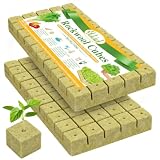
You do not need either for simple Kratky lettuce, since you can germinate directly in the Kratky lid with a small amount of growing medium. For seeds that need consistent moisture, such as basil, tomatoes, and peppers, rockwool cubes at $8.99 for 100 plugs or rapid rooter plugs at $16.99 for 50 inside a humidity dome give much better germination rates. Pre-soak rockwool at pH 5.5, deliberately below the normal range, because the cube is alkaline and pulls the number up as it absorbs.
Should I use a humidity dome for hydroponic germination?
Yes for most crops, especially in dry rooms. A humidity dome keeps moisture around the seeds during the critical first 3 to 7 days. The AC Infinity dome at $74.99, however, includes a built-in LED for the germination phase. Once seeds sprout and you see root tips, take the dome off, since damping off is stem rot at the base and it is what kills most indoor seedlings.
When should I start measuring EC and pH?
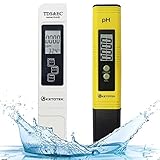
Start checking pH from day one, since it affects germination. Of the 39 crops, 29 sit inside 5.5 to 6.5. Watercress needs 6.5 to 7.0. Bok choy, nasturtiums and lemongrass run 6.0 to 7.0, and a few more, such as Swiss chard and romaine, tolerate up to 6.8. Hold EC at the 1.0 seedling floor until the first true leaves appear, then work up to the crop’s mature range. Eight crops start below that floor, among them microgreens (0.5 to 1.0), wheatgrass (0.8 to 1.2) and nasturtiums (0.8 to 1.0), and dwarf cucumbers can start a touch higher, up to 1.5. The countdown shows your crop’s own pH and EC. A basic pH and EC meter set starts at $12.79.