⏳ 15 min read · Last updated: September 2026
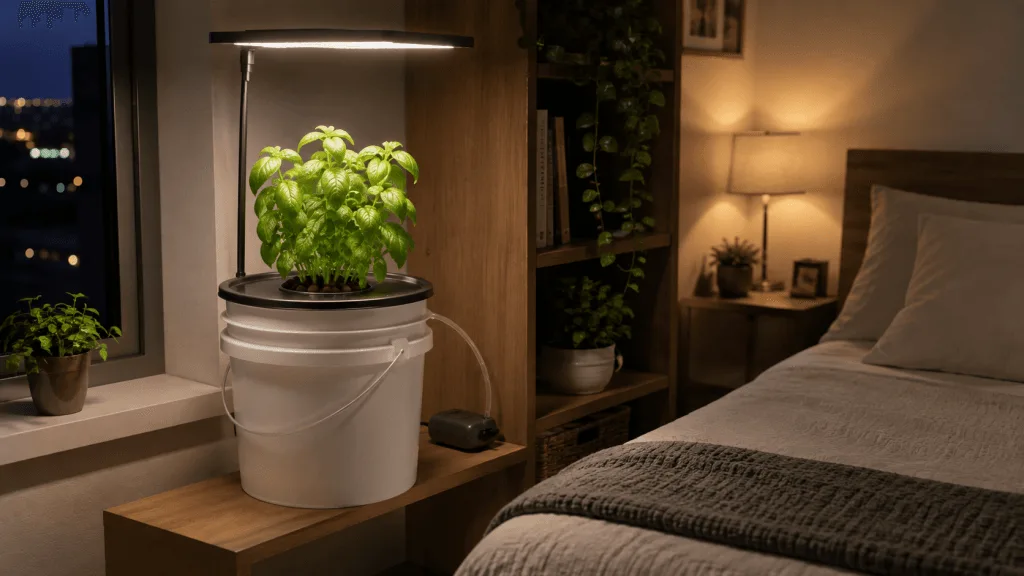
A quiet DWC bucket build lets me run deep water culture two feet from a bed and still sleep. Deep water culture normally means a submerged air pump running nonstop. Most air pumps are built for a fish tank in a living room. A bedroom is different, though. Once the lights go out, it goes silent, and every small sound gets amplified.
This build walks through the bucket, pump, and airline choices that keep the noise under what a box fan makes. It also covers the routine that keeps a bedroom bucket from turning into an algae jar, since that happens by week two if you skip it. My first attempt failed because I skipped one of these steps, so I will start there.
🌱 Why A Quiet DWC Bucket Build Works In A Bedroom
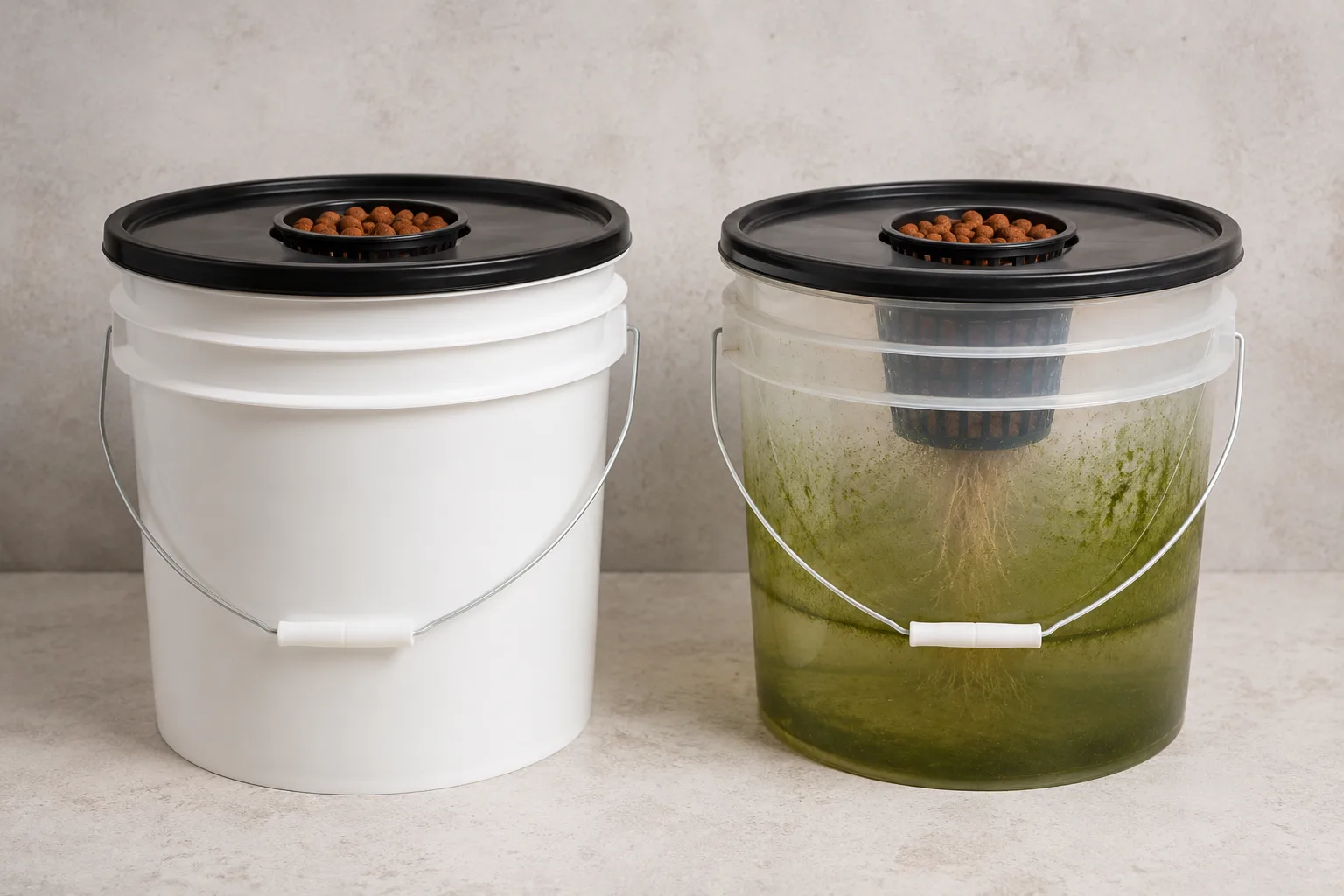
My first bucket was a free five gallon pickle bucket from a deli down the street. I never checked whether the plastic was actually opaque under the label. Then, by day nine, the water had gone the color of pond scum. The air pump sat directly on the particleboard nightstand. Because the wood carried the hum like a drum, I moved everything to the closet floor before the tenth night. Neither problem was about hydroponics. Both were about treating an aquarium pump and a leftover bucket as good enough for a bedroom. That is because a bedroom is the one room where sound and light actually matter.
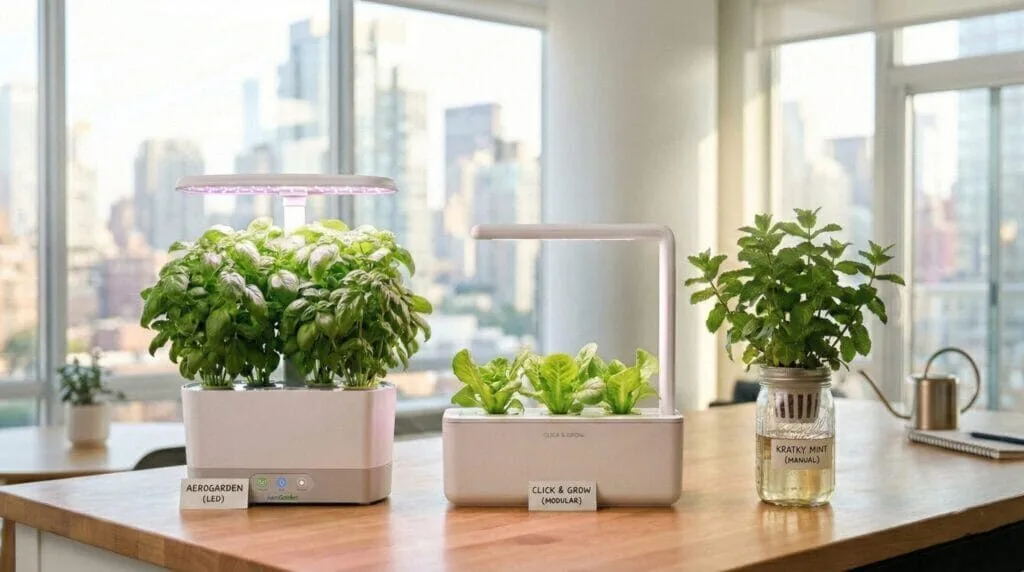
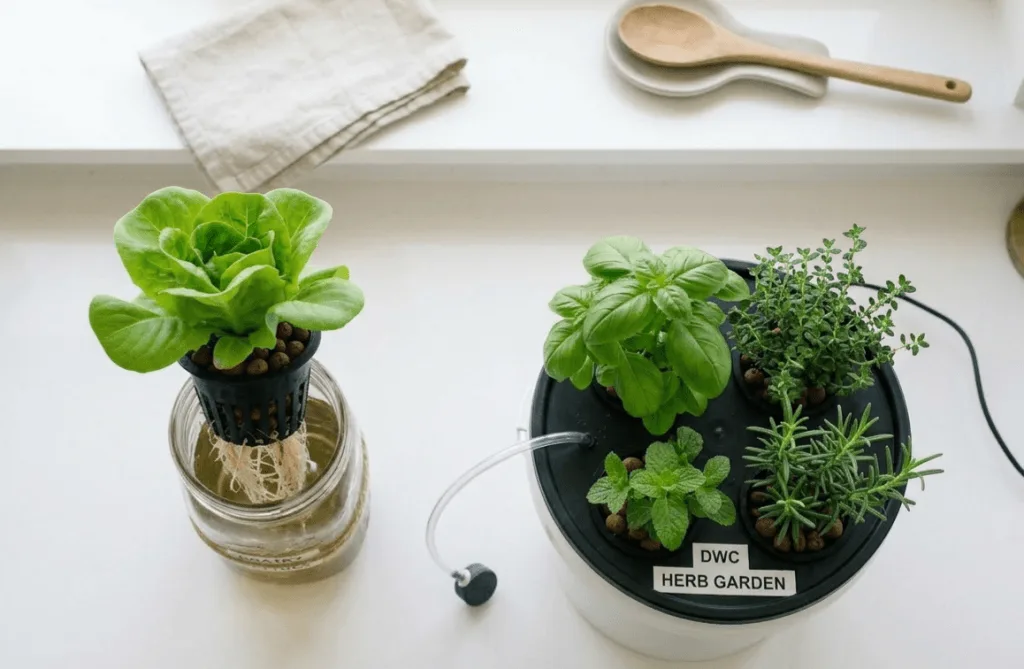
A DWC bucket beats a passive Kratky jar here. The constant aeration grows a full-size lettuce or basil plant in weeks rather than months. It beats a countertop kit on cost too, since a bucket, a pump, and a net pot run under thirty dollars total. My full DWC vs Kratky comparison for tiny apartments breaks down that trade-off. Read it if you have not settled on a system yet. The remaining trade-off is the pump. It is the only moving part, so it is the only thing that can wreck a night of sleep. Solve the pump, and the bucket build stays quiet enough for a bedroom shelf.
At A Glance
- Use an opaque, food-grade five gallon bucket, since clear or translucent plastic grows algae inside two weeks under any grow light.
- A rated 40 decibel air pump, set on a rubber mat rather than the floor or a shelf, is the single biggest noise fix in this build.
- Top off daily with plain, pH-adjusted water, then do a full reservoir change every 2 weeks.
- Run the light 14 hours on, 10 hours off. A cheap outlet timer removes the guesswork.
- Basil, mint, lettuce, and parsley all fit comfortably in one bucket, while fruiting crops need a bigger container.
🧰 Core Components For A Quiet DWC Bucket Build
Four parts make this build: the bucket, the net pot and lid, the pump and airline, and the air stone. Getting the bucket and the pump right solves most of the noise and light problems before they start. Every other apartment fear, a spill, a smell, a wasted deposit, traces back to one of these two choices. Which is why they are worth getting right first.
Choosing An Opaque, Food-Grade Bucket
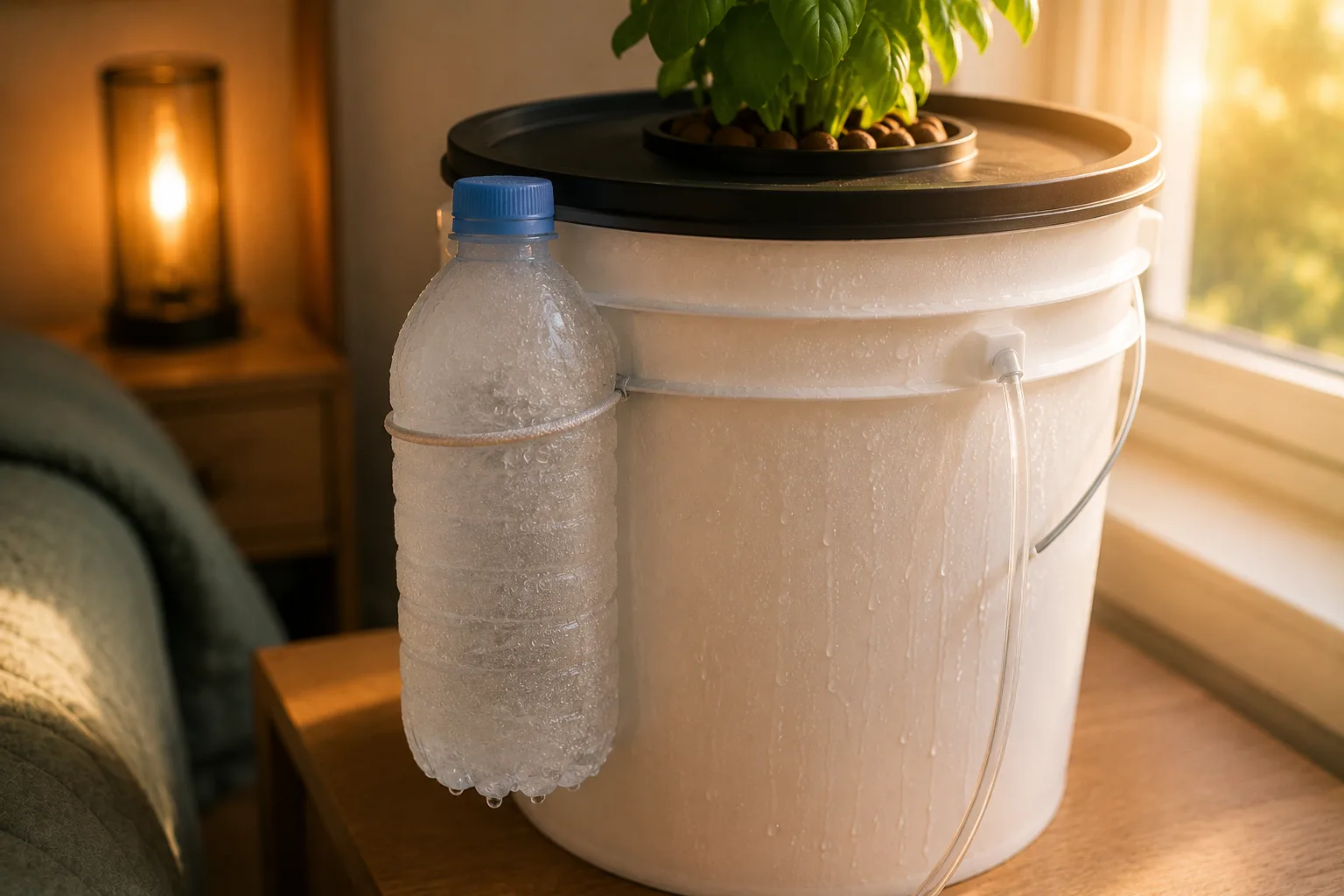
A genuine five gallon food-grade bucket is the right size for one mature plant. Look for the kind sold for pickles, paint, or bulk grain. Since basil, mint, and lettuce all stay compact, they fit one bucket comfortably. It needs to be fully opaque, since any light reaching the reservoir through the plastic feeds algae. Once a bucket goes green on the inside, there is no fixing it short of scrubbing and starting over. The complete beginner’s guide to apartment hydroponics covers container prep in more depth, if this is your first build.
Picking A Silent Air Pump
The pump is the only part of this build with a rating you can actually shop by. Look for a pump rated at 40 decibels or lower. That, though, is closer to a quiet refrigerator than an aquarium store. Cheaper pumps rated in the 50s will run, though they buzz. A buzz through a nightstand at 2am is a different problem, since it carries much further than a buzz across a living room. My full breakdown of the quietest air pumps for apartment DWC setups compares real models, since I ran each one side by side for a week.
What To Do If You Cannot Find An Opaque Bucket
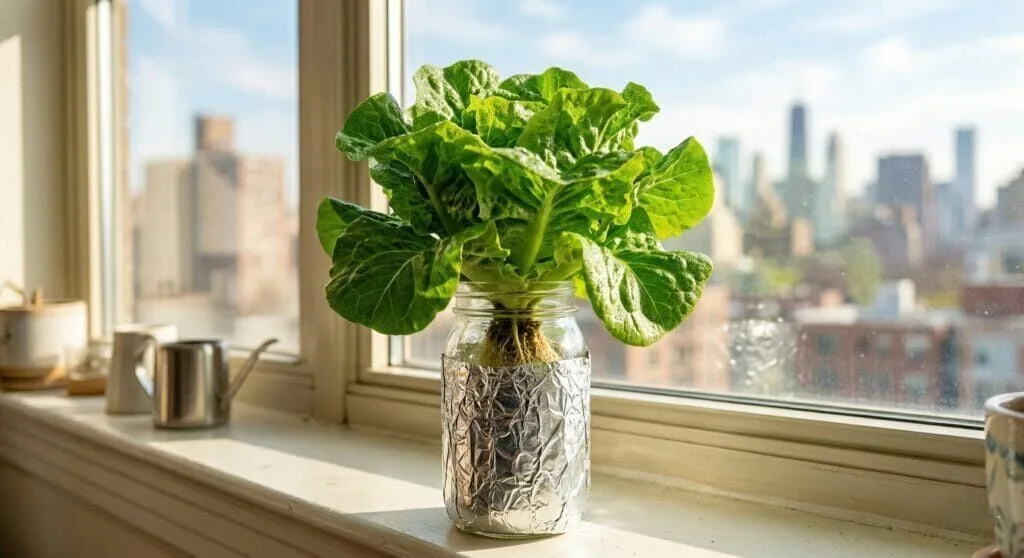
Home improvement stores sell food-grade buckets in white or black. If all you can find is a clear one, wrap it in two layers of black contractor bags or heavy-duty foil, before you fill it with water. This is the same fix I cover in the guide to stopping algae in hydroponic jars, and it works just as well on a bucket as it does on a mason jar. Tape the wrap at the seams so light cannot sneak through a gap near the lid.
🔧 Step-By-Step Assembly
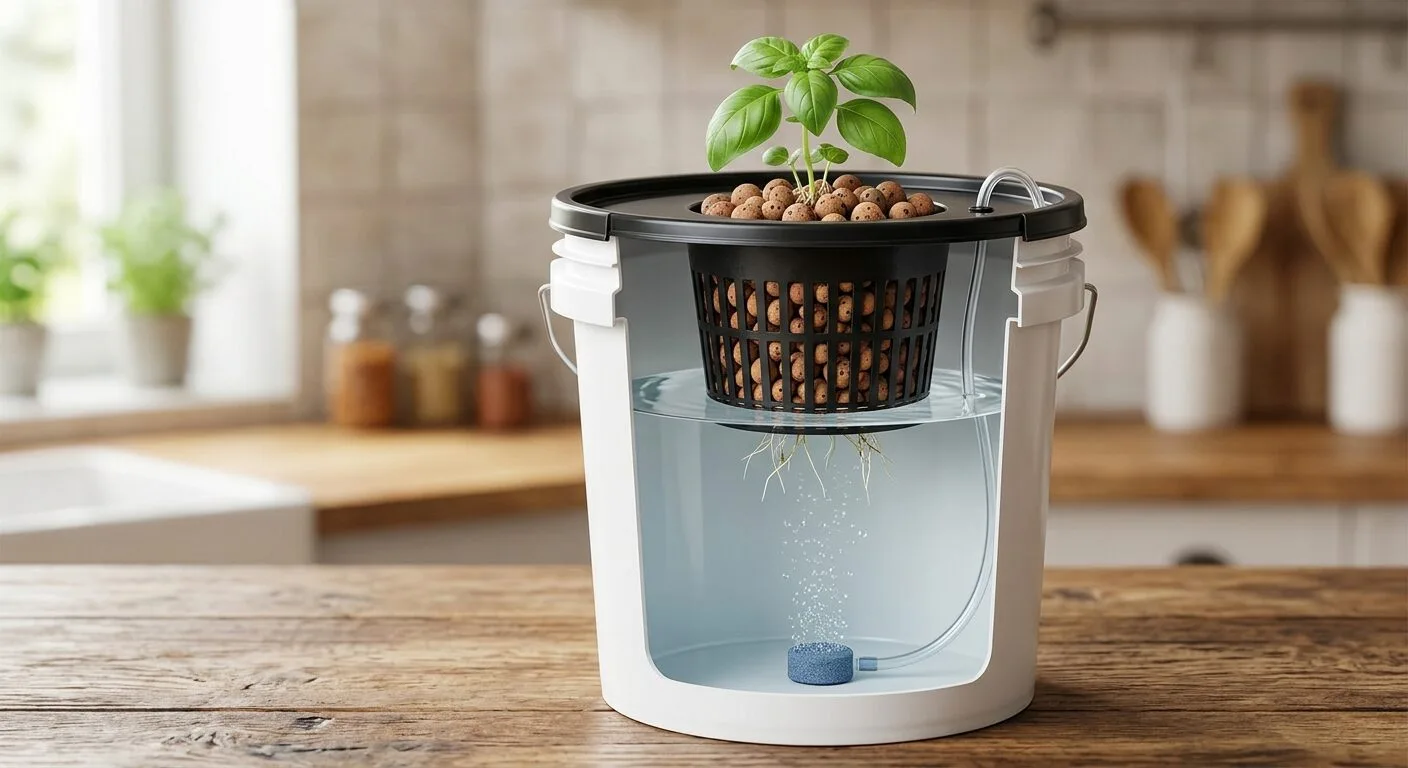
- Wash the bucket, lid, and net pot with warm water and unscented dish soap. Rinse until no suds remain.
- Trace the net pot’s rim onto the center of the lid. Cut the hole with a jigsaw or a drill and a hole saw, sized so the net pot’s lip rests on the lid without falling through.
- Drill a second, smaller hole near the edge of the lid for the airline to pass through.
- Fill the bucket to about an inch below the net pot’s base once it sits in place, since that gap is the air layer the roots need above the waterline.
- Connect the airline from the pump to the air stone, then drop the stone to the bottom of the bucket. Thread the line out through the small hole before sealing the lid.
Sanitizing Before You Build
Wipe every surface that will touch water with a diluted vinegar solution or food-safe sanitizer before the first fill. A bucket that once held pool chemicals or paint, even years ago, can leach enough residue to stunt a seedling. The full rundown is in how to clean a small hydroponic system without making a mess. It covers what to use and what to avoid.
Drilling The Net Pot Hole
Go slightly undersized on the first pass. You can always widen a hole with a utility knife or sandpaper. An oversized hole lets light straight down onto the water and starts the algae clock early. A 1 and 3/4 inch net pot needs roughly a 1 and 5/8 inch hole to start.
What If The Cut Comes Out Too Wide
A gap around the net pot is a light leak, not a lost bucket. Wrap a strip of foam pipe insulation or weatherstripping around the net pot’s rim until it seats snugly. Then check for light with the room dark and a phone flashlight held against the outside of the lid. No glow inside means the fix worked.
🔇 Noise Reduction And Vibration Isolation Hacks
Once the build is sealed and running, three things carry sound into a quiet bedroom: the pump’s motor, water splashing back into the reservoir, and vibration traveling through the surface under the bucket. Each has its own fix. None of them require buying a second pump.
Isolating The Pump From Furniture
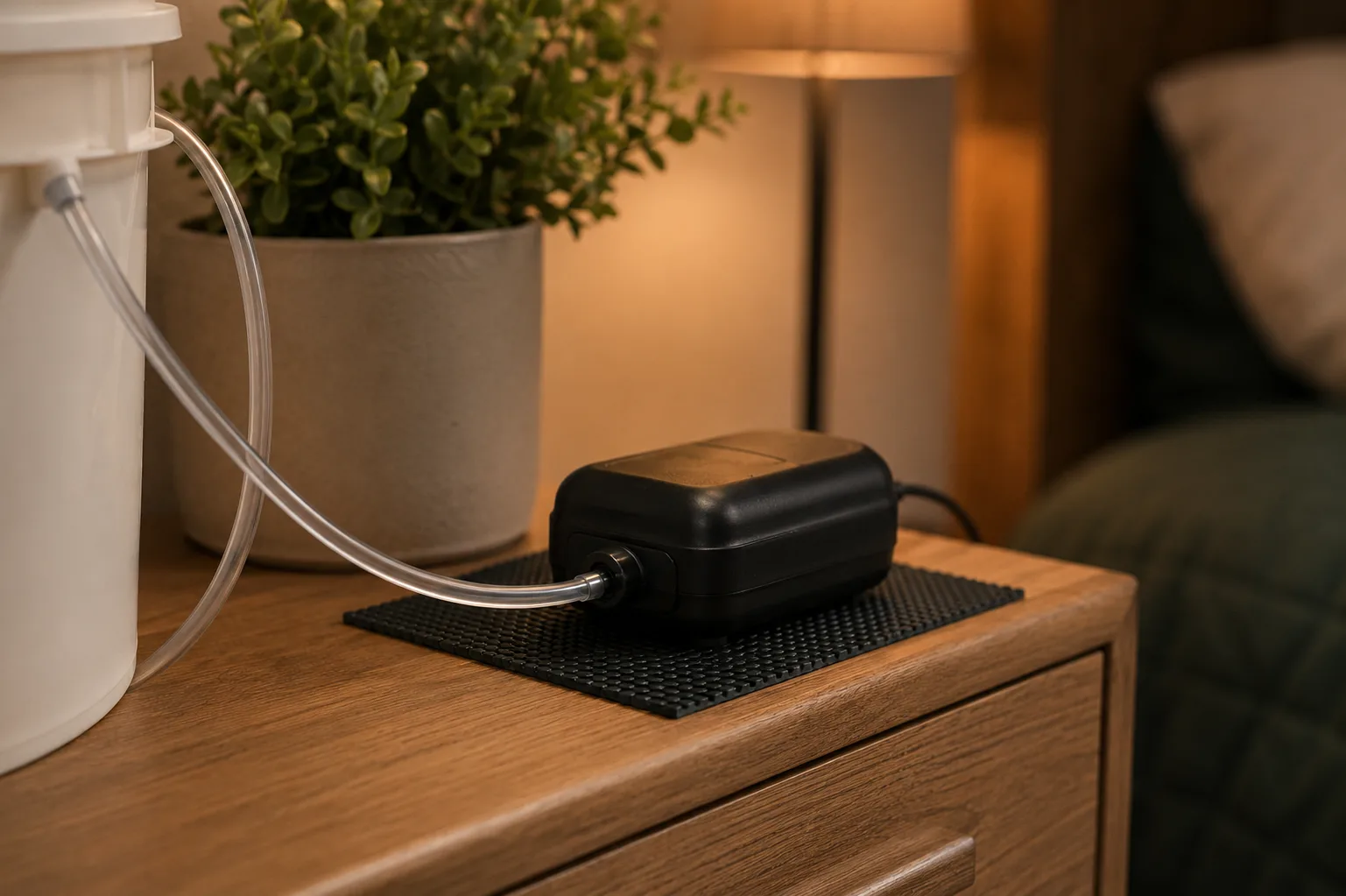
Set the pump itself on a small rubber mat, a folded towel, or a cut piece of yoga mat, rather than directly on wood or particleboard. Hard surfaces act like a drum. They carry the motor’s vibration far past what the sound alone would travel. If the pump you already own hums louder than it should, the fixes in how to quiet a noisy hydroponic pump go further than isolation alone. They cover where to check for a worn diaphragm too.
Managing Splashing And Bubbling Sound
A single small air stone, rather than two aggressive ones, keeps the surface from turning into an audible boil. More bubbles do not mean more oxygen once the pump exceeds what a five gallon bucket needs. Backing off the air stone size is a free trade that costs the plant nothing.
Building A Simple Sound-Dampening Box
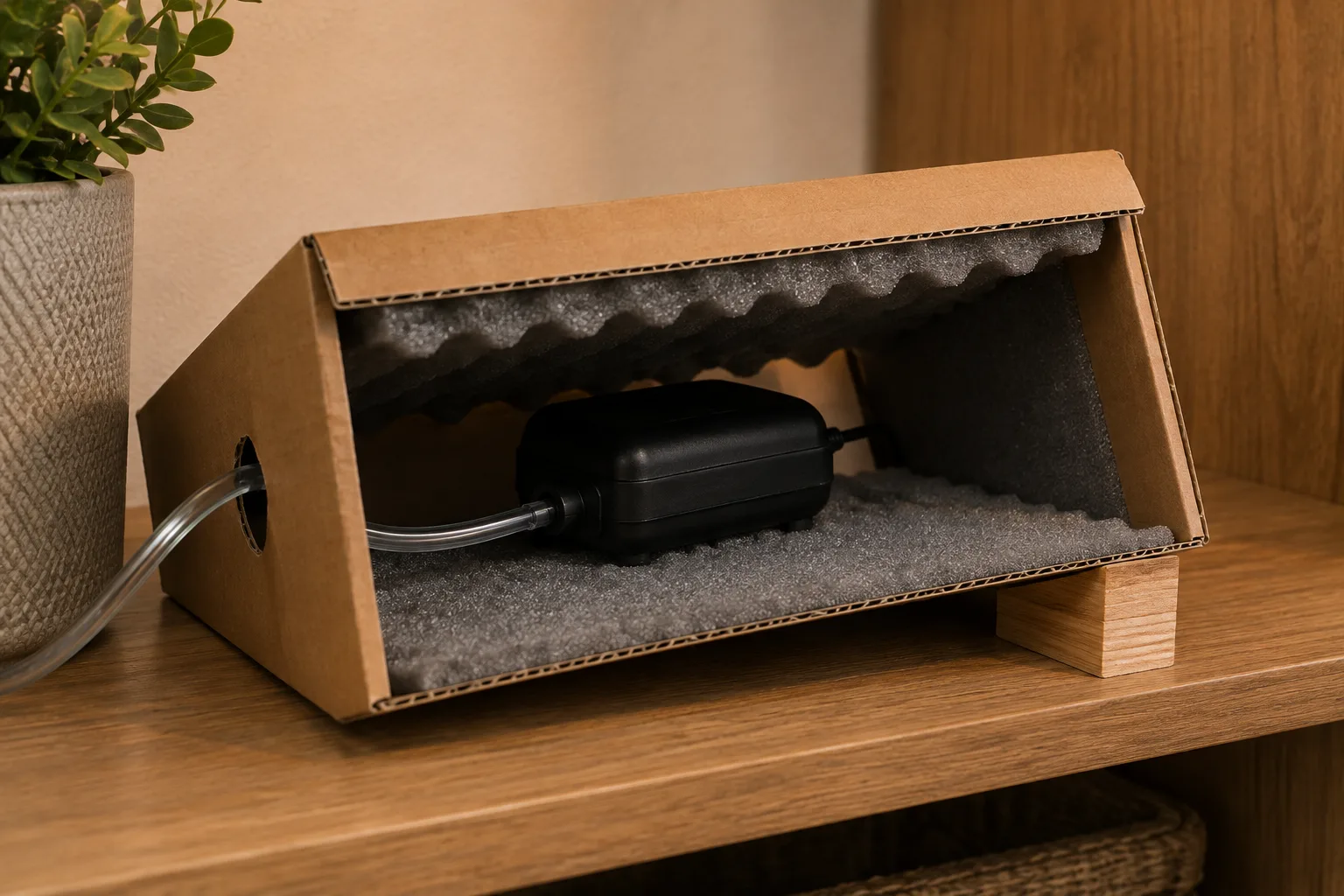
A cardboard box lined with an inch of foam cuts the audible hum well. Set it upside down over the pump with a small hole cut for the airline. Leave one side propped open a crack, though, so the pump does not overheat inside a sealed box. Once the build is quiet, automate the schedule with a cheap outlet timer. Then you are not the one remembering to flip a switch every morning. My picks for compact timers for apartment grow lights work just as well on a pump as they do on a light.
🧪 Managing Nutrients And Water Temperatures
A bedroom often runs cooler at night than the rest of the apartment. That actually works in this build’s favor, since warm reservoir water is the more common failure. Feed and pH targets stay the same regardless of which room the bucket sits in.
| Growth Stage | Target EC | Target pH |
|---|---|---|
| Seedling or rooted cutting | 1.0 to 1.2 | 5.5 to 6.5 |
| Vegetative growth | 1.4 to 1.8 | 5.5 to 6.5 |
| Mature, crop-specific ceiling | See the crop table above | 5.5 to 6.5 |
Check EC with a pen before you assume a nutrient problem is anything else. My explainer on EC for hydroponic herbs covers what the number actually measures if this is your first reservoir. Use the hydroponic pH and nutrient calculator to work out starting doses for a five gallon reservoir rather than eyeballing it.
Keeping The Reservoir Cool In A Bedroom
Bedrooms with the door kept shut for quiet can trap heat during the day, even when the room feels cool at night. Water above 75°F (24°C) holds less dissolved oxygen. A warm reservoir and a slightly undersized air stone compound each other fast. If your building runs warm, the fixes in small hydroponic system temperature problems and easy apartment fixes cover cooling a bucket without adding another loud piece of equipment.
Routine Maintenance: Top-Offs And Full Changes
Top off daily with plain, pH-adjusted water as the level drops from the plant drinking. Never top off with more nutrient solution, since that concentrates the EC over time instead of holding it steady. My guide to topping off without messing up your nutrients walks through the exact habit. Every 2 weeks, dump the full reservoir and rinse the bucket. Mix a fresh batch at the correct EC for whatever stage your plant is in. A printable hydroponics tracker taped to the bucket stand makes day 14 hard to miss.
When pH Will Not Hold Steady
If the reading climbs back up within a day of correcting it, something in the bucket is pushing the number back up. It is not the pH simply drifting on its own. Why hydroponic pH keeps drifting in small systems covers the usual causes. These range from a fresh net pot’s growing medium to a reservoir that has gone past its two week limit.
→ University of New Hampshire Extension: Hydroponics at Home
→ University of Minnesota Extension: home food growing systems
🍅 Best Crops For A Bedroom DWC Bucket
Not everything belongs in a single five gallon bucket next to a bed. While the everyday leafy herbs handle it easily, my roundup of the best herbs for small hydroponics covers the full shortlist, if you want options beyond the four below. Fruiting crops need more room than most people expect. Knowing that before you plant one avoids a wasted month.
Leafy Greens And Herbs That Stay Small
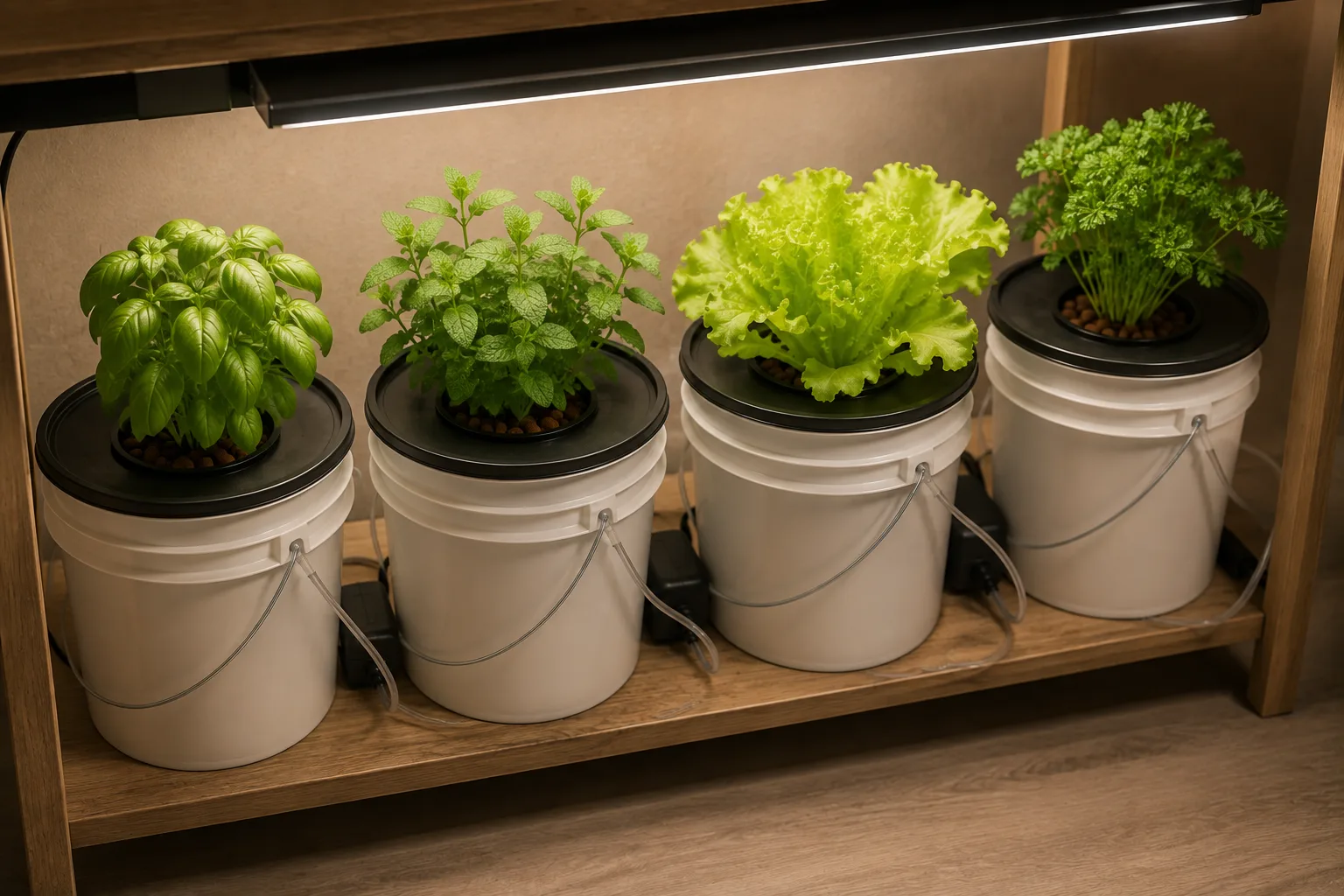
Basil, mint, lettuce, and parsley all fit comfortably in one bucket for their full life cycle. Keep the light at 6 to 8 inches above the canopy, running 14 hours on, 10 hours off. Once you want to run two herbs under one panel to save on electricity, though, one grow light for basil, mint, and lettuce on the same shelf covers the shared EC 1.5 compromise. It keeps both plants alive without burning either one. Spinach also works in a bucket this size, although it wants 12 hours of light rather than 14. My apartment spinach guide explains this in more depth.
Fruiting Plants Need More Room
Cherry tomatoes and dwarf peppers are the two fruiting crops people most often try to cram into a five gallon bucket. Both want more than this build gives them, since their light height runs 8 to 12 inches rather than 6 to 8. Their pH floor sits at 5.8 rather than 5.5. Mature EC climbs to 2.0 through 2.5 as well, higher than any of the leafy crops in the table above. Both also take two to three months to first harvest instead of a few weeks. A bucket this size can carry either through the seedling stage, though, so plan to move it into a larger reservoir once true flowers appear. The seed to harvest calculator will show you exactly when that transition point lands for your setup. If growth stalls earlier than that, though, why hydroponic seedlings stay small under grow lights is the first place to look. Strawberries sit in the same bracket, so the guide to hydroponic strawberries indoors covers the aerated tote they need instead of a bucket this size.
Sharing One Bucket Between Two Plants
Two herbs can share one bucket if their roots have room, although their EC targets rarely match. A shared reservoir of EC 1.5 is the safe middle ground. It runs slightly under what mint or basil would prefer alone, and slightly over what lettuce wants, though it is survivable for both. Mint’s spreading roots make it a poor second tenant in a bucket this size, since it tends to crowd out anything sharing the water within a few weeks.
💬 A Word From Sarah
The change that made the biggest difference in this build was not the pump at all. Instead, it was setting the whole bucket on a two dollar rubber shelf liner, rather than directly on the floor or a bookshelf. I had already swapped pumps twice, chasing a lower decibel rating. Then I noticed the hum was traveling up through the particleboard shelf itself, not the air. The liner cut what was left of the vibration in one night, for less than the cost of a coffee. I still do not fully understand why a thin sheet of rubber outperformed an entire pump upgrade, though three buckets later it still does.
❓ Frequently Asked Questions
🔇 Is a DWC bucket actually quiet enough for a bedroom?
Yes, with the right pump. A pump rated at 40 decibels or lower, isolated on a rubber mat, runs about as loud as a quiet refrigerator. The bucket and net pot themselves make no sound at all once assembled.
📢 How loud is a hydroponic air pump normally?
Most aquarium-style air pumps sold for hydroponics run between 35 and 55 decibels, depending on the model and how worn the diaphragm is. That range, though, is the difference between a whisper-quiet setup and one that hums across a small bedroom at night.
🛌 Can I run a hydroponic system in the room while I sleep if I am a light sleeper?
Yes, most light sleepers and side sleepers do fine once the pump is isolated from furniture and rated under 40 decibels. Set the pump on foam or rubber rather than a shelf. Keep the air stone off to one side of the bucket to soften the bubbling sound.
🪣 What size bucket do I need for one DWC plant?
A five gallon bucket comfortably grows one mature basil, mint, lettuce, or parsley plant to full size. A smaller container works for a seedling stage, though it forces an early transplant once roots fill the space.
💧 How often should I change the water in a DWC bucket?
Top off daily with plain, pH-adjusted water as the plant drinks it down, and do a full reservoir change every 2 weeks. Topping off with nutrient solution instead of plain water concentrates the EC over time and eventually burns the roots.
⏰ Do I need to run the air pump 24 hours a day?
Yes, in a DWC bucket the pump should run continuously. While the grow light cycles 14 hours on and 10 off, the roots depend on constant aeration, so even a few hours without it can start root rot in warm water.
🪣 Can I use a regular bucket instead of a specialized DWC kit?
A food-grade, opaque five gallon bucket works exactly as well as a bucket sold specifically as a DWC kit, at a fraction of the price. So the only parts worth buying new are the net pot, the air pump, and the air stone.
🌱 What plants grow best in a small bedroom DWC bucket?
Basil, mint, lettuce, and parsley are the easiest fits for a five gallon bucket and stay quiet, compact companions for a bedroom shelf. Save cherry tomatoes and dwarf peppers for a larger system once they outgrow the seedling stage.
🪰 Will a DWC bucket attract gnats or bugs in my bedroom?
A sealed DWC bucket attracts far fewer pests than a soil pot, since there is no exposed growing medium for fungus gnats to breed in. So the net pot and any exposed clay pebbles are the only spots worth checking if gnats do show up.
💰 How much does it cost to build a quiet DWC bucket?
A five gallon bucket, a net pot, a quiet air pump, an air stone, and airline tubing typically run under thirty dollars combined. A grow light adds more, since the bucket usually sits away from a window, though a rubber isolation mat adds only a couple dollars more.
☀️ Does a DWC bucket need to sit near a window?
No, a grow light replaces window sun entirely and gives more consistent results, since bedroom windows rarely get enough direct light on their own. So running the light 14 hours on, 10 hours off works whether the bucket sits on a windowsill or in a dark corner.
Happy growing! 🌿
Sarah, Urban Hydro Space

Sarah Whitfield is the founder of Urban Hydro Space and an indoor gardening enthusiast dedicated to helping apartment dwellers grow fresh herbs and vegetables in small spaces. She researches hydroponic systems carefully from real specifications and verified buyer feedback, and shares practical tips and honest, clearly labeled product picks to make indoor gardening accessible for beginners.