
Affiliate disclosure. As an Amazon Associate I earn from qualifying purchases. Urban Hydro Space earns a small commission on purchases made through links on this page, at no extra cost to you. Full disclosure.

Researched, not tested: every product in this post was chosen from the makers’ published specifications, labels and listings, not tried at home. How we research and choose products.
Hydroguard vs hydrogen peroxide sounds like a choice between two root rot treatments. It isn’t, because the two do opposite jobs. Hydrogen peroxide kills: it oxidizes microbes on contact, good and bad alike, then breaks down into water and oxygen within days. Hydroguard adds life. It’s a live Bacillus culture that goes into the water from the first fill and stays there. I think of one as a reset button and the other as a standing guard, and since peroxide kills the very bacteria Hydroguard adds, they can never share the same water at the same time.
So the real question is which one, and when. That comes down to how each works, what the label and the research actually back up, the dose, the cost per use and how to switch from one to the other safely. Neither fixes what causes root rot, though. Warm water, still water and a dirty system do that, and I’d sort those out before buying either bottle. New to growing in water? The beginner’s guide to apartment hydroponics explains why roots need cool, moving water in the first place.
Hydroguard vs Hydrogen Peroxide: The Short Verdict

Treating rot now, or cleaning between crops: 3% hydrogen peroxide, measured with a syringe.
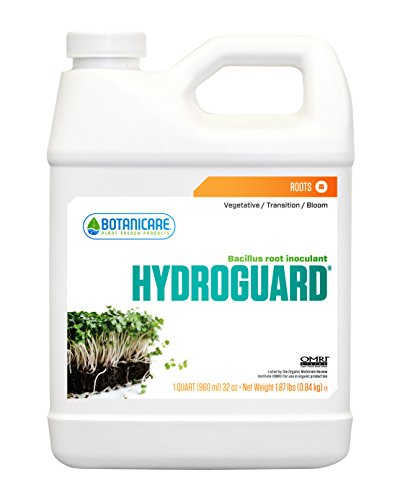
Protecting a warm DWC system from the first fill: Hydroguard at the label rate, after any peroxide has gone.
Hydroguard quart on Amazon $27.88
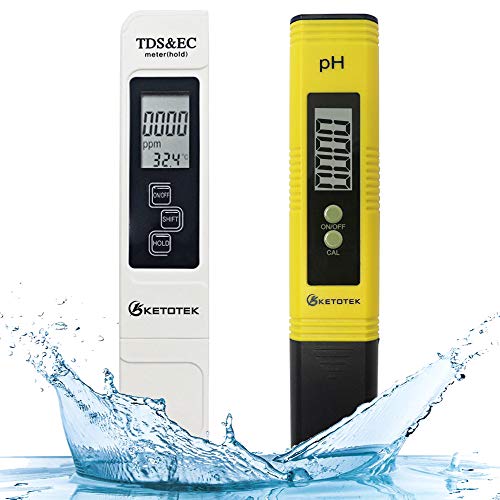
Finding the cause first: a meter set that reads water temperature as well as pH and EC.
KETOTEK meter set on Amazon $12.79
Doses come from the labels and my peroxide guide. Prices are pulled from Amazon and were last checked on 25 November 2026 at 5:37 am. Amazon prices change often, so check the listing before buying.
Key takeaways
- Peroxide is a short-acting disinfectant; Hydroguard is a live Bacillus amyloliquefaciens culture meant for continuous use.
- Never use them together. Peroxide kills the bacteria, so I’d wait 48 hours after a peroxide dose before adding Hydroguard.
- For an active infection, dose 3 ml of 3% peroxide per liter; Hydroguard’s label rate is 2 ml per US gallon with every watering.
- Hydroguard’s label promises organic matter breakdown and stronger roots. It doesn’t promise a root rot cure, and biological products work best as prevention anyway.
- Neither replaces the basics: water at 65 to 75°F, aeration above 72°F, a dark reservoir and a full change every 2 weeks.
Side by Side
| 3% hydrogen peroxide | Hydroguard | |
|---|---|---|
| What it is | An oxidizer and disinfectant | A live bacterial root inoculant |
| Active ingredient | Hydrogen peroxide, 3% | Bacillus amyloliquefaciens, 0.038% |
| How it acts | Kills microbes on contact, then breaks down into water and oxygen | Lives in the water and on the roots, breaking down organic matter |
| Kills good microbes? | Yes | No, it’s one |
| Dose | 3 ml per liter to treat; 5 ml per liter for a dip of up to 20 minutes | 2 ml per US gallon, about 0.5 ml per liter |
| How often | Only when treating or cleaning | With every watering, all season |
| Best for | Active rot, cleaning between crops | Prevention in warm, active systems |
| Shelf life | Check the bottle’s expiry date | 2 years from the bottle date; use within 6 months of opening |
How Hydrogen Peroxide Works

Hydrogen peroxide is an oxidizer. In the reservoir it attacks whatever microbes it touches, including the water molds behind most root rot, then breaks down into plain water and oxygen. That’s both its strength and its limit. It works fast and leaves nothing harmful behind, but it leaves no protection either, so if the cause is still there, the rot comes back.
The doses I recommend all assume ordinary 3% peroxide:
- Treating an active infection: 3 ml per liter in the reservoir, which is about 11 ml in a US gallon.
- A root dip: 5 ml per liter for no more than 20 minutes, then rinse and return the plant to fresh solution. Never leave dip strength standing in a jar.
- Cleaning between crops: wash the empty reservoir, net cups and air stone with diluted peroxide, then rinse.
Measure every dose. Don’t pour. A glug straight from the bottle can easily triple the dose and strip the fine root hairs, which is why a cheap set of dosing syringes is the first thing I’d buy here. My hydrogen peroxide for root rot guide has the full method, including which crops tolerate it best.
How Hydroguard Works
Hydroguard is the opposite: a Botanicare liquid culture of Bacillus amyloliquefaciens. Everything here comes from the label and the research. The guaranteed analysis lists it at 0.038%, with at least 10,000 colony-forming units per milliliter. Botanicare calls it a bacterial root inoculant that breaks down organic matter and may turn it into nutrients roots can take up, while the Amazon listing goes further and says it amplifies root mass and vigor.
Now look at what the label doesn’t say. It never claims to cure or prevent root rot, even though that’s why most people buy it. Growers use it against rot because of the idea behind biological control: harmless microbes settle on the roots and in the water first, so disease organisms find less room and less food. A review in the Annual Review of Phytopathology lists Bacillus among the organisms in biocontrol products sold against root pathogens such as Pythium in greenhouses. The part I’d pay attention to comes from a later review of hydroponic lettuce in Thailand. Results from Bacillus products varied there, mostly because growers used them like chemical fungicides, after disease showed up, instead of as the steady prevention a living product needs.
So if you buy it, use it the way it’s designed. The Hydroguard dosage on the label is 2 ml per US gallon, starting at the first fill and going into every watering until harvest. In a reservoir, that means dosing the fresh solution at each fill and water change, and dosing your top-off water at the same rate too. Shake the bottle before each use. The label also says to add it to the water on its own, not mixed with other concentrates.
Why Not Both at Once
Peroxide can’t tell good bacteria from bad. Pour a treatment dose into a reservoir that already holds Hydroguard and you’ve just killed the Bacillus you paid for. So the order matters:
- First, treat the rot with peroxide, trim off dead roots and fix the cause.
- Then wait 48 hours for the peroxide to break down, or start with a fresh reservoir. Whether you can reuse old solution covers what to do with the infected water.
- Finally, add Hydroguard to the new solution and keep dosing it from then on.
Once you’re running Hydroguard, keep the peroxide for the empty system between crops: clean, rinse, and restart the bacteria with the next fill. There’s no conflict there, because an empty tank has no bacteria in it yet.
Which One, When
A healthy system in a cool room. If the water stays at 65 to 75°F (18 to 24°C) and you change it fully every 2 weeks, I wouldn’t put either one in the reservoir. Keep the peroxide as your cleaner between crops instead, with the routine in the guide to cleaning small systems.
A warm apartment and a DWC bucket. Once the water creeps up to 72°F and past it, the risk climbs. This is the one case where I think Hydroguard earns its price, as insurance from the first fill. Add an air stone if the system lacks one and work on the temperature at the same time. The quiet DWC bucket build shows a setup you can sleep next to, and the quiet air pump guide helps if it lives in a bedroom.
Rot already showing. Brown, slimy roots that smell like a swamp need peroxide first. Adding bacteria now won’t rescue them. Treat at 3 ml per liter, trim the dead roots with clean scissors and fix the water temperature, and only then, 48 hours later, start Hydroguard on a fresh reservoir. Not sure it’s rot? Why hydroponic plants wilt helps you confirm it before you treat.
Kratky jars and countertop gardens. Small systems mostly get rot from warm water or from light reaching the solution, so fix those first. If a jar does rot, a fresh start is quicker than a rescue, so I wouldn’t bother saving it. Clean it with peroxide, start again with a new seedling, and let the seed to harvest calculator give you the new date. In a countertop garden, a pump that has quietly stopped leaves still water too, so run through the steps in AeroGarden pump not working.
Fix the Cause First

Root rot is a symptom of conditions, so both products fail when the conditions stay the same. The Thai lettuce review found Pythium root rot severe and predictable in a hot climate, which is why I’d treat a warm apartment in summer as the danger zone. These settings prevent it:
- Water temperature: keep it at 65 to 75°F (18 to 24°C) and add aeration above 72°F. Past 75°F, expect rot. The guide to temperature in small systems covers cooling.
- Oxygen: run an air stone in DWC and keep it clean, since every water culture system depends on oxygen in the water. For pump-free options, read how to oxygenate water without a pump.
- Darkness: block every light leak into the water, because light grows algae, and dying algae feed rot. Algae in hydroponic jars shows how.
- Fresh water: top off with plain, pH-adjusted water and change it fully every 2 weeks. How often to change hydroponic water explains the schedule.
- Measurement: check temperature, pH and EC instead of guessing. The KETOTEK set reads all three, but if you only want pH, a reliable pH meter does that job. The pH and nutrient calculator sets the targets for your crop.
My guide to preventing root rot in small systems goes through each one in detail. Your nose is a good early warning too, and why hydroponic water smells bad helps you catch trouble before the roots go brown.
What Each Costs per Use
Both are cheap per dose, but you buy them in very different ways. A 16 oz bottle of 3% peroxide holds about 470 ml. That’s enough to treat roughly 150 liters at 3 ml per liter, and it only comes out when something goes wrong or a crop ends. A quart of Hydroguard holds about 946 ml, though, and at 2 ml per gallon that would dose around 470 gallons of water.
That sounds like a bargain until you read the shelf life. Hydroguard’s Amazon listing says to use an opened bottle within 6 months, and most apartment systems hold a gallon or two. So a small grower uses only a fraction of a quart before it expires. I’d skip the gallon size unless you run a large system or split an order with a friend. Prices on both move often, so check the live listing.
Where these facts come from
Hydroguard’s ingredient, guaranteed analysis, description and label rate come from Botanicare’s Hydroguard page, and the shelf life and root vigor line from its Amazon listing, both read in October 2026. Bacillus in greenhouse biocontrol comes from Paulitz and Bélanger, “Biological control in greenhouse systems”, Annual Review of Phytopathology (2001), doi:10.1146/annurev.phyto.39.1.103. The varied results and the hot-climate Pythium pressure come from Kanjanamaneesathian, “Biological Control of Diseases of Vegetables Grown Hydroponically in Thailand” (2015), doi:10.2174/1872208310666160414102201. Both reviews were found through PubMed. Peroxide doses, the 48 hour wait, water temperatures and the 2 week water change are this site’s standard settings.
One Last Tip
Buy a thermometer before you buy either bottle. Water that creeps above 75°F in a warm month is where most root rot in a small system starts, and no product outruns that for long. The test is simple: read the water at the warmest time of day for a week. If it stays in range, keep a bottle of peroxide for cleaning and skip the bacteria. If it climbs, cool the water and add aeration before anything else. Hydroguard is the backup, not the plan.
Frequently Asked Questions
Is Hydroguard better than hydrogen peroxide for root rot?
Neither is better, because they do different jobs. Peroxide is for active rot and for cleaning between crops, while Hydroguard is live bacteria for prevention from the first fill. If rot is already showing, I’d use peroxide first and start Hydroguard later on a fresh reservoir.
Can I use Hydroguard and hydrogen peroxide together?
No. Peroxide kills the Bacillus in Hydroguard along with everything else. Wait 48 hours after a peroxide treatment, or start a fresh reservoir, before you add Hydroguard. Save peroxide cleaning for when the system is empty.
What is the right Hydroguard dosage per gallon?
The label says 2 ml per US gallon, which works out to about 0.5 ml per liter, with every watering from start to harvest. Shake the bottle first and add it to the water by itself.
How much hydrogen peroxide for root rot?
For an active infection, I’d dose 3 ml of 3% peroxide per liter of reservoir, roughly 11 ml per US gallon. A root dip is stronger: 5 ml per liter, 20 minutes at most, then rinse. Measure it with a syringe rather than pouring from the bottle.
What is in Hydroguard?
One live bacterium, Bacillus amyloliquefaciens, at 0.038%. Botanicare guarantees at least 10,000 colony-forming units per milliliter and sells it as a root inoculant that breaks down organic matter.
Does Hydroguard cure root rot?
The label doesn’t claim it does. Greenhouses use Bacillus products for prevention, and the research says they work best dosed steadily from the start rather than as a rescue once disease shows up. For rot you can already see, I’d reach for peroxide and fix the water temperature.
How long after hydrogen peroxide can I add Hydroguard?
Give the peroxide 48 hours to break down into water and oxygen, or skip the wait with a fresh reservoir. After that, dose Hydroguard into the new solution at every watering.
Do I need Hydroguard in Kratky jars?
I wouldn’t bother. Jars mostly rot from warm water or light getting into the solution, so fix those. If one rots anyway, clean it with peroxide and start over with a new seedling instead of trying to save it.
Does Hydroguard expire?
Yes. The Amazon listing gives it 2 years from the date on the bottle and 6 months once opened. So for a small apartment system, the quart is plenty.
What prevents root rot best?
Water that’s cool, full of oxygen, dark and fresh. That means 65 to 75°F, an air stone above 72°F, no light getting in and a full change every 2 weeks. Get those right first, since products only help after that.


