

⏳ 20 min read · Last updated: September 2026
When your hydroponic water smells bad, the scent usually hits you the moment you walk through your apartment door. Picture a Thai basil in a 32-ounce mason jar on a kitchen island, left for a long weekend. The door opens on a stench like old gym socks mixed with swamp mud, the water in the jar has turned cloudy, and the roots are coated in brown slime. That is severe root rot, and it comes from a tiny reservoir left stagnant under intense lights without temperature control.
Dealing with foul odors is a rite of passage for indoor growers, but you don’t have to live with the stink in your living space. If your hydroponic water smells bad, it means your roots are stressed, dissolved oxygen is low, and unwanted bacteria have moved into your jar. This problem frustrates new apartment growers, yet the fix is straightforward once you understand what’s growing in the dark. You’ll learn how to identify the specific odor, reset your nutrient solution safely, and stop these swampy scents from ever returning.
Why Your Hydroponic Water Smells Bad
Hydroponic water smells bad when oxygen levels drop and bacteria or algae move into the reservoir. Warm, stagnant water in a small jar loses dissolved oxygen fast, and when that happens, anaerobic bacteria take over and release the sulfur, swamp, or chemical odors apartment growers dread. Fixing the smell starts with figuring out which of these three culprits you’re dealing with, then resetting the reservoir before the rot reaches the crown of the plant.
- Check your root zone for brown slime if your hydroponic water smells bad.
- Maintain a safe water temperature of 65 to 75°F (18 to 24°C) to stop anaerobic bacteria.
- Perform a full reservoir change every 2 weeks to halt organic decay.
- Keep your baseline feed low at EC 1.5 so salts build up more slowly.
- Not sure what is wrong yet → start with Identifying Why Your Hydroponic Water Smells Bad
- You know the cause → jump to Step-By-Step Fixes For Stinky Reservoirs
- The room smells but the roots look fine → check Ruling Out Natural Plant Aromas
Identifying Why Your Hydroponic Water Smells Bad
Before you toss out your struggling plants, you need to play detective. When your hydroponic water smells bad, the specific scent tells you what type of invader is living in your jar. Healthy nutrient solution should smell like clean tap water, perhaps with a very faint mineral scent from the fertilizer salts.
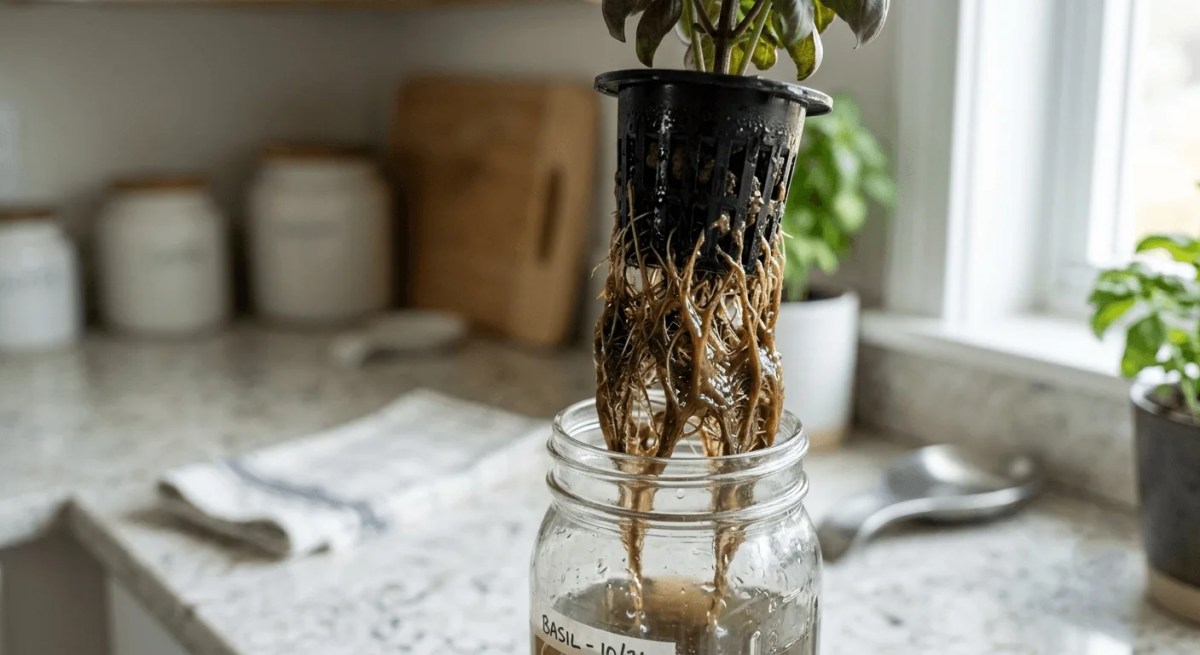
If you detect something foul, you’re usually dealing with microscopic organisms. These tiny invaders thrive in small apartment setups where temperatures fluctuate and grow lights leak into places they shouldn’t. That is why learning to classify the odor is your first step toward rescuing your herbs. If you’re brand new to indoor growing, our apartment hydroponics beginner’s guide covers the fundamentals this post builds on.
The sulfur or rotten egg odor
A rotten egg smell is the classic signature of anaerobic bacteria, especially in warm water. Because of this, it’s the most alarming scent you’ll encounter in an indoor garden. These bacteria breed in environments that lack dissolved oxygen, which often happens when temperatures rise or the water sits still for multiple weeks in a basic Kratky setup.
When you lift the plant out of the jar, you’ll likely see the roots turning brown and slimy. As a result, the plant stops drinking water and absorbing nutrients. You might also notice your hydroponic pH keeps drifting erratically as the bacteria alter the water chemistry by releasing acidic byproducts. Fixing this requires immediate intervention before the rot travels up into the main stem.
The swampy or earthy scent
When your countertop jar smells like a damp forest floor or a stagnant fish tank, algae is the prime suspect. Algae spores exist everywhere in our homes, and they only need moisture, nutrients, and a tiny sliver of light before they explode into a thick green sludge. While a mild earthy smell won’t kill your basil overnight, it’s a prominent warning sign.
Algae causes problems because it consumes the oxygen your plant needs. When this happens, the algae eventually dies off, decays, and triggers the much worse rotten egg smell mentioned above. Your goal is to block the light before this secondary decay process begins.
The chemical or metallic stench
Occasionally, growers report a sharp, metallic, or chemical odor radiating from their setups. This usually points to a severe nutrient imbalance or an extreme pH crash. When the pH drops below 4.5, certain nutrient salts can precipitate out of the solution, creating a bitter, acrid scent. This is less common than biological odors.
A chemical smell can also occur if you’ve recently treated the water with harsh cleaning agents and failed to rinse the container. Never mix household bleach with your hydroponic nutrients. The resulting chemical reactions create fumes that will damage your plants and irritate your lungs in a small, enclosed apartment.
Diagnosing Root Rot Versus Algae Overgrowth
Once you’ve narrowed down the scent, you need visual confirmation. Your roots act as the engine of your plant, and inspecting them provides the best clue about your reservoir’s health. You’ll want to handle the plant gently to avoid snapping off any fragile, healthy growth during your investigation. For a deeper walkthrough of prevention, see our full guide to preventing root rot in small hydroponic systems.
Small jars hide problems well until they become severe. Because we often place these jars on decorative shelves, we forget to look beneath the net cup. You should aim to inspect your root zone at least once a week, especially in summer.
🔎 Quick diagnosis table
| What you see | Most likely cause | Check this first |
|---|---|---|
| 🟡 Brown, slimy roots | Pythium (root rot) | Water temp above 75°F (24°C) |
| 🟢 Green sludge on jar walls | Algae bloom | Light leaks hitting the nutrient water |
| 🔴 White roots dropping off | Extreme pH crash | Test your solution pH level |

Inspecting your root zone safely
When you inspect your roots, lift the net cup out of the jar by the rim. Do this over a sink to catch any drips. Healthy roots should look firm, white, or slightly off-white, and they should smell neutral. If your hydroponic water smells bad you’ll likely see a different picture.
Look for these distinct visual clues when diagnosing a smelly jar:
- Roots that appear brown, gray, or translucent, however, indicate active decay.
- A slimy, gel-like coating over the root strands points directly to pythium (root rot).
- Roots that clump tightly together instead of spreading out suggest severe oxygen starvation.
If you touch a brown root and it disintegrates into mush between your fingers, you’re dealing with advanced root rot. This requires a full system reset and aggressive trimming.
Checking your jar walls and threads
Sometimes the roots look acceptable, but the smell persists. In this scenario, you instead need to examine the container itself. In small glass jars, bacteria and algae love to hide in the microscopic scratches on the glass or within the screw threads near the top rim.
Run a paper towel along the inside rim of your jar. If it comes away coated in green or brown slime, you’ve found the source of the odor. This biofilm harbors the microscopic organisms that release smelly gases into your apartment. You’ll need a stiff bottle brush to clean these crevices during your next water change.
Ruling out natural plant aromas
Before you panic and dump your nutrients, make sure the smell isn’t just the plant doing its normal thing. Certain crops emit strong, pungent scents naturally. For instance, tomato plants have a distinct, sharp odor emanating from their fuzzy stems that can sometimes be mistaken for an earthy funk in a confined room.
Likewise, strong herbs like oregano and thyme produce heavy essential oils. If you run your hands through the leaves, the room will fill with a strong scent. To differentiate, sniff the water directly. If the water smells clean but the room smells pungent, your plant is just maturing and expressing its natural oils.
Step-By-Step Fixes For Stinky Hydroponic Reservoirs
Once you realize your hydroponic water smells bad, you need to act fast. Leaving a sour jar on your kitchen counter won’t fix itself. You’ll need to clean the system to halt the bacterial spread before it travels up the stem and ruins the crown of the plant.
I always keep basic supplies on hand for this exact moment. A quick intervention usually saves the plant, especially if you catch the odor within a day or two of it developing. The following steps will guide you through a complete recovery protocol.
Doing a proper reservoir reset

If the water is cloudy and pungent, don’t try to save it by adding plain water on top. Topping off will not help, because diluting bad water only gives bacteria more room to breed. Instead, you need to dump the tainted solution and sterilize the container. Small Kratky jars are notorious for harboring bacteria in the threads of the lid.
Follow this exact process to clean out an infected reservoir:
- Remove the affected plant gently and set the net cup in an empty, clean glass.
- Pour the smelly nutrient solution down the drain and rinse the jar with hot tap water.
- Scrub the jar’s interior and threads with dish soap and a brush to remove all slime.
- Rinse away all soap residue until the jar squeaks when you rub the glass.
- Mix a fresh batch of nutrients, keeping the strength at EC 1.5 to reduce stress on the plant.
Trimming away the damage
Sometimes changing the water isn’t enough if the roots are already decaying. Brown, mushy roots act like a sponge, holding onto the bacteria that cause the stench. If you place rotting roots into fresh water, the new water will turn sour in under a day. You’ll need to remove the dead tissue so the plant can grow healthy new roots.
Sterilize a pair of sharp scissors with rubbing alcohol. Snip away the slimy brown sections, cutting about half an inch above the visible rot. Leave any firm, white roots intact, even if they look thin. Trimming feels harsh, but herbs like mint and basil will push out new white feeder roots in 3 to 5 days if the new environment is clean. Track your regrowth timeline with the seed-to-harvest calculator to know exactly when you’re back on schedule.
Using hydrogen peroxide safely
When soap and water aren’t enough, 3 percent food-grade hydrogen peroxide is an excellent tool for neutralizing bad smells. It breaks down into plain water and oxygen, leaving no dangerous chemicals behind. You’ll find it helpful for sterilizing containers after an algae bloom or severe rot event.
If you aren’t sure how much to use, read my guide on using hydrogen peroxide for root rot to ensure you treat the infection safely. As an alternative to peroxide, you can use a natural enzyme cleaner designed for hydroponics, or a beneficial bacteria root inoculant added after every water change. These products introduce bacteria that compete directly with the pathogens that cause root rot, so they work well as ongoing prevention rather than a one-time treatment.
What to do if the smell comes back
If you’ve cleaned the jar, trimmed the roots, and refreshed the water, the smell should disappear. However, if the rotten egg scent returns in two days, you’re dealing with a persistent environmental issue. Usually, this means your apartment temperature is too high, or you have a hidden light leak feeding a new algae bloom.
When this happens, you’ll need to inspect your light-blocking efforts. Ensure your jar is wrapped tightly in foil or vinyl, covering all the way up to the net cup rim. If the plant continues to decline and the water turns murky again, it might be safer to discard the plant, sterilize the equipment, and start fresh with new seeds.
→ Why Algae Keeps Growing In Hydroponic Jars
→ Beginner Guide To Growing Hydroponic Mint
Managing Temperature When Hydroponic Water Smells Bad
Heat is the number one enemy of small hydroponic systems. When hydroponic water smells bad, the first question is always about room temperature. Warm water holds less dissolved oxygen than cool water, creating the perfect breeding ground for trouble.
When roots sit in hot, oxygen-depleted water, they suffocate. Anaerobic bacteria thrive in these exact conditions, turning a healthy jar into a smelly swamp. Managing your reservoir temperature is the most effective way to prevent odors.
Keeping reservoirs cool indoors
Your goal is to maintain the root zone between 65 to 75°F (18 to 24°C) at all times. In a small apartment, sunlight hitting a windowsill jar acts like a magnifying glass, cooking the water inside. Location matters immensely when you’re growing in tiny volumes of water.
If you’re struggling with small system temperature problems try these simple cooling strategies:
- Move your jars away from south-facing windows during the intense summer months.
- Wrap clear glass or plastic containers in thick foil, black vinyl, or dark fabric.
- Ensure your grow lights sit 6 to 8 inches above the canopy to prevent downward heat radiation.
Adding oxygen to fight stagnation
If your apartment stays warm year-round and you can’t lower the ambient temperature, you might need to mechanically introduce oxygen. While the passive Kratky method relies on an air gap, a Deep Water Culture (DWC) setup uses an air pump to bubble the water. This continuous movement prevents stagnation and keeps the water fresh even if temps creep slightly above 75°F (24°C).
Adding an air stone makes a massive difference for root health, but you’ll have to deal with a slight humming noise in your living space. Basic dual-outlet pumps are inexpensive and easy to find, and many run quiet enough for a studio apartment. If you sleep in a studio, I recommend finding the best quiet air pump to avoid disrupting your peace while still protecting your herbs from root rot.
Apartment-specific cooling hacks

Sometimes you need creative solutions when your apartment lacks air conditioning. One effective trick is to point a small USB clip fan directly at the reservoir jars. This creates mild evaporative cooling around the container, dropping the internal water temperature by a degree or two.
You can also adjust your grow light timer. Instead of running lights during the hottest part of the afternoon, set your 14 hours of light to run overnight when the apartment naturally cools down. This simple scheduling shift keeps the heat away from your reservoirs during peak daytime temperatures.
Water Source And Nutrient Imbalance Causes
Sometimes the smell doesn’t originate from heat or bacteria, but rather from what you’re putting into the jar. Your source water and your nutrient mixing habits play a huge role in reservoir stability. If you mix your solution haphazardly, you invite chemical crashes that lead to funky odors.
Small jars contain less water to buffer changes, meaning mistakes magnify faster than they do in a huge commercial setup. You need to be precise with your measurements to keep the water sweet.
Understanding tap water interactions
Many apartment dwellers wonder if they can use tap water for small setups. The answer is yes, but you need to know what’s in it. City tap water contains chlorine or chloramines to kill pathogens. While chlorine evaporates if you leave water sitting out overnight, chloramine doesn’t.
When you add high-strength liquid nutrients to hard tap water, the existing minerals can clash with your fertilizer. This creates a cloudy solution that sometimes gives off a sharp, metallic scent. If your tap water has a starting EC above 0.4, you might need to dilute it with distilled water to prevent these messy chemical reactions.
Preventing nutrient salt buildup
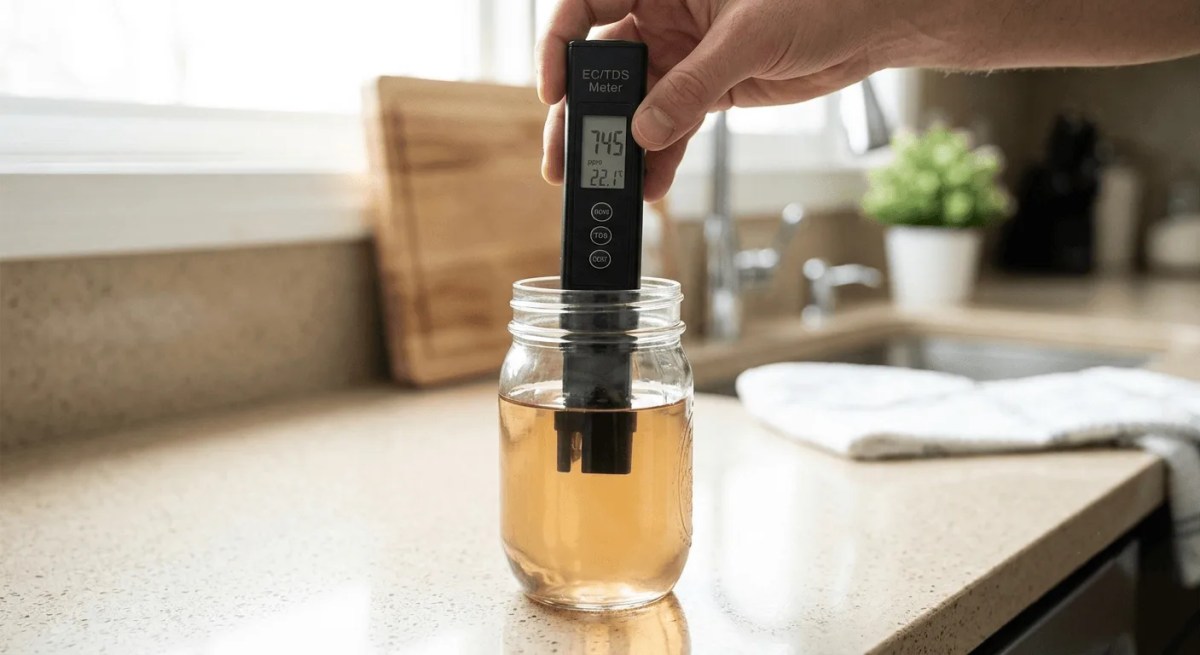
Overfeeding is a common beginner mistake that leads directly to foul odors. If you pour heavy nutrients into a tiny jar, the plant can’t drink them all. The unused fertilizer salts build up, burning the roots and causing them to die. Decaying roots then trigger the rotten egg smell.
To avoid this, you should always measure your feed strength. Use a reliable meter to test your solution. If you need help picking one, check my guide on the best EC and TDS meters for tiny reservoirs. If your reading spikes above EC 2.0 for basic herbs, you’ll need to learn how to lower EC safely before the roots scorch.
Maintaining the proper pH window
Your hydroponic pH acts as the gatekeeper for nutrient absorption. If the pH strays outside the optimal pH 5.5 to 6.5 range, the plant experiences nutrient lockout. It stops feeding, becomes stressed, and its root defense system weakens, inviting bacteria to attack.
Because of this, you should test your pH every time you mix a new batch of water. If you aren’t sure how much pH Up or Down to use in a small one-liter jar, you can use the free pH and nutrient calculator on my site. It takes the guesswork out of dosing tiny containers.
Cleaning Routines To Prevent Smelly Reservoirs
Prevention is always easier than a rescue mission. You’ll rarely complain that your hydroponic water smells bad if you stick to a strict maintenance schedule. Skip the schedule, and even a big, healthy basil plant can be lost to plain neglect.
Establishing a routine takes the stress out of indoor growing. When you know exactly what to do and when to do it, your jars stay pristine, and your apartment smells like fresh herbs instead of swamp water.
Daily and bi-weekly maintenance steps
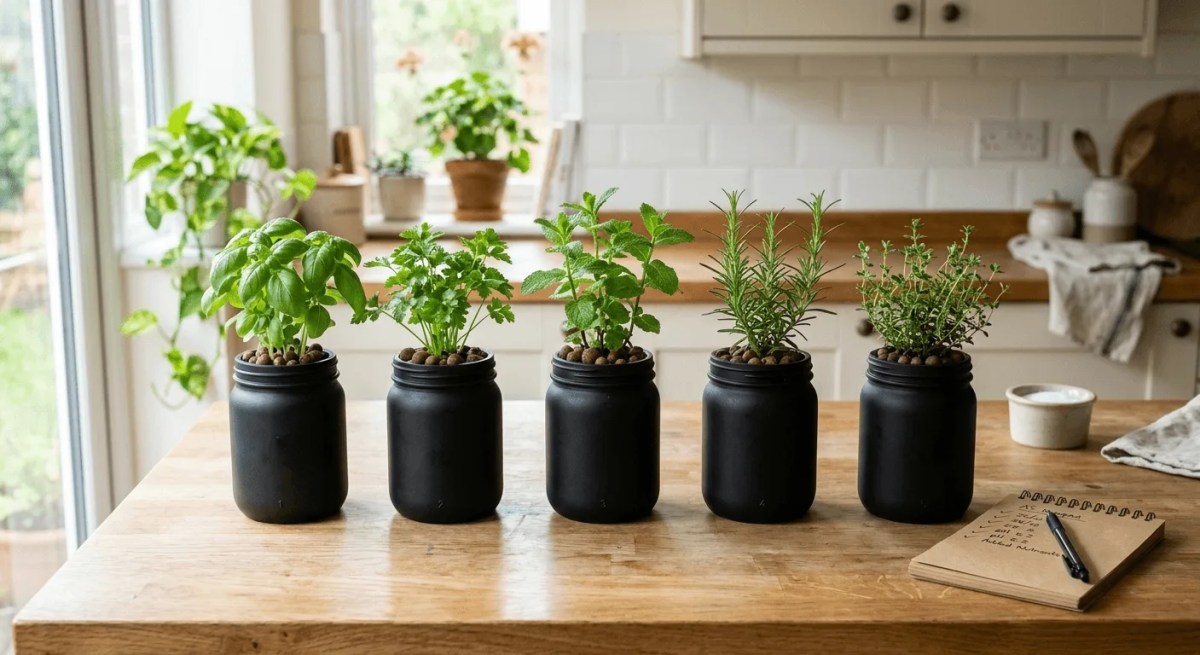
If you’re wondering how often to change your water the golden rule for small pumped or aerated setups is simple: top off daily with plain water and perform a full reservoir change every 2 weeks. Daily plain water top-offs prevent the remaining nutrients from becoming overly concentrated as the plant drinks.
Here is my recommended schedule for a flawless countertop setup:
- Daily: Lift the jar, check the water level, and top off with plain, pH-adjusted water if it’s low.
- Weekly: Inspect the root zone for slime and check the EC to ensure it isn’t climbing.
- Bi-weekly: Dump the old water, wash the jar with soap, and refill with fresh nutrients.
Before you start your weekend chores, use the hydroponic shopping list builder to ensure you have fresh nutrients and pH buffers ready. Being prepared stops you from putting off your bi-weekly water changes.
Choosing the right crop for your setup
Some plants resist root rot better than others. If you struggle with maintaining cool temperatures in your apartment, you should choose resilient crops that forgive minor mistakes. Mint and basil bounce back from root stress much better than delicate crops like cilantro.
I’ve compiled the difficulty ratings below to help you choose your next seed.
| Crop | Difficulty under grow light | Notes on odor recovery |
|---|---|---|
| Mint | Very forgiving | Fastest recovery, most forgiving of high temps |
| Basil | Easy | Vigorous, forgives minor EC mistakes |
| Lettuce | Very forgiving | Fastest harvest, lowest light need |
| Chives | Easy but slow | Slow but reliable, low maintenance |
| Cilantro | Advanced | Bolts in heat, demands cool water |
| Parsley | Medium | Slower germination, worth the wait |
- You want fast recovery from root rot mistakes → start with Mint
- You want a sturdy herb that thrives on a kitchen counter → start with Basil
Best Container Types To Avoid Stagnation
The jar you choose plays a huge role in preventing odors. While mason jars look beautiful on Instagram, they require diligent light-blocking efforts. If you leave a clear jar exposed to ambient sunlight, algae will bloom and the water will eventually smell.
Upgrading your containers is an easy way to reduce the maintenance burden. When you use materials that naturally block light and insulate the water, you’ll rarely encounter foul smells.
Materials that block light naturally

Instead of struggling to wrap clear jars in foil, consider using opaque containers from the start. Food-grade black plastic buckets or stainless steel canisters work beautifully for countertop hydroponics. They block 100 percent of the light, starving any stray algae spores before they can multiply.
If you want to grow multiple herbs under one light a long, opaque plastic tote is an excellent choice. It holds a larger volume of water than a single jar, which means the temperature stays cooler and the pH remains more stable throughout the week.
Providing adequate air gaps
If you’re using the passive Kratky method, the air gap is your only defense against root suffocation. You must leave the top third of the root mass exposed to the air. If you accidentally overfill the jar and submerge the entire root system, the plant will drown and the water will turn sour.
When you perform your water changes, mark the outside of the container with a piece of tape. This gives you a visual fill line so you never drown your air roots during a rushed morning top-off. It’s a tiny habit that saves countless herbs from rotting.
Setting up your grow space
Finally, ensure your grow lights are properly configured. Lights placed too close will heat the water indirectly. You should calculate the right distance and intensity to keep the canopy happy without cooking the reservoir below.
If you’re unsure how to arrange your shelf, use my hydroponic grow light calculator. It helps you find the sweet spot between providing enough energy for growth and keeping your small apartment setup at a safe temperature.
A Word From Sarah
Cilantro in a clear plastic coffee tub on a bright shelf is a recipe for this smell, even with the AC on. Within days the water can reach 75°F (24°C) and a thick carpet of green algae coats the roots, and pulling the plant out releases a sulfur smell strong enough to need open windows, with the roots turned into a foul, stringy mess. So I never start a new crop without wrapping the reservoir in heavy black vinyl first.
Frequently Asked Questions
Why does my hydroponic water smell like rotten eggs?
A rotten egg smell indicates anaerobic bacteria are breeding in your reservoir. This happens when water lacks oxygen, usually due to high temperatures or stagnant conditions. You’ll need to clean the system and trim any slimy roots to stop the bacteria from spreading further.
What does healthy hydroponic water actually smell like?
Healthy hydroponic water has almost no smell at all, or just a faint mineral scent from the dissolved nutrient salts. If you notice sulfur, swamp, or chemical odors, that is a clear sign something in the reservoir has gone wrong and needs attention.
Will a bad smell in my reservoir kill my plants?
The smell itself won’t hurt your plants, but the underlying cause will. Odors usually signal root rot or severe algae blooms. If left untreated, the roots suffocate, nutrient uptake stops, and the plant will decline within a matter of days.
How often should I change the water to stop odors?
For small pumped or aerated systems, top off daily with plain pH-adjusted water and perform a full reservoir change every two weeks. Regular water changes prevent nutrient buildup, remove lingering pathogens, and keep your hydroponic water fresh and oxygenated. This simple habit is your best defense against bad smells.
Can I use bleach to clean a smelly hydroponic system?
It’s best to avoid bleach for small apartment setups because residue can harm sensitive roots. Instead, use diluted food-grade hydrogen peroxide or a mild enzyme cleaner. These break down organic matter safely and dissipate without leaving harmful toxic traces behind in the jar.
Does an air pump prevent hydroponic water from smelling bad?
An air pump adds dissolved oxygen to the water, which helps prevent the anaerobic bacteria that cause bad odors. While it won’t fix an existing severe infection, running a quiet air stone makes it much harder for swampy smells to develop in the first place.
Should I cut off brown roots if the water smells?
Yes, you should trim away roots that are brown, mushy, and slimy. Use sterilized scissors and cut just above the rotted section. Leave any firm, white roots intact. Trimming stops the rot from spreading and allows the plant to focus on growing healthy new tissue.
Why does my Kratky jar smell earthy but the plant looks fine?
A mild earthy scent usually means algae is growing in your nutrient solution. This happens when grow lights pierce through clear glass or plastic. While algae won’t kill plants outright, it competes for nutrients and oxygen, eventually causing slower growth if left uncorrected.
Can multiple plants share one reservoir without causing odor problems?
Multiple plants can share a reservoir if their pH and EC needs are close, but crowding raises the odor risk because more roots compete for the same dissolved oxygen. Use a larger opaque container, keep the feed at a shared middle ground of EC 1.5, and inspect roots weekly.
Happy growing! 🌿
Sarah, Urban Hydro Space

Sarah Whitfield is the founder of Urban Hydro Space and an indoor gardening enthusiast dedicated to helping apartment dwellers grow fresh herbs and vegetables in small spaces. She researches hydroponic systems carefully from real specifications and verified buyer feedback, and shares practical tips and honest, clearly labeled product picks to make indoor gardening accessible for beginners.


