

⏳ 22 min read · Last updated: October 2026
Disclosure: This post contains affiliate links (paid links). As an Amazon Associate I earn from qualifying purchases, at no extra cost to you. I have not grown with the gear in this post myself. Every pick is researched from published specifications and listings, and I say so plainly.
🔎 Research pick: I have not grown with the products in this post myself, so every pick rests on the makers’ published specifications and listings. How I test and choose products.
Finding the best small grow tent for apartment hydroponics starts with the problems that matter in a rental: stray light, equipment noise, floor space, and safe ventilation. For example, an open shelf can cast grow-light glare across a living room, while a pump on a hard surface can carry vibration through the floor. A tent can contain the setup, but it cannot make poor ventilation or noisy equipment disappear.
A tent can limit light spill and give fans a defined path for moving warm air out of the growing area. However, noise still depends mainly on the pump, fan, mounting method, and room surfaces. Never grown indoors before? Read the apartment hydroponics beginner’s guide before you buy a tent; it lists the rest of the kit you will need. These five compact models are compared from published dimensions, materials and listed features.
Ratings below are my editorial assessment from published specifications and listings, not hands-on testing. Links are affiliate links.
Why the Best Small Grow Tent for Apartment Hydroponics Changes Everything
An open shelf spreads light and humidity into the room. Instead, a reflective enclosure redirects more of that light toward the canopy and gives you defined ports for ventilation. The tent itself does not control temperature, humidity, or noise, so you still need an exhaust path and vibration control. For renters who cannot drill permanent ventilation holes, a freestanding tent can be dismantled and moved without modifying the walls.
- A 24 by 24 inch footprint can fit a closet that has enough depth, door clearance, and ventilation space.
- Canvas rated 1680D or 2000D is thicker than 600D, but seam construction and zipper baffles matter more than the fabric number alone.
- Choose ventilation for the light load and the crop, then monitor air and reservoir temperature through a full light cycle.
- Keep reservoir water between 65 to 75°F (18 to 24°C) to reduce root-problem risk in a warm tent.
- In a pumped or aerated reservoir, top off daily with plain pH-adjusted water and do a full water change every 2 weeks to prevent salt buildup and root problems.
Five tents side by side
The ratings below are my own, and they also give apartment fit the same weight as build quality. That is why the sturdiest tent here is not the highest scored, since its footprint will not sit in a standard closet.
- You want the thickest listed canvas and controller routing → AC Infinity CLOUDLAB 422
- Startup costs need to stay low → VIVOSUN S224
- A stronger frame for heavier equipment matters, at mid-range cost → Spider Farmer 2×2
- You need extra headroom on a moderate budget → MARS HYDRO 2×2
- You want maximum vertical space for taller plants → Gorilla Grow Tent 2×2.5
Not sure how long your chosen crop takes from seed to harvest? The seed to harvest calculator gives you a practical harvest window for planning.
What To Look For in the Best Small Grow Tent for Apartment Hydroponics
Before you purchase the best small grow tent for apartment hydroponics, measure the available footprint, ceiling clearance, door swing, and exhaust route. Canvas density is useful for comparing materials, but it does not prove that a finished tent is lightproof or quiet. In addition, zipper baffles, seams, ports, fan choice, and pump isolation all affect the result.

| Canvas Rating | Light Blocking | Noise Reduction | Typical Brand |
|---|---|---|---|
| 600D Oxford | Depends on seams, ports, and zipper baffles | Do not rely on canvas alone | VIVOSUN |
| 1680D Oxford | Thicker fabric; inspect seam design | Pump and fan mounting still matter | Spider Farmer, MARS HYDRO, Gorilla |
| 2000D Mylar | Thickest fabric in this comparison | No verified sound rating | AC Infinity |
Footprint and height constraints
A 24 by 24 inch footprint is a useful starting point for a closet, but closet depth and door clearance vary. Therefore, measure the actual floor, opening, shelf height, and exhaust route before ordering. The five tents in this guide range from 48 to 78 inches tall, and each inch matters once you factor in the hanging light, filter, ducting, and reservoir.
When measuring your available space, account for these setup requirements:
- Leave at least four inches of clearance above the tent for exhaust ducting.
- Ensure the front zipper panel has enough room to swing open fully.
- Confirm the floor can support the weight of a full nutrient reservoir.
- Note that the Gorilla Grow Tent 2×2.5 has a 24 by 30 inch footprint, slightly wider than a standard 24-inch-deep closet.
Controlling light and noise leaks
If you set your lights to run 14 hours on and 10 hours off, the schedule may overlap with your evening routine. For example, look for zipper baffles, covered seams, and ports that close around cables and ducting. Check the assembled tent in a dark room during the return window because the canvas rating alone cannot predict every light leak. Meanwhile, treat pump and fan noise separately with quiet equipment and vibration-isolating mounts.
→ Closet Hydroponic Garden Setup for Renters Without Windows
→ One Light, Many Herbs: Apartment Hydroponic Shelf Layouts That Work
My top research pick when build quality is the priority. Its listed 2000D canvas is the thickest material in this comparison, and the design includes SBS zippers, front zipper flaps, and a controller mounting plate with a cable passthrough.
- ✅ 2000D Mylar canvas (thickest in this comparison)
- ✅ SBS zippers with front zipper flaps
- ✅ Controller mounting plate with lightproof cable passthrough
- ⚠️ 48 inches tall, requires pruning to manage herb height
AC Infinity CLOUDLAB 422 Review
The AC Infinity CLOUDLAB 422 is my best small grow tent for apartment hydroponics research pick when build quality is the priority. The 422 model has a 24 by 24 inch footprint and stands 48 inches tall. Its listed 2000D Mylar canvas is the thickest material in this comparison. The controller mounting plate also makes it a practical match for an AC Infinity fan controller.
- Best for: Growers who want thick listed canvas and AC Infinity controller integration
- Canvas: 2000D Mylar (thickest in this comparison)
- Height: 48 inches · Footprint: 24 x 24 inches
What makes it stand out

Amazon price right now: $129.00 Prices refresh automatically. Prices are pulled from Amazon and were last checked on 9 October 2026 at 1:43 am. Amazon prices change often, so check the listing before buying.
On the published specifications, this model pairs 2000D canvas with SBS zippers, front zipper flaps, a viewing window, and external controller routing. Those features make cable management and quick visual checks easier. However, they do not provide a verified sound reduction figure, so plan pump and fan noise separately.
Standout features include:
- A controller mounting plate with a lightproof cable passthrough, keeping cables tidy without punching holes in the canvas.
- Three rows of duct ports (four 4-inch and three 6-inch) for running multiple fans, heaters, or humidifiers simultaneously.
- A white stain-resistant catch tray that makes spilled nutrient solution easy to spot and clean.
- Extra hanging bars so you can suspend a carbon filter separately from your grow light.
When you set up a system inside and need to mix nutrients, having a stable tray and organized cable routing reduces mess significantly. Use the free pH and nutrient calculator to dial in your solution before pouring anything inside the tent.
Potential drawbacks
At 48 inches tall, however, vertical space disappears once you install your gear. After hanging your light and setting down a standard reservoir, you’ll be left with roughly 20 inches of growing height. That means you need to prune herbs like basil regularly to keep them within reach of the light. If you need more headroom, the MARS HYDRO and Gorilla options below add meaningful extra inches at similar or higher price points.
VIVOSUN S224 2×2 Review
When you want to test the waters without spending a fortune, the VIVOSUN S224 is a solid entry point. It still delivers a functional enclosure that gets the job done for simple herb systems. It’s a reliable choice for absolute beginners who want to hide their Kratky jars from view and block out the grow light glow without committing to a premium budget.
- Best for: Beginners who want to test the concept without spending much
- Canvas: 600D Oxford; check seams and zipper baffles during setup
- Height: 48 inches · Footprint: 24 x 24 inches
Budget-friendly benefits

Amazon price right now: $67.49
Overall, the listed design uses push-button poles, dual-cinching duct ports, a reflective interior, and hanging bars rated by the manufacturer for 100 pounds each. Still, keep the total load within the current manual and distribute it across the frame rather than assuming one bar can safely carry every component.
Where the VIVOSUN excels:
- Lightweight enough to slide across a hard floor when you need to clean behind it.
- Removable floor tray catches minor spills during daily top-offs.
- The observation window with hook-and-loop fastener cover also lets you check plants without unzipping.
- Tool-free corner connectors reduce the number of loose parts during assembly.
Trade-offs to consider
The 600D Oxford canvas is the thinnest listed fabric in this comparison. That does not prove the assembled tent will leak light, but it makes seam construction and zipper baffles especially important. Inspect those areas during setup and use the return window if the enclosure does not suit a dark bedroom.
The manufacturer does not publish a sound-reduction figure for the canvas. In a DWC setup, choose the air pump and inline fan for the room where the tent will sit, then isolate vibration with a foam pad or suspended mount. The quiet air pump comparison for apartment DWC setups covers that decision separately.
Spider Farmer 2×2 Review
The Spider Farmer 2×2 is the mid-range research pick in this comparison. It has the same 48-inch height as the AC Infinity and VIVOSUN, with listed 1680D Oxford fabric and a 120-pound frame rating. Those specifications sit between the lighter VIVOSUN build and the thicker AC Infinity canvas, without implying measured light or sound performance.
- Best for: Mid-range buyers who want 1680D canvas and a 120-lb hang capacity
- Canvas: 1680D Oxford with double-stitched zipper tracks
- Height: 48 inches · Footprint: 24 x 24 inches
Where it excels

Amazon price right now: $89.99
Similarly, the manufacturer lists a 120-pound frame capacity, hardened metal corners, double-stitched zipper tracks, and a side buckle for holding the open door panel. Therefore, treat the capacity as a total planning limit, confirm the current manual, and spread the light, filter, and fan load across the supplied bars.
Notable features include:
- SBS zippers with a zipper flap for a second layer of light protection.
- 11.8 by 11.8 inch viewing window, which is large enough to inspect the full canopy.
- A hook for mounting external controllers.
- Waterproof floor tray included.
Where it falls short
The 48-inch height is the clear limitation. After accounting for the reservoir, light, hangers, and safe fixture distance, you will need to manage plant height carefully. Also check the viewing-window cover and zipper seal during setup because their fit matters more than the canvas rating alone.
If you notice seedlings staying unusually small inside the tent, the light is probably positioned too far above the canopy. Moving the fixture to 6 to 8 inches above the plant tops usually resolves it. If the problem persists, the guide on why hydroponic seedlings stay small under grow lights walks through every possible cause.
MARS HYDRO 2×2 Review
The MARS HYDRO 2×2 is the headroom pick in this comparison. It stands 55 inches tall, seven inches higher than the 48-inch models, and uses listed 1680D canvas. The product description also specifies a shade cloth sewn along the zipper stitching, a useful design detail where two materials meet.
- Best for: Anyone who needs 55-inch headroom and a sealed zipper seam on a moderate budget
- Canvas: 1680D + dedicated shade cloth at zipper stitching
- Height: 55 inches · Footprint: 24 x 24 inches
What makes it stand out

Amazon price right now: $69.99
The zipper shade cloth is the feature that separates this model from the other listed 1680D tents. It adds another layer behind the zipper track. Because this comparison is research-based, I have not measured how much light it blocks against the competing tents.
Other standout features:
- 55-inch height gives you seven more inches of growing room compared to the 48-inch tents at the same price tier, leaving roughly 27 to 30 inches for plants after equipment.
- Diamond reflective mylar interior also maximizes PAR output from your grow light, meaning more of every watt reaches the leaves.
- Smooth dual zippers with double black inner lining for additional light blocking at the zipper track.
- Detachable waterproof floor tray and a viewing window with a double-layered cloth cover.
- MARS HYDRO offers 24-hour customer support, which is useful when you’re troubleshooting a new setup late at night.
Potential drawbacks
MARS HYDRO does not publish a rated hanging capacity for this tent in the material used for this comparison. Therefore, do not infer a safe load from the steel poles alone. Confirm the current manual before hanging a light and filter, or choose a model with a published capacity if you need several heavy components.
At 55 inches tall, this tent will be a tight fit if your closet shelf sits at 60 inches. You’ll have only five inches of clearance above the tent top for ducting, which can make routing an exhaust line awkward. Measure your closet ceiling height before ordering.
Gorilla Grow Tent 2×2.5 Review
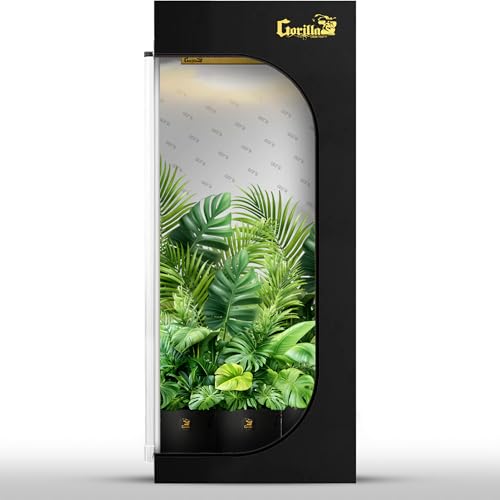
The Gorilla Grow Tent 2×2.5 is the tallest option in this guide. At 78 inches (6 feet 6 inches), it leaves more room for the reservoir, light, safe fixture distance, and plant canopy than the 48-inch and 55-inch models. The manufacturer lists a 300-pound hanging capacity, but you should still follow the current manual and distribute equipment across the frame.
- Best for: Full-cycle grows, fruiting plants, or anyone who needs maximum vertical space
- Canvas: 1680D High Density, 300-lb hang capacity
- Height: 78 inches (6’6″) · Footprint: 24 × 30 inches
What makes it stand out
Amazon price right now: $145.95
The published specifications list a 19mm all-steel interlocking frame, 1680D high-density canvas, and EZ View windows for checking plants without opening the main door. However, this research comparison does not independently verify frame flex or long-term fabric durability.
What makes it the most future-proof option in this comparison:
- 78-inch height gives compact fruiting plants like dwarf cherry tomatoes or dwarf peppers the vertical space they need to produce a real harvest.
- 300-pound hang capacity supports any combination of lights, fans, and filters you’re likely to add in an apartment setup.
- Compatible with 4-inch and 6-inch inline fans and standard carbon filters, meaning your ventilation equipment doesn’t need to be brand-specific.
- Diamond reflective interior also maximizes PAR output from any light source.
Who should skip it
The Gorilla has two apartment-specific limitations to weigh before buying. Its footprint is 24 by 30 inches, so it needs six more inches of floor depth than the 2×2 models. At 78 inches tall, it also needs additional clearance for top-mounted ducting. Measure the intended room and duct route rather than relying on a typical closet or ceiling size.
For herbs and leafy greens, compare the added height and wider footprint with the space you actually have. The 55-inch MARS HYDRO may be easier to place, while the Gorilla leaves more room for compact fruiting plants and hanging equipment.
Smaller Tents and Complete 2×2 Kits
Every tent above stands at least 48 inches tall on a 2×2 footprint or bigger. Two smaller VIVOSUN tents cover the shelf and countertop end of the range. Two kits cover the opposite case, when you want the tent, light and fan to arrive in one box. All four are research picks, and kit contents change, so read the current listing before you order.
VIVOSUN 30″ x 18″ x 36″ (Shelf-Height Tent)

Thirty inches wide, eighteen deep and three feet tall. This is the tent for a closet shelf or the top of a dresser, where a 2×2 will not fit. VIVOSUN builds it like the S224 above, with 600D canvas lined in reflective mylar, metal poles and tool-free corner connectors, and rates each top bar to hold up to 100 pounds. A low window lets heat out, and there are openings for a duct fan, a lamp and cords.
Three feet is the number to plan around. Subtract the jars, the light fixture and the 6 to 8 inches the light hangs above the leaves, and what remains suits lettuce and pruned herbs. Tomatoes need a taller tent.
VIVOSUN 30x18x36 tent on Amazon · Amazon price right now: $53.24
VIVOSUN 20″ x 14″ x 21″ (The Smallest Here)

Built around a countertop garden rather than a hanging light. VIVOSUN uses fiberglass poles, double-stitched 600D fabric and a diamond mylar lining with a sealed bottom, with zippered doors on each side that roll out of the way, a cable port and a mesh vent window.
The listing shows no hanging bar, so the light has to come from the garden inside. Before buying it for a particular unit, check that unit’s lamp at full height against the 21-inch ceiling.
VIVOSUN mini tent on Amazon · Amazon price right now: $29.99
MARS HYDRO 2×2 Kit with the TS600 Light

The kit version of the MARS HYDRO tent reviewed above, at the same 24 by 24 by 55 inches. In the box: the 100 W TS600 light with a 0 to 100% dimmer, a 4-inch inline fan with a speed controller, a carbon filter, 25 feet of ducting, trellis netting and three grow bags. Mars lists the fan at 205 CFM and 26.8 dB and the frame at up to 88 pounds, figures from the listing rather than a measurement.
A kit saves the matching work. The trade-off is taking Mars’s choice for every part, including a fan sized for exactly one tent.
MARS HYDRO kit on Amazon · Amazon price right now: $265.99
Spider Farmer 2×2 Kit with the GGS Controller

The automated option. Spider Farmer pairs a 2x2x5 ft tent in 1680D canvas with its SF1000D light, which draws 100 W and dims from 0 to 100%, a 4-inch 205 CFM inline fan with a carbon filter, and the GGS controller with temperature, humidity and light sensors that you run from the Spider Farmer app or by hand.
If the standalone Spider Farmer tent above sells out, and it was down to its last unit in early October, this kit is the way to stay with the brand.
Spider Farmer kit on Amazon · Amazon price right now: $269.99
Managing Heat and Noise Inside Your Tent
Buying the best small grow tent for apartment hydroponics is only the first step. A zipped tent can retain heat from the grow light and pumps. As reservoir temperature rises, dissolved oxygen falls and root problems become more likely. Keep the water in the site’s safe target of 65 to 75°F (18 to 24°C), then use the guide to managing small hydroponic system temperature if the reservoir keeps warming.
→ Small-scale hydroponics (University of Minnesota Extension)
→ University of New Hampshire Extension: Hydroponics at Home
Ventilation tactics
An exhaust fan gives warm air a controlled path out of the tent, while a lower intake replaces it with room air. Choose airflow for the fixture and tent volume, then monitor the crop’s air range and keep reservoir water at 65 to 75°F (18 to 24°C).
To set up an effective airflow system in a small tent:
- Mount a correctly sized inline exhaust fan at an upper duct port; a 4-inch model is a common starting size for a 2×2 tent.
- Attach a short run of flexible ducting to direct the hot air out of the closet or room.
- Open a bottom mesh vent to allow cool, fresh air to enter passively.
- Place a small clip-on oscillating fan inside to move air across the plant canopy.

If heat builds up, leaf tips may scorch. Should that happen, read the guide on grow light burn in small indoor setups to identify and fix the damage before it spreads further.
Muffling equipment noise
In addition, the inline exhaust fan and the water air pump are the two loudest items in your grow space. In an apartment, persistent vibration will travel through the floorboards and annoy downstairs neighbors. Hang your inline fan using bungee cords from the top crossbar rather than bolting it rigidly. Suspension absorbs motor vibration before it reaches the frame and floor.
When nutrient levels need topping off in a cramped, warm tent, plan your visits efficiently to limit how long you have the door open. Review the strategies for topping off small hydroponic reservoirs without spilling water onto the tent floor.
A Word From Sarah

Before leaving a newly assembled tent unattended, run the light and ventilation together and watch the reservoir temperature through a full light cycle. That dry run tells you whether the exhaust route can remove heat before plants are inside. Confirm the fan is running, the lower intake is open, and no duct has collapsed or slipped loose.
Check the undersides of leaves whenever you open the tent. A white full-spectrum panel can make spider mites and aphid clusters easier to notice. Early checks matter in an enclosed canopy because leaves sit close together and pests can move between plants quickly.
Frequently Asked Questions
How much noise does a small grow tent make?
The exhaust fan and air pump create most of the noise. Canvas thickness alone does not provide a reliable sound rating. For example, keep the air pump on a foam pad and suspend the inline fan with suitable straps to reduce vibration reaching the frame and floor.
Can a 2×2 tent fit in a standard apartment closet?
Most standard bedroom closets measure at least 24 inches deep, making a 24 by 24 inch footprint a natural fit. Measure your specific closet depth. In addition, confirm you have enough overhead clearance for exhaust ducting above the tent. Leave the closet door cracked or remove it to allow fresh air to reach the lower intake vents. Note that the Gorilla Grow Tent 2×2.5 has a 24 by 30 inch footprint and may not fit in shallower closets.
Do I need an exhaust fan for a small grow tent?
Yes. Plan an exhaust path whenever the tent is closed around a grow light. Without ventilation, heat can build inside the tent. As a result, reservoir water may warm, hold less dissolved oxygen, and increase the risk of root problems. A 4-inch inline fan is a common starting size for a 2×2 tent, but the correct airflow depends on the light, duct length, bends, filter, and room temperature.
What size grow light fits in a 2×2 tent?
Specifically, start with the fixture manufacturer’s flowering or vegetative coverage for a 24 by 24 inch footprint, then check the actual hanging height and intensity your crop needs. A dimmable fixture gives you more control during the seedling stage. Use the grow light calculator to compare the canopy distance and target instead of choosing from wattage alone.
Will a grow tent increase my power bill?
The tent itself uses no power. Add the actual wattage of the light, fan, pump, and any heater or humidifier, multiply by daily running hours, then apply your electricity rate. The light usually accounts for most of the total, while a fan that runs continuously still needs to be included.
Can I grow tall plants in a 48-inch tent?
It’s difficult. After hanging a grow light and placing a reservoir on the floor, you’re left with roughly 20 to 24 inches of vertical growing height. Stick to compact herbs or dwarf greens in any 48-inch tent. If you want to grow plants that reach 24 inches or taller, the MARS HYDRO at 55 inches or the Gorilla at 78 inches give you the room you need.
Does a grow tent mask the smell of hydroponic nutrients?
A tent can contain some odors, while a correctly sized carbon filter may reduce what leaves through the exhaust. However, it will not guarantee an odor-free room. Follow the filter manufacturer’s replacement guidance and investigate any strong sour or rotten smell because healthy nutrient solution should not need to be masked.
What is the best small grow tent for apartment hydroponics?
The AC Infinity CLOUDLAB 422 is the premium research pick for its listed 2000D canvas and controller mounting system. The VIVOSUN S224 is the simpler budget option. If headroom matters more than canvas thickness, the 55-inch MARS HYDRO gives seven more inches than the 48-inch models.
How often should I change the water in my hydroponic system inside the tent?
In a pumped or aerated reservoir, top off daily with plain pH-adjusted water to replace what the plants consume. Every 2 weeks, do a full water change: empty the reservoir, rinse it out, and refill with a fresh nutrient solution. In a tent the changes matter more, because algae and bacteria build up faster in a closed space that runs a few degrees warm.
Can I use a grow tent in a rented apartment without damaging the walls?
Yes. These freestanding tents do not require wall mounting, but they do need a level floor, safe cable routing, and a path for exhaust air. A removable window insert or an open doorway may work without drilling. Check the lease and avoid blocking a required exit, smoke detector, or ventilation grille.
AC Infinity or VIVOSUN: which one should you pick?
Pick the AC Infinity CLOUDLAB 422 when you want the thickest listed canvas here and dedicated controller routing. Pick the VIVOSUN S224 when a lighter, simpler build better suits your budget. The Spider Farmer 2×2 sits between them with listed 1680D canvas and a 120-pound frame rating. None of these choices carries a verified sound-reduction result, so choose the pump and fan separately and seal room-level light gaps where needed.
What is the smallest grow tent available?
Among the tents in this guide, VIVOSUN’s 20 by 14 by 21 inch tent, made to zip around a countertop garden. It has no hanging bar, so it suits a unit with its own light. One size up, VIVOSUN’s 30 by 18 by 36 inch tent takes a small hanging light and fits a closet shelf.
Is a short 32 to 36 inch tent tall enough for herbs and lettuce?
Usually, if you plan the height. Add up the jar or tray, the light fixture and the 6 to 8 inches the light hangs above leafy herbs, and what is left is the plant’s room. In a 36-inch tent that covers lettuce and pruned basil, but not fruiting crops.
Which is better, Gorilla or AC Infinity, and Mars Hydro or Spider Farmer?
Each pair solves a different problem. Gorilla’s 2×2.5 is the height pick at 78 inches with a 300-pound hang rating, while AC Infinity’s CLOUDLAB 422 is 48 inches with the thickest canvas here, 2000D. Between the other two, the Mars Hydro 2×2 gives 55 inches of height and the Spider Farmer 2×2 is 48 inches with steel poles rated to 120 pounds. Decide on height first and the choice usually makes itself.
Is there an all-in-one grow tent system for beginners?
Yes. Complete tent kits bundle a tent with some combination of a grow light, inline fan, filter, ducting, and timer. Still, check the exact component list, dimensions, controls, and warranty because bundles vary. Two examples are reviewed above: Mars Hydro’s 2×2 kit with the TS600 light and Spider Farmer’s 2×2 kit with the GGS controller. A separate build takes more planning but lets you match each part to your space. Start with the best hydroponic accessories for small systems and size the fixture with the grow light calculator.
What is a Spider Farmer tent?
Spider Farmer is a grow-equipment brand. The 2×2 model in this guide lists 1680D Oxford canvas, double-stitched zipper tracks, and a steel frame rated for 120 pounds. It is the mid-range research pick when those specifications matter more than the VIVOSUN’s lighter build, while the 48-inch height remains the main constraint.
Use these free calculators to dial in every part of your tent setup:
- pH & Nutrient Calculator: get the right nutrient mix and pH target for your herbs
- Grow Light Calculator: find the correct light height and intensity for your tent
- Seed-to-Harvest Calculator: estimate how long until your first cut based on crop and system
- Shopping List Builder: build a complete beginner kit matched to your budget and space
Happy growing! 🌿
Sarah, Urban Hydro Space

Sarah Whitfield is the founder of Urban Hydro Space and an indoor gardening enthusiast dedicated to helping apartment dwellers grow fresh herbs and vegetables in small spaces. She researches hydroponic systems carefully from real specifications and verified buyer feedback, and shares practical tips and honest, clearly labeled product picks to make indoor gardening accessible for beginners.


