⏳ 13 min read · Last updated: September 2026
Disclosure: This guide contains Amazon affiliate links. If you buy through them, I may earn a commission at no extra cost to you.
🔎 Research picks: I have not personally tested the trays in this guide. I chose them from published dimensions and intended uses. Check the current listing and measure your own setup before buying. How I choose products.
A hydroponic drip tray can save a shelf from routine top-off splashes. A leak tray for hydroponics needs a harder test: could it contain enough water if a reservoir cracks? Those are different jobs, and a thin silicone mat that handles the first may not handle the second.
For a small apartment, I would start by measuring the filled reservoir, the shelf, and the tray’s inside dimensions. Then choose a rigid pan if you want meaningful secondary containment. This guide shows the simple volume calculation, three specific research picks, and the checks that matter before a tray goes under a powered indoor garden.
🌱 The quick answer
- Routine drips: a raised-edge mat or shallow boot tray is easy to wipe, but do not assume it holds a full reservoir.
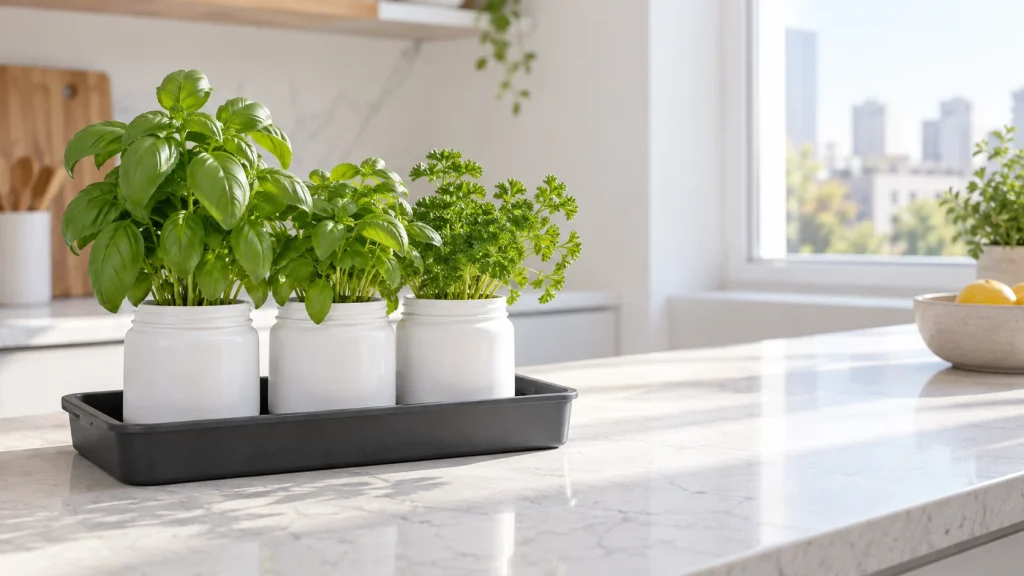
- Small jar setup: a rigid, unperforated tray with enough usable volume is the better starting point.
- Bucket on the floor: measure a deeper washer pan’s inside dimensions, then account for the bucket’s footprint and any drain opening.
- Every setup: keep plugs and power strips above the possible spill level. A tray is a backup, not permission to put electricity on the floor.
My practical pick is the Ottomanson 15 x 30-inch boot tray for a compact row of jars when spill-catching is the main job. However, if the goal is retaining a larger leak, compare a rigid pan such as the Camco washer pan against your actual reservoir volume. No product below has a verified hydroponic containment rating, so the sizing check still decides.
Which tray fits which job?
| Research pick | Best fit | Main limitation | Sarah’s rating | Amazon |
|---|---|---|---|---|
| Ottomanson 15 x 30 boot tray | Narrow shelf, small jars, routine drips | Shallow edge; inside capacity unverified | 4/5 for drip control | View listing $14.38 |
| MidWest 36-inch crate replacement pan | Wide floor or shelf footprint | About 1-inch exterior height; capacity unverified | 3/5 for leak containment | View listing $32.99 |
| Camco 21006 washer drain pan | Floor setup needing a larger pan | Drain fitting needs inspection; large footprint | 4/5 for sizing flexibility | View listing $34.60 |
Prices are pulled from Amazon and were last checked on 27 September 2026 at 4:21 am. Amazon prices change often, so check the listing before buying. These are Sarah’s editorial fit ratings, based on the stated dimensions and tray design, not customer reviews or a spill test. Prices and availability can change.
📏 Size a leak tray for hydroponics
Begin with the largest credible release. For a single jar, that may be the water in the jar. With several independent jars, decide whether you want to cover one broken jar or an unlikely multi-jar accident. A pumped system also has hoses and a reservoir, so think through what could siphon or drain before you choose a pan. Therefore, our DWC versus Kratky guide helps identify the extra tubing and pump parts in a powered setup.
Measure the tray’s flat inside length and width, not the advertised outer size. Also, measure the usable water height below the lowest rim or cutout, and leave some headroom. The theoretical volume in US gallons is inside length x inside width x usable water height / 231, with all measurements in inches. One US gallon is 231 cubic inches. This is a ceiling, not a promise: buckets and jars occupy space, curved corners reduce it, and a tilted shelf spills earlier.
Calculate a ceiling, then allow for the real setup
For example, a hypothetical 10 x 20-inch inside base filled to a 1-inch usable height has a geometric ceiling of 200 / 231 = 0.87 US gallon. It cannot be treated as a one-gallon backup, because there is no allowance for the container sitting in it or for slosh. Likewise, a 24 x 24-inch inside base with 1.5 inches of usable height has a ceiling of about 3.74 gallons before those deductions. The old draft called the first case 0.5 gallon without stating a method; the revised figures show the math and its limit.
Do not estimate depth from a product photo. For instance, the Ottomanson listing describes a 1.2-inch raised edge, while the MidWest pan is often listed around 1 inch high. Those are outside specifications, not measured usable water depths. A pan can look large and still overflow quickly under a two-gallon jar. If the inside dimensions or drain condition are unclear, ask the seller or choose a larger pan rather than claiming full containment.
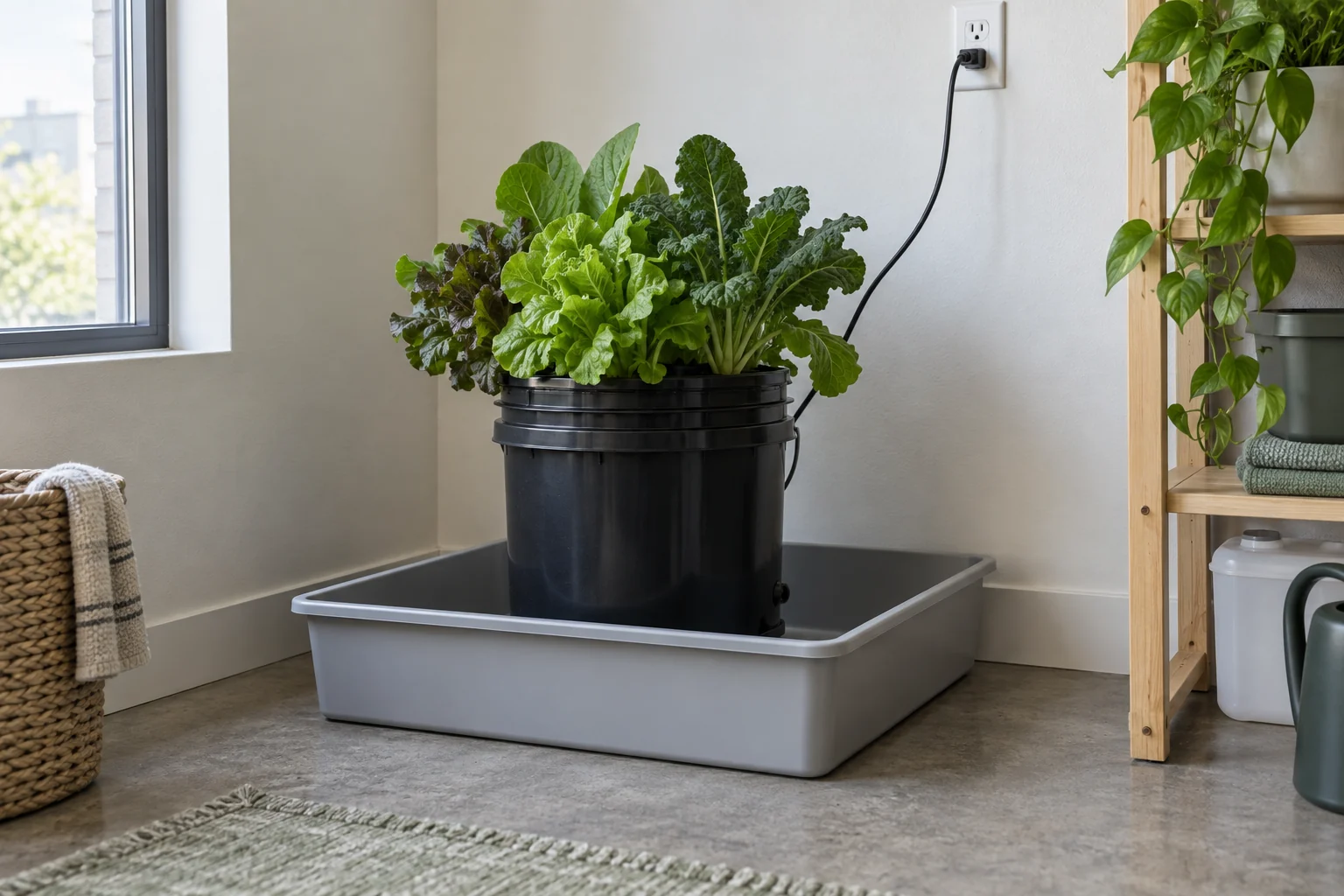
Check the support under the tray
A flexible tray on open wire shelving may sag between bars. Therefore, put it on a flat, load-rated surface that supports its entire base, and keep the tray level. A tray hanging over a shelf edge can tip when a heavy reservoir shifts. For renters, our no-drill setup guide covers stable, movable layouts; the closet garden guide addresses tight floor space.
Place cords so water cannot run along them to an outlet, and make a drip loop where the equipment instructions permit. Also, keep electrical connections above the rim and off the floor. If the shelf is narrow, compare the footprint with your hydroponic shopping list before ordering. A slightly larger pan is useless if it cannot sit flat.
🔎 Three rigid-pan research picks
Ottomanson 15 x 30-inch boot tray: small jars and daily splashes
The Ottomanson boot tray is a sensible first layer under a line of Kratky jars or a small seed-starting station. Its stated 15 x 30-inch footprint is narrow enough for some shelves, and its raised edge makes wipe-up easier. However, its advertised 1.2-inch edge does not establish how much water it will retain under the jars. Measure the available shelf width and the pan’s actual interior before relying on it for a crack.

Check the Ottomanson tray on Amazon. Current Amazon price: $14.38.
Choose it when: the system uses small individual vessels and your primary problem is drips, condensation, or a small accidental splash. For a large jar, verify the volume first. If you are still choosing vessels, the mason jar net-cup guide explains the jar hardware that fits above the tray.
MidWest 36-inch crate pan: a broad footprint with a low wall
MidWest sells replacement crate pans for its own crate lines, including the 36-inch range. The listed 36-inch pan measures 35.5 x 23.8 x 1 inches; confirm the actual inside dimensions because crate sizes differ. Therefore, that broad footprint can catch drips from multiple containers, but a low wall is the constraint. I would use it as a wide splash pan only unless an inside-volume measurement proves adequate for the reservoir above it.
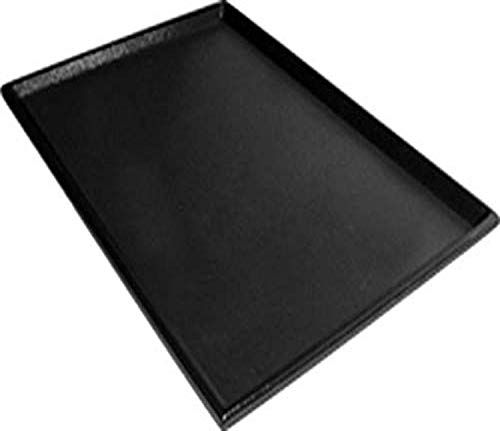
Check the MidWest pan on Amazon. Current Amazon price: $32.99.
Choose it when: you need width more than height, and can support the whole base. For a shelf with separate jars, our shared grow-light layout guide can help space the containers without crowding the rim.
Camco 21006 washer pan: more room for a floor setup
The Camco 21006 is an apartment-size washer pan listed at 28 x 30 inches outside and about 25 x 27 inches inside. Its advertised 2 7/16-inch height is an outside dimension, not a measured usable water depth. The included drain fitting is for a washing machine installation. In a hydroponic setup without a plumbed drain, a hole or poorly seated fitting defeats containment. Confirm whether the delivered pan is uncut, then inspect the actual fitting area before filling anything above it.
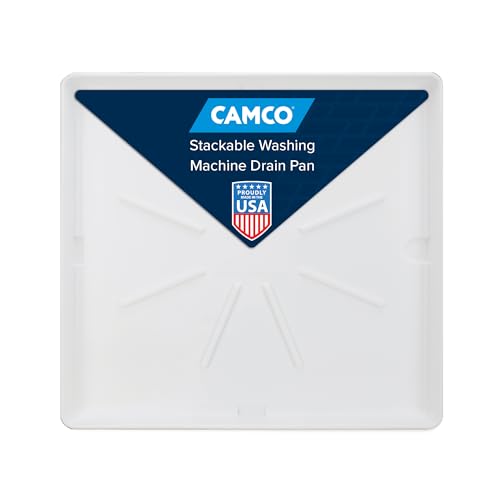
Check the Camco 21006 on Amazon. Current Amazon price: $34.60.
The Camco pan has a larger geometric ceiling than a boot tray, but I would still calculate the usable volume with the bucket inside it. Also, a broad pan can make a bucket awkward to reach in a tiny room. Review the small-apartment water-change routine before committing to a floor footprint, since every full change means lifting the bucket out of the pan.
🧽 When is a silicone mat enough?
A raised-edge silicone mat is useful under a countertop garden when the expected mess is a few drips during top-offs. It also wipes clean and is easy to move. Yet flexible sides can fold as you lift the mat, and the lip is usually shallow. Treat it as a work-surface protector unless its inside capacity has been measured for your reservoir. A flat mat with no raised edge is not secondary containment at all.
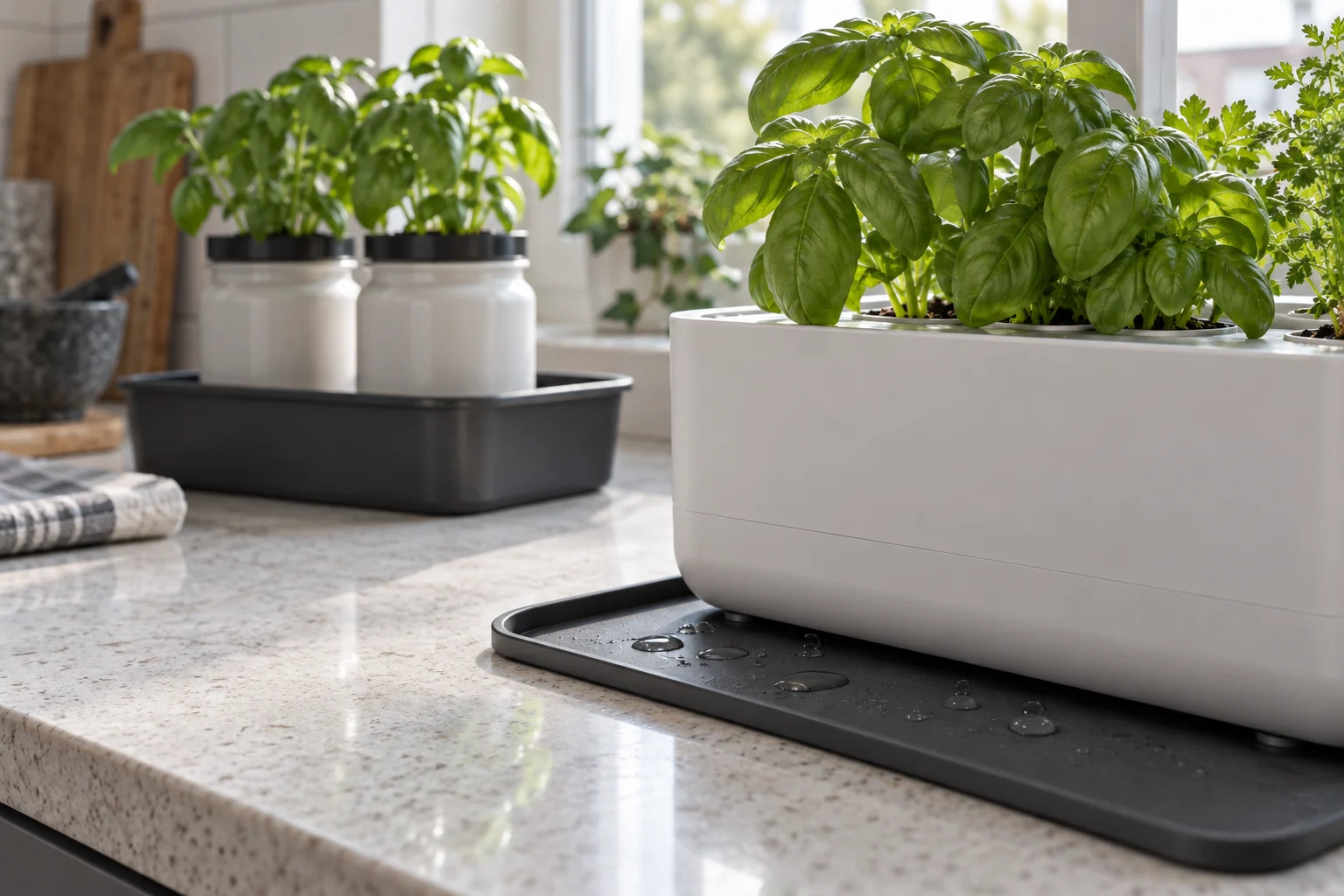
Keep the device’s ventilation clear, and check whether the mat changes the way the base sits. For a powered countertop unit, the countertop system comparison shows how different footprints affect a small kitchen. If algae appears in exposed water, see the jar algae guide; a tray only catches water, it does not fix the cause.
A nursery propagation tray can be another budget drip catcher, provided it is the no-drain-hole version and does not flex under the load. The seed-starting kit guide explains the tray, plug, and dome choices. Seedling trays and heat mats have different jobs; do not assume the heat mat itself is a spill barrier.
🛠️ Set up the pan, then check it
- Measure the real setup. Record the reservoir’s maximum fill, vessel footprint, support surface, and any hose route. A beginner hydroponics setup starts with a modest reservoir that is easier to handle.
- Inspect the empty pan. Look for drain holes, cracks, raised seams, and a warped base. Do this before putting it on carpet or wood.
- Support and level it. The pan should rest fully on a firm surface. Keep the reservoir away from the rim so a bump cannot tip it outward.
- Plan safe access. You should be able to spot pooled liquid and remove the reservoir for a system cleaning without dragging the pan.
- Recheck after top-offs. Wipe drips promptly and investigate recurring water. A tray full of old nutrient solution hides a slow leak.
When you mix or top off nutrients, the beginner feeding guide explains what goes into the reservoir. Use the pH and nutrient calculator for the solution, and the seed-to-harvest calculator for crop timing. Neither changes the pan’s physical capacity.
⚠️ If water escapes the pan
If water approaches a cord, power strip, outlet, or pump, keep clear of the wet area and electrical equipment. Only disconnect power from a dry, safe location; otherwise call for qualified help. Do not touch a breaker with wet hands or while standing on a wet floor. The Electrical Safety Foundation International advises keeping wet electrical equipment off until it has been assessed.
Once the electrical hazard is controlled, stop the water source, contain the spill with absorbent towels, and dry the affected surface. If liquid reached flooring, walls, a neighbor’s space, or wiring, contact the property manager and an appropriate professional promptly. A tray reduces the chance of a mess; it cannot guarantee protection of a rental deposit. Also, investigate the failed container or hose before you restart the garden.
💬 A word from Sarah
The useful question is not “How deep should every tray be?” It is “How much water could reach this particular tray, and how much room remains after the container takes up space?” That keeps a cheap drip catcher from being mistaken for a bucket-sized backup. If the math is close, choose a larger rigid pan or reduce the amount of water stored above a vulnerable floor.
❓ Frequently asked questions
Do I need a tray under a hydroponic jar?
A tray is useful for top-off drips and condensation. To cover a broken jar, measure the water in the jar and the tray’s usable capacity with the jar footprint accounted for.
What is the difference between a drip mat and a containment pan?
A drip mat protects a surface from small splashes. A containment pan needs rigid, continuous sides and enough measured usable volume for the leak you are planning around.
How do I calculate tray capacity in gallons?
Multiply the flat inside length, inside width, and usable water height in inches, then divide by 231. That is a theoretical ceiling; subtract space occupied by containers and allow headroom.
Will a 10 x 20-inch tray hold one gallon?
Not if its usable depth is only 1 inch: the geometric ceiling is about 0.87 US gallon before a jar displaces water. Check the actual inside measurements rather than the outside label.
Can I put a five-gallon bucket in a washer pan?
You can use a washer pan as a candidate, but first check its uncut drain area, inside dimensions, bucket displacement, support surface, and the amount of liquid that could escape. Do not assume it holds five gallons.
Are silicone mats suitable for a countertop garden?
They can catch routine drips if they have a raised edge and do not block ventilation or destabilize the unit. A shallow flexible mat is not a verified full-reservoir backup.
Can I use a crate replacement pan on wire shelving?
Only if the base is fully supported and level. Open wires can let a flexible pan sag, reducing usable depth and making it harder to remove safely.
Does a tray prevent condensation?
No. It may catch the water that drips from a cold reservoir, but it does not stop moisture forming on the outside of that reservoir.
How should I clean nutrient residue from a pan?
Move the reservoirs safely, wipe up standing liquid, wash the pan with mild dish soap and water, rinse it, and dry it before putting the setup back. Inspect for cracks while it is empty.
What should I do if water reaches a power strip?
Stay clear of the wet area and equipment. Disconnect power only from a dry, safe location; otherwise get qualified help. Do not use water-damaged electrical equipment until a qualified person has assessed it.
Happy growing! 🌿
Sarah, Urban Hydro Space

Sarah Whitfield is the founder of Urban Hydro Space and an indoor gardening enthusiast dedicated to helping apartment dwellers grow fresh herbs and vegetables in small spaces. She researches hydroponic systems carefully from real specifications and verified buyer feedback, and shares practical tips and honest, clearly labeled product picks to make indoor gardening accessible for beginners.