⏳ 19 min read · Last updated: September 2026
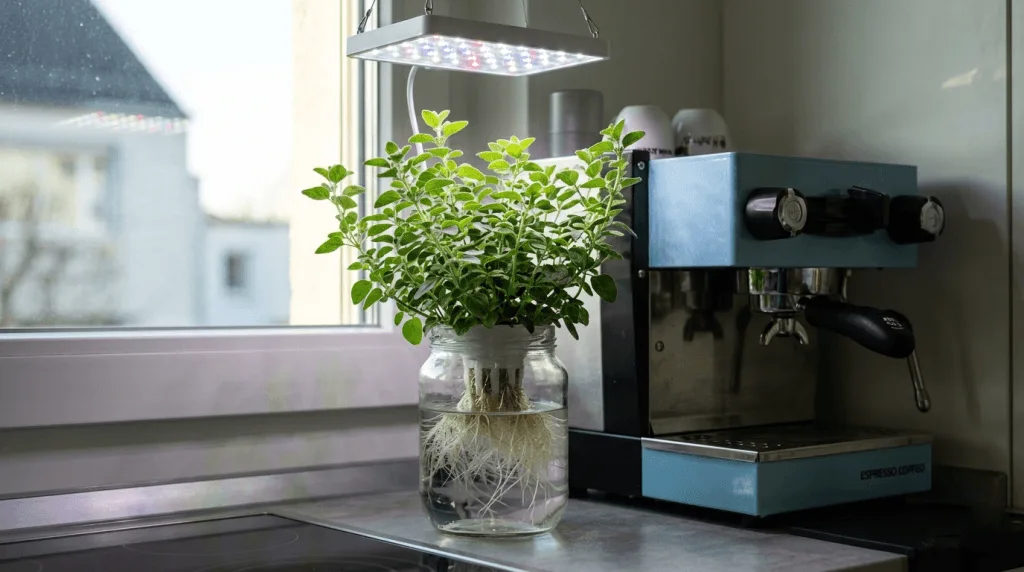
Getting hydroponic oregano indoors right took me three failed attempts and a lot of frustration. I first brought a soil-potted oregano home from a nursery, and it withered within two weeks in my tiny kitchen. Poor light and still air stressed it beyond recovery. Then I moved a fresh stem cutting into a jar of nutrient water, and the roots exploded into a healthy white mass. Now I keep a steady supply growing next to the coffee maker.
A soil-free system is cleaner and far more predictable for apartment living. This Mediterranean herb wants stable conditions and controlled feeding, so dropping the dirt removes the mess and the soil-borne gnats at once. If you have not set up an indoor garden yet, start with the complete apartment hydroponics guide for beginners before the crop-specific detail.
Hang the light at 4 to 6 inches, closer than the 6 to 8 that suits basil and lettuce. Then feed lean at EC 1.4 to 1.8. Oregano is woody, so it needs intensity rather than food to build essential oils.
Get either wrong and you grow large, pale, watery leaves with no scent. That is the single most common complaint about apartment oregano, and it is never the growing method’s fault.
🎚️ The Two Levers You Actually Control
Light intensity builds the oils. Nutrient strength decides whether the plant makes leaves or watery bulk. Everything else here is maintenance around those two.
- Run EC 1.4 to 1.8 once mature, though hold seedlings at 1.0 to 1.2 first.
- The Kratky method is the quietest and cheapest way to grow oregano in a flat.
- Keep the light 4 to 6 inches above the canopy, closer than any leafy herb.
- Hold water at 65 to 75°F (18 to 24°C), since warmer water starves roots of oxygen.
- Prune the top early and often, otherwise stems turn woody and production stalls.
- Top off daily with plain water, then run a full reservoir change every 2 weeks.
📐 Hydroponic Oregano Indoors At A Glance
Every number you need sits in the table below. Pin it near your shelf, because most oregano problems trace back to one of these drifting out of range.
- First time growing anything → basil or mint, since both forgive mistakes
- Comfortable with a mason jar already → oregano or thyme, both intermediate
- Want the fastest possible harvest → lettuce, ready in 4 to 5 weeks
- Hydroponic Oregano Indoors At A Glance
- Choosing The Right Oregano Variety
- Choosing The Right System For Small Spaces
- Starting From Seed Or Cutting
- Setting Up Lighting And Temperature
- Mixing Nutrients And Managing pH
- Routine Maintenance And Water Changes
- Pruning And Harvesting Techniques
- Troubleshooting Yellow Leaves And Roots
- A Word From Sarah
- Frequently Asked Questions
🌿 Choosing The Right Oregano Variety
This is the decision most guides skip, and it matters more than your equipment. Seed packets labelled simply “oregano” are usually Origanum vulgare, common oregano, which grows fast and tastes of almost nothing. Growers then blame the light or the nutrients. In truth they bought the flavour problem at the shop.
Ask for Greek oregano instead, meaning Origanum vulgare subsp. hirtum. It carries far more carvacrol, the compound behind that sharp pizza-herb bite, and it handles indoor conditions perfectly well. Italian oregano is a marjoram cross sitting between the two, milder but sweeter, which some people prefer for tomato dishes.
Whichever you pick, every variety runs on the same numbers above, so variety changes your flavour ceiling rather than your setup. For how oregano compares to the rest of a small shelf, see the guide to the 7 best herbs for small hydroponics.
🧰 Choosing The Right System For Small Spaces
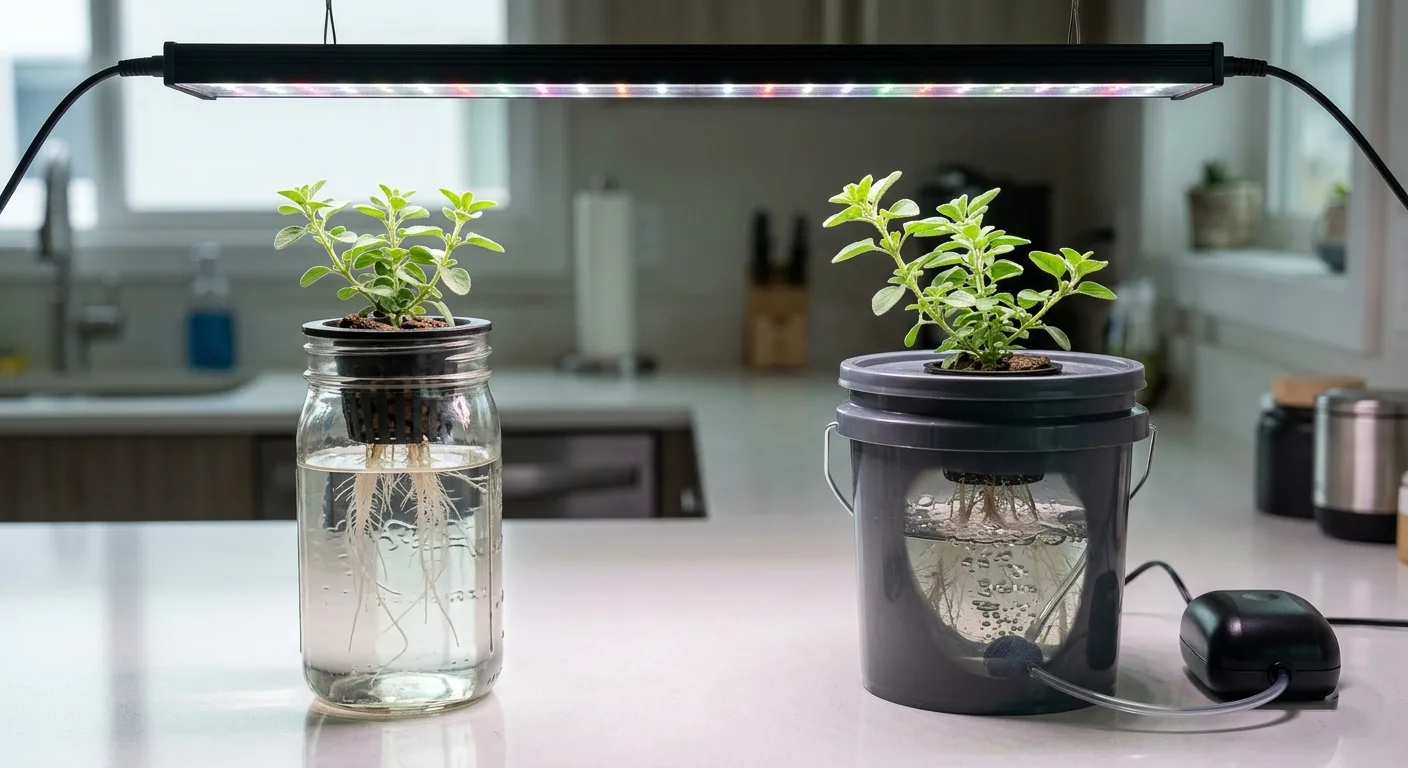
Your apartment size dictates the setup, and you need nothing large or complicated for a good yield. Keeping things small usually means fewer headaches and faster troubleshooting when something does go wrong.
There are three realistic builds:
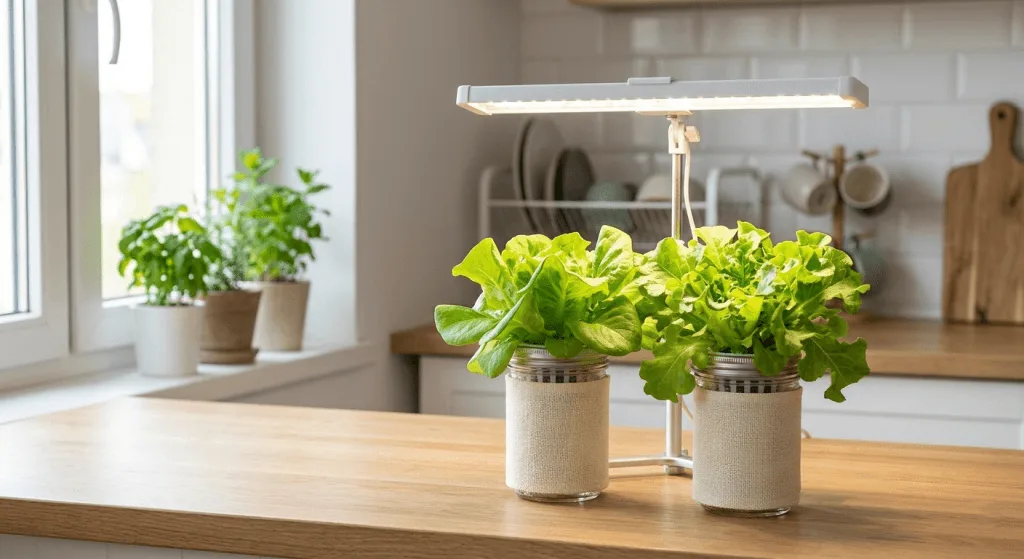
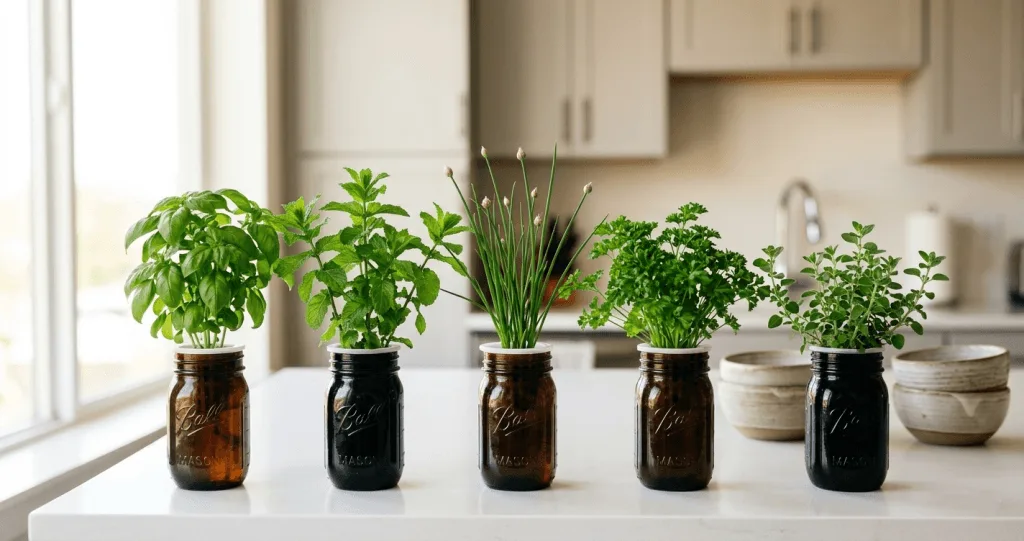
- A passive Kratky mason jar under a dedicated LED panel
- Small Deep Water Culture totes with an air pump, since that grows bushier plants
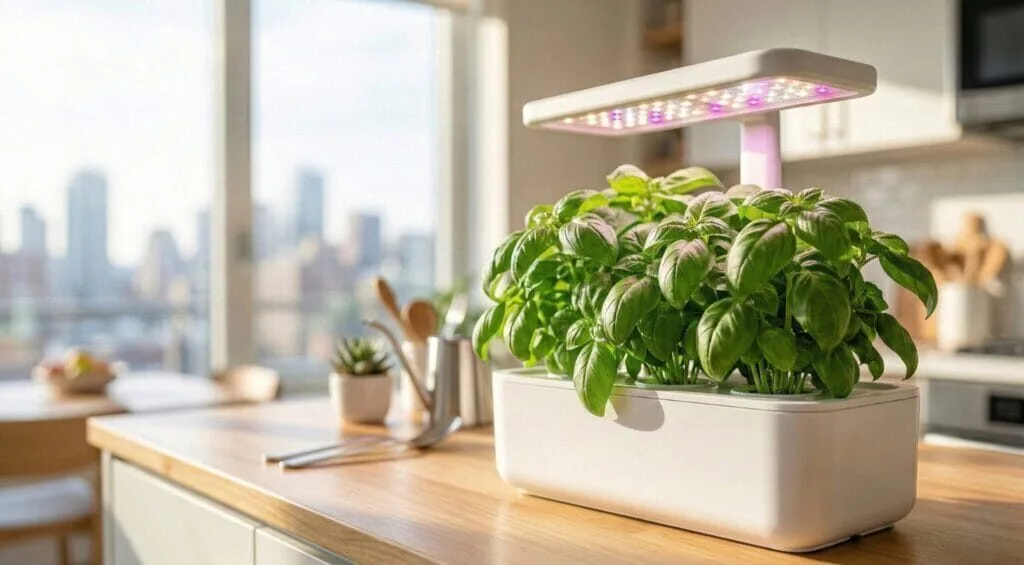
- Pre-built smart gardens, though the pods cost more per grow
Each works, although starting low-tech leaves you fewer variables to manage while you learn the crop.
🧪 Starting With The Kratky Method
The Kratky method suits apartment dwellers best, since it needs no electricity, no pump, and makes no noise. Fill a light-proof jar with nutrient water, drop a seedling into a net cup, then let the plant work. As it drinks, the waterline falls and exposes the upper roots to air so they can breathe.
Because oregano drinks slowly, a wide-mouth quart jar lasts weeks between refills. Net cup and lid fit varies between brands, though, so the roundup of mason jar net cups and lids for Kratky saves a return. The differences between the two methods are covered in the DWC vs Kratky comparison for apartment beginners, and the shopping list builder works out the rest of the gear.
🌊 Moving Up To Deep Water Culture
If you want large plants to dry for winter, you may outgrow a mason jar. A small DWC system pushes oxygen straight into the water through a pump and air stone, so growth speeds up and roots tolerate the top of the EC range without stress.
DWC needs power and hums while it runs, though. Rest the pump on a folded silicone mat to absorb the vibration, since structure-borne noise is where most of the sound comes from rather than the motor itself. Choosing a quiet air pump for apartment DWC makes a real difference in an open-plan studio, and quieting a pump you already own covers what to do if you have one humming already.
🌱 Starting From Seed Or Cutting
You have two routes in, and they differ by about a month. Seed is cheap and gives you variety control, whereas a cutting skips the slowest stage entirely.
📦 Starting Oregano From Seed
Oregano seed is dust-fine and needs light to germinate, so surface sow rather than burying it. Press two or three seeds onto a damp rockwool cube, leave them uncovered, then expect 7 to 14 days before anything appears. That slow start is normal and catches most beginners out.
Pre-soak the rockwool at pH 5.5 first, deliberately below range, since the cube is alkaline out of the bag and pulls the number up as it absorbs. Hold seedlings at EC 1.0 to 1.2 until the first true leaves open, then work up toward 1.6. Thin to the strongest single seedling once they reach an inch, because crowded oregano competes with itself. The full process is in starting hydroponic seeds in rockwool without damping off.
✂️ Rooting A Grocery Store Cutting
This is the faster route by a wide margin. Take a firm green stem about four inches long, strip the lower leaves, then stand the bare stem in plain water on a bright sill. Roots usually show within 10 to 14 days.
Once those roots reach roughly two inches, move the cutting into a net cup at EC 1.0 and raise the strength gradually. A rooted cutting reaches a usable harvest in about 3 to 4 weeks against 8 to 10 from seed. Track either timeline with the seed to harvest calculator, which shows both windows side by side.
☀️ Setting Up Lighting And Temperature For Oregano
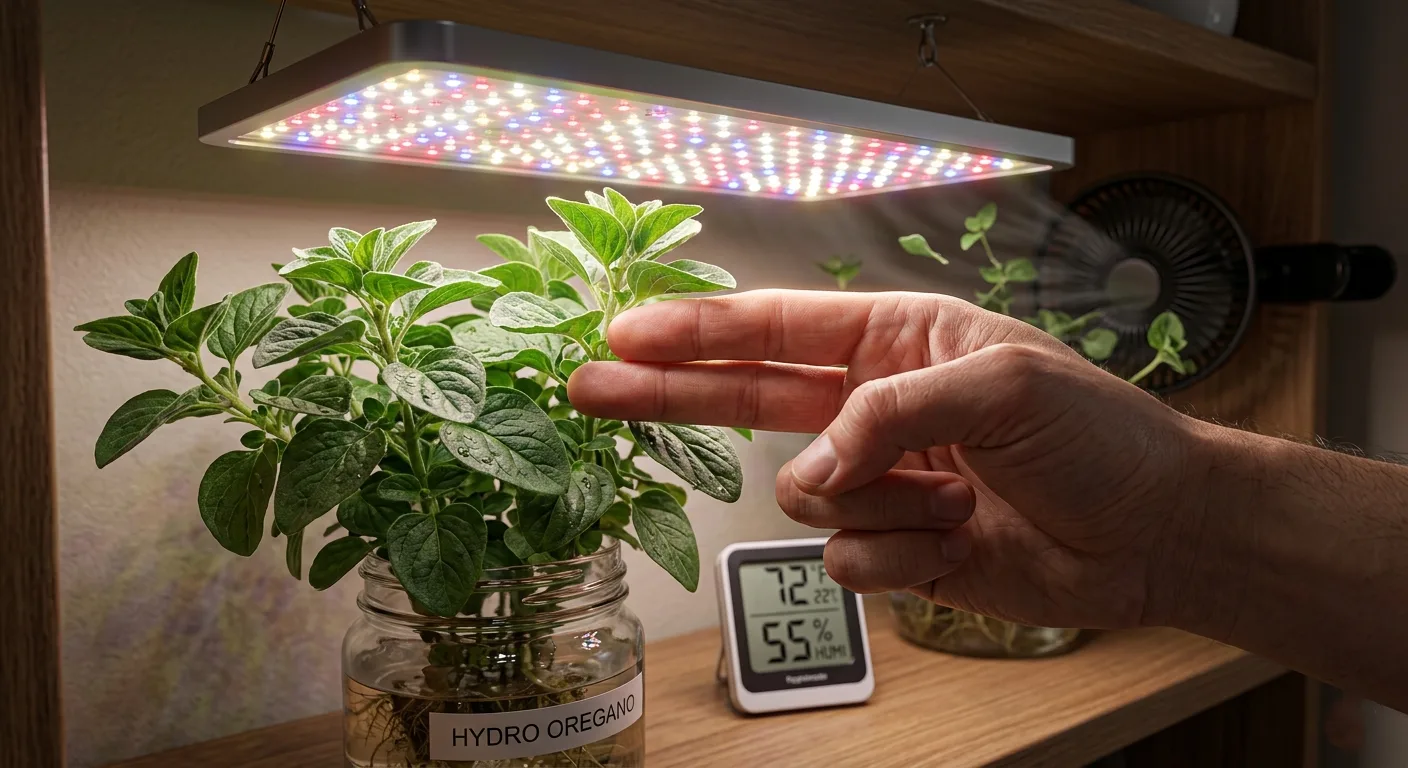
Oregano comes from the sunny Mediterranean, so it wants intense light to build essential oils. A dim kitchen corner will not do, however. Light is the single biggest factor separating pungent oregano from the stringy tasteless kind, and why hydroponic herbs taste weak covers the mechanism behind that link. For the settings that push flavour further, see why hydroponic herbs taste weak and how to fix it.
💡 Hanging Your Grow Lights At The Right Distance
Oregano needs a stronger overhead source than leafy greens do. Set the cycle to 14 hours on, 10 hours off from the day the plant goes in, and put the fixture on a timer so forgetting becomes impossible. The roundup of compact timers for apartment grow lights lists the quietest options, and the light schedule guide for 9-to-5 growers covers which windows still deliver the full 14 hours.
Then position the light in four steps:
- First mount the panel or clip-on light above the canopy.
- Set the distance to 4 to 6 inches above the highest leaves, closer than most herbs need.
- Plug the fixture into the timer, then set it for 14 hours on.
- Finally, check the top leaves after three days for crisping or bleaching.
Pale or scorched tips usually mean grow light burn, so raise the panel an inch and watch the new growth for 48 hours. Exact heights by herb type are in the grow light distance guide, while the grow light calculator matches wattage to shelf size. Budget panels are compared in the grow lights under $50 roundup.
If oregano shares a shelf with taller herbs, you have a height conflict rather than a wattage one, since basil wants 6 to 8 inches while oregano wants 4 to 6. The guide on running one grow light over multiple plants explains how to zone the coverage, and the two tier grow shelf height guide covers stacking two levels.
🌡️ Managing Reservoir Temperatures
Air temperature matters, though water temperature is the critical one. Hold the root zone at 65 to 75°F (18 to 24°C). Once water climbs past 75°F it loses the ability to hold dissolved oxygen, so anaerobic bacteria multiply quickly.
Keep the jar away from heating vents, radiators, and the warm air coming off refrigerator coils. If your flat runs hot in summer, small hydroponic system temperature problems and fixes covers cooling that works without a chiller. Stand a frozen bottle against the outside of the jar rather than dropping ice in, since a sudden swing shocks the roots and fades within the hour.
⚗️ Mixing Nutrients And Managing pH For Hydroponic Oregano
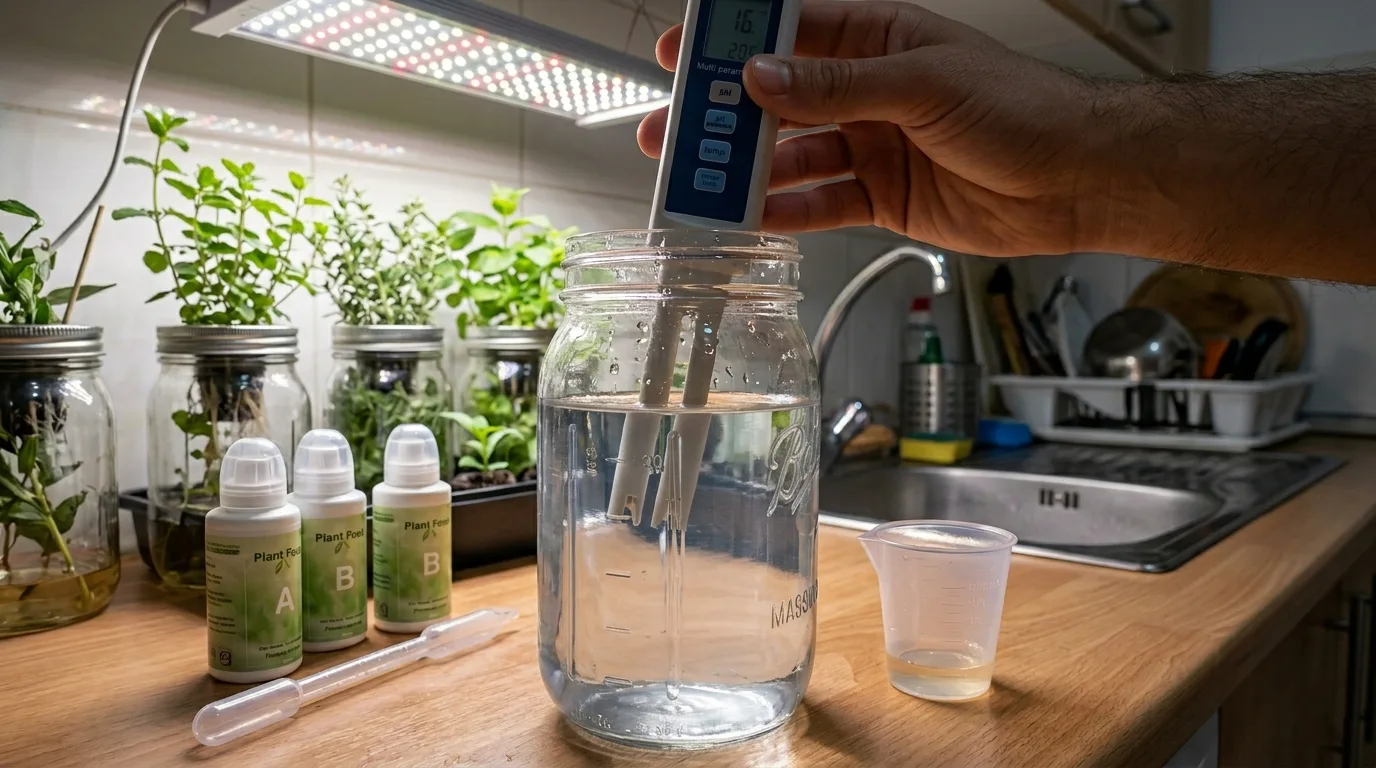
Soil buffers small mistakes. In water you are the buffer, so you measure the liquid and check acidity to be sure the plant can absorb what is in there. If the numbers drift, roots hit lockout while the jar still looks full of food.
Oregano is a light feeder, wanting more than lettuce but far less than a fruiting crop. For how it compares across the whole shelf, the EC and nutrient strength guide for apartment herbs is the reference to bookmark.
💧 Hitting The Target EC For Oregano
Electrical conductivity measures how strong your solution is, and for oregano the band is EC 1.4 to 1.8. Never use potting soil fertilizer in a hydroponic jar, since it depends on soil microbes to break down, clogs your probe, and starves the roots anyway. Use a hydroponic liquid blend instead, because it dissolves cleanly.
- First fill the container with room-temperature tap or filtered water.
- Add a calcium-magnesium supplement if you use reverse osmosis water, then stir.
- Then add nutrients according to the bottle directions.
- Test with a calibrated meter, then dilute with plain water if you read above 1.6.
The pH and nutrient calculator works out millilitres for your jar size, and how to mix two-part nutrients in small jars covers the order that stops concentrates reacting. Reading either number reliably needs a decent instrument, so the EC and TDS meter guide covers which models stay accurate at jar volumes. Whether you need CalMag at all is covered in do you need Cal-Mag in a small system.
🌀 Managing pH Drift In A Small Jar
Oregano wants a slightly acidic reservoir at pH 5.5 to 6.5. Above 6.5 it can no longer take up iron, which shows as yellowing at the top of the plant. In small systems the number moves as the plant drinks and leaves salts behind, so it drifts faster than in a large tank.
So test every few days with a digital pen. To lower it, add pH Down one diluted drop at a time, stir well, then wait ten minutes before testing again. If it keeps climbing back after every correction, why hydroponic pH keeps drifting in small systems explains the underlying causes, and the beginner pH meter guide covers which pens hold calibration. If your tap water reads high before you add anything, using tap water for hydroponics explains how to adjust.
🗓️ Routine Maintenance And Water Changes
This is not a set-and-forget hobby, although the daily tasks shrink to almost nothing once the routine sticks. Keeping the reservoir balanced prevents the algae blooms and bacterial infections that take out a plant overnight.
The golden rule: top off daily with plain pH-adjusted water, then run a full reservoir change every 2 weeks. That rhythm flushes unused salts and refreshes the oxygen supply, and how often to change hydroponic water explains why the fortnightly rule holds even when EC reads fine.
🧫 How To Top Off Without Spiking EC
Oregano drinks water faster than it eats nutrients. Therefore topping off with more nutrient solution spikes the salt concentration and burns roots within days. Use plain water only, and topping off without messing up your nutrients covers the daily process.
- Keep a jug of plain pH-balanced water under the sink so it stays at room temperature
- Pour slowly down the jar wall, since splashing wets the dry upper roots
- Maintain a 1 to 2 inch air gap between the net cup and the waterline at all times
That air gap is critical in a Kratky jar. Drown those upper roots and the plant suffocates, with rot following within days.
🧼 Cleaning The Reservoir Every Two Weeks
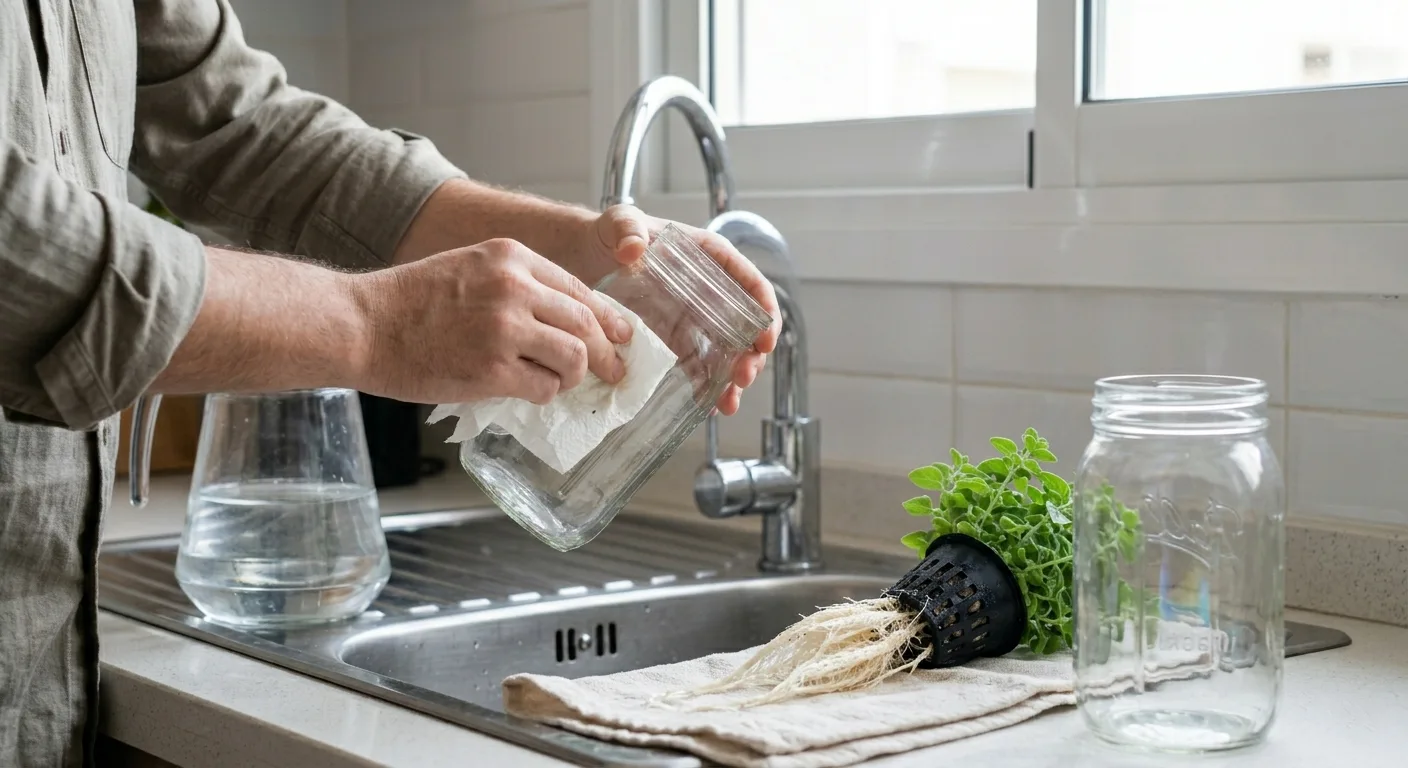
Every fortnight, dump the old solution and scrub the container. Residue builds on the jar walls, and ignoring it invites bacterial growth. In a small kitchen the whole job takes under ten minutes at the sink.
- Lift the plant and net cup out, resting it on an empty mug to protect the roots.
- Next, drain the old solution away.
- Then wipe the inside with hot water and a clean paper towel.
- Mix fresh at EC 1.4 to 1.8, check pH, then pour it into the clean jar.
- Replace the plant, then confirm the water touches the lower roots while the air gap remains.
Never use bleach on a routine cycle, because it leaves residue unless the rinse is perfect and corrodes fittings over time. Diluted 3% hydrogen peroxide followed by plain water does the job without harming roots, and using hydrogen peroxide safely gives the exact dilutions. The full walkthrough on cleaning a small hydroponic system covers deeper cleans, while reusing hydroponic nutrient solution covers what to do with the old liquid.
| Task | Frequency | Action required |
|---|---|---|
| Check water level | Daily | Top off with plain water only, never nutrients |
| Test pH | Twice a week | Adjust back to 5.5 to 6.5 if it drifted |
| Test EC | Weekly | Dilute with plain water when above 1.6 |
| Full reservoir change | Every 2 weeks | Drain, wipe the jar, then mix fresh |
| Prune growing tips | Every 2 to 3 weeks | Cut above a node, though never past a third |
✂️ Pruning And Harvesting Hydroponic Oregano
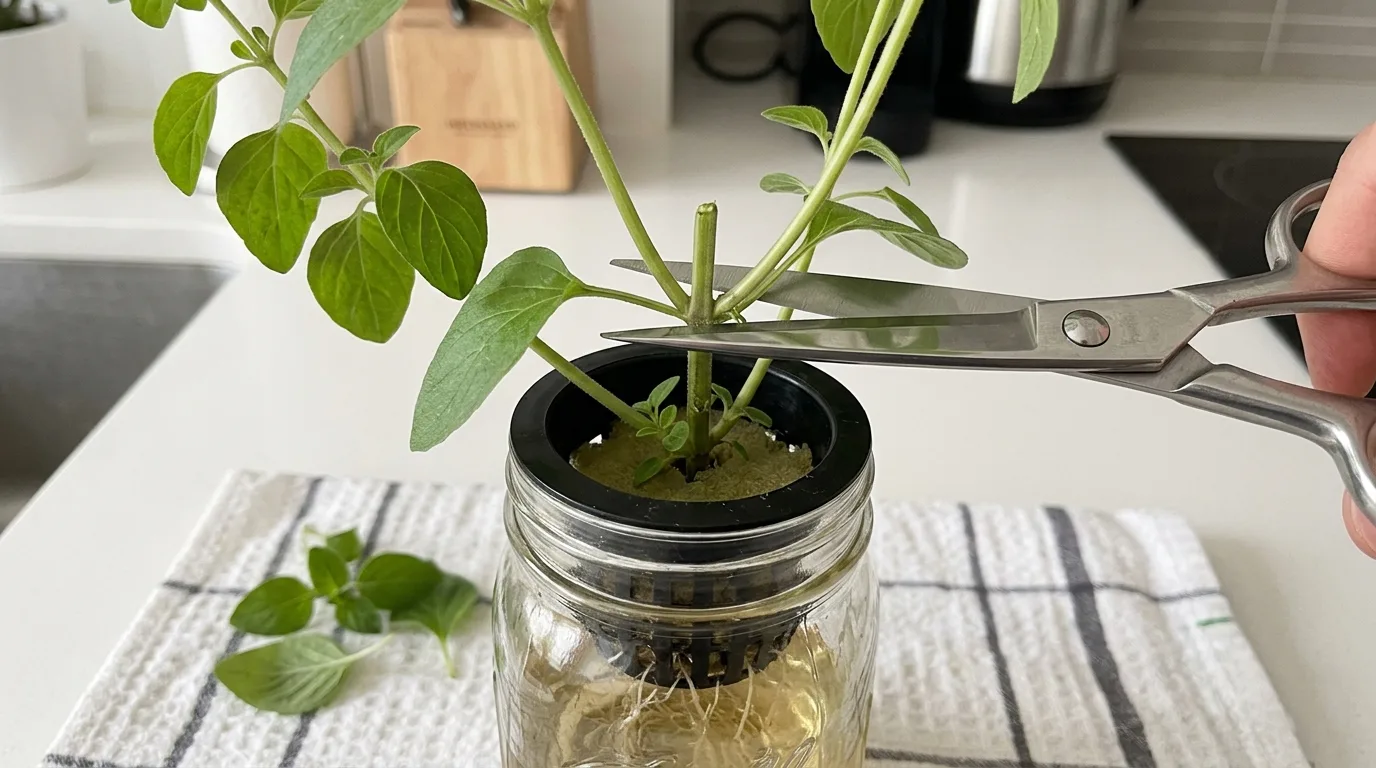
Oregano grows vigorously once the roots establish. Let it run and the stems turn thick, brown, and woody, which produces smaller tougher leaves and slows the whole plant. Regular haircuts force it to split and spread wider instead of climbing.
🔪 Making The First Cut
Begin harvesting once the plant reaches 6 to 8 inches tall. Then find a node where two small leaves emerge from the main stem, and snip just above it with clean scissors.
When you make that cut the plant redirects energy into those two tiny leaves, turning them into two new branches. This topping technique builds a dense canopy, which is exactly what you want when shelf space is tight. The same node logic applies across the shelf, and how to prune hydroponic basil and herbs covers it in more detail.
🍂 Harvesting Without Stunting The Plant
Oregano enjoys a trim, yet taking too much at once sends it into shock. Never remove more than one-third in a single session. If you need a large amount for cooking, plan ahead and take smaller harvests across several weeks instead.
Dry the leaves on a paper towel, or hang small bunches somewhere with moving air. Dried oregano actually tastes stronger than fresh, since the volatile oils concentrate as the water leaves.
🌸 What To Do When It Flowers
Sooner or later your oregano pushes small white or pink buds. That is the plant switching from leaf production to seed, and leaf flavour drops sharply once it commits. So pinch the buds off as soon as you see them.
Frequent pruning delays flowering considerably, which is another reason to keep cutting even when you do not need the herb. A well-managed indoor plant produces for a year or more before starting fresh is worth it.
🩹 Troubleshooting Yellow Leaves And Root Problems
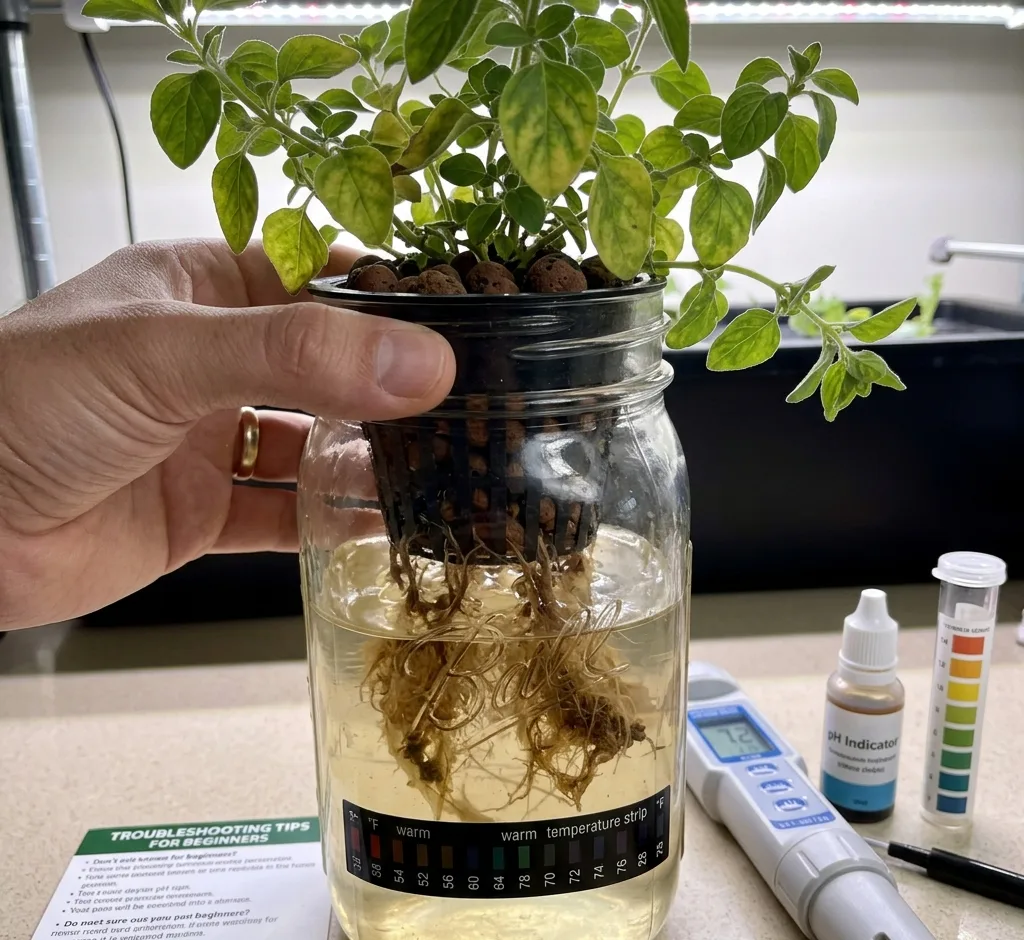
Even with careful maintenance, oregano shows stress from time to time. Catching it early makes recovery quick, and in a water-based system root health is always the first thing to check when leaves look unhappy.
🔎 Quick diagnosis table
| What you see | Most likely cause | Check this first |
|---|---|---|
| Pale yellow top leaves | Iron lockout, therefore high pH | Test water, then drop to 5.5 to 6.5 |
| Brown slimy roots, swampy smell | Root rot, because the water ran warm | Confirm the water sits below 75°F (24°C) |
| Crispy brown leaf tips | Nutrient burn, so EC is too high | Dilute the reservoir with plain water |
| Leggy, pale, flavourless growth | Not enough light intensity | Lower the panel to 4 to 6 inches |
| White dusty patches on leaves | Powdery mildew, since the air is still | Add a small fan near the shelf |
🔍 Fixing Yellowing Leaves
When top leaves turn a sickly pale yellow, do not reach for more fertilizer. This is almost always pH instead. Once the number drifts to 7.0 or higher the plant cannot absorb iron no matter how much sits in the water.
Therefore check your reading immediately. If it runs high, add a few diluted drops of pH Down, stir, then wait ten minutes before retesting. Colour then returns to the new growth over the following days. For every other cause of yellowing, why apartment hydroponic plants turn yellow walks the full diagnosis.
🩹 Preventing And Treating Root Slime
Healthy oregano roots are firm and off-white. Brown slimy strands with a swampy smell mean rot, caused when water creeps above 75°F and oxygen falls.
- First remove the plant, then trim the worst dead roots with sterile scissors.
- Next, rinse the remaining roots under lukewarm water.
- Sterilise the jar with diluted 3% hydrogen peroxide, then rinse it clean.
- Refill at a recovery strength of EC 1.2 to 1.5 and hold there 4 to 7 days.
Caught early, the plant pushes fresh white roots within a week. Preventing root rot in small hydroponic systems covers the warning signs that appear before the roots turn.
🌬️ White Dust On The Leaves
Oregano’s low spreading habit puts its leaves in still air, which makes it a moderate candidate for powdery mildew. White circular patches that smear when rubbed are the giveaway. A small clip-on fan solves this more reliably than any spray, since the fungus needs stillness rather than wetness, and the roundup of quiet clip-on fans for hydroponics covers which stay silent in a studio.
If it has already taken hold, treating powdery mildew on indoor hydroponic herbs covers the pantry sprays that work in an apartment.
📚 Want to see where these numbers come from? The oregano section of the crop sources page shows the sources behind each growing number, with a label for how well each one is backed.
💬 A Word From Sarah
I killed my second batch by ignoring the EC meter for a month. I kept topping the jar off with full-strength nutrient water rather than plain, assuming more food meant faster growth.
By week five the leaves curled inward and felt like crispy paper. When I finally tested, EC had climbed to 3.2, roughly double what oregano wants. I drained it and refilled at 1.4 the same afternoon, though the plant never came back.
Now a jug of plain pH-adjusted water lives under the sink permanently, and I do a full change every two weeks without exception. That single habit has saved every oregano plant I have grown since.
❓ Frequently Asked Questions
💡 Can I grow hydroponic oregano indoors without a grow light?
You need a dedicated grow light to produce healthy oregano in a flat. Window light is rarely strong enough, especially in winter. Oregano wants about 14 hours of bright light daily to build the essential oils that carry flavour, and without that it turns leggy and bland within weeks.
📏 How close should the light be to hydroponic oregano?
Hang it 4 to 6 inches above the canopy, closer than the 6 to 8 inches that suits basil and lettuce. Oregano and thyme are the two woody herbs on a typical shelf, and both need that extra intensity. At leafy-herb height you get large pale leaves with almost no scent.
⏳ How long does oregano take to grow hydroponically?
From seed, expect 8 to 10 weeks before a meaningful harvest, which makes oregano one of the slower herbs on a small shelf. A rooted cutting from a grocery store stem cuts that to roughly 3 to 4 weeks once new growth appears above the existing leaves.
🌿 Which oregano variety tastes best indoors?
Greek oregano carries the most carvacrol, the compound behind that sharp pizza-herb bite, so it is the one to look for. Packets labelled just “oregano” are usually common oregano, which grows quickly and tastes of very little. Italian oregano sits between the two, milder but sweeter.
🌾 Why are the stems on my hydroponic oregano turning woody?
Oregano develops woody stems naturally as it matures, although frequent pruning delays it considerably. Regular harvesting encourages soft new growth from the nodes below each cut. Once a stem turns brown and hard all the way down, trim it back to where green tissue begins.
🧪 What is the best pH for hydroponic oregano indoors?
Keep it between 5.5 and 6.5. That slightly acidic range lets roots absorb everything they need, iron and magnesium included. Above 6.5 the plant hits lockout, which shows as yellowing at the top even while the water still looks full of food.
🍃 Does hydroponic oregano taste as strong as soil-grown?
Yes, when conditions are right. Strong light at 4 to 6 inches and an EC held at 1.4 to 1.8 are what drive essential oil production. Weak flavour indoors almost always traces to light intensity rather than the growing method, and rich feeding makes it worse rather than better.
✂️ How often should I harvest indoor oregano?
Harvest every 2 to 3 weeks once the plant passes 6 to 8 inches tall. Never take more than one-third in a session, since removing too much foliage causes shock and slows recovery. Frequent small cuts keep the plant bushy and delay it running to seed.
🌱 Can I start hydroponic oregano from a grocery store cutting?
Yes, fresh cuttings root well in plain water. Strip the lower leaves, leave the top two or three sets, then stand the bare stem in a glass on a bright sill. Once roots reach about two inches, move the cutting into your jar at EC 1.0 before raising the strength.
🌸 Should I let my oregano flower?
No, pinch the buds off as soon as they appear. Flowering signals the plant to shift energy from leaves into seed, and leaf flavour drops sharply once that happens. Frequent pruning is the simplest way to delay flowering in the first place.
🧪 Can oregano share a reservoir with other herbs?
It can, though the EC becomes a compromise. Oregano wants 1.4 to 1.8, close to thyme at 1.2 to 1.6 and well below mint, so a shared tank settles around EC 1.5. Pair it with thyme, since both sit near that strength and want the same light height.
🌿 What is the best way to dry indoor oregano?
Hang small bunches upside down somewhere with moving air, or spread the leaves on a paper towel. Both take a few days. Avoid the oven, since heat drives off the volatile oils you spent weeks growing. Store the dried leaves whole and crush them only as you cook.
Happy growing! 🌿
Sarah, Urban Hydro Space

Sarah Whitfield is the founder of Urban Hydro Space and an indoor gardening enthusiast dedicated to helping apartment dwellers grow fresh herbs and vegetables in small spaces. She researches hydroponic systems carefully from real specifications and verified buyer feedback, and shares practical tips and honest, clearly labeled product picks to make indoor gardening accessible for beginners.