⏳ 18 min read · Last updated: March 2026
Finding success with hydroponic cilantro indoors requires a specific approach if you want to stop it from turning into a leggy weed. I remember my first attempt at this finicky herb in my small apartment kitchen. I placed my young sprouted seedlings under a blazing grow light. Then I added the strongest nutrient mix I could find. Three weeks later, the plants shot up tall, produced white flowers, and the leaves tasted bitter. It was enough to frustrate any beginner looking for fresh taco garnishes.
I realized that cilantro is a cool-weather crop. It hates heat and long light cycles. By mimicking a crisp autumn environment, I finally achieved a continuous harvest. Furthermore, I learned how to balance my reservoir chemistry to support lush foliage instead of rapid blooming. This guide shows you the exact steps to keep your plants bushy, healthy, and full of flavor all year long.
- Keep temperatures below 70°F (21°C) to delay flowering.
- Maintain your nutrient solution at pH 5.5 to 6.5 for ideal absorption.
- Target an EC of 1.2 to 1.8 mS/cm to prevent nutrient burn on young roots.
- Limit light exposure to 10 to 12 hours daily so the plant thinks it is autumn.
- Use a staggered 14-day seeding schedule for continuous fresh harvests.
- Perform a full reservoir change every 2 weeks to prevent salt buildup.
🔎 Quick diagnosis table
| What you see | Most likely cause | Check this first |
|---|---|---|
| 🟡 Tall stems and white flowers | Heat stress causing bolting | Room temperature and light hours |
| 🤢 Lower leaves turning yellow | Nitrogen deficiency or wrong pH | Nutrient strength and pH level |
| 🟤 Brown, foul-smelling roots | Root rot from lack of oxygen | Water temperature and aeration |
| 🍂 Crispy brown leaf edges | Nutrient burn from high salts | Reservoir EC level |
- Not sure what is wrong yet → start with Why Growing Is Tricky
- You know the cause → jump to the relevant troubleshooting section below
- Why Growing Hydroponic Cilantro Indoors Is Tricky And How To Fix It
- Best Setup Options For Hydroponic Cilantro Indoors
- Perfecting The Nutrient Solution For Hydroponic Cilantro Indoors
- Succession Planting: Your Secret To A Never-Ending Supply
- Troubleshooting Common Cilantro Problems
- A Word From Sarah
- Frequently Asked Questions
🌿 Why Growing Hydroponic Cilantro Indoors Is Tricky And How To Fix It
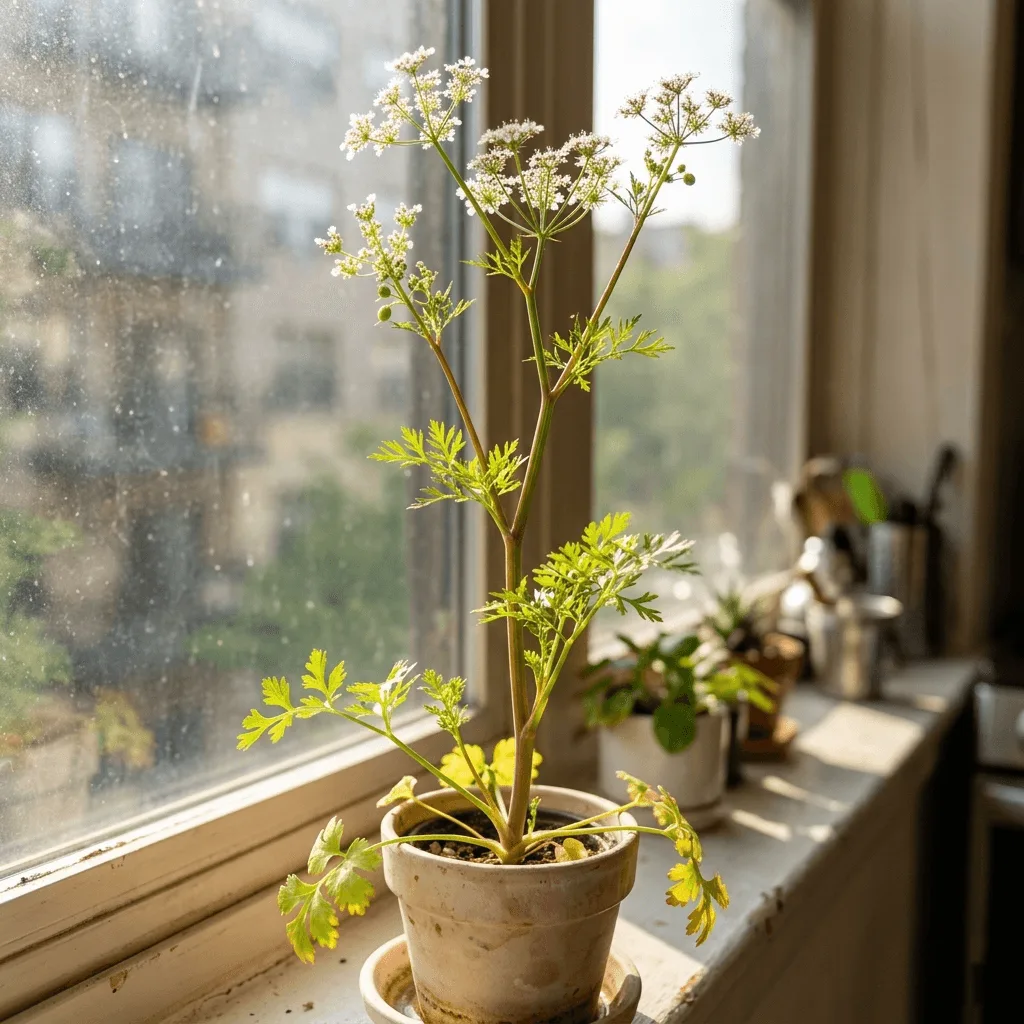
Bolting is the biological process where a plant abandons leaf production and rushes to create flowers and seeds. In the wild, cilantro does this when summer arrives. The plant senses warm weather and long days, triggering a survival mechanism to reproduce before it perishes. When you set up indoor hydroponic cilantro, your cozy apartment often mimics a hot summer day.
As a result, the central stalk thickens, the leaves become sparse, and the flavor turns bitter. The culinary value drops to zero once this transformation completes. To stop this, you must control the environment with care. The goal is to fool the plant into thinking it lives in a cool, shaded autumn garden.
For a full foundation in indoor growing before diving into this specific crop, the guide to the best herbs for small hydroponic systems explains how cilantro compares to other beginner-friendly varieties. And if you are starting from zero, the beginner guide covers every system and concept you need first.
🌡️ Temperature Control: The Enemy Of Bolting
Heat is the primary trigger for flowering in indoor herb gardens. Apartments run warm, especially near sunny windows or baseboard heating vents. If your growing space stays above 75°F (24°C), your crop will flower ahead of schedule. Keep your setup in the coolest room available. I keep my herbs in a shaded corner of my kitchen.
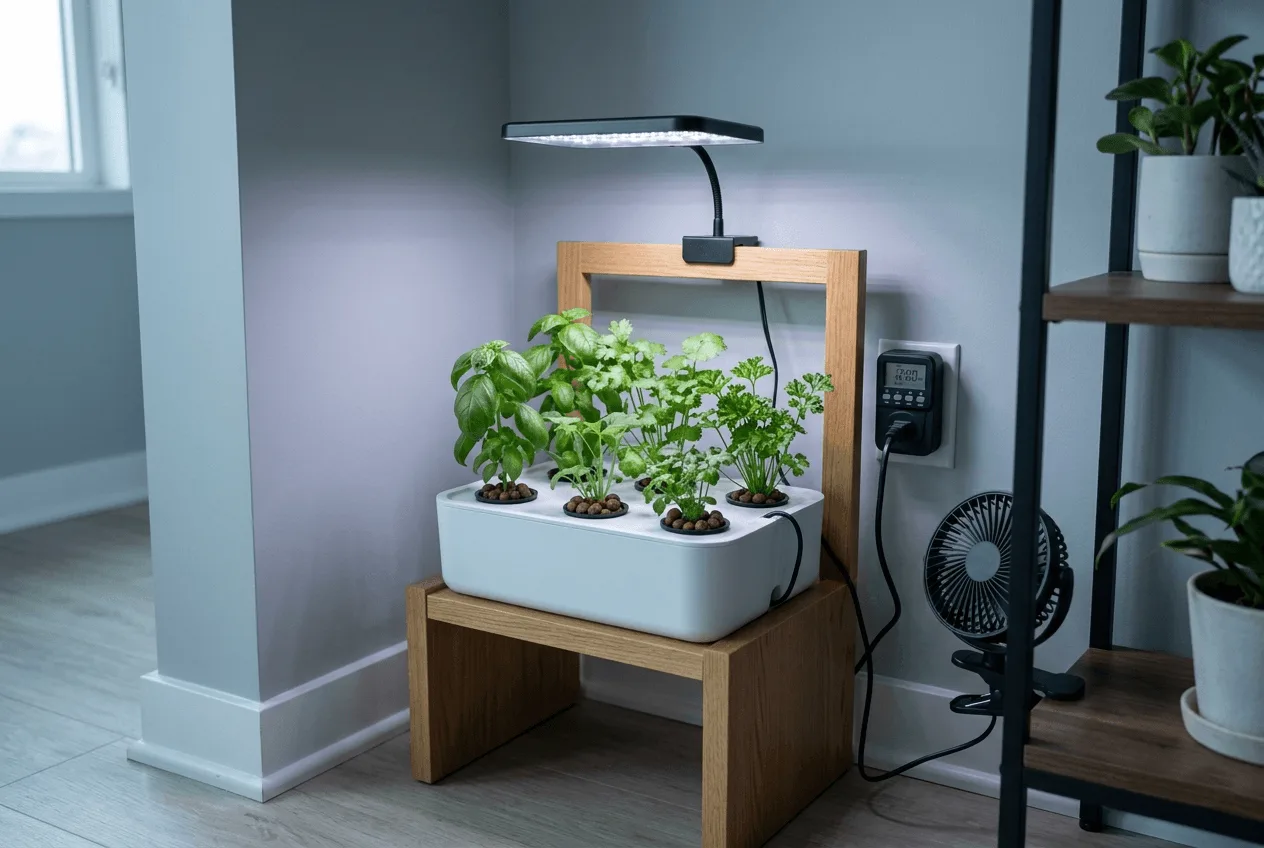
A small clip fan blowing over the leaves helps dissipate the radiant heat generated by grow lights. Maintain an ambient temperature below 70°F (21°C) during the daylight hours. Night temperatures can drop into the low sixties without harming the plant at all. This cool environment keeps the plant in a vegetative state for a much longer period. If your apartment lacks air conditioning, you may struggle to grow this specific herb during July and August.
🕂️ Light Duration For Cool Season Herbs
Many beginners damage their plants by leaving grow lights on for 16 hours straight. This long duration simulates mid-summer. The plant reacts by rushing to flower because it senses long days. Instead, simulate the shorter days of spring or autumn. Set your digital timer to provide 10 to 12 hours of light per day.
If you struggle to balance this with your own routine, the guide on the easiest light schedule for apartment hydroponics shows exactly how to set a timer around a work schedule. Because the daylight hours are shorter, the light intensity must remain sufficient. Keep the LED panel 6 to 8 inches above the canopy without causing heat damage. Use the free grow light calculator to find the exact wattage required for your shelf dimensions. For safe hang height margins by herb type, the guide on how far grow lights should be from hydroponic herbs on a shelf covers the specifics. Budget light options are covered in the guide to the best grow lights for low-light apartments under $50.
🧬 The Genetics Behind The Rush To Seed
Genetics play a large role in how your herbs behave indoors. Standard grocery store seeds carry wild traits that favor rapid reproduction. Cheap seed packets mean fighting an uphill battle against nature. Breeders have developed specific strains that resist the urge to flower.
Look for seed varieties labeled as slow-bolt or long-standing. These genetic variations give you an extra 2 to 3 weeks of vegetative growth before the central stalk emerges. As a result, your harvest window expands considerably. Sourcing seeds from suppliers who specialize in hydroponic varieties gives you the best indoor results.
Best Setup Options For Hydroponic Cilantro Indoors
Choosing the right container makes maintaining your hydroponic cilantro indoors much smoother. Since the plant has a short lifespan, you do not need massive reservoirs or complex plumbing. Small, modular setups fit better on apartment counters and make rotating crops clear. Here are the top methods for apartment dwellers.
- Sunny windowsill available → Kratky Jars
- Want fastest growth → Deep Water Culture (DWC)
- Low light apartment → Countertop Smart Garden
🫙 The Kratky Method For Small Spaces
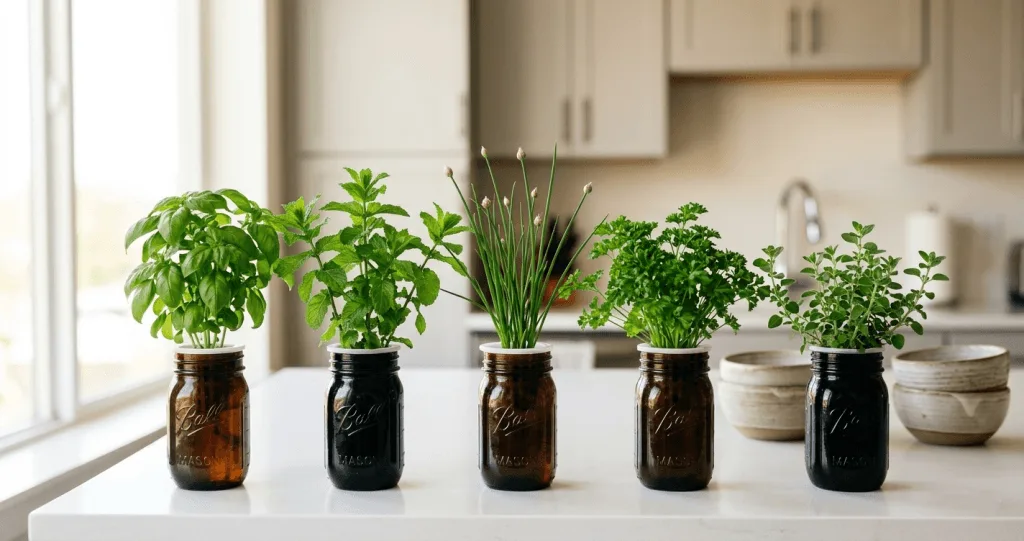
The Kratky method requires no electricity, making it ideal for tight spaces. You suspend the plant over a container of nutrient water, leaving an air gap for the roots to breathe. Because cilantro grows fast and has a short lifespan, a 1-quart mason jar holds enough liquid to sustain the plant from seed to final harvest. You mix the water once, set the plant in the net cup, and watch it grow.
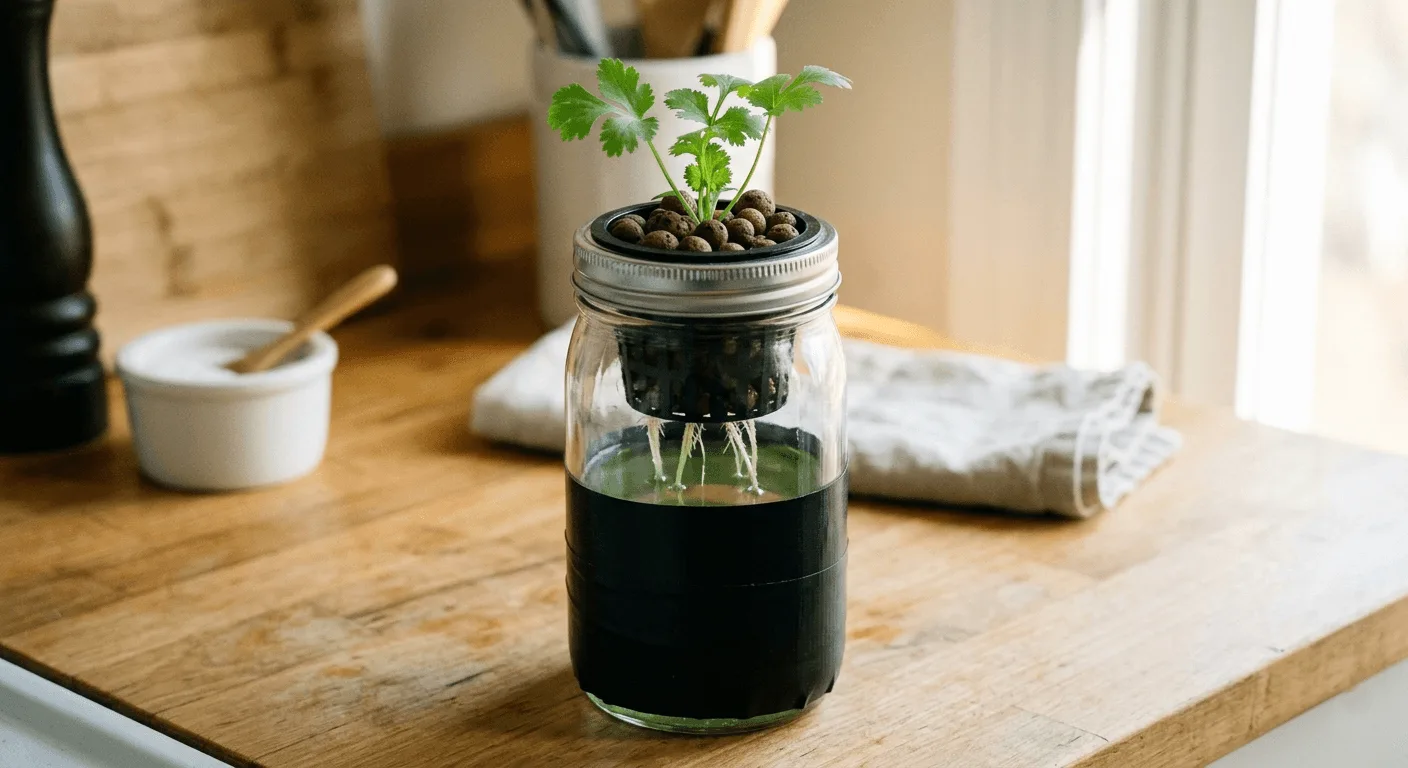
This method produces no pump noise. If you want to build this yourself, the guide on simple apartment-friendly Kratky jar setups covers every step using kitchen supplies. For those deciding between systems, the comparison on DWC versus Kratky for apartment beginners breaks down which fits your daily routine and space.
🌊 Deep Water Culture For Faster Harvests
Deep Water Culture uses a motorized air pump to push oxygen bubbles into the reservoir. This oxygen-rich environment accelerates root growth. Plants mature faster, giving you quicker harvests. However, the system requires an electrical outlet and produces a low humming noise. Both the water movement and air pump vibration create sound in a quiet room.
If you share a small studio apartment, the constant hum can become distracting. Fortunately, there are ways to quiet a noisy hydroponic pump with a few modifications, like placing it on a dense foam pad. Always keep your air pump elevated above the water line to prevent siphoning during a power outage. Use the free shopping list builder to find a silent air pump and matching stones for a quieter build.
🔌 Countertop Smart Systems For Busy Lives
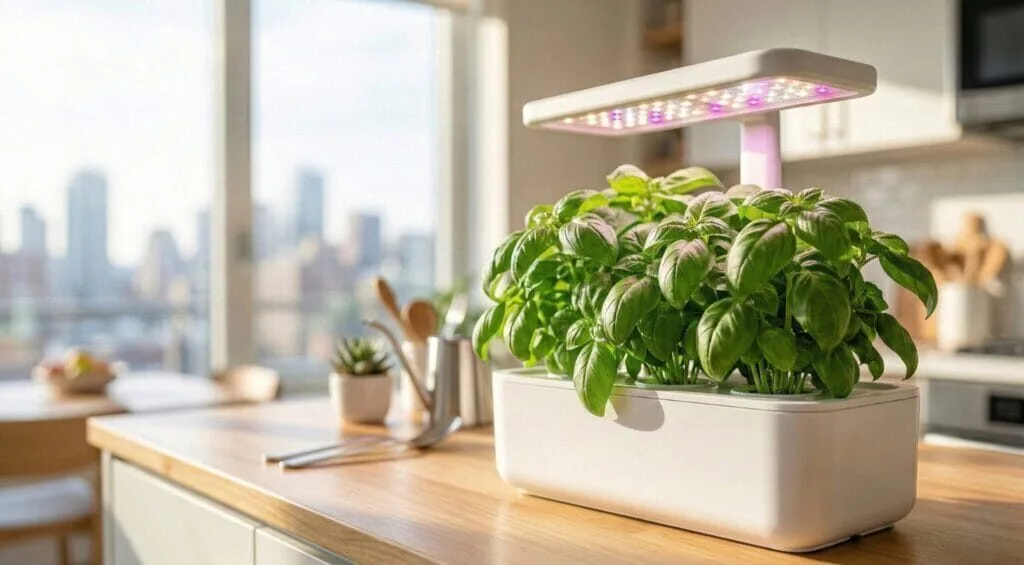
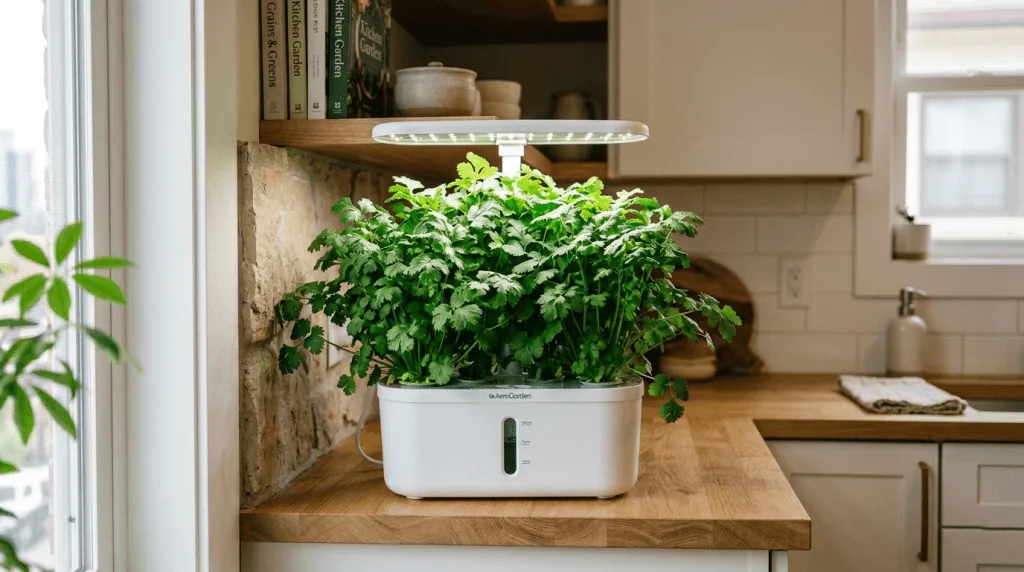
All-in-one smart gardens come with built-in lights and automatic timers. They take the guesswork out of indoor gardening. You plug the unit in, add tap water, and drop in a pre-seeded pod. These systems fit on kitchen counters or small desks. However, their internal lights often run on preset 15-hour cycles, which causes rapid bolting in cool-weather crops.
You must adjust the internal timer to 12 hours or manually cover the unit early in the evening. Because the light hood sits close to the young plants, heat builds up near the leaves. Adding a small desktop USB fan nearby keeps the canopy cool and prevents heat stress. Reliable models are reviewed in the guide to the 3 best countertop hydroponic systems for apartment beginners. A broader kit comparison is at the best beginner hydroponic starter kits under $100.
🪨 Choosing The Right Grow Media
Your choice of growing substrate impacts early root development. Rockwool cubes provide excellent moisture retention for seeds. Soak the cube in pH-balanced water before inserting the tiny seeds into the center hole. Peat sponges also work well in smart gardens, as they break down on its own over time.
Avoid loose potting soil in your net cups. Soil contains organic matter that rots when submerged in a hydroponic reservoir, leading to foul smells and bacterial blooms. Instead, surround your chosen starter plug with expanded clay pebbles. These pebbles provide structural support for the fragile stems while allowing air to reach the upper root zone.
⚗️ Perfecting The Nutrient Solution For Hydroponic Cilantro Indoors
Your water chemistry dictates how well your plants absorb their food. Getting the balance right stops nutrient lockout and encourages lush foliage. Hydroponic cilantro prefers a mild feed compared to hungry fruiting crops like tomatoes or peppers. Managing your reservoir takes a bit of practice, but the results speak for themselves.
→ Beginner Hydroponic Nutrients Guide: Simple Feeding Schedule
→ Best Hydroponic Nutrients for Small Apartment Systems
🧪 Hitting The Right EC And pH Targets
Electrical Conductivity measures the salt concentration in your water. Keep your target at an EC of 1.2 to 1.8 mS/cm during the main growth phase. The acidity of the water matters just as much for mineral uptake. Maintain the reservoir at pH 5.5 to 6.5 to prevent trace element deficiencies. The free pH and nutrient calculator gives you exact dosages for your specific reservoir size.
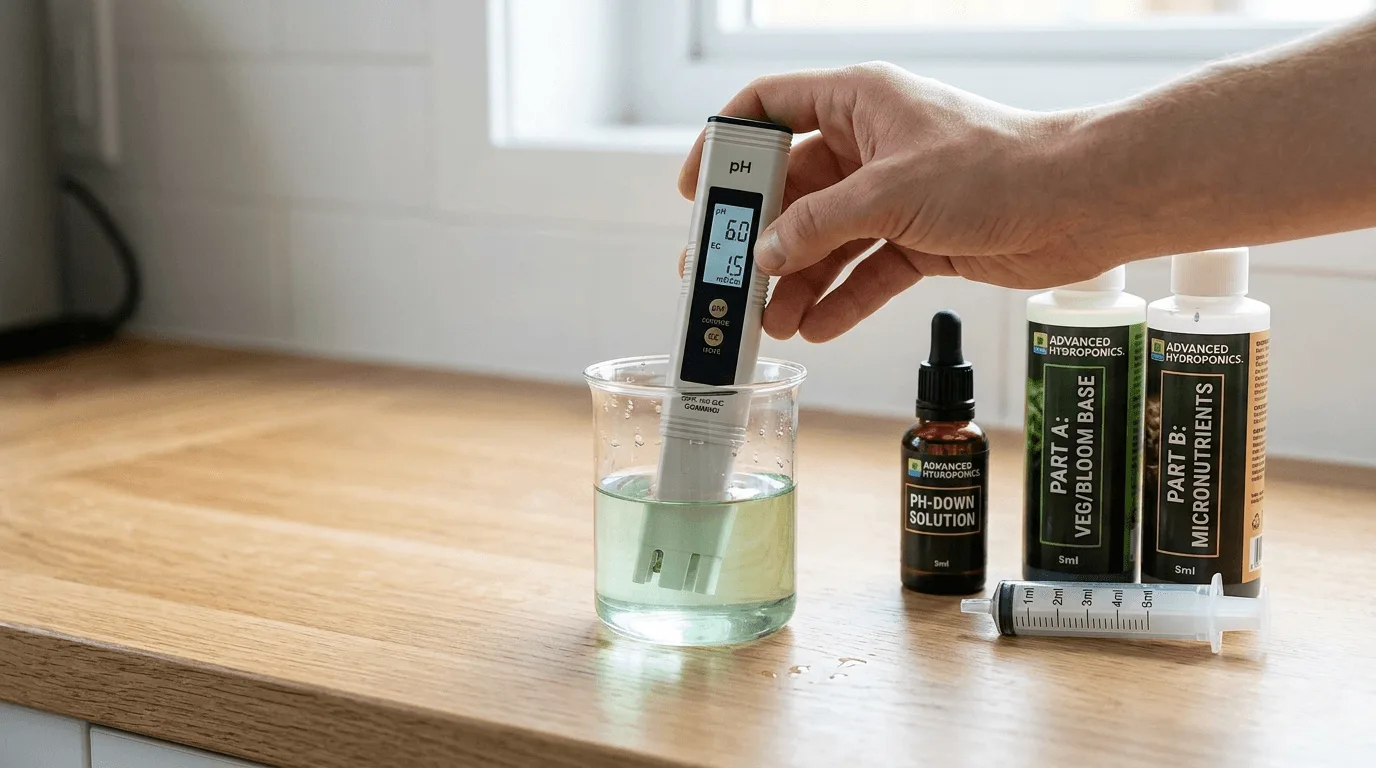
I learned this the hard way. I once pushed my young herbs to EC 2.4 hoping for larger leaves. The roots burned from the excess salt, and the plants wilted within three days. Dropping the strength fixed the next batch. For reliable equipment to track these metrics, the review of the best pH meter for beginners covers the Apera PH20, which is what I use.
🧊 Managing Water Temperature For Root Health
Water temperature controls the amount of dissolved oxygen available to your roots. Warm water holds less oxygen than cold water. If your reservoir climbs above 75°F (24°C), the roots begin to suffocate regardless of how much air your pump pushes. This leads to weak stems and eventual collapse.
Wrap your reservoir in reflective insulation if it sits near a sunny window. Avoid placing your system on top of heat-generating appliances like refrigerators. Some growers drop a frozen water bottle into larger reservoirs on hot summer days. In small apartment systems, keeping the room air-conditioned works best.
🧫 Managing Nitrogen Levels To Delay Flowering
Plants rely on nitrogen for green leaf growth and phosphorus for blooming. If your nutrient mix contains too much phosphorus, the plant receives a chemical signal to produce flowers. Stick to a vegetative formula high in nitrogen. A standard lettuce or leafy green liquid fertilizer works well. Over time, plants consume pure water faster than they consume mineral salts.
This causes the internal concentration to spike dangerously high by the end of the week. To avoid this, top off your container with plain water mid-week, and perform a full reservoir change every 2 weeks. The guide on how often to change your hydroponic water covers the timing for every system type without causing shock.
🌡️ What To Do If Your Nutrient Mix Fails
Sometimes you measure everything correctly, yet the plants still look stressed. The leaves droop, or the stems turn purple. When this happens, a toxic salt buildup has likely locked out the roots. Adding more fertilizer will only compound the problem and damage the plant further. Instead, flush the system.
- Dump the old nutrient solution down the drain.
- Rinse the empty reservoir with warm tap water to remove crusty salt deposits.
- Fill the reservoir with plain, pH-balanced water and let the plant sit in it for 24 hours.
- Mix a fresh batch of nutrients at half the recommended strength.
- Introduce the new mix and monitor the plant for new green growth.
⏱️ Succession Planting: Your Secret To A Never-Ending Supply
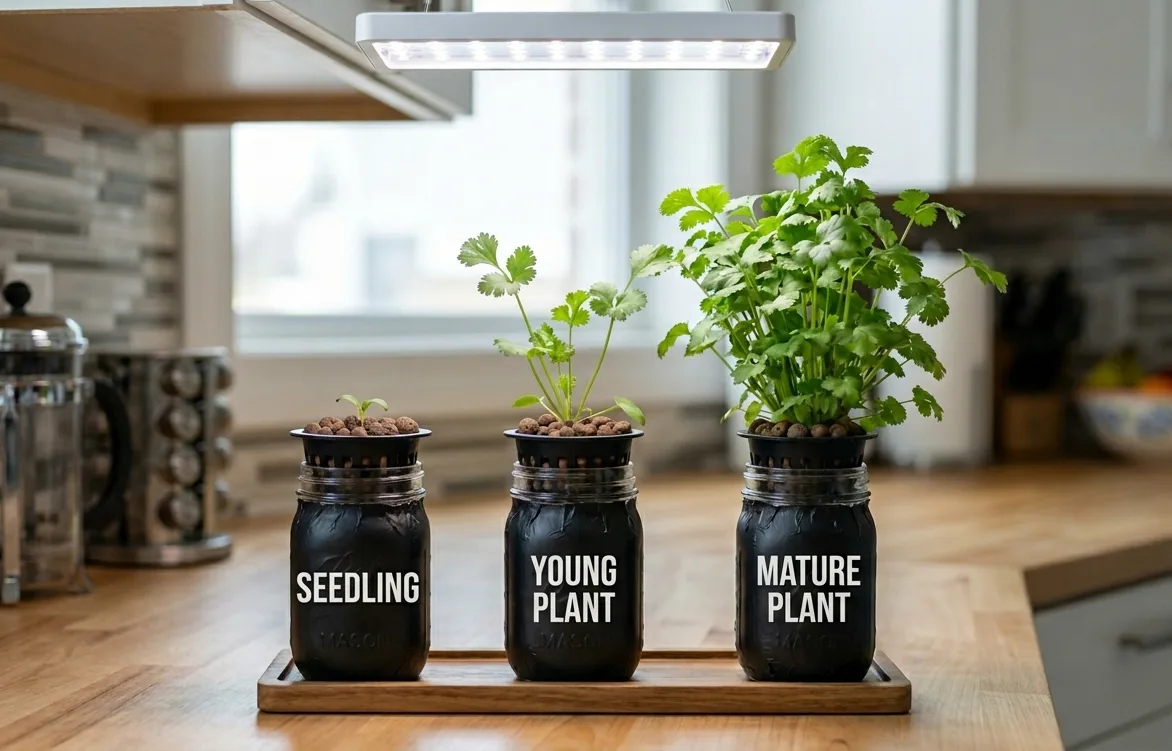
Even with perfect environmental conditions, cilantro will eventually bolt. It is genetically programmed to flower after a few weeks of maturity. The secret to continuous indoor harvesting is succession planting. By starting new seeds on a rolling schedule, you always have a fresh plant ready to replace an old one.
📆 Seeding Every Two Weeks
Every fourteen days, prepare a new rockwool cube. Soak the cube in pH-balanced water, then plant 3 to 5 seeds per hole. Germination takes about a week. Keep the rockwool moist but not soaking wet. Overwatering the cube causes the seeds to rot before they crack open. The guide on starting hydroponic seeds in rockwool without damping off covers how to avoid that mistake.
Once the tiny seedlings show their first true leaves, move them into your main system under the grow lights. Track exact harvest dates and plan your cooking schedule using the free seed to harvest countdown calculator. This rhythm ensures that when an older plant starts growing a thick central stalk, a young, vibrant plant is ready to take its place.
🌱 Selecting Slow-Bolt Seed Varieties
Your success with rolling harvests depends on the seeds you choose. Standard seeds often rush to maturity in less than four weeks. You need varieties designed for extended leaf production. Varieties labeled as Calypso or Cruiser perform well in indoor water setups.
These strains resist the urge to flower even if the temperature rises slightly during the day. When you purchase seeds, store the extra packets in a sealed container in your refrigerator. The cool, dry environment keeps the seeds viable for up to three years, preventing waste on fresh packets every season.
✂️ Harvesting Techniques To Prolong Life
How you cut the plant determines how long it survives. Never chop the entire plant down at once. Instead, cut the outer leaves first, clipping them near the base of the stem. Leave the inner crown untouched. This allows the center to keep pushing out new growth for your next meal.
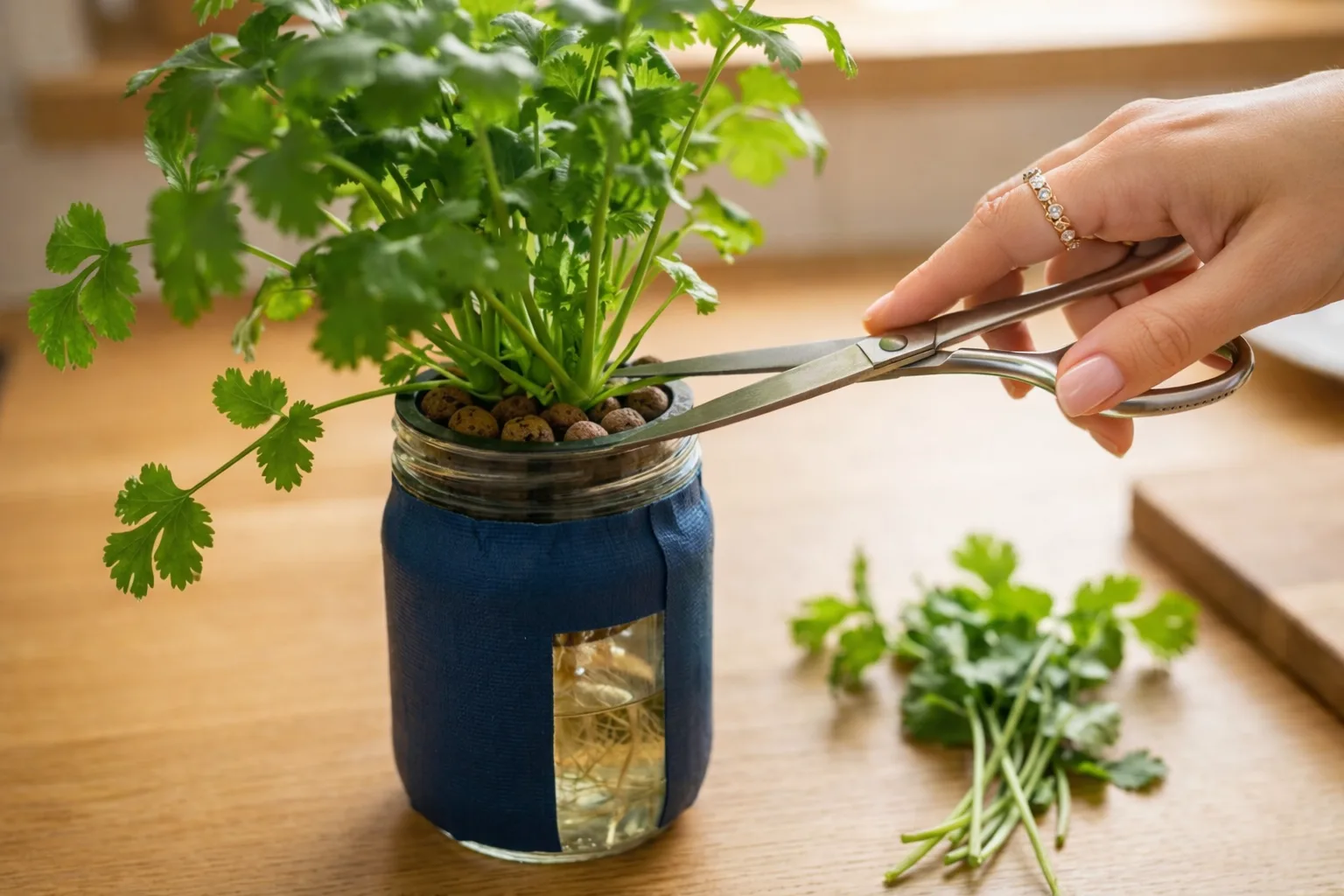
If you take more than one third of the foliage in one sitting, the plant bolts faster. Always use sterilized scissors to make clean cuts. Tearing the stems with your fingers invites bacterial infections. For proper cutting technique, the guide on how to prune hydroponic herbs so they keep producing shows exactly where to cut above leaf nodes.
🍂 Knowing When To Compost The Old Plant
Holding onto an old, bolting plant wastes valuable space. Once the central stem elongates and thickens, the plant will not produce any more tender leaves. The remaining foliage becomes tough and takes on a soapy, bitter taste. At this stage, the plant has run its course.
Pull the entire plant out of the net cup. Discard the rockwool and roots into your compost bin or trash. Wash the net cup with hot water and dish soap to remove any lingering organic matter. Once clean, the empty slot in your reservoir is ready for the next seedling in your succession rotation. If you want to experiment with other fast-growing apartment crops, the guide to hydroponic spinach in an apartment is a good next step. Mint is another fast producer covered in the hydroponic mint apartment guide, and chives follow a similar low-maintenance pattern in the hydroponic chives apartment guide.
🚨 Troubleshooting Common Cilantro Problems
Even experienced growers face issues with hydroponic cilantro indoors. Because the root system sits directly in standing water, problems escalate if ignored. Spotting symptoms early saves your crop from total failure.
🦠 Fixing Root Rot Before It Spreads
Healthy roots look white and smell earthy, like fresh rain. If you lift your net cup and find brown, slimy roots smelling like a damp basement, a fungal infection has taken hold. This happens when water lacks oxygen or temperatures rise too high. Act fast before the pathogen spreads to other pods.
- Remove the affected plant from the system.
- Rinse the roots gently under lukewarm tap water to wash away slime.
- Sterilize the empty reservoir using a diluted 3% hydrogen peroxide solution, then rinse it clean.
- Refill the container with fresh, cool nutrient water at EC 1.0 to let roots recover.
- Place the plant back, ensuring the roots never dry out during the entire process.
While hydrogen peroxide helps sterilize, it degrades in water and cannot fix the underlying cause alone. If this issue keeps returning, the guide on how to prevent root rot before it starts covers every cause and fix in detail. Full cleaning instructions are in the guide on how to clean a small hydroponic system in an apartment.
🔍 What To Do When Leaves Turn Yellow
Yellowing leaves almost always point to a nutrient lockout caused by pH swings in the reservoir. When the pH drifts outside the ideal 5.5 to 6.5 range, the roots cannot absorb nitrogen even if the water is full of it. As a result, the plant cannibalizes its own lower leaves to survive.
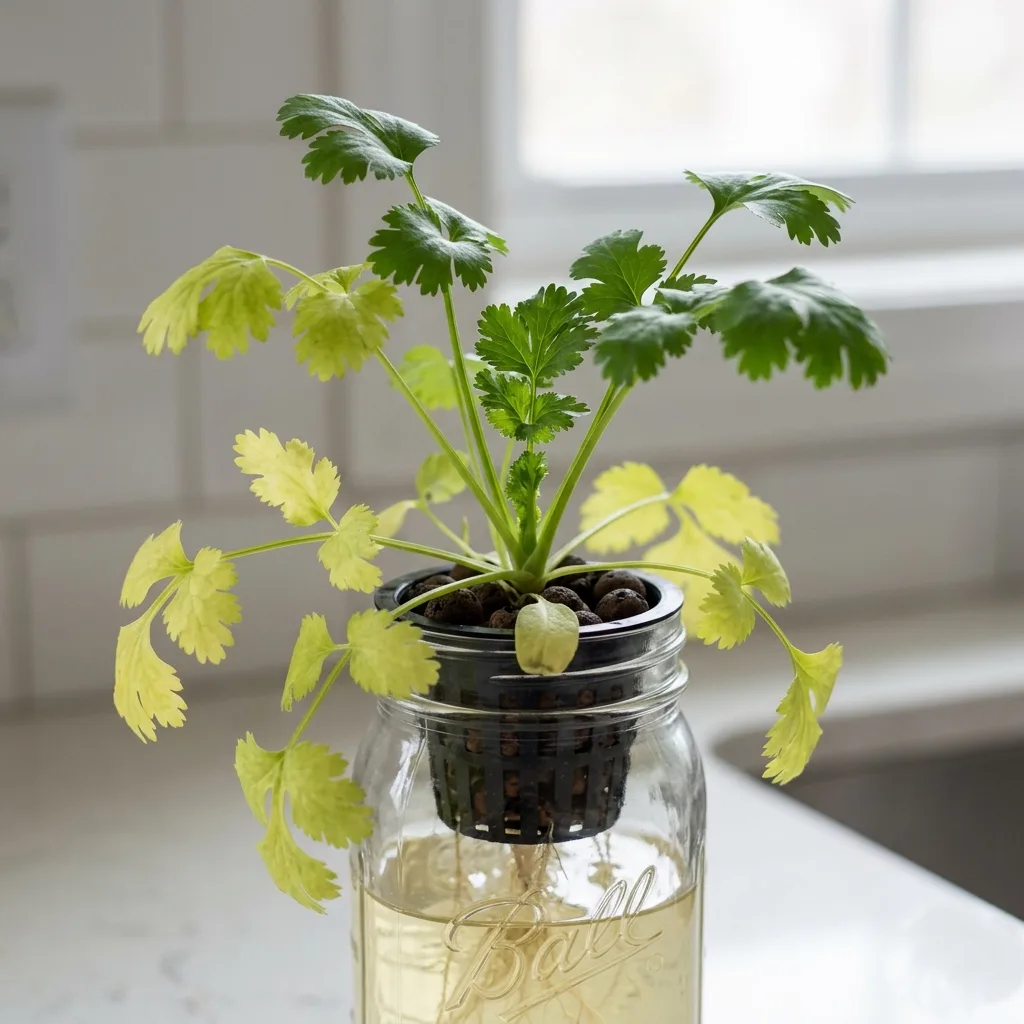
Always check pH first before pouring more fertiliser into the tank. Adding nutrients blindly risks burning the roots with excessive salts. To diagnose specific color changes based on leaf position, the guide on fixing yellow hydroponic leaves in apartments covers the full process.
- Lower leaves turning yellow indicate a mobile nitrogen shortage.
- Yellowing between the green leaf veins suggests a magnesium deficiency.
- New growth turning pale yellow points to iron or calcium lockout.
⭕ Stopping Algae Growth In Clear Reservoirs
Algae needs two things to thrive: bright light and mineral nutrients. If you use clear glass mason jars for your setup, algae will bloom in the water. This green sludge steals vital oxygen and food from your plant roots. A clean jar can turn murky and green in just three days once algae establishes itself.
Block the light to stop the growth in its tracks. Wrap your jars in thick aluminium foil or paint the outside with black matte spray paint. If you already have a severe bloom, empty the container and scrub it out. For detailed prevention tips and step-by-step fixes, the guide on stopping algae growth in hydroponic jars covers every method that works.
🐛 Beating Fungus Gnats In An Apartment
Fungus gnats love damp environments. While hydroponic setups lack soil, these tiny black flies will lay eggs in soggy rockwool cubes. The resulting larvae feed on the fragile root hairs of young seedlings. Seeing gnats buzzing around your kitchen counter is a clear sign you need to act.
Place yellow sticky traps near the base of your plants. The adult flies are attracted to the color and get stuck. Next, cover the exposed top of your rockwool cube with a layer of dry expanded clay pebbles. This dry barrier prevents the adults from reaching the moist surface to lay their eggs. For severe infestations, dissolve a small piece of a mosquito dunk in your reservoir water to kill the larvae.
💬 A Word From Sarah
Growing hydroponic cilantro indoors taught me a lot about patience and observation. I used to think more light and more nutrients equaled better, faster growth. I learned the hard way that less is more with cool-season herbs. My biggest turning point was moving my glass jars off the warm, sunny windowsill and onto a shaded bookshelf with a small LED light set to 11 hours. The early bolting stopped, and the leafy flavor stayed vibrant for weeks. Do not be afraid to pull a plant and start over if it goes to seed. Every fresh batch teaches you something new about your unique indoor environment. Keep experimenting with your light schedule until you find that perfect rhythm.
❓ Frequently Asked Questions
🌴 Why does my hydroponic cilantro bolt so fast?
Cilantro bolts when stressed by high temperatures or long light cycles. In warm apartments, the plant assumes summer has arrived and rushes to produce seeds. Keeping ambient temperatures below 70°F (21°C) and limiting light to 10 to 12 hours per day delays this process and extends your vegetative harvest.
💧 What is the best EC for cilantro?
Maintain your nutrient solution at an EC between 1.2 and 1.8 mS/cm. Pushing the concentration higher can burn the sensitive root system and trigger early flowering. Check your levels every few days with a digital EC meter to ensure the plants stay in a healthy vegetative state.
⏳ How often should I plant new cilantro seeds?
Start a new batch of seeds every two weeks. This succession planting method ensures that as older plants begin to flower and turn bitter, a fresh batch is ready for harvest. It guarantees a steady supply for your kitchen year-round.
☀️ Can I use regular grow lights for cilantro?
Yes, but you must limit the duration. Exposing the plants to more than 12 hours of light tricks them into thinking the days are getting longer. Set your timer for 10 to 12 hours to mimic cool autumn conditions and prevent premature bolting.
🍃 Why do cilantro leaves taste like soap sometimes?
Once cilantro begins to bolt and produce flowers, the chemical composition of the leaves changes. This makes the foliage taste bitter or soapy. Harvest leaves before the central stalk elongates to preserve the best culinary flavor. When bolting begins, pull the plant and start a fresh one from your succession rotation.
🔪 How do I harvest hydroponic cilantro without killing it?
Cut the older, outer leaves first, leaving the central crown intact. Never remove more than one third of the plant at a single time. This allows the inner leaves to continue growing and extends the overall life of the plant by several weeks.
🏡 Does cilantro grow well in Kratky jars?
Kratky jars work well for cilantro because of its short lifespan. A 1-quart mason jar holds enough water and nutrients to support the plant from seed to final harvest without requiring a mid-cycle reservoir change. Wrap the jar in foil to block light and prevent algae.
🌼 Should I prune the flowers off my cilantro?
Pinching off early flower buds can buy you a few extra days of harvest. However, once the plant commits to flowering, leaf flavor will decline regardless of pruning. It is better to rely on fresh succession plantings rather than trying to hold back a bolting plant.
Happy growing! 🌿
— Sarah, Urban Hydro Space

Sarah is the founder of Urban Hydro Space and an indoor gardening enthusiast dedicated to helping apartment dwellers grow fresh herbs and vegetables in small spaces. With hands-on experience testing hydroponic systems, she shares practical tips and honest product reviews to make indoor gardening accessible for beginners.