⏳ 18 min read · Last updated: March 2026
Finding space to grow hydroponic chives in a tiny apartment kitchen feels challenging at first. I used to buy those plastic clamshells of sad herbs from the grocery store. I tried potting them in dirt on my windowsill, but they dried up and turned yellow. Switching to a water-based system fixed the issue.
Now I snip fresh greens for my morning eggs whenever I want. Because of this, I never waste money on store-bought packets. You can achieve this same result in a tiny space with minimal effort. Let me show you how to set up your own continuous indoor harvest.
Over the years, I killed many batches of herbs by making avoidable mistakes. I overfed them, burned them with hot lights, and flooded my counter. However, trial and error taught me the exact steps for success. If you follow this guide, you will bypass my early failures and grow a thriving crop on your first attempt.
- Maintain a target pH 5.8 to 6.2 for optimal nutrient absorption.
- Always leave 2 inches of stem when harvesting so the basal plate recovers.
- Provide 12 to 14 hours of light daily using a supplemental LED setup.
- Perform a full reservoir change every 2 weeks to prevent algae and rot.
- Add a gentle breeze from a small fan to build strong stalks that stand upright.
🔎 Quick diagnosis table
| What you see | Most likely cause | Check this first |
|---|---|---|
| 🟡 Yellowing inner leaves | High pH causing iron lockout | Test reservoir pH |
| 🤢 Stems falling over limp | Insufficient light or zero airflow | Lower grow light distance |
| 🟤 Brown slimy roots | Lack of oxygen or warm water | Check air pump or water level |
| 🍂 Crisp brown tips | Nutrient burn from salts | Lower EC strength with fresh water |
- Sunny windowsill available → Kratky Jar
- Low light kitchen → Countertop Smart Garden
- Want the fastest growth and largest yields → Deep Water Culture (DWC)
- Why Hydroponic Chives Make Sense For Indoor Gardens
- How To Start Hydroponic Chives From Seed Or Cuttings
- Choosing The Right System For Hydroponic Chives
- Perfecting Water, Nutrients, And pH For Growing Hydroponic Chives
- Lighting And Temperature Needs For Indoor Hydroponic Chives
- How To Harvest Hydroponic Chives Without Killing Them
- Troubleshooting Common Hydroponic Chive Problems
- A Word From Sarah
- Frequently Asked Questions
🌿 Why Hydroponic Chives Make Sense For Indoor Gardens
Many beginners start their apartment growing journey with leafy greens like lettuce. However, herbs offer a better return on investment for small spaces. When you grow hydroponic chives indoors, you bypass the common issues associated with potting soil, like erratic moisture levels and dirt-borne pests. If chives sound like your starting point, the guide to the best herbs for small hydroponic systems covers how chives compare to other beginner-friendly varieties.
Because herbs thrive in stable environments, an indoor setup provides the exact conditions they need. You control the light, water, and food. Consequently, your plants dedicate all their energy to producing lush, green stalks instead of searching for sparse nutrients in poor dirt. This level of control produces a better tasting crop.
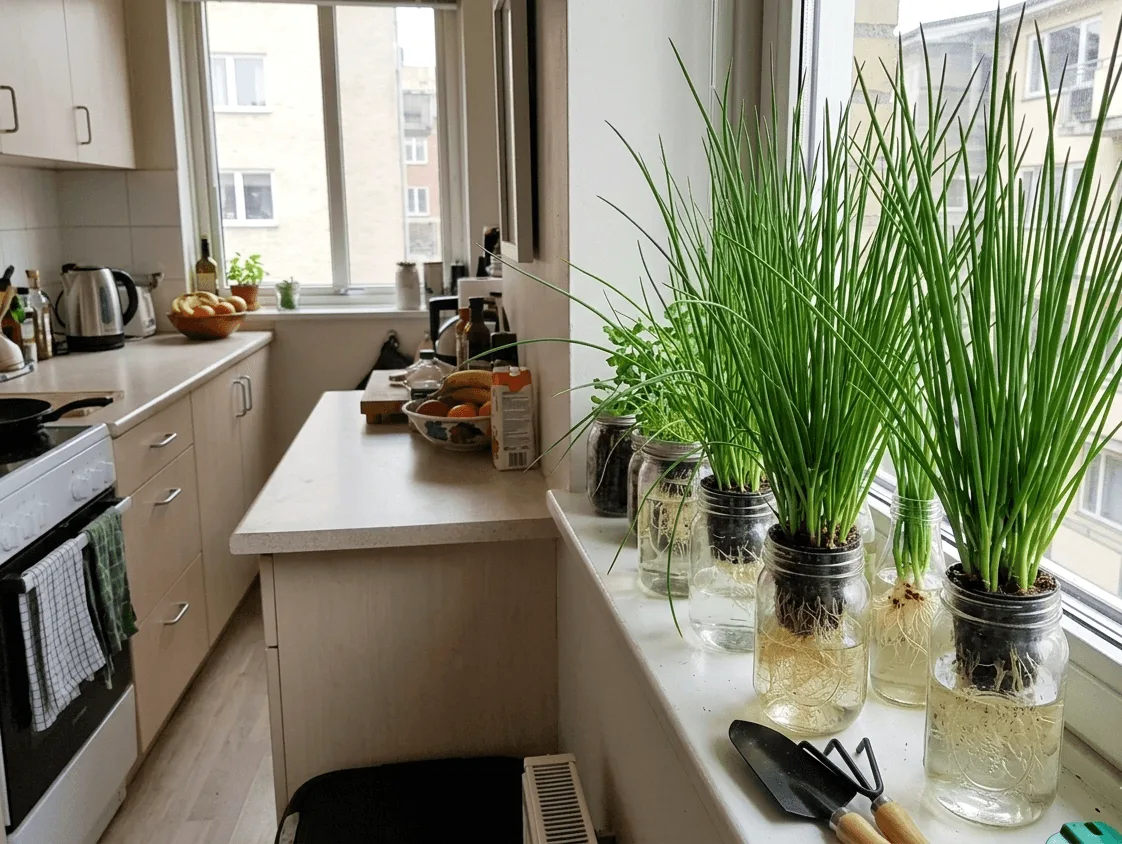
✂️ The Cut-and-Come-Again Harvest Cycle
The biggest advantage of this plant is its growth habit. Chives grow from a central basal plate, meaning they push new growth up from the bottom rather than branching out from the top. When you master the cut-and-come-again method, you turn one plant into an endless supply of garnishes.
Instead of pulling the whole plant out of the system, you snip what you need. Afterward, the plant regenerates the missing foliage using energy stored in the roots. This cycle allows you to harvest every 3 to 4 weeks from a single net cup.
Additionally, regular pruning encourages the basal plate to divide. Over time, your single cluster will split into multiple healthy bunches. As a result, your yields increase month after month without planting new seeds.
📈 Faster Growth Compared To Soil Potted Herbs
Water-based systems deliver nutrients directly to the root zone without any barrier. Because of this direct access, plants expend less energy expanding their root systems. They redirect that energy upward. You will notice thicker stalks and darker green colors much faster than you would with dirt.
For a small apartment kitchen, faster growth means less waiting around for your ingredients to be ready. In traditional pots, roots must push through dense, compacted earth to find water. This physical resistance slows down vegetative development.
Hydroponic setups remove this friction. The roots bathe in an oxygen-rich, nutrient-dense solution all day long. This unrestricted access produces an explosion of top growth.
📐 Space Efficiency For Crowded Studio Kitchens
Apartment dwellers rarely have room for sprawling garden beds. Thankfully, chives grow vertically and take up minimal horizontal space. You can fit three or four plants in a single narrow container on a windowsill. Because they grow straight up, they do not cast wide shadows over neighbouring crops.
For instance, I keep a dedicated row of jars right behind my sink. This proximity makes harvesting during meal prep highly convenient. You do not need to walk outside in the cold to grab a garnish while cooking eggs.
Additionally, keeping them indoors protects them from frost and unpredictable seasonal shifts. Your tiny kitchen becomes a year-round production hub.
🌱 How To Start Hydroponic Chives From Seed Or Cuttings
Starting a new crop requires patience, but the process is clear. You can grow them from tiny black seeds or rescue discarded stems from your grocery haul. Most beginners prefer seeds because they carry zero risk of importing outdoor bugs into your apartment.
However, using cuttings speeds up your timeline by weeks. Either way, you must anchor the base of the plant securely so it stays upright in the water. I recommend using rockwool or clay pebbles for this stabilisation task.
🧹 Preparing Your Rockwool Cubes For Germination
Rockwool provides an excellent foundation for delicate seeds. This spun volcanic rock holds moisture while allowing air to reach emerging sprouts. Before you plant anything, you must prepare the material. Raw rockwool comes with a on its own high pH that stunts early growth.
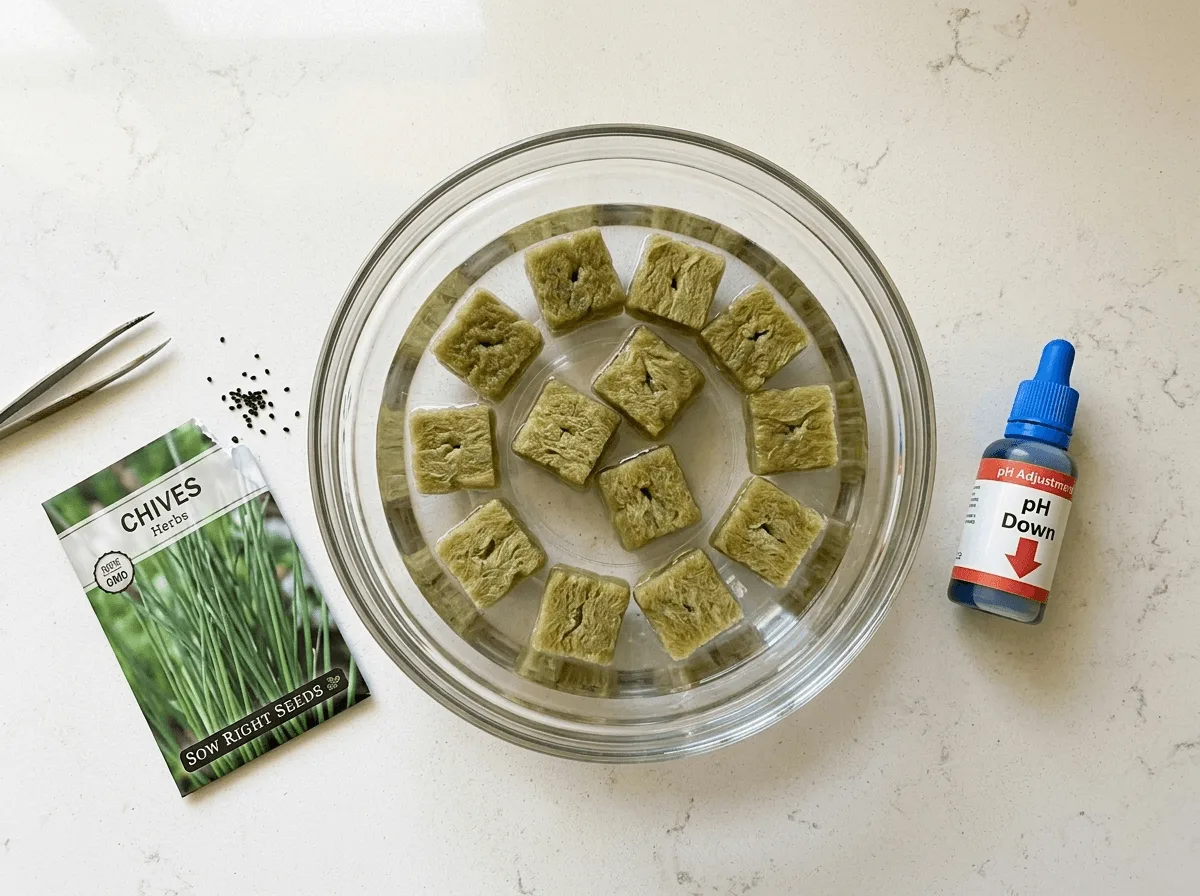
Conditioning the cubes is a mandatory first step. Here is my soaking process:
- Fill a bowl with lukewarm tap water.
- Adjust the water pH down to 5.5 using your liquid acidifier.
- Drop the dry rockwool cubes into the bowl.
- Let them soak undisturbed for one hour.
- Remove the cubes and give them a gentle shake. Do not squeeze them.
Squeezing the cubes crushes their internal structure. Consequently, they lose their ability to hold oxygen. If you ruin the structure, the seeds will drown. Treat the wet cubes like delicate glass sponges. The full process is covered in the guide on how to start hydroponic seeds in rockwool without damping off.
🫘 Sowing Seeds To Prevent Damping Off
When I first tried to sprout herbs, I planted the seeds too deep inside the wet cubes. I thought they needed to be buried to sprout. Instead, they rotted in the damp environment before seeing the light. This fungal rotting process is called damping off.
Place 3 to 5 seeds on the surface of your prepared rockwool. Use a toothpick to press them gently into the top layer. You want them to make contact with the moisture without sinking to the bottom of the hole. Once planted, place the cubes in a warm, dark spot.
Keep the top misted with plain water until you see green shoots emerge.
♻️ Propagating Grocery Store Scraps In Water
If you lack the patience for seeds, you can bypass the germination phase. Buy a bundle of organic chives that still have their white bulbous bases and roots attached. Most high-end grocery stores sell them in small plastic sleeves near the fresh produce.
This shortcut saves you almost three weeks of waiting. To propagate them, trim the green tops down to two inches. Place the rooted bottoms in a shallow glass of plain, unchlorinated water.
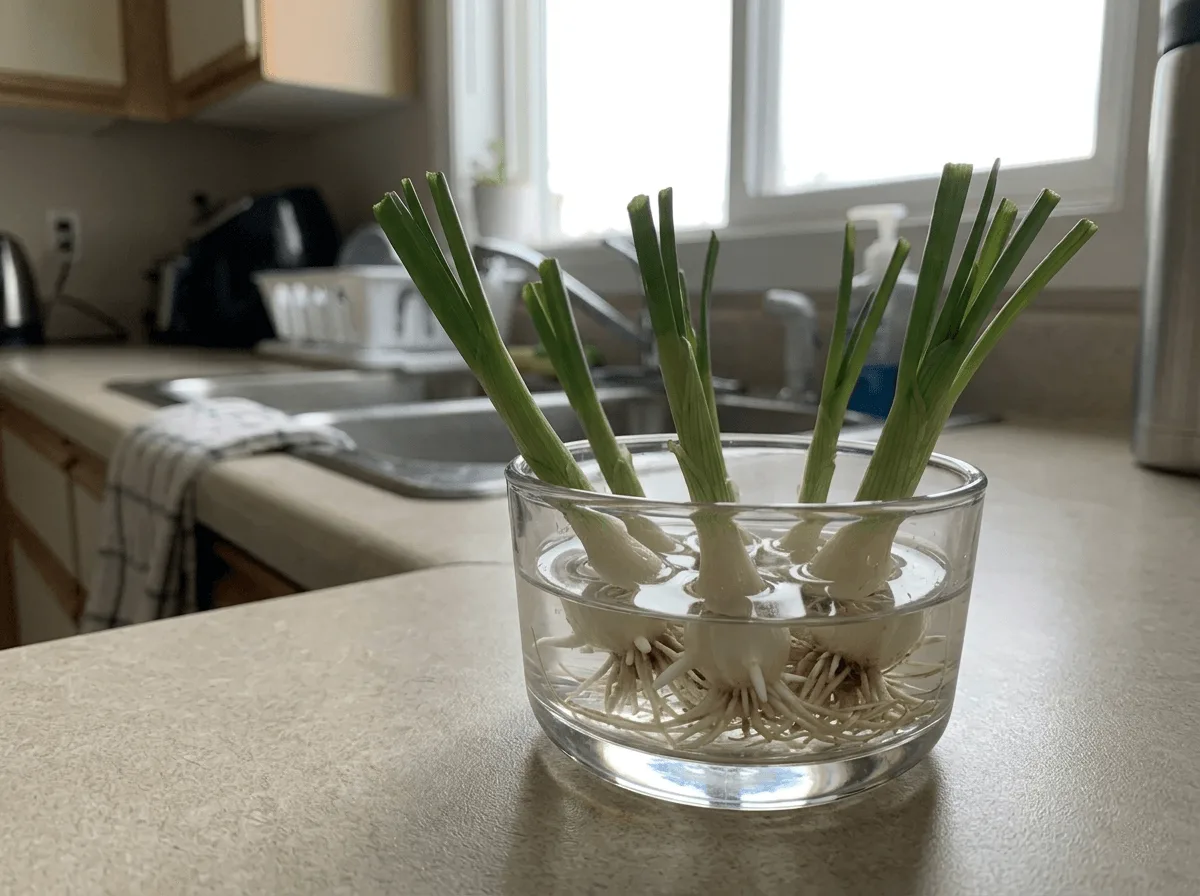
Change this water daily to prevent bacterial slime. Within a week, you will see fresh white roots shooting out of the old base. At this point, transfer the bundle into a net cup filled with clay pebbles. The mechanics are identical to the method covered in the guide on how to regrow green onions in water and move them into hydroponics.
🏤 Choosing The Right System For Hydroponic Chives
You have several options for setting up your indoor garden. The right choice depends on your budget, available space, and tolerance for noise. Every system requires you to secure the plant in a net cup, but the way water reaches the roots changes.
Some methods use passive wicking, while others rely on active bubbling. If you feel overwhelmed by the options, use the free shopping list builder to gather exactly what you need without buying unnecessary extras.
→ University of Minnesota: Small-scale hydroponics (DIY setups)
🧴 The Kratky Method For Silent Windowsills
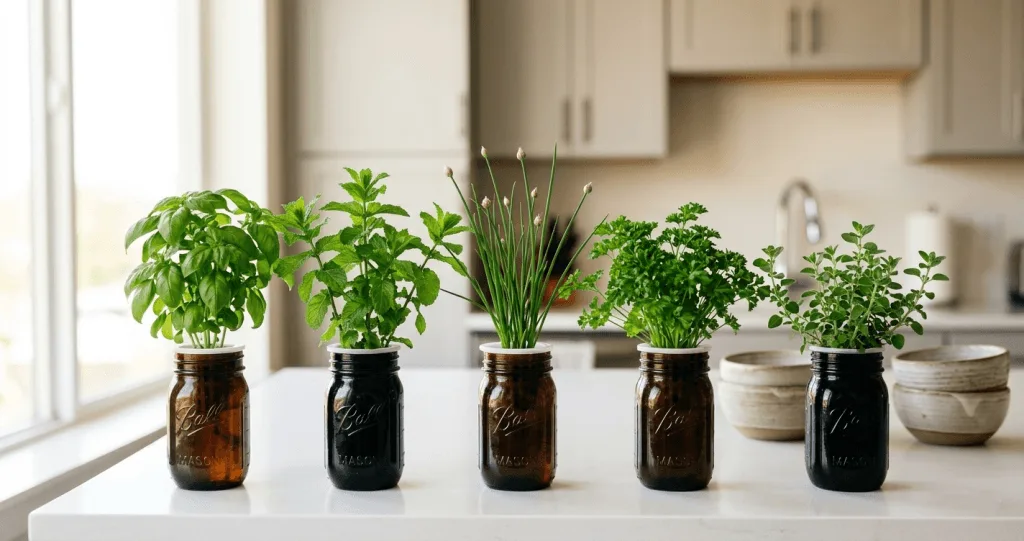
The Kratky method is the quietest way to grow indoor herbs. You fill a light-proof container with nutrient water and suspend the plant above it. As the plant drinks, the water level drops. This drop creates an air gap that allows the upper roots to breathe.
This method requires zero electricity, making it perfect for crowded kitchen counters. I use old pasta jars painted black to block out light. If light hits the water, algae will bloom and steal food from your crops.
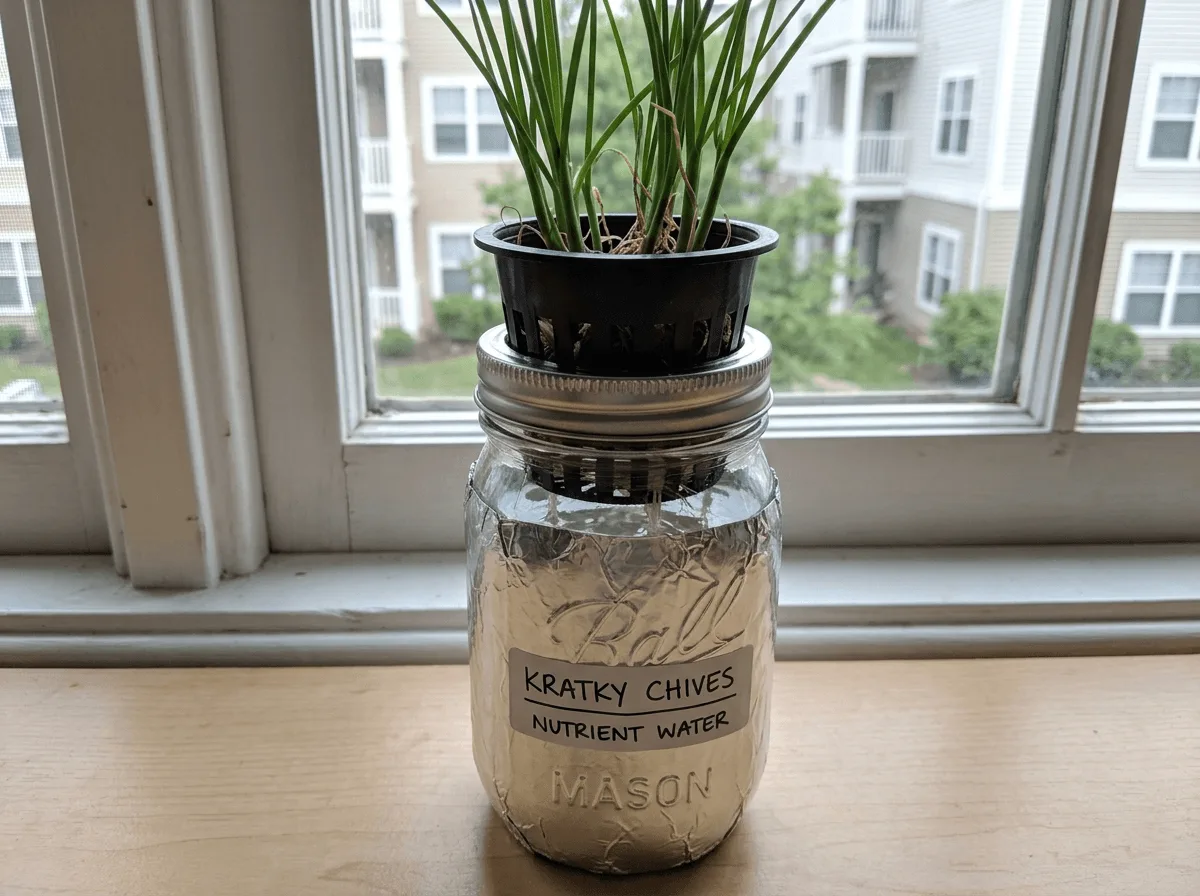
The full setup walkthrough is in the guide on simple apartment-friendly Kratky setups you can build with jars and kitchen supplies. Because there are no moving parts, this setup never fails during a power outage.
🌊 Deep Water Culture For Maximum Yields
Deep Water Culture (DWC) uses an air pump and an air stone to bubble oxygen into the reservoir. This oxygenation supercharges the roots and leads to faster foliage growth. Because the water constantly moves, you rarely deal with stagnant zones.
The churning action keeps the nutrient salts mixed evenly. However, the air pump does create a humming noise. If your apartment has thin walls, this constant vibration can become disruptive while working from home. Consider placing the setup on a foam mat to dampen the vibration.
Not sure which route to take? The comparison guide on Deep Water Culture vs Kratky for tiny apartments breaks down exactly which suits your space and budget. If the humming becomes an issue later, the tips on how to quiet a noisy hydroponic pump cover the fastest fixes.
🔌 Countertop Smart Gardens For Hands-Off Care
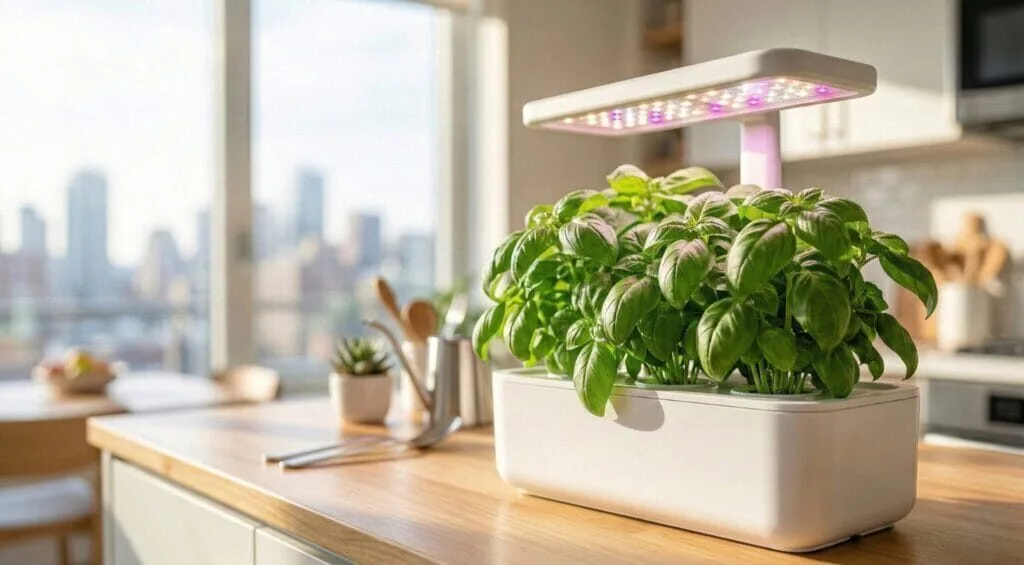
If you prefer a plug-and-play solution, countertop smart gardens handle the lighting and water circulation for you. These units look sleek and fit neatly on narrow shelves. They are ideal for beginners who want fresh herbs without measuring individual nutrients.
Most kits come with pre-measured liquid plant food and automated timers. They do have limitations regarding root space. Once the plants mature, you must prune the root mass so it does not clog the internal water pump. A tangled root ball blocks water flow and causes the deck to flood. Reliable models are covered in the review of the best beginner hydroponic starter kits under $100 for apartments. For a broader look at plug-and-play options, the 3 best countertop hydroponic systems for apartment beginners covers the top three side by side.
🧪 Perfecting Water, Nutrients, And pH For Growing Hydroponic Chives
Your plants rely on the liquid in the reservoir for their survival. If the water balance is off, the roots cannot feed themselves. Managing your water chemistry sounds intimidating, but it becomes a simple weekly habit once you learn the basics.
You must balance the acidity and the nutrient concentration. A slight miscalculation here leads to stunted growth or crispy brown leaf tips.
⚖️ Setting The Ideal pH Range For Root Health
The pH level determines how acidic or alkaline your water is. For chives, maintain a pH 5.8 to 6.2 environment. If the pH drifts above 6.5, the plant experiences nutrient lockout.
Iron and manganese become unavailable to the roots, causing new leaves to turn pale yellow. Test your water every few days to monitor this shift. A digital meter gives far better accuracy than paper strips, especially under artificial LED light. See the top recommendation in the best pH meter for hydroponics beginners review.
🥄 Mixing Nutrients And Finding Your EC Target
Plants need a balanced diet of nitrogen, phosphorus, and potassium. Electrical Conductivity (EC) measures the total amount of dissolved salts in your reservoir. For chives, aim for an EC of 1.2 to 1.8 mS/cm. Too little food leads to weak stems, while too much food burns the delicate root hairs.
When I first started, I pushed my EC to 2.4 thinking more food meant faster growth. Instead, the tips turned brown and crispy within three days. Dropping the strength back down saved the crop. Use the free pH and nutrient calculator to find the exact measurements for your specific reservoir size.
Follow this process when feeding your system:
- Fill a clean pitcher with fresh tap water.
- Add your liquid nutrients according to the manufacturer schedule.
- Stir the liquid for a full minute to dissolve all salts.
- Test the EC with a digital meter to ensure it stays below 1.8.
- Adjust the pH using your liquid up or down solutions.
Pick a formula designed for leafy greens when selecting your plant food. Good options are in the guide on the best hydroponic nutrients for small apartment systems. For a week-by-week feeding schedule from seedling to harvest, the beginner hydroponic nutrients and feeding schedule guide breaks down every stage.
🛑 Troubleshooting Nutrient Lockout And Imbalances
If your reservoir measurements look correct but the leaves are still turning pale, your water might be stagnant. Old water accumulates unused mineral salts over time. This invisible buildup changes the chemical profile of the solution and stops the roots from absorbing fresh food.
The plant starves even though it sits in fertilizer. To fix this, complete a full reservoir change every 2 weeks. Dump the old liquid down the sink, rinse the container, and start fresh. For a detailed breakdown of this schedule, the guide on how often to change water in a small hydroponic system covers every system type. Never top off an old, murky reservoir indefinitely. This habit causes sudden plant death in indoor gardens.
💡 Lighting And Temperature Needs For Indoor Hydroponic Chives
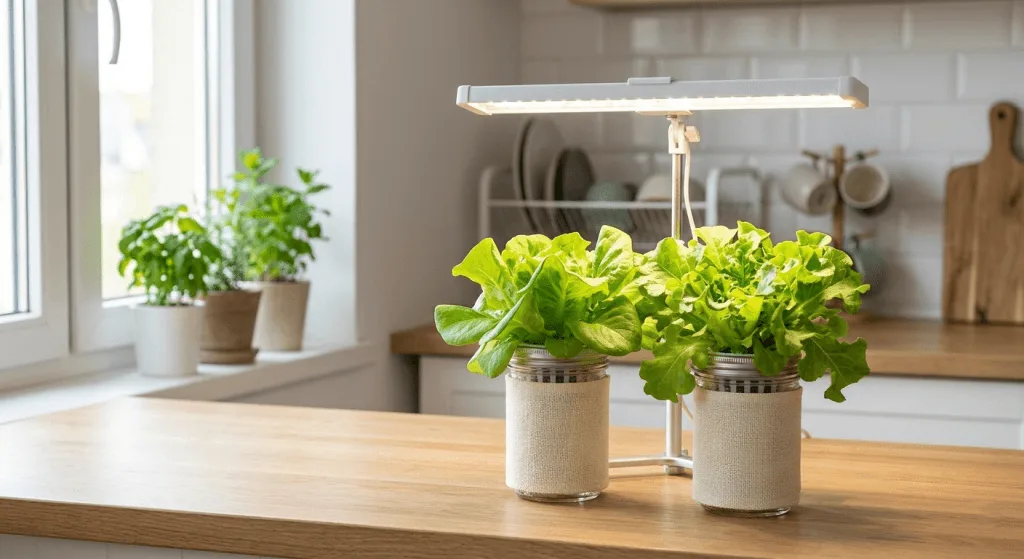
Windowsills rarely provide enough direct sun, especially during winter months. To grow healthy herbs indoors, you need supplemental LED grow lights. Proper lighting prevents the stems from stretching and falling over under their own weight.
Temperature also plays a role in stalk thickness and overall flavor. If your apartment gets too hot, the plant bolts and tries to produce purple flowers. This reproductive phase turns the green leaves tough and bitter.
Maintaining a cool, bright environment mimics the crisp spring weather these plants love best.
⏱️ Setting Your LED Grow Light Schedule
Set your timer to provide 12 to 14 hours of light each day. The plants also need a dark period to rest and process the energy they absorbed. Do not leave the lights on for 24 hours.
A constant bombardment of light stresses the cellular walls and stunts upward growth. Keep the light panel 6 to 8 inches above the top of the canopy. If you position it too high, the stems grow weak and spindly as they reach for the source.
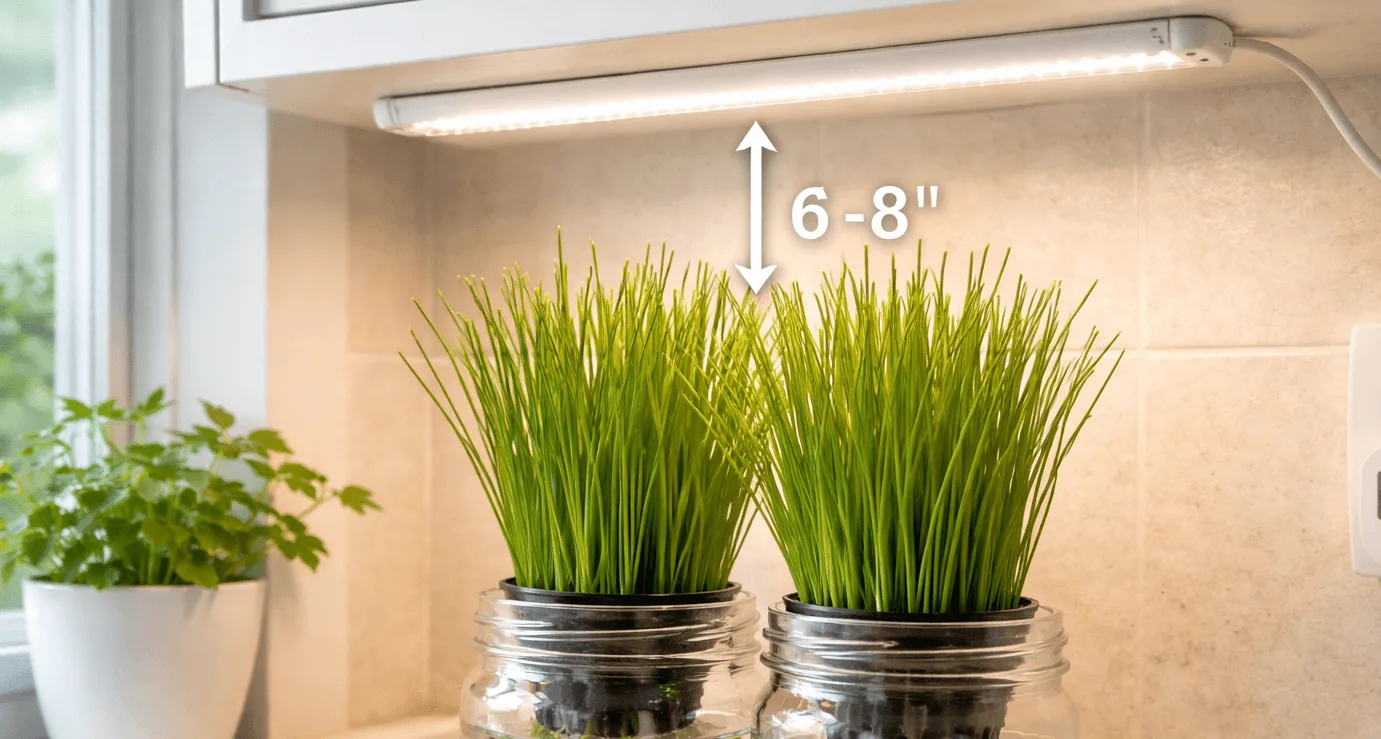
Use the free grow light calculator to find the right wattage for your space. The guide on how far grow lights should be from hydroponic herbs on a small shelf covers specific margins for each herb type. For budget-friendly light options, the guide to the best grow lights for low-light apartments under $50 covers the most cost-effective picks.
🌡️ Managing Ambient Apartment Temperatures
Chives prefer cooler environments compared to tropical crops like basil or tomatoes. Aim for a room temperature between 65°F and 72°F (18°C to 22°C). If your apartment runs warm, keep the system away from radiators and forced-air heating vents.
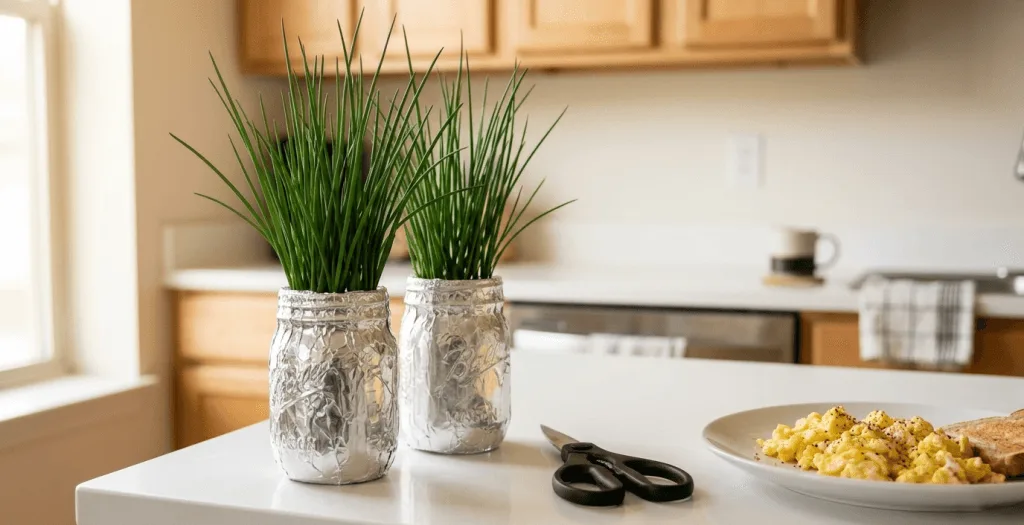
Heat stress causes the tips to wither and die. Reservoir temperature is even more critical than air temperature. Warm water holds less dissolved oxygen than cold water. If the liquid climbs above 75°F (24°C), the roots will struggle to breathe. This oxygen deprivation increases the risk of waterborne disease. If your counter gets too much direct afternoon sun, wrap your jars in reflective foil to deflect the heat.
🌬️ Adding Airflow For Strong Structural Stems
Indoors, plants do not experience wind. Wind serves an important biological purpose. It causes micro-tears in the plant tissue, forcing the stems to heal and grow thicker.
Without this gentle resistance, indoor herbs grow flimsy and pale. To fix this, place a small oscillating desk fan nearby. Aim it so it provides a gentle breeze across the canopy for a few hours each day. This constant movement forces the stalks to toughen up. A fan also prevents stagnant humidity from pooling under the leaves, which lowers the chance of fungal spores taking hold.
🔪 How To Harvest Hydroponic Chives Without Killing Them
Harvesting is the most rewarding part of the whole process. However, improper cutting technique will stunt the plant or kill it. You need clean, sharp scissors to make precise cuts without crushing the delicate vascular tissue.
A clean cut heals fast and blocks pathogens from entering the open wound. Do not pull or tear the stalks with your bare hands. Tearing damages the central basal plate where new growth originates. Track your exact harvest date with the free seed to harvest countdown calculator so you know when to make that first cut.
📏 The Two-Inch Rule For Safe Cutting
When you are ready to harvest, gather the outer stalks in a loose bunch. Use your scissors to slice cleanly across the group, making sure to leave 2 inches of stem above the net cup.
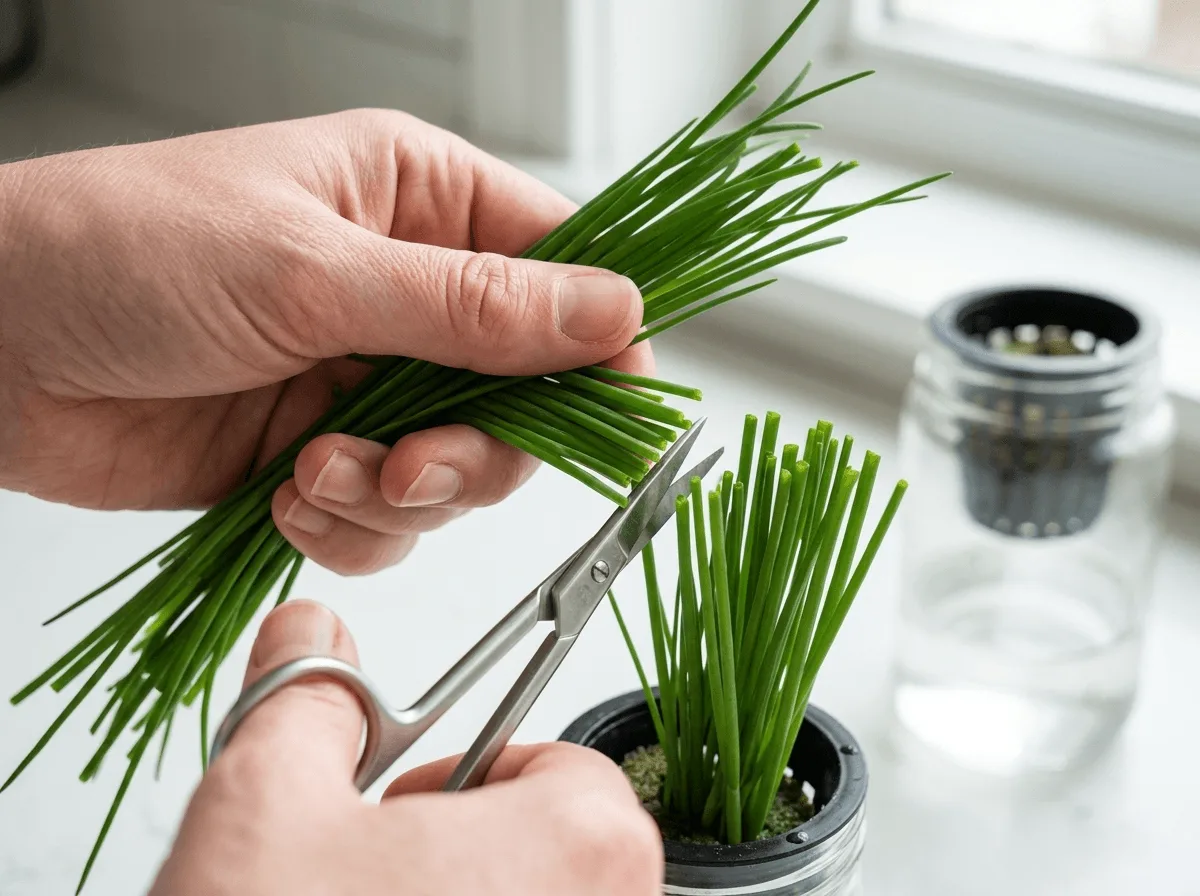
Leaving this base allows the plant to photosynthesize and recover. If you cut all the way down to the rockwool, the plant lacks the energy to regrow. It will sit there and eventually rot.
Always cut from the outside first, as those are the oldest leaves. The newer shoots emerge from the center of the cluster. By harvesting the perimeter, you give the central shoots room to expand outward.
❄️ Storing Your Fresh Yields For Later Use
Sometimes your setup produces more greens than you can eat in one sitting. Storing them correctly prevents them from turning into slimy mush in your refrigerator crisper drawer. Fresh, water-grown herbs hold more internal moisture than soil-grown versions, making them prone to rot if sealed in plastic.
Follow these storage steps:
- Gently pat the cut stems dry with a paper towel.
- Wrap the bundle loosely in a dry, clean cloth.
- Place the wrapped bundle inside an open glass jar in the fridge.
- Consume within five days for the best flavor.
Alternatively, chop them up and freeze them in ice cube trays with a little olive oil. This preserves their bright, oniony flavor for winter soups and stews.
🐌 What To Do If Growth Slows Down Post-Harvest
Sometimes a plant stops producing after three or four harvest cycles. This usually means the root zone is crowded or the nutrient balance is exhausted. The basal plate might also be choked by dead, decaying tissue from older cuts.
First, check the reservoir for thick, tangled root masses blocking the water flow. Second, empty the container and mix a fresh batch of nutrient solution. Third, trim away any dead or brown roots using sterilized scissors.
Finally, ensure your grow light is still positioned at the correct height. If you see pale foliage during this slowdown phase, the guide on why apartment hydroponic plants turn yellow and how to fix it covers the full diagnosis process.
🚨 Troubleshooting Common Hydroponic Chive Problems
Even in a controlled apartment setting, things go wrong from time to time. Water gardens are sensitive to hygiene. If you neglect your cleaning routine, bacteria and bugs will find their way in.
Catching problems early prevents a minor issue from ruining your entire crop. Inspect your plants every time you top off the water. Catching a pest early saves the whole harvest.
- Not sure what is wrong → start with Fixing Root Rot below
- You see bugs flying around → jump to Dealing With Fungus Gnats
🦠 Fixing Root Rot In Small Reservoirs
Healthy roots should look white or light tan. If you lift the net cup and see brown, slimy strands that smell like a swamp, you have root rot. This happens when the water lacks oxygen or gets too warm.
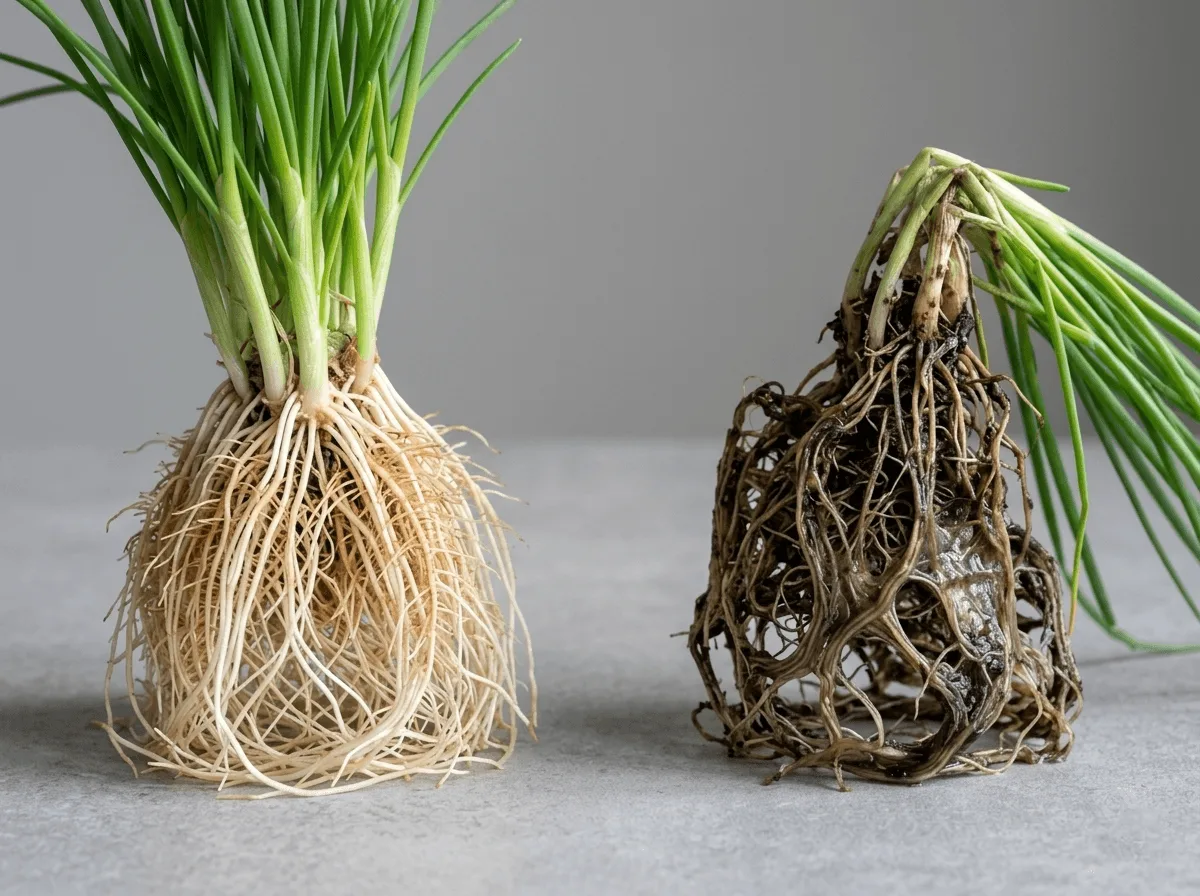
The roots become stressed and the plant will decline if left uncorrected. Here is how you fix the problem:
- Remove the affected plant from the system.
- Rinse the roots gently under lukewarm tap water.
- Trim away the worst of the brown slime with sterile shears.
- Sterilize the empty reservoir with diluted 3% hydrogen peroxide.
- Refill with fresh, pH-balanced nutrient solution at EC 1.2 to let roots recover.
While hydrogen peroxide helps clean reservoirs, mild dish soap and warm water works for standard maintenance. Too much peroxide will stress your plants, so use it sparingly. Full cleaning instructions are in the guide on how to clean a small hydroponic system without making a mess. The guide on how to prevent root rot before it starts covers every cause and early warning sign. If algae appeared alongside the rot, the algae in hydroponic jars guide shows how to seal the light leaks that cause both problems at once.
🧻 Dealing With Fungus Gnats And Flying Pests
Fungus gnats love exposed, damp growing media like rockwool or peat plugs. They lay eggs in the wet surface, and the larvae chew on the delicate upper roots. Spotting tiny black flies buzzing around your kitchen is a frustrating sign you need to act fast.
To stop them, cover the top of your net cups with dry clay pebbles or a layer of aluminium foil. This blocks light and dries out the top layer, making it hostile to flying pests. You must ensure you never let roots dry out underneath, but keeping the top dry is essential. Adding sticky yellow traps to the edge of your container will catch adult flies before they can lay a new generation of eggs.
🥀 Why Your Stems Are Falling Over
If your stalks look thin and flop over the side of the container, they lack structural strength. As covered earlier, poor lighting and zero airflow cause weak cell walls. Many new growers are surprised that upright, rigid stalks require more than water and nutrients.
First, measure the distance from your LED light to the top of the leaves. If it is more than ten inches, lower the light panel. Second, check your water level. If the water drops too low in a Kratky jar, the plant loses turgor pressure and wilts. Refill the reservoir so the liquid touches the bottom quarter of the root mass. The stems will perk back up within twelve hours.
💬 A Word From Sarah
When I first tried to grow hydroponic chives indoors, I made a classic beginner mistake. I planted the tiny black seeds far too deep inside my rockwool cubes. I thought they needed to be buried to sprout. Instead, they rotted in the damp cube before they ever saw the light. I learned to barely cover the seeds with a tiny pinch of media. Once I made that small change, germination jumped to ninety percent. Do not overcomplicate the seedling stage. Give them moisture, give them light, and step back. The less you mess with them early on, the stronger they grow. Let the water do the heavy lifting!
❓ Frequently Asked Questions
⏳ How long do hydroponic chives take to grow?
Most setups yield harvestable leaves in 4 to 6 weeks from seed. Starting from grocery store cuttings with roots already attached cuts that timeline by 2 to 3 weeks. Adequate light and correct nutrient levels are the two biggest factors in how fast the stalks reach a harvestable height.
🛒 Can I grow hydroponic chives from store-bought cuttings?
Yes. Buy a bundle with the white bulbous base and roots still attached. Clean the dirt off the roots under lukewarm water, then place the plant in your net cup with fresh clay pebbles. This bypasses the seedling phase entirely and gives you a head start of several weeks.
🧪 What is the best pH for hydroponic chives?
Keep your water pH between 5.8 and 6.2. This slightly acidic range allows the roots to absorb all essential nutrients without experiencing mineral lockout. Test your water every 3 to 5 days and adjust with pH Down if the number drifts above 6.5.
📉 Why are my hydroponic chives falling over?
Weak stems come from poor lighting or no indoor airflow. Lower your grow light so it sits 6 to 8 inches above the canopy. Add a small oscillating fan to mimic outdoor wind and strengthen the cell walls of the stalks. Results are visible within a few days.
🚿 How often should I change the water for indoor chives?
Perform a full reservoir change every 2 weeks to prevent stagnation and salt buildup. Dump the old liquid, rinse the container, and mix fresh nutrients. Between those major changes, top off with plain pH-adjusted water only.
🚫 Can I use regular potting soil fertilizers in my hydro setup?
No. Soil fertilizers lack the complete micronutrient profile required for soilless growing. They also contain organic matter that will clog pumps or pollute the reservoir, leading to bacterial blooms. Use a liquid fertilizer specifically formulated for hydroponics.
🍂 Why do my chive tips turn brown and crisp?
Brown tips point to nutrient burn from an EC level that climbed too high. Low humidity or intense heat also causes crispy tips. Dilute your reservoir with plain pH-adjusted water and recheck your EC with a digital meter. Target EC should stay between 1.2 and 1.8.
🌬️ Do I need an air pump to grow chives indoors?
No air pump is needed for the passive Kratky method. The air gap that forms as the plant drinks provides all the oxygen the roots need. DWC setups do require an air stone and pump. That churning action prevents root diseases and speeds up overall growth, but it adds noise to your space.
Happy growing! 🌿
— Sarah, Urban Hydro Space

Sarah is the founder of Urban Hydro Space and an indoor gardening enthusiast dedicated to helping apartment dwellers grow fresh herbs and vegetables in small spaces. With hands-on experience testing hydroponic systems, she shares practical tips and honest product reviews to make indoor gardening accessible for beginners.