

⏳ 15 min read · Last updated: September 2026
Disclosure: As an Amazon Associate, Urban Hydro Space earns from qualifying purchases at no extra cost to you. This post contains affiliate links. Some of the gear here I have grown with myself. The rest I research thoroughly before it earns a place on this page, and I always tell you which is which. Thank you for supporting Urban Hydro Space!
🌱 Hands-on tested: the KETOTEK pH, EC and temperature meter. I have used it in my own grows. 🔎 Research pick: everything else in this post, chosen from published specifications and listings. How I test and choose products.
Surviving a hydroponics power outage comes down to one counterintuitive move: take water out, not put more in. When the power goes, Deep Water Culture basil can start wilting within hours while the reservoir sits completely full. That is the trap. A full reservoir with no pump is not a safety margin, it is a drowning hazard.
You do not need a generator to get through this. A few minutes of work buys you days of survival time, and the whole plan fits on one page. If you are new to indoor growing, the apartment hydroponics beginners guide covers the fundamentals worth having in place before the next outage. Here is what to do when the lights go out.
Drain enough solution to leave a 1-inch air gap under the net cup, then unplug everything at the wall. Those two actions cover most of the risk.
Do not top the reservoir up. Do not add nutrients. The instinct to give plants more water in a crisis is the single most expensive mistake in hydroponics.
Key Takeaways
- Lower the water to leave a 1-inch air gap beneath the net cup. This converts DWC into Kratky.
- Unplug everything, because the surge when power returns kills more gear than the outage does.
- Hold water at 65 to 75°F (18 to 24°C). Heat is far more dangerous than cold here.
- Feed nothing during the outage, then recover at EC 1.2 to 1.5 for 4 to 7 days.
- Finish with a full reservoir change every 2 weeks once you are back to normal.
NFT is the outlier and it deserves the warning. A nutrient film system holds almost no water by design, so when the pump stops the roots are dry within hours rather than days. If your grid is unreliable, that alone is a reason to pick a different method.
- Frequent grid problems → stick with the Kratky method since it needs no power at all
- Reliable power but you want speed → build a DWC setup and keep a drain plan
The full trade-off is in DWC vs Kratky for apartment beginners.
What Happens During A Hydroponics Power Outage
When the electricity fails your garden loses its life support, though not all of it at once. Two clocks start running at different speeds, and knowing which one matters saves the crop.
Oxygen Depletion Is The Fast Clock
Your air stone stops, so dissolved oxygen starts falling immediately. Roots keep consuming it regardless, therefore the water around them goes anaerobic within hours rather than days. Mature plants burn through it faster than seedlings, which means your biggest, healthiest plant is the first one at risk.
Here is why the full reservoir is the problem. Submerged roots in still water have no oxygen source at all. Expose part of the root mass to air and those roots start breathing atmosphere directly, exactly as they do in a Kratky jar. That single change is worth days. For the pathogen timeline behind it, see preventing root rot in small hydroponic systems.
Light Is The Slow Clock
Herbs run on 14 hours on and 10 hours off. When the panels die the plants simply pause, since photosynthesis stops and nutrient uptake slows with it. That is survivable for a surprisingly long time.
So do not panic about a missed cycle or three. Extended darkness weakens stems and pales the leaves, but it rarely kills anything, and plants recover. Meanwhile the oxygen problem can finish a plant in 48 hours. Fix the water first, then worry about light. If your apartment is dim even normally, the north-facing apartment grow light strategy covers working with poor windows year-round.
The First-Hour Hydroponics Power Outage Action Plan
Work calmly through this in order. You are converting an actively circulated system into a passive one, which is a physical change rather than a clever one.
Unplug Everything First
Surges happen when the grid comes back, not when it fails. So the damage usually arrives at the moment you are relieved, and it takes out the gear you need most. Unplugging is free and beats any hardware, though a surge protector strip covers you for the outages you sleep through.
- Unplug grow lights and smart garden bases at the wall.
- Disconnect inline timers, since they reset to random schedules after a cut.
- Pull air pump plugs, because a surge can blow the internal diaphragm.
- Move cords clear of anything you are about to pour.
Convert DWC to Kratky
This is the move that matters. The Kratky method works because an air gap sits above the water line and feeds the roots oxygen from the atmosphere. DWC keeps the water high and relies entirely on the pump, so removing the pump without removing water leaves the roots with nothing.

- Lift the net cup gently out of the reservoir or basin.
- Pour solution into a spare bucket, and keep it rather than tipping it away, since you may want it back.
- Replace the net cup so a 1-inch air gap sits beneath the basket.
Do not go further than an inch on the first pass. Too large a gap strands the roots above the water and dries them out, which trades one problem for another.
Temperature Control in a Hydroponics Power Outage
Water temperature decides how much oxygen your solution can hold, so once circulation stops you become the thermostat. Aim for 65 to 75°F (18 to 24°C). A stick-on thermometer costs very little and tells you which way the problem is running, which matters because the two directions need opposite responses.
Summer Outages Are The Dangerous Ones
Heat is the emergency. Above 75°F (24°C) oxygen capacity drops just as pathogens speed up, and the plants drink faster, concentrating the salts left behind. Three failures compound at once, therefore a summer outage can finish a plant in a day and a half.
- Stand a sealed frozen bottle against the outside of the reservoir, never in the solution.
- Wrap the outside of the basin with a towel to slow warming.
- Move the whole setup to the floor, away from windows. Floor level is reliably the coolest air in a small apartment.

Winter Outages Give You Time
Cold is uncomfortable rather than lethal. Drafts near a window can pull water below 65°F (18°C), which stalls growth, though it rarely kills anything overnight. So you have days to act instead of hours.
Wrap reservoirs in a mylar emergency blanket or an old coat, since insulation slows heat loss in both directions. Move the setup away from balcony doors and exterior walls. Then leave it alone, because a dormant plant in cold water needs nothing from you.
Backup Gear For A Hydroponics Power Outage
Preparation beats improvisation, though you need far less than the prepper forums suggest. Three cheap items cover almost everything, and the wider kit list is in the hydroponic accessories guide.
A Battery-Powered Air Pump
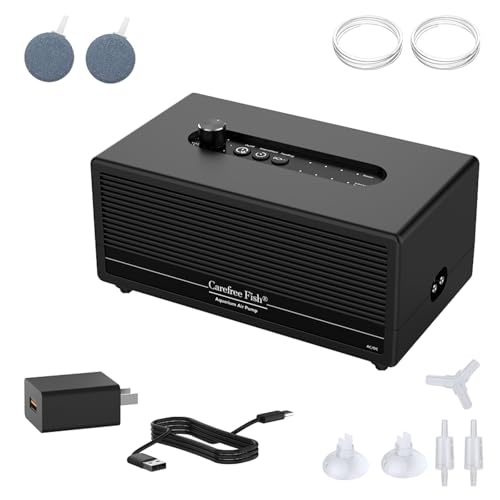
This is the one piece of gear worth buying before you need it, because it removes the draining step entirely. The Carefree Fish 6W battery backup pump runs on mains and switches to its own lithium cell the moment power drops, with no input from you. That matters more than capacity, since a pump that only helps when you are home to flip a switch is not a backup.
It holds 15 to 24 hours continuous or up to 96 hours in intermittent mode, which is enough for almost any apartment outage. It also ships with 15 ft of silicone tubing, two air stones, two check valves and a Y connector, so nothing else is needed to run it.
$54.99
Prices are pulled from Amazon and were last checked on 8 October 2026 at 10:41 pm. Amazon prices change often, so check the listing before buying.
It costs roughly three times a basic mains pump, so here is the way to think about it. Do not buy it as emergency kit that sits in a cupboard. Buy it as your everyday pump that happens to have backup built in, and the decision becomes a modest premium for never having to think about outages again. Against a reservoir of mature plants that is easy arithmetic. If you only want a standard pump, the best quiet air pumps for hydroponics covers the apartment-friendly options.
Battery pumps do run louder than mains ones. A rubber and cork anti-vibration pad under the chassis kills most of it, since what you actually hear is vibration transmitting into the worktop rather than the motor itself.
A USB Clip Light and a Power Bank
Plants stretch badly in the dark and some never straighten out. A clip-on gooseneck grow light running off a power bank gives enough spectrum to hold them steady, and it draws about 10 W. Position it 6 to 8 inches above the canopy, the same height you would use normally.
One thing to know before you set it. Its built-in timer offers 4, 8, 12 or 18 hours, and none of those is the 14 you actually want. Do not split the difference upward either, because 18 hours leaves only a 6-hour dark period when plants need 10 to move sugars into their roots. Once power is back, run it from a plug-in timer and ignore the onboard presets.
Do not expect real growth from this. The goal is survival, not harvest, and a clip light delivers a fraction of what a proper panel does. Full-spectrum LED panels draw far too much for a standard power bank, so do not plan around running one.
A Meter You Can Read Without Power
Battery pens keep working when nothing else does, which matters because the recovery phase is where most post-outage losses actually happen. A combo pen reading pH, EC and temperature covers all three numbers this article depends on, and the KETOTEK meter is the budget pick. Comparisons are in the best pH meters for beginners and the best EC and TDS meters for small reservoirs.
Recovering From A Hydroponics Power Outage
The recovery kills more plants than the outage. That sounds wrong, yet it is what I see most often, because people restore full light and full-strength nutrients the moment the power returns and the plant cannot cope with either.
Check The Roots Before You Plug Anything In
Stagnant water breeds the pathogens that destroy fine root hairs. Look and smell before restarting, since a pump circulating infected water spreads it through the whole system in minutes.

If you find slime or a sour smell:
- Lift the plant and rinse the roots under cool running water.
- Drain the reservoir completely, then scrub the walls rather than rinsing them, because biofilm survives a rinse. The mess-free method is in cleaning a small hydroponic system.
- Treat with hydrogen peroxide for root rot at 3 ml per liter.
- Refill with plain pH-adjusted water for the first day, and add nutrients only once the plant stops drooping.
🔎 Quick diagnosis table
| What you see | Most likely cause | Check this first |
|---|---|---|
| 🟡 Yellow lower leaves | Oxygen starvation while submerged | Confirm the air gap, then see yellow leaves |
| 🟤 Brown slimy roots | Water climbed past 75°F while still | Temperature, then dump and scrub |
| 🟢 Leggy pale stems | Light deprivation, so mostly cosmetic | Drop the light back to 6 to 8 inches |
| 🍂 Crispy leaf edges after restart | Fed too strong, too soon | EC, then dilute to the recovery range |
Resetting pH and Nutrient Levels
A still reservoir lets salts settle and pH drift, so test both before you correct anything. My guide on why hydroponic pH keeps drifting explains these post-blackout swings. Hold pH at 5.5 to 6.5, with cilantro and chives in the upper half at 6.0 to 6.5.
Then feed weak. A stressed root system with reduced surface area cannot process a normal dose, and the salt burn that follows looks exactly like the outage damage you are trying to fix. Hold EC at 1.2 to 1.5 for 4 to 7 days, then step back to the crop’s normal range.
| Crop | Normal mature EC | Hold for 4 to 7 days after |
|---|---|---|
| Basil | 1.0 to 1.6 | 1.2 to 1.5 |
| Mint | 2.0 to 2.4 | 1.2 to 1.5 |
| Parsley | 1.4 to 1.8 | 1.2 to 1.5 |
| Cilantro (pH 6.0 to 6.5) | 1.4 to 1.8 | 1.2 to 1.5 |
| Lettuce | 1.0 to 1.4 | 1.0 to 1.2 |
Lettuce is the exception, since its normal range already sits at the bottom. Everything else steps down. Run the numbers for your container through the free pH and nutrient calculator and for full crop targets see the best herbs for small hydroponics or EC and nutrient strength for apartment herbs.
Restore light gradually too. Go straight back to a full 14 hours on and 10 hours off and a pale, stretched plant will scorch, so run 8 to 10 hours for the first two days. Then finish with a full reservoir change every 2 weeks and check the schedule per system in how often to change hydroponic water. An outage pushes your harvest date back, so re-run the dates through the seed to harvest calculator once growth restarts.
A Word From Sarah
The panic move in a blackout is to fill a countertop smart garden to the very brim with fresh tap water, and it smothers every air root the plants have. Chives treated that way are yellow and limp by morning. So I drain the basin halfway the moment the lights go out, which takes about ninety seconds. The instinct to give plants more water in a crisis is almost always wrong in hydroponics.
The second half of the lesson comes after the power returns. Plugging everything in at once, running the full light schedule and mixing nutrients at normal strength to make up lost time can brown the leaf edges within days, because the plant is running on a reduced root system. So I hold the solution weak and the lights short for the first few days after an outage.
Frequently Asked Questions
How long can plants survive a hydroponics power outage?
Three to five days for DWC and smart gardens, provided you lower the water to leave an air gap. Kratky setups last weeks, because they already run without power. NFT and tower systems are the exception at roughly 12 hours, since they hold almost no water once the pump stops.
Why should I drain water instead of adding it?
Because submerged roots in still water have no oxygen source at all. The pump was supplying it, so once the pump stops a full reservoir suffocates the plant. Lowering the level exposes part of the root mass to air, and those roots start breathing atmosphere directly. It feels wrong, yet it is the single most useful thing you can do.
Should I move my plants outside during a blackout?
No, unless outdoor temperatures closely match your apartment. Sudden sun or cold wind shocks roots that have only ever known stable indoor conditions. Put them near a bright window instead, and draw the blinds partly during afternoon sun so the still water does not overheat.
Does a power outage cause pH to drift?
Yes. Without circulation the salts settle and pockets of different concentration form through the reservoir, so a reading from the top may not represent the whole thing. Stir it daily and test, keeping pH at 5.5 to 6.5. Test again once power returns, and correct before adding any nutrients.
Will my plants die if the water goes cold?
Rarely. Roots tolerate cold far better than heat, though growth stalls. Below 60°F (15°C) plants go effectively dormant, which is survivable for days. Wrap the reservoir to slow further heat loss, then resume normal feeding once you are back above 65°F (18°C).
How can I aerate the water without a pump?
Scoop out a cup of solution and pour it back from a height, twice a day. The splash entrains air and raises dissolved oxygen measurably. It is not equivalent to an air stone, but combined with an air gap it keeps roots alive for several days.
Can I run grow lights off a battery bank?
Small USB clip lights, yes, for several hours. Full-spectrum LED panels draw far too much for a standard portable charger, so do not plan around one. Keep a clip light 6 to 8 inches above the canopy, and treat it as stretch prevention rather than as growth.
Should I feed my plants during a blackout?
No. Without light the plants are barely taking anything up, so added nutrients simply concentrate and burn stressed roots. Use plain pH-adjusted water for any top-offs until the power returns, then bring strength back gradually. My guide to topping off small systems covers doing it without spiking EC.
What EC should I use after the power comes back?
Hold EC 1.2 to 1.5 for 4 to 7 days, then return to the crop’s normal range. Lettuce is the exception at 1.0 to 1.2, since its usual range is already low. Feeding full strength immediately is the most common way people lose a plant that survived the outage itself.
How do I restart my smart garden after the grid returns?
Inspect the roots first, then do a full reservoir change to clear stagnant water and settled salts. Scrub the basin rather than rinsing it. Refill at EC 1.2 to 1.5 run the light 8 to 10 hours for two days before returning to 14 on and 10 off and test pH before you plug anything back in.
Happy growing! 🌿
Sarah, Urban Hydro Space

Sarah Whitfield is the founder of Urban Hydro Space and an indoor gardening enthusiast dedicated to helping apartment dwellers grow fresh herbs and vegetables in small spaces. She researches hydroponic systems carefully from real specifications and verified buyer feedback, and shares practical tips and honest, clearly labeled product picks to make indoor gardening accessible for beginners.


