⏳ 13 min read · Last updated: March 2026
Growing hydroponic parsley in a small apartment tests your patience at first. However, having fresh herbs right on your kitchen counter makes the effort worthwhile. Getting those tiny seeds to sprout can frustrate any beginner, and many people abandon the project before a single leaf appears. If you understand the expected timeline, you will succeed. You do not need a massive backyard or a complicated greenhouse. A glass jar and some basic nutrients will yield a steady harvest of the best herbs for small hydroponics.
- Parsley seeds require up to three weeks to sprout.
- The ideal nutrient target is an EC 1.2 to 1.8.
- Keep your water acidity balanced between pH 5.5 to 6.5.
- Always perform a full reservoir change every 2 weeks.
- Want the fastest growth → Flat-leaf (Italian) parsley
- Need a compact plant for a low shelf → Curly parsley
- Cooking authentic Mediterranean dishes → Flat-leaf (Italian) parsley
- Why Hydroponic Parsley Is Perfect For Apartments
- Choosing Your Setup For Hydroponic Parsley
- Lighting And Temperature Rules For Healthy Herbs
- Nutrients And pH For Bright Green Leaves
- How To Harvest Hydroponic Parsley Continuously
- Troubleshooting Common Hydroponic Parsley Problems
- A Word From Sarah
- Frequently Asked Questions
🌴 Why Hydroponic Parsley Is Perfect For Apartments
Growing indoor herbs protects your plants from harsh weather and garden pests. In an apartment, you manage the climate directly. As a result, you can cultivate a steady supply of garnish all year long without worrying about the changing seasons.
Many soil gardeners watch their crops die back during winter. In contrast, an indoor water-based system keeps the roots fed and happy. The plant focuses on growing lush foliage rather than surviving cold nights.
⏱️ The Reality Of Parsley Germination
Parsley seeds take their time waking up in any environment. You might wait 14 to 21 days just to see a green speck emerge. Therefore, you must keep the rockwool cubes moist throughout this entire waiting period.
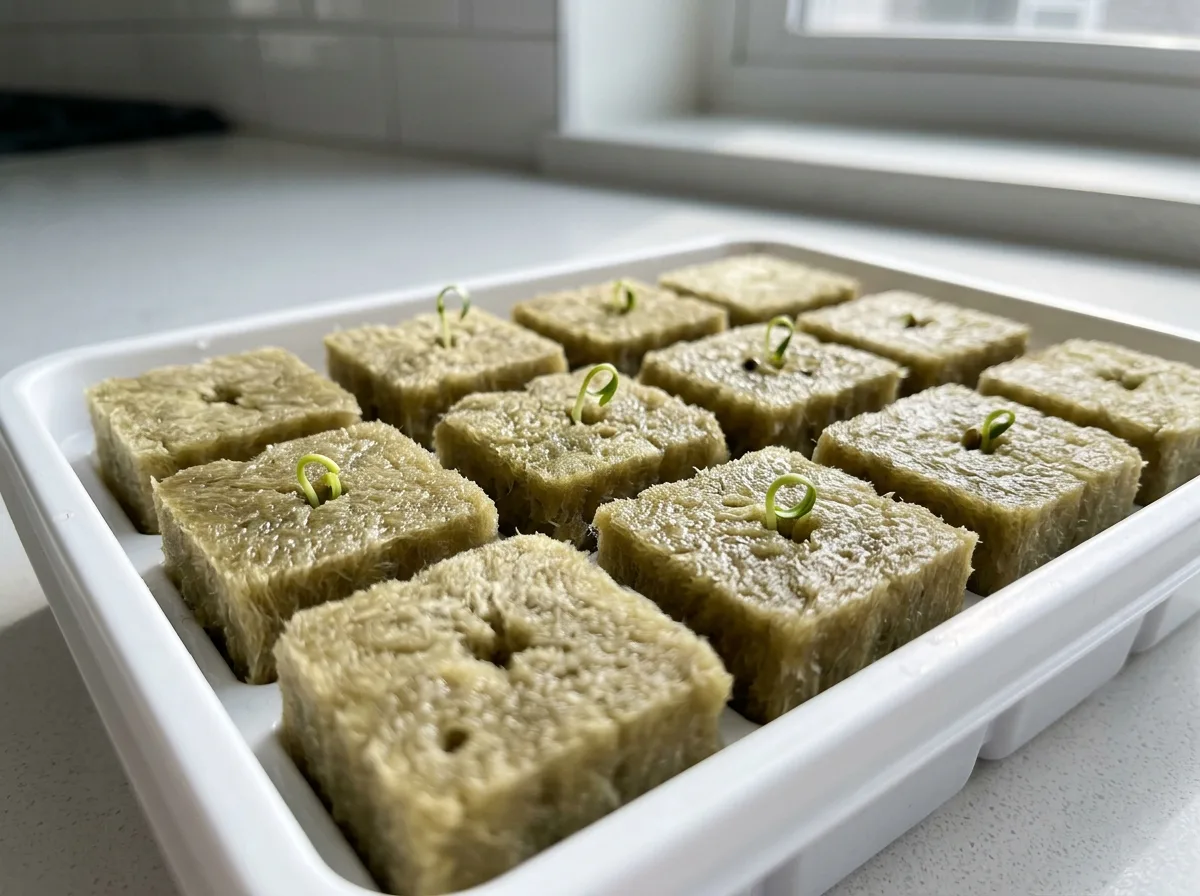
Do not let the cubes dry out at any point. If the medium feels light, pour a small amount of plain tap water into your tray. You can also track your exact harvest date to stay motivated during this slow phase.
📏 Space Requirements On A Kitchen Counter
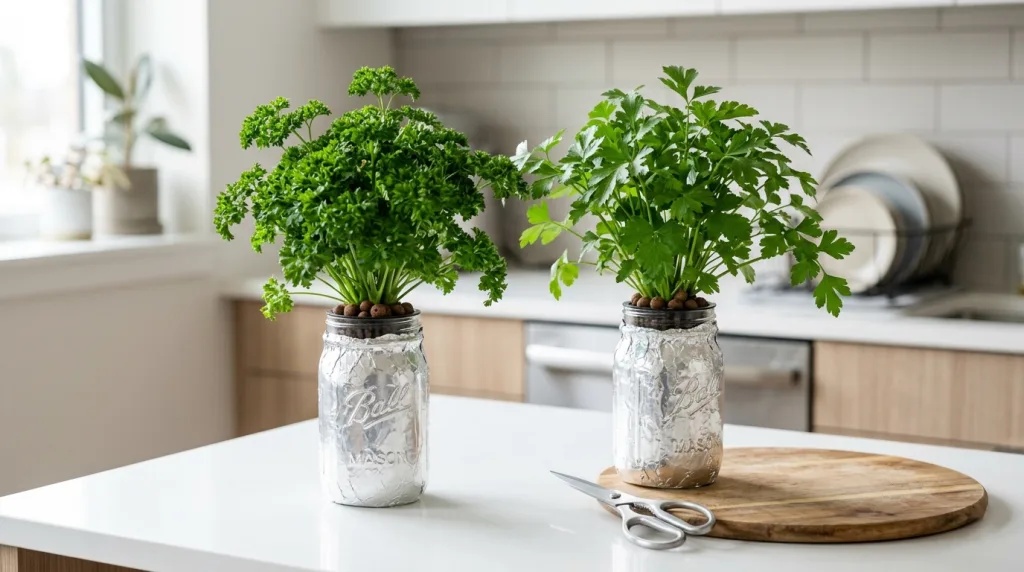
Hydroponic herbs stay compact when given enough overhead light. Flat-leaf varieties grow taller, reaching about 12 to 18 inches in height. Curly parsley, however, forms a dense bush closer to the base.
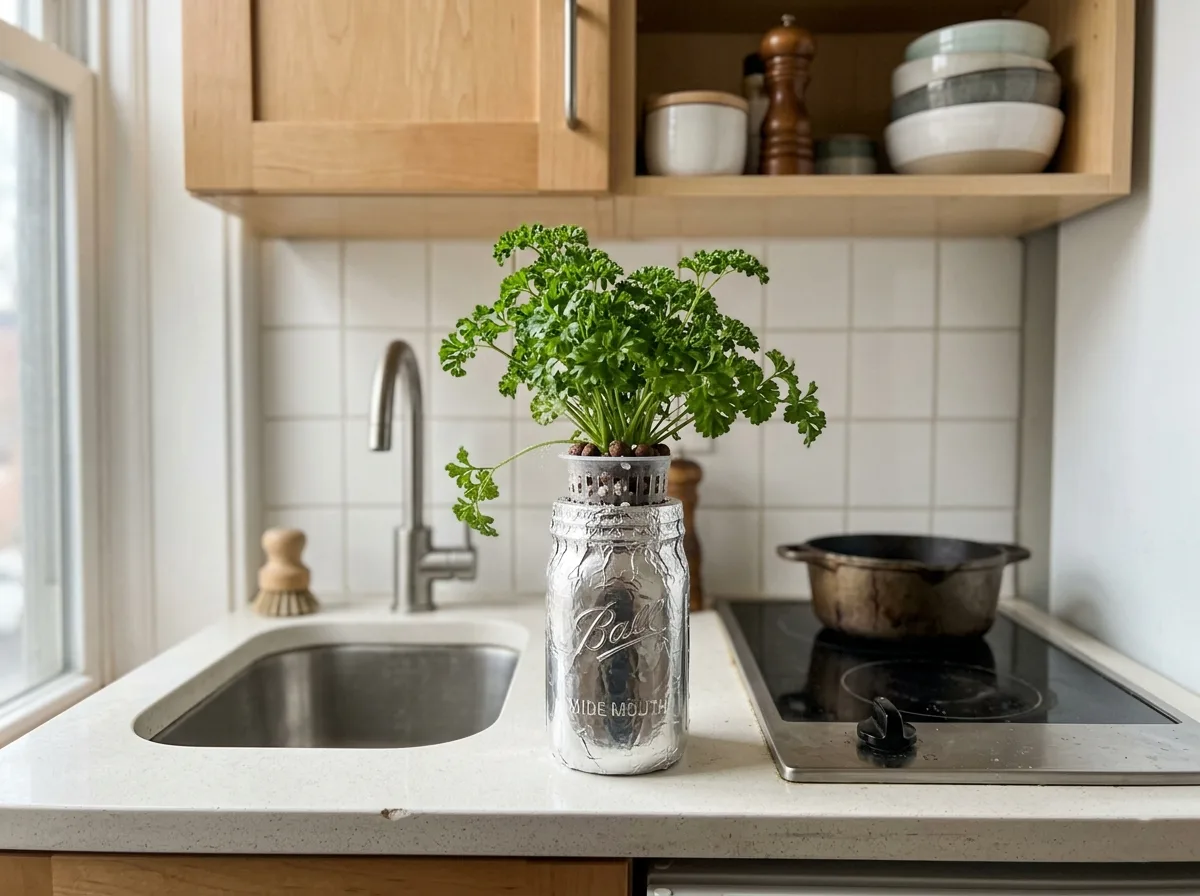
You can fit a thriving parsley plant in a single mason jar. This herb works well in tiny studio apartments where counter space is limited. The small footprint lets you grow food without sacrificing your prep area.
🥗 Fresh Yields Over Grocery Store Waste
Buying fresh herbs at the grocery store often leads to food waste. You purchase a large bunch for a single recipe, and the rest wilts in the crisper drawer. Watching that expensive bunch turn to mush is genuinely infuriating.
Growing your own supply solves this frustrating cycle. You harvest only what you need for tonight’s dinner. The plant stays alive on your counter, ready for your next culinary project.
🧙 Choosing Your Setup For Hydroponic Parsley
Selecting the right container dictates how much maintenance you’ll perform every week. You can build a custom system or purchase an automated unit depending on your preference. Before you start, build a complete shopping list for your setup so you have all the necessary parts ready.
Both passive and active systems grow excellent indoor crops. The final choice comes down to your budget and available electrical outlets in the kitchen.
→ Deep Water Culture vs Kratky for Tiny Apartments
→ 4 Best Beginner Hydroponic Starter Kits Under $100 for Apartments
🏺 The Kratky Method For Low Maintenance
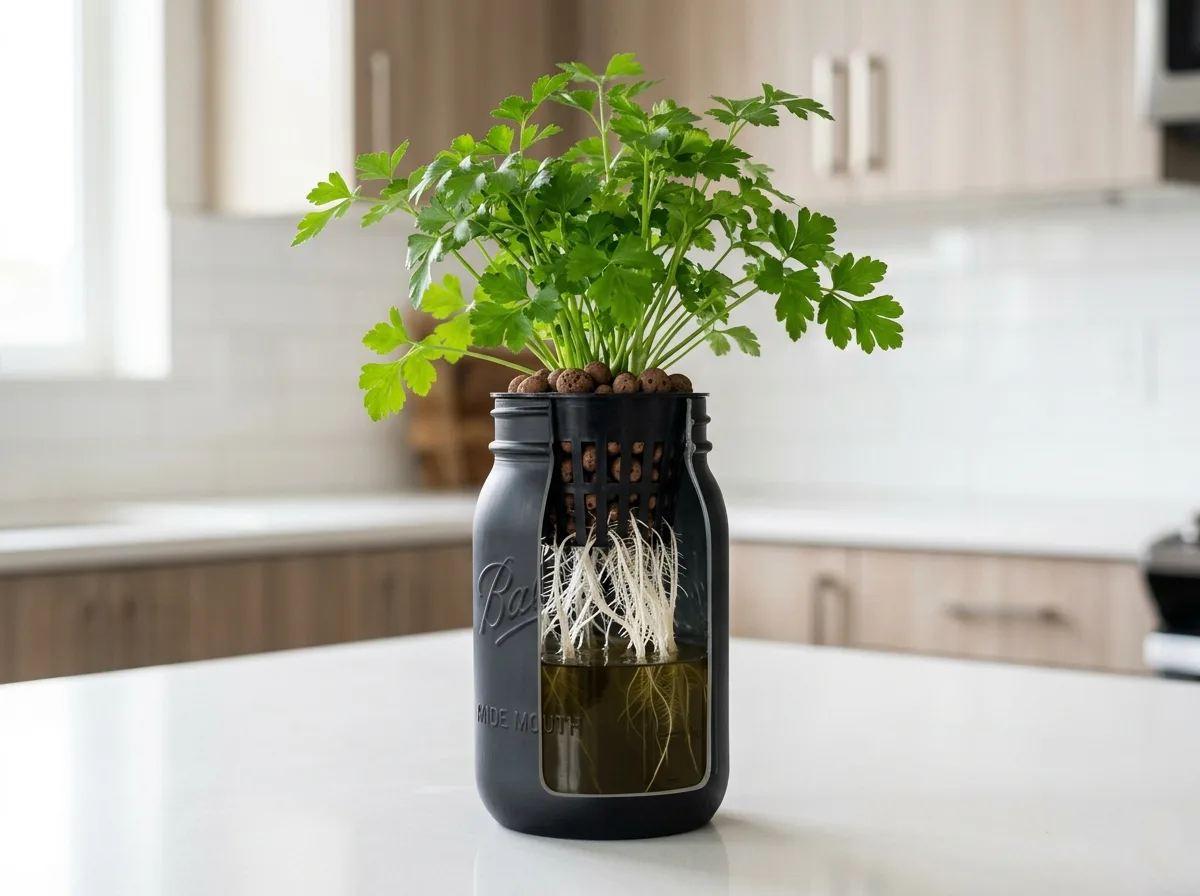
The Kratky method requires no electricity to function. You fill a light-proof jar with nutrient solution and place a net cup on top. As the plant drinks, the water level drops inside the container.
This drop creates an essential air gap inside the jar. The roots adapt by growing fine hairs to absorb oxygen from the humid air. You do not need an air pump, which keeps your apartment quiet.
🌊 Deep Water Culture For Speedy Growth
Deep Water Culture uses an electric air pump and a porous air stone. The stone bubbles, pushing dissolved oxygen into the liquid. That extra oxygen is why your hydroponic parsley grows faster in this setup.
If you upgrade to a larger active setup, you’ll manage both a water pump for circulation and an air pump for aeration.
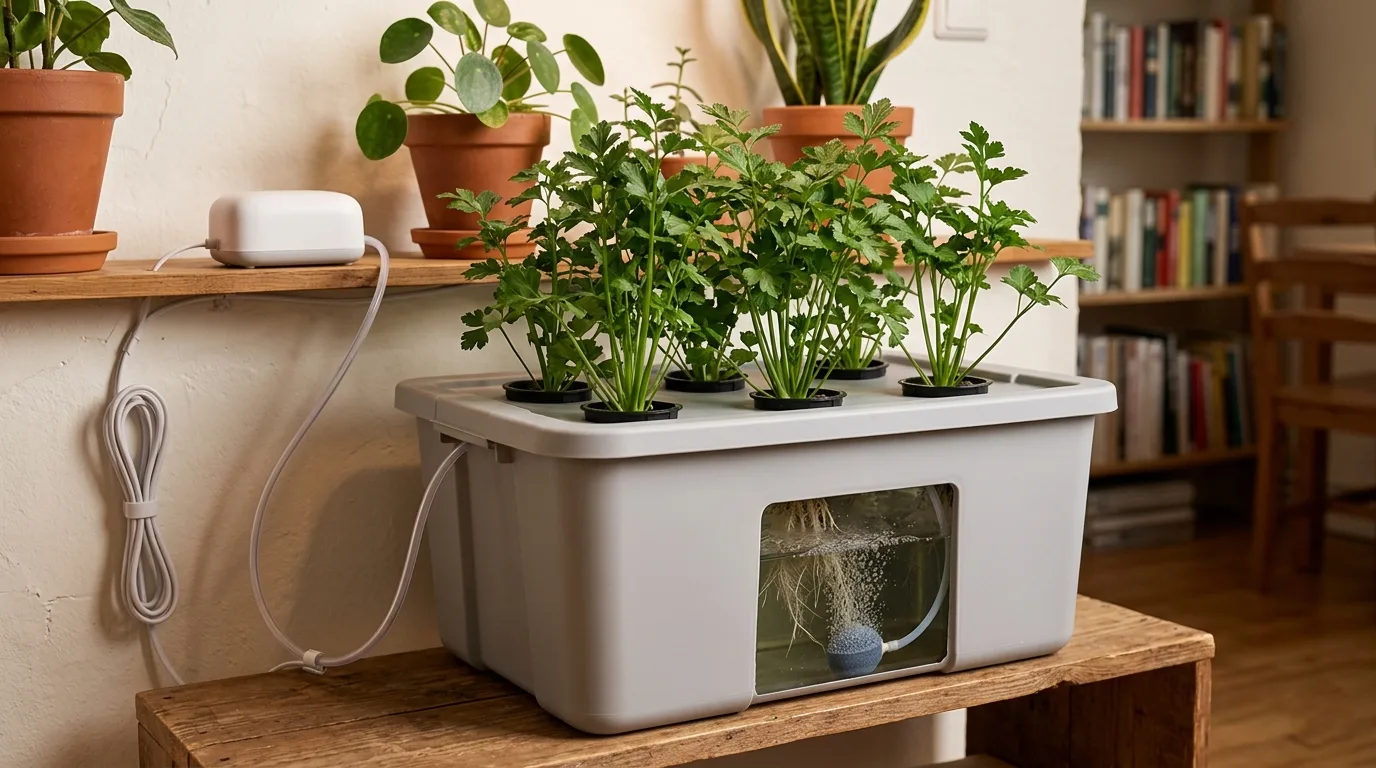
Place your air pump above the water level so it does not siphon liquid during a power outage. If the bubbling vibration is loud, place a folded towel under the pump case to dampen the sound.
🔌 Automated Smart Gardens For Beginners
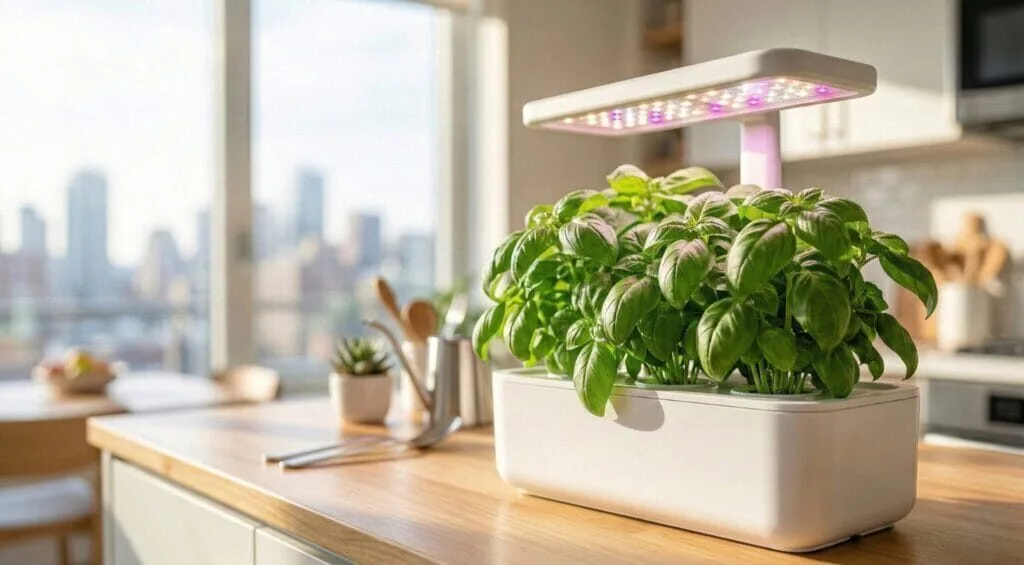
Countertop smart gardens take the guesswork out of the process. These units feature built-in LED panels and automatic timers. You spend less time adjusting equipment and more time enjoying the harvest.
The initial cost is higher than a DIY jar. However, the sleek design looks great in a modern apartment kitchen. These systems alert you when the water runs low, protecting your plants from accidental droughts.
💡 Lighting And Temperature Rules For Healthy Herbs
Without sufficient light, indoor parsley grows tall and weak. The thin stems stretch toward the nearest window and eventually flop over the edge of the container. You must provide a strong, overhead light source to build sturdy stalks.
The right environment mimics a mild spring day. Keep the area comfortable and avoid placing your system next to drafty windows or heating vents. Extreme temperature swings stress young seedlings significantly.
| Growth Stage | Light Duration | Ideal Temperature |
|---|---|---|
| Germination Phase | Ambient light | 70°F (21°C) to 75°F (24°C) |
| Vegetative Growth | 14 hours | 65°F (18°C) to 70°F (21°C) |
☀️ Finding The Sweet Spot For LED Lights
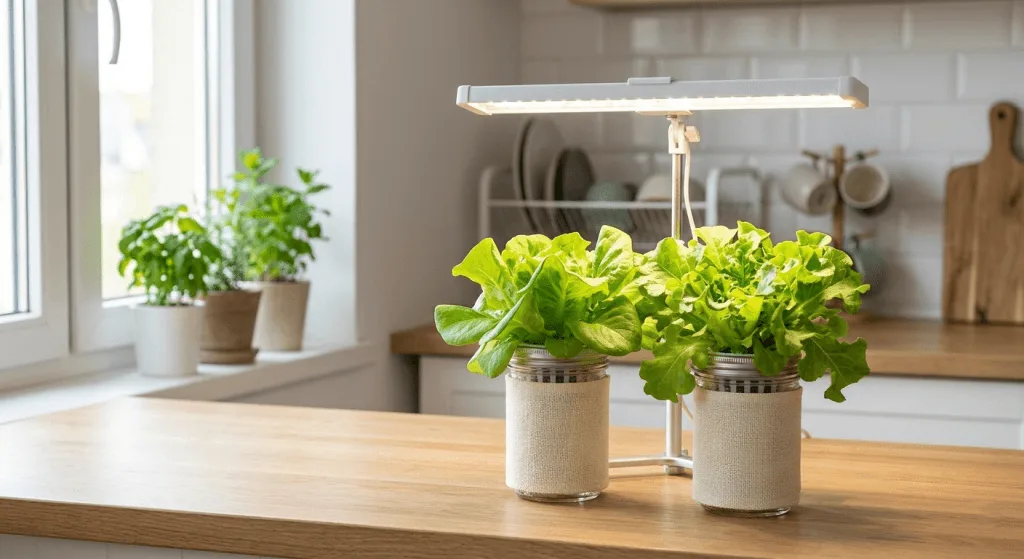
Position your LED panel 6 to 8 inches above the plant canopy. If the leaves turn pale yellow at the tips, the light might be too close. You can calculate the right wattage for your space to avoid burning the delicate foliage.
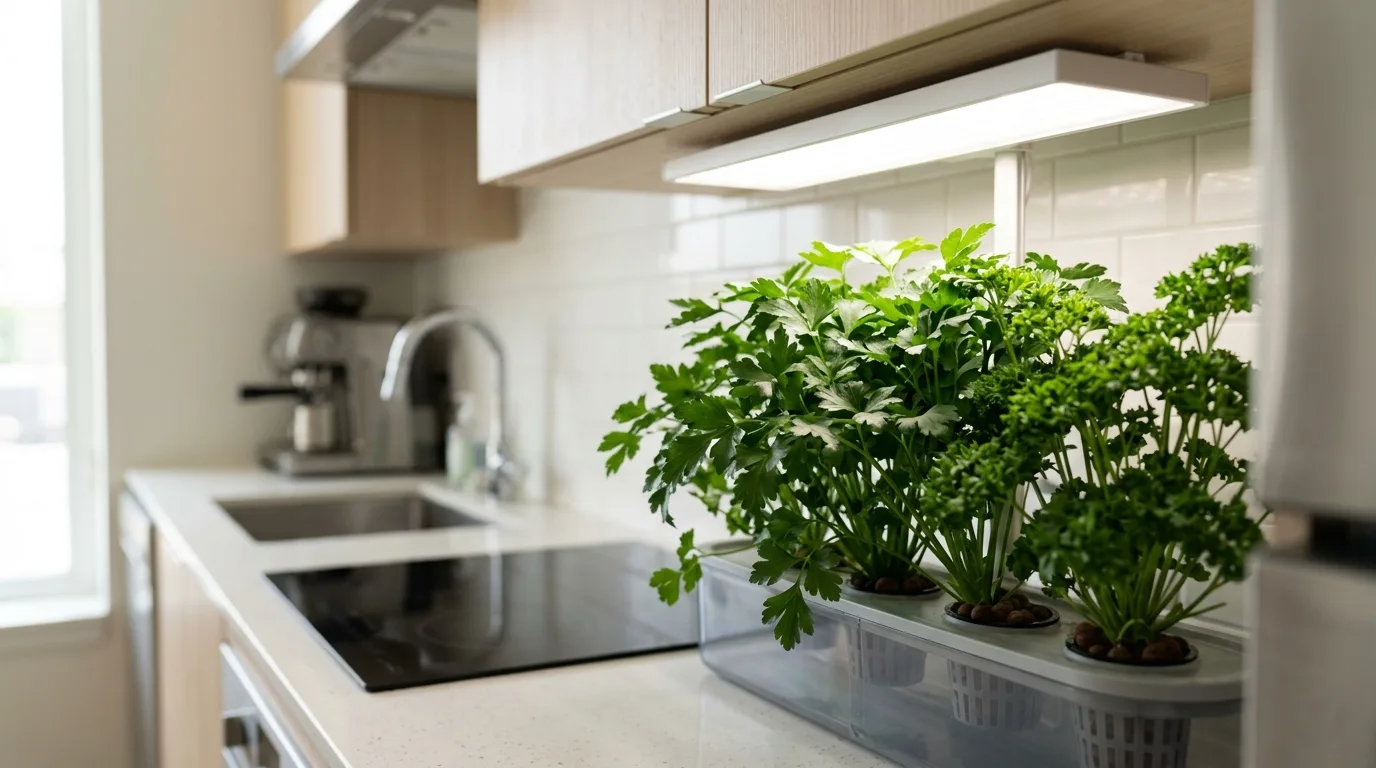
Run the lights on a consistent schedule. Check out the easiest light schedule for apartment hydroponics if you want to align the timer with your work shifts.
🌡️ Keeping The Environment Cool Enough
Parsley prefers cooler weather compared to basil or peppers. If your apartment gets too hot, the plant might bolt. Bolting means the plant produces a flower stalk and the leaves turn bitter.
Keep the room temperature below 75°F (24°C) if possible. Your water reservoir should also stay out of direct sunlight. Warm water holds less oxygen and encourages harmful bacterial growth.
🌙 Providing A Restful Dark Period
Plants need sleep just like humans do. Leaving the grow lights on all night interrupts their natural metabolic cycles. Therefore, you should give your herbs at least eight hours of darkness each night.
A cheap smart plug automates this routine. You set the schedule once on your phone, and the lights handle themselves. This hands-off approach prevents you from forgetting to flip the switch before bed.
🧪 Nutrients And pH For Bright Green Leaves
Hydroponic plants rely on you for their food. Tap water lacks the complete mineral profile required for thick, flavorful foliage. Therefore, you must mix a balanced hydroponic fertilizer into the reservoir to sustain growth.
The water acidity matters just as much as the food concentration. If the pH strays out of range, the roots suffer from nutrient lockout. The plant will starve even if the water is full of expensive fertilizer.
→ University of Minnesota Extension: Small-Scale Hydroponics Guide
⚖️ Mixing The Perfect Solution
I ruined my first crop by keeping the concentration at an EC 2.4. The leaves turned brown around the edges within three days. Dropping the strength to an EC 1.6 fixed the issue on my next round.
Always mix the micro-nutrients first, then stir well before adding the macro-nutrients. This prevents the minerals from clumping together in the pitcher. You can use our free pH and nutrient calculator to determine the exact dosage for your container size.
⚗️ Routine Reservoir Maintenance
A fresh reservoir keeps your plants vibrant and disease-free. Top off the jar with plain tap water during the week as the plant drinks. Then, perform a full reservoir change every 2 weeks.
If your pH fluctuates fast, you must act quickly to protect the roots. Follow these steps to correct the imbalance safely:
- Empty the affected reservoir into the sink.
- Rinse the roots gently under lukewarm water.
- Refill the container with fresh, filtered water.
- Add a half-strength dose of your fertilizer.
- Measure the acidity using a reliable digital pH meter.
📉 Managing Acid Drifts During The Week
Water naturally shifts in acidity as the plant consumes minerals. You’ll notice the pH creeping upward over a few days. For this reason, you should test the water every three days.
Add tiny drops of acid to correct the drift. Stir the water vigorously after each drop to ensure an accurate reading. Patience during this step prevents wild swings that stress the root zone.
✂️ How To Harvest Hydroponic Parsley Continuously
The goal of indoor gardening is a continuous yield. If you cut the plant incorrectly, you stunt its growth for weeks. Proper pruning techniques encourage the plant to produce thicker, tastier foliage.
Hydroponic herbs grow from the center outward in most cases. The newest leaves emerge from the middle of the crown. For this reason, you must protect the inner core at all costs.
🔪 The Outer Stem Cutting Method
When you need garnish, locate the oldest, thickest stems on the outside of the plant. Follow the stem down to the base. Snip the stem about 1 inch above the base.
Never snip just the leaves off the top. Leaving a headless stalk attached to the base wastes the plant’s energy.
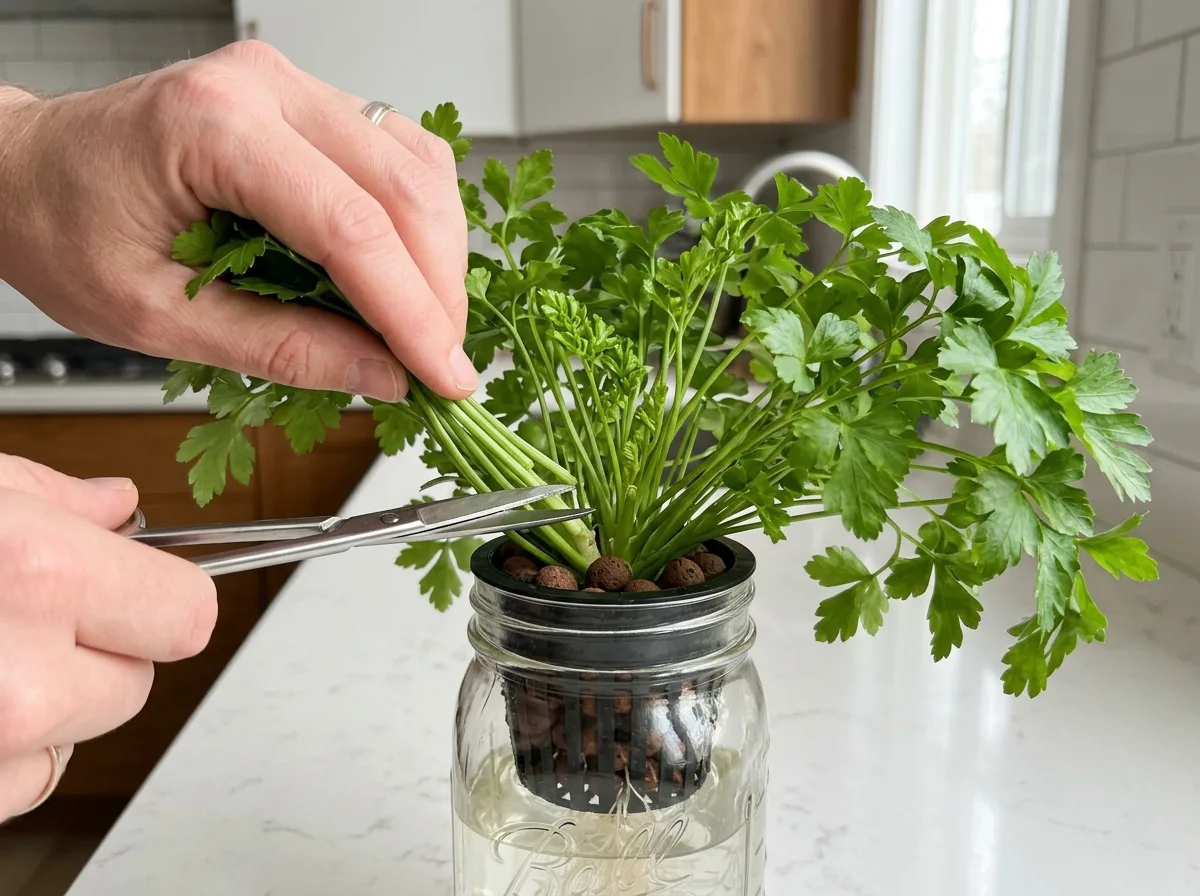
If you want to learn more about similar techniques, read about how to prune hydroponic basil for ongoing harvests.
🍽️ When To Cut For Maximum Flavor
Wait until the outer stems are at least 6 inches tall before taking your first cutting. Harvesting too early removes the solar panels the young plant needs to build strong roots.
Harvest your crop early in the morning, before the grow lights have been on for long. The essential oils concentrate in the leaves during the dark period. You’ll get a stronger aroma and better taste as a result.
🧪 Proper Storage For Hydroponic Parsley Cuttings
Sometimes you harvest more than you need for a single meal. You can store the excess stems in the refrigerator. Treat the cuttings like fresh cut flowers.
Place the stems in a small glass with an inch of water. Cover the top loosely with a plastic bag. This setup keeps the foliage crisp for up to a week.
🚨 Troubleshooting Common Hydroponic Parsley Problems
Even cautious beginners face occasional issues in their indoor gardens. Nutrient imbalances and water temperature spikes happen in small apartments. Recognizing the early symptoms allows you to save the crop.
Do not panic if you spot a yellow leaf or a brown root tip. Plants respond well to quick corrections if you catch the problem early.
- Not sure what is wrong yet → start with the diagnosis table below
- You know the cause → jump to the relevant section below
🔎 Quick diagnosis table
| What you see | Most likely cause | Check this first |
|---|---|---|
| 🟡 Yellow lower leaves | Nitrogen deficiency or high pH | Test the pH and adjust below 6.5 |
| 🤢 Drooping stems | Low oxygen in the root zone | Check the air stone or water level |
| 🟤 Brown slimy roots | Root rot from warm water | Smell the reservoir for a swampy odor |
| 🍂 Crispy leaf edges | Nutrient burn (EC too high) | Dilute the reservoir with plain water |
🩺 Fixing Yellow Or Pale Leaves
When the older leaves turn pale yellow, the plant is scavenging nitrogen from its lower sections to support new growth. This indicates a feeding issue in the tank. You must check the pH first before adding more fertilizer.
If the pH is correct, increase your feeding dose slightly. Discover more details on why apartment hydroponic plants turn yellow to rule out lighting issues and other common culprits.
🫛 Preventing Slimy Brown Roots
Root rot occurs when harmful bacteria attack oxygen-starved roots. The roots become stressed and the plant will decline rapidly if left uncorrected. Healthy roots look white or pale tan.
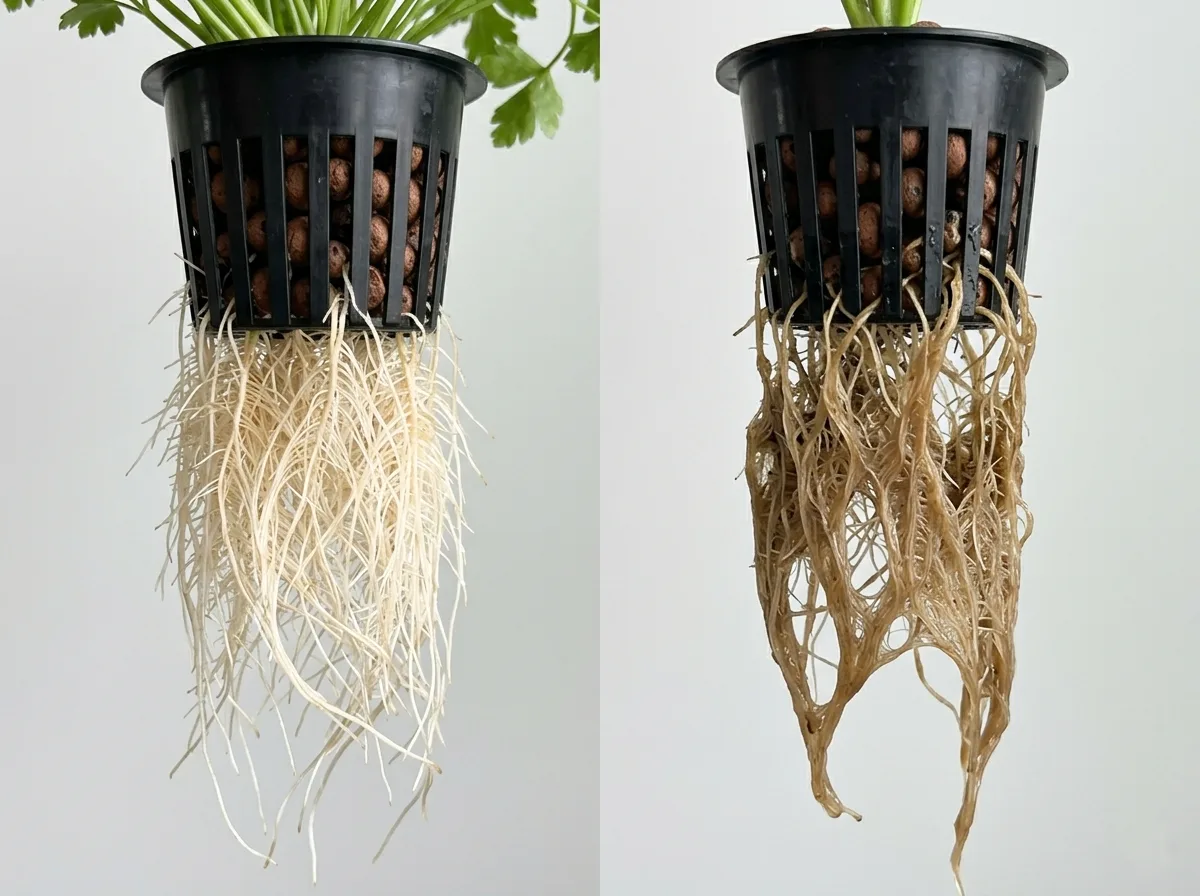
To combat this, keep your water cool and block all light from entering the jar. Learn how to prevent root rot in small hydroponic systems to keep your apartment garden thriving for months.
🦠 Stopping Algae In Clear Containers
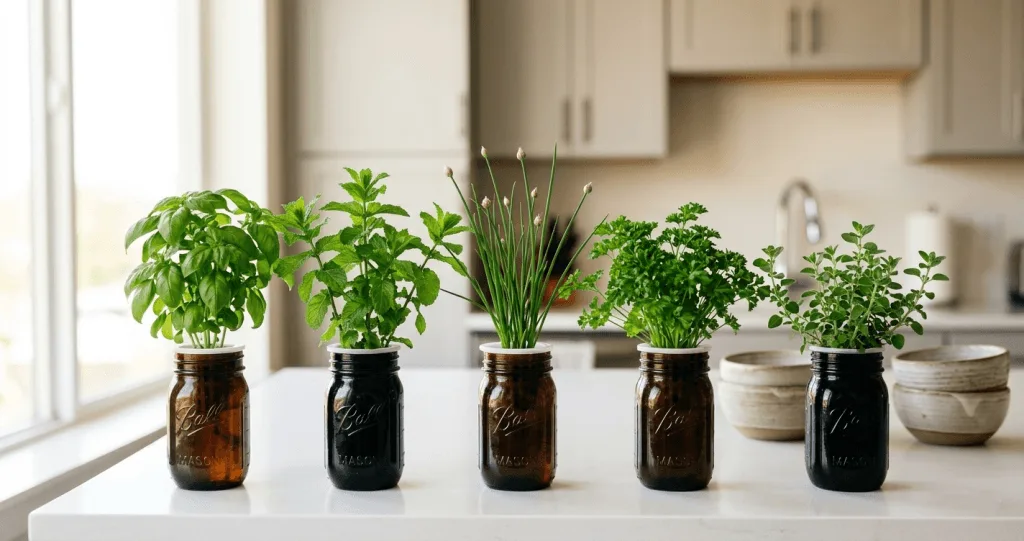
Algae blooms in your reservoir when light hits the nutrient-rich water. This green slime competes with your plants for food and oxygen. Therefore, you must cover transparent jars with foil, paint, or dark fabric.
If algae takes hold, you must act fast. Empty the jar, scrub the sides, and refill with fresh water. A dark environment stops the bloom from returning.
→ How To Start Hydroponic Seeds In Rockwool Without Damping Off
💬 A Word From Sarah
When I first tried growing parsley indoors, I stared at those bare rockwool cubes for weeks. I was convinced I had bought dead seeds. On day eighteen, a tiny green loop broke the surface. That plant went on to produce fresh garnish for my pasta dishes for six straight months. The one thing I wish I had known earlier: parsley speeds up noticeably once you drop the temperature two or three degrees below what feels comfortable for you. That cooler environment is where it thrives. Keep your water balanced, protect the inner crown during harvest, and give those stubborn seeds time to wake up.
❓ Frequently Asked Questions
⏱️ How long does hydroponic parsley take to grow?
Parsley seeds require three to four weeks to sprout. After germination, the plants need another four to six weeks of vegetative growth before the first harvest. Using fresh seeds and maintaining warm temperatures around 72°F (22°C) can speed up the sprouting phase by a few days.
🥙 Can I grow hydroponic parsley in a Kratky jar?
Yes, parsley thrives in a passive Kratky jar setup. The roots adapt to the declining water level by developing air roots. This method requires no electricity or air pumps, making it an excellent choice for a quiet apartment kitchen with limited counter space.
💧 What is the best pH for hydroponic parsley?
The ideal pH range for hydroponic parsley is 5.5 to 6.5. Keeping the nutrient solution within this window ensures the plant can absorb essential minerals like nitrogen and iron. Check the levels every three days using a digital meter or test drops.
🍂 Why are my hydroponic parsley leaves turning yellow?
Yellow leaves often indicate a lack of nitrogen or a pH imbalance. When the pH rises above 6.5, the plant experiences nutrient lockout and cannot absorb the food in the water even when the solution is full. Lower the pH to 6.0 and check your nutrient strength before making other changes.
🚿 How often should I change hydroponic parsley water?
Perform a full reservoir change every two weeks. Top off with plain water between changes as the plant drinks. Empty the old water, rinse the container, and refill with a fresh nutrient solution. This habit prevents mineral buildup and stops harmful bacteria from damaging the root system.
🌿 Can I grow curly and flat-leaf parsley together?
You can grow both varieties in the same system if they share the same water reservoir. Both types require identical pH levels and nutrient strengths between EC 1.2 and 1.8. Flat-leaf parsley tends to grow taller, so ensure it does not block the grow light from the curly variety.
✂️ How do I harvest hydroponic parsley without killing it?
Harvest the outer stems first and leave the inner crown intact. Cut the mature stems about one inch above the base using clean scissors. The plant will continue producing new growth from the center, giving you a steady supply of fresh hydroponic parsley for months without replanting.
Happy growing! 🌿
— Sarah, Urban Hydro Space

Sarah is the founder of Urban Hydro Space and an indoor gardening enthusiast dedicated to helping apartment dwellers grow fresh herbs and vegetables in small spaces. With hands-on experience testing hydroponic systems, she shares practical tips and honest product reviews to make indoor gardening accessible for beginners.