

⏳ 23 min read · Last updated: October 2026
Disclosure: This post contains affiliate links. As an Amazon Associate, Urban Hydro Space earns from qualifying purchases at no extra cost to you. I only recommend products I’ve researched carefully from real specifications and verified buyer feedback, and I say when I have not run one myself.
🌱 Hands-on tested: the AeroGarden Harvest (I grew in the standard Harvest, not the Harvest Lite covered here). I have used it in my own grows. 🔎 Research pick: everything else in this post, chosen from published specifications and listings. How I test and choose products.
Deciding between an AeroGarden vs Gardyn vs Click and Grow setup is often the first hurdle when you’re starting an indoor garden. Picture the classic mismatch: a big vertical tower bought for a small studio blocks the only window, hums day and night, and gets unplugged within weeks because the light glare is too much. A tower can still work in a small space, as long as it is sized for the room. My roundup of apartment-friendly vertical hydroponic towers covers the models sized for a room instead of a warehouse.
AeroGarden vs Gardyn vs Click and Grow: The Apartment Reality Check
If you’re comparing these three smart gardens, look at space, noise, maintenance and recurring supplies before the size of the harvest. The apartment hydroponics beginner guide covers the basics before you choose a system.
- The AeroGarden Harvest Lite, in fact, offers the fastest herb growth using an active mechanical water pump.
- Click and Grow’s Smart Garden 3 operates in silence, making it the top choice for bedrooms and home offices.
- The Gardyn Studio 2 grows up to 16 non-GMO plants in the footprint of a single potted plant.
- Maintain a pH 5.5 to 6.5 in any water-based system to keep plants healthy and free of nutrient lockout.
- Water temperatures should stay between 65 to 75°F (18 to 24°C) to prevent root rot in active systems.
How the Three Systems Compare
What to Look for in an Apartment Hydroponic Kit
Choosing an aerogarden vs gardyn vs click and grow system comes down to how the machine fits a small living area, not the plant count on the box. A loud pump or a glaring LED panel three feet from your sofa wears thin fast.
Think about water changes too. Countertop units hold less liquid and fit under a kitchen faucet, while a big reservoir carried to a bathroom sink is a recipe for spills.

Sizing Up Your Space
Measure the exact surface before adding anything to your cart. Countertop units also need clearance above them to accommodate light hoods that extend upward as the plants grow.
Good surfaces for anchoring your new smart garden include:
- Bookshelves with a solid top edge and plenty of vertical clearance
- Kitchen islands with an overhang away from the main cooking zone
- Sturdy desks with a thick frame to absorb minor pump vibrations
- Dedicated floor corners away from drafty windows and heating vents
Leave at least 4 to 6 inches around the unit, so humidity does not collect against the wall and you can refill without spilling.
Managing Noise and Light
Each garden runs its own light schedule. Click & Grow’s light comes preset: its listing says it runs 16 hours on and 8 off by itself, while this site aims for 14 hours on systems you can set. Either way, in a studio with no dividing wall the light spills into your sleeping area, so line the schedule up with your waking hours.
Systems with mechanical pumps create ambient noise. AeroGarden models have small submersible pumps that emit a low hum. The Gardyn Studio 2, however, uses a pump that lifts water up vertical columns, creating a noticeable trickling sound. If you’re sensitive to noise, you might prefer a passive system like the Click and Grow Smart Garden 3.
A small foam mat under the base muffles pump hum, especially on hollow furniture, as long as it does not block any vents underneath.
→ The 3 Best Countertop Hydroponic Systems for Apartment Beginners (2026)
→ Light Schedule Guide for 9-to-5 Apartment Growers
Understanding Ongoing Costs
Proprietary seed pods are convenient, but they carry a premium price tag. If you rely solely on branded refills, a few heads of lettuce can cost you more than buying them organic at the local farmer’s market.
Most systems, however, allow you to work around this. You can buy blank sponges or rockwool cubes and add your own seeds. You’ll also need a steady supply of liquid nutrients and a reliable pH adjustment kit. Learning how often to top off and change your nutrient solution is one of the most important habits you can build early on.
Electricity costs are generally quite low for countertop units. A small LED panel uses about the same energy as a standard laptop charger. Larger vertical units, however, like the Gardyn Studio 2 will draw more power, which you’ll notice slightly on your monthly bill.
Top Recommendation for Apartment Growers
Six pods, a 20 W LED on an automatic timer, and a touch panel that flags when the water or the plant food runs low. It is the AeroGarden I grew in, it takes up less room than a toaster, and the cheaper Harvest Lite reviewed below does the same job with a simpler indicator light.
- ✅ 6 pods: enough variety for a full kitchen herb mix
- ✅ 20 W full-spectrum LED that rises as plants grow, up to 12 inches tall
- ✅ Touch control panel with water and plant food reminders
- ⚠️ Low pump hum, audible in open-plan apartments, manageable with a foam mat
⭐⭐⭐⭐⭐ • The AeroGarden I grew in • Amazon price right now: $79.99
AeroGarden Harvest and Harvest Lite: Best for Fast Countertop Harvests
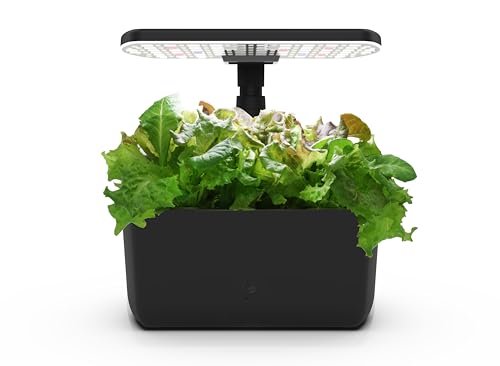
Amazon price right now: $59.47 Prices refresh automatically. Prices are pulled from Amazon and were last checked on 8 October 2026 at 8:44 pm. Amazon prices change often, so check the listing before buying.
AeroGarden is still the most recognizable brand in countertop hydroponics. It uses a form of Deep Water Culture (DWC) to accelerate plant growth. The roots dangle directly into a nutrient-rich water bath while a small pump circulates the liquid to deliver oxygen. That circulation is why basil and mint grow so fast in one.
In an aerogarden vs gardyn vs click and grow comparison, AeroGarden is the one for fast kitchen harvests, and two near-identical models matter here: the standard Harvest and the cheaper Harvest Lite. Each grows six plants as tall as 12 inches, with a light you lift as they grow. The Harvest lists a 20 W LED with an automatic timer and a touch panel with reminders for water and plant food; the Lite’s listing gives no wattage and swaps the panel for a single indicator light. You can build a complete shopping list for your setup if you decide to branch out into your own seeds.
I started with the standard AeroGarden Harvest on my kitchen counter, not the Lite. It holds six plants and still takes up less space than a toaster. The interface is simple, with glowing buttons that alert you when water or plant food runs low.
- Best for: Kitchen counter herb growers who want fast results
- Pods: 6 • LED: built in, with a timer (no wattage listed; the Harvest lists 20 W) • Footprint: 11 × 8 inches
- Noise: Low hum from the water pump
- Nutrients: Liquid solution added to tank every 2 weeks
- Price: See on Amazon → ($59.47)
How the Setup Works
The AeroGarden Harvest Lite requires you to add liquid nutrients directly to the water tank every two weeks. Its control panel has a reminder light that blinks when it’s time to feed the plants. The system uses proprietary pre-seeded sponge pods, but you can also buy empty sponges to plant your own seeds.
To keep the system running smoothly, you need to monitor the nutrient strength. Basil thrives at an EC 1.0 to 1.6, while heavy feeders like mint want more. You can use the free pH and nutrient calculator to find the exact mix for your shared reservoir.
The light runs on a built-in timer, so there is nothing to program.
Common AeroGarden Harvest Lite Drawbacks
The fast growth rate of an AeroGarden can, however, become a problem in small apartments if you fail to prune the plants. Basil will soon overtake the light hood, causing the upper leaves to suffer from grow light burn. You need to trim the canopy every week to keep the plants bushy rather than tall.
The system needs regular cleaning, since the pump filter can clog with root debris, which stresses the motor. To clean out an infected or clogged reservoir:
- Remove the plant deck and set the roots gently in a bowl of lukewarm tap water.
- Unplug the base and dump the old nutrient solution into a sink.
- Scrub the inside of the tank with a soft brush and diluted hydrogen peroxide.
- Rinse the pump filter under running water to clear away stray roots.
- Refill with fresh pH-balanced nutrient solution at EC 1.5 for a shared herb mix.
What to do if the Pump Fails
When a pump stops moving water during its cycle, roots have usually wrapped around the impeller.
First, unplug the unit. Remove the plastic pump cover inside the tank. You’ll often find a thick mat of roots choking the intake valve. Use clean scissors to snip away the stray roots. Rinse the sponge filter under warm water.
If the pump still won’t start after a cleaning, you can buy a replacement directly from the manufacturer for a few dollars. The plants will survive for a few days without the pump as long as you keep the water fresh and the pH balanced. You can also explore adding a quiet air pump designed for apartment setups if you want to modify the tank into a true DWC hybrid.
Click and Grow Smart Garden 3: Best for Hands-Off Aesthetics

Amazon price right now: $124.95
The Click and Grow Smart Garden 3, however, takes a different approach to indoor gardening. Instead of pumping liquid nutrients over bare roots, it uses a proprietary “Smart Soil” sponge that contains all the necessary food for the plant’s entire lifespan. The system, in fact, acts like a sophisticated self-watering planter. You fill the water reservoir, and the sponge wicks moisture up via capillary action.
Because it has no water pump, the Click and Grow Smart Garden 3 avoids pump noise. That can matter in a small apartment where the garden sits near a television or bed. Its pre-dosed pods also remove routine nutrient mixing, though you still need to watch the water level and plants.
The matte-white finish also looks more like a home accessory than a science experiment.
- Best for: Bedrooms, offices, and noise-sensitive growers
- Pods: 3 • System: Passive wicking • Footprint: 12 × 5 inches
- Noise: Completely silent (no pump)
- Nutrients: Built into Smart Soil pods, no measuring needed
- Price: See on Amazon → ($124.95)
The Smart Soil Approach
The pods look like small dirt plugs, but they’re engineered sponge matrices that provide excellent aeration. In practice, you drop the pod into a plastic cup, click it into the deck, and add water to the base. You don’t have to measure liquid nutrients, which removes the risk of mixing errors.
The growth rate in a Click and Grow is, however, slower than in an AeroGarden. The plants behave more like soil-grown herbs. This slower pace is often a benefit for apartment dwellers who don’t want to prune their basil twice a week. You can use a seed-to-harvest countdown tool to know when to start clipping.
The built-in water float tells you when the tank is empty. It bobs up and down, sitting flush with the deck when the tank is full and sinking when it’s time for a refill. The kit comes with three basil pods to get you started, and you can choose from over 50 pre-seeded pod varieties after that, including cilantro, lavender, thyme, and chili peppers.
Click and Grow Smart Garden 3 Limitations
The Click and Grow Smart Garden 3 has a fixed light height on older models, though newer versions include plastic extension arms. Even with extensions, the light isn’t as intensely powerful as its competitors. High-light plants like oregano might, however, struggle or become leggy. The water reservoir must be kept at a steady 65 to 75°F (18 to 24°C) to prevent the pods from souring.
Signs you need to adjust your Click and Grow setup include:
- Stems growing thin and stretching toward the light panel
- White fuzzy mold appearing on the surface of the Smart Soil
- Roots escaping the plastic cup and tangling in the reservoir float valve
What to Do if Pods Develop Surface Mold
The biggest complaint about the Smart Soil system is, in fact, surface mold. Because the top of the pod remains damp, white fuzz often develops before the seeds even sprout. The fungus is harmless, but it thrives in warm, stagnant air.
To combat surface mold on your pods:
- Scrape the white fuzz off gently using a clean toothpick.
- Sprinkle a tiny pinch of cinnamon over the exposed soil surface to act as a natural fungicide.
- Increase the airflow around the unit using a small desk fan.
- Ensure your room humidity stays below 60 percent.
You can also cover the top of the plastic cup with a bit of aluminum foil, leaving only a small hole for the seedling to emerge. This blocks light from hitting the damp soil, which suppresses unwanted organic growth. If you struggle with green slime in your other tanks, read up on why algae keeps growing in hydroponic setups for more mitigation strategies.
Gardyn Studio 2: Best for Vertical Growing
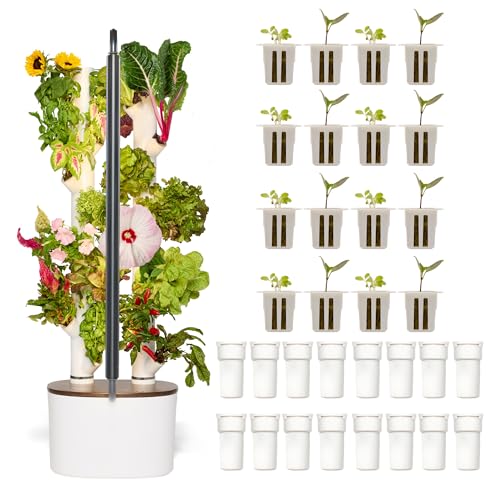
Amazon price right now: $549.00
If you’ve outgrown countertop limits, the Gardyn Studio 2 is a freestanding vertical smart garden. Its stated capacity is up to 16 plants, but measure the full tower and access space before assuming it will fit a small room.
When analyzing the aerogarden vs gardyn vs click and grow comparison, the Gardyn Studio 2 caters to high-volume consumers. If you want to grow full heads of lettuce, herbs, and even small fruiting plants simultaneously, this unit delivers. It doubles as a genuine room feature, with sunrise and sunset LED modes that shift light intensity across the day in a way that doesn’t feel like stadium lighting.
Because the unit relies on height, you still need to position it carefully so the bright vertical LED bars don’t create glare while you sit on the couch. The visual impact is elegant, but it commands a corner all to itself.
- Best for: High-volume growers, salad lovers, living room corners
- Pods: 16 yCubes • System: Vertical timed pump • Footprint: Single potted plant
- Noise: Moderate (trickling water through vertical columns)
- Nutrients: Liquid solution in base tank; Kelby AI monitoring optional
- Price: See on Amazon → ($549.00)
Vertical Water Delivery and Sealed Columns
The Gardyn Studio 2 also runs on a timed pump cycle. A water pump pushes nutrient solution up through the vertical columns, where it flows down through the individual plant pods (called yCubes). The trickling sounds like a small indoor waterfall. Some growers love the ambient noise, while others find it distracting during quiet evenings.
One major improvement in the Studio 2 is, in fact, the watertight silicone-sealed columns. Older Gardyn models could leak when root masses grew inside the narrow columns, and the sealed design is meant to stop that.
Because the water travels through vertical pipes, managing the temperature is critical. If your apartment gets hot, the base tank will warm up. Keep the water below 75°F (24°C) to prevent the roots from rotting inside the columns.
Subscription Costs and Seeds
Gardyn offers a monthly membership called Kelby, an AI assistant that monitors your water levels and light schedules via the built-in high-resolution camera. The membership also provides discounted seed credits. While the app is helpful, you don’t need the paid tier to operate the machine. You can manually control the light schedule, aiming for 14 hours of on-time for leafy greens.
You can reuse empty yCubes by packing them with rockwool and your own seeds, saving substantial money over time. Just ensure you calculate the right wattage for your space if you add supplemental lighting for the lower pods.
Getting the Most from Your 16 Pods
Sixteen pods fill fast, so plan the placement before one vigorous plant shades out the rest:
- Reserve the top four to six slots for high-light, fast-growing crops like basil, mint, and cherry tomatoes.
- Place slower greens like lettuce, spinach, and chives in the bottom slots where the light is slightly cooler.
- Avoid putting two aggressive spreaders like basil and mint side-by-side. They’ll crowd each other within weeks.
- Stagger harvest timing by starting new pods every two weeks in vacant slots rather than replanting all 16 at once.
- If you’re new to the system, start with 8 to 10 pods your first cycle and learn the growth rates before filling all 16. A proper system cleaning routine becomes even more important when you’re running this many plants.
Bigger Models and Other Brands Worth Comparing
Each system above is its brand’s small model. If you want more plants, or a different maker, these are the ones people weigh against them. Only the standard Harvest has been on my counter; everything in this section is a research pick, described from the makers’ listings.
Gardyn Home 4 (30 Plants)
The Studio 2 above holds 16 plants. The Home 4 holds 30 in 2 square feet, according to Gardyn, with redesigned columns that are easier to clean, sunrise and sunset light modes and real-time water measurement. It ships with 30 yCubes of seeds in rockwool and a 30-day trial of Kelby, Gardyn’s AI coach, plus 10 bonus yCubes.
So for a household that eats salad most days, this is the real comparison with a big AeroGarden. For a few herbs, however, it is more garden than most apartments need.
Gardyn Home 4 on Amazon · Amazon price right now: $899.00
AeroGarden Bounty (9 Plants)

AeroGarden’s step up from the Harvest: nine plants up to 24 inches tall under a 40 W LED, WiFi and Alexa control, a three-step water level indicator, and a 6-inch trellis in the box for tomatoes or peppers.
It also takes twice the counter space of a Harvest, and in early October the black version was down to its last few units, so check stock before you plan around it.
AeroGarden Bounty on Amazon · Amazon price right now: see listing
Three more names you will meet. Click & Grow’s nine-pod Smart Garden 9 ships with three mini tomato, three basil and three lettuce pods, runs without pumps, and takes any of its 75-plus pods or your own seeds in an experimental pod; it was showing a later ship date in early October. Rise Gardens’ Personal garden is an 18-inch-wide countertop unit for up to 12 plants, with an app that guides the feeding and sends weekly reminders. Finally, LetPot’s 21-pod LPH-Max tops up its own water and nutrients from a level sensor and puts its 36 W light on an extendable rod that reaches 30 inches, with the schedule set from an app.
System Maintenance and Troubleshooting
Every system needs some baseline maintenance, and almost any problem, including the first yellow leaf, traces back to water chemistry or light height.
🔎 Quick diagnosis table
| What you see | Most likely cause | Check this first |
|---|---|---|
| 🟡 Yellowing lower leaves | Nutrient lockout from poor pH | Test and adjust water to pH 5.5 to 6.5 |
| 🟡 Brown, crispy leaf tips | Nutrient burn (EC too high) | Dilute the reservoir with plain, pH-adjusted water |
| 🟡 Tall, skinny, weak stems | Insufficient light reaching canopy | Lower the light hood to 6 to 8 inches above plants |
Managing pH and Nutrients
Out-of-range pH causes nutrient lockout even when nutrients are present in the water. For most herbs and greens, maintain a pH 5.5 to 6.5. The AeroGarden nutrients have pH buffers built in, but apartment tap water is often alkaline, which overpowers those buffers.
More fertilizer does not mean faster growth in a smart garden either. Basil held at EC 2.4, well above its 1.0 to 1.6 range, burns brown at the tips within days. Diluting the tank with plain, pH-adjusted water back to around EC 1.5 lets new growth come in clean. That is why I check the numbers with a reliable pH and EC meter before trusting the built-in system reminders.
If you face constant fluctuations, read up on how to fix yellow leaves in apartment hydroponics. Small reservoirs lack the water volume to absorb chemical changes gracefully. This means you’ll need to test the water twice a week during heavy growth phases.
Keeping Plants Tame
Left alone, basil in an active system shades out shorter herbs like thyme and parsley, so prune early and often.
To prune a smart garden effectively:
- Locate the “Y” intersection on the main stem of the herb.
- Snip the stem a quarter-inch above that intersection using clean scissors.
- Remove any large fan leaves that are blocking light from reaching the lower deck.
- Ensure the light hood remains 6 to 8 inches above the highest leaf.
Preventing Heat Stress and Light Burn
If the leaves touch the LED panel, they’ll crisp up and die within hours.
If leaves scorch, trim the damaged ones and keep the light at least 6 to 8 inches above delicate greens; see how to fix grow light burn in small setups.
Summer heat matters too. Water above 75°F (24°C) holds too little oxygen, and stressed roots decline if nothing changes. Rest a frozen, sealed bottle against the outside of the Gardyn Studio 2 base tank (never ice in the water), or read up on how to prevent root rot in small hydroponic systems for more permanent fixes.
AeroGarden vs a Custom DIY Hydroponic Setup
Many people weighing these three kits are really asking a different question: should I buy a smart garden at all, or build a jar? Here is the honest comparison, with a passive Kratky jar standing in for the custom setup, because it is the one most apartment growers build first.
Custom does not have to mean a jar. The next step up is a deep water culture bucket or tote with an air pump and an air stone. You choose the reservoir size, the oxygen at the roots and the nutrient mix, and it scales to as many plant sites as you have room for. The trade-off, however, is doing the checking yourself: pH, EC and water temperature. My DWC vs Kratky comparison covers which of the two suits an apartment.
The short version: a smart garden buys you the first month with no decisions to make. A jar costs a fraction of the price, makes no noise, and teaches you the numbers every later system runs on. Plenty of growers end up with both, a kit on the counter and jars on the windowsill. The full cost comparison is in is an AeroGarden worth it, and the build is in the Kratky jar setup guide.
A Word From Sarah
The failure I would guard against first is a smart garden left running during a trip without a top-off. Once the water drops too low, the pump sucks air, and in a pumped system like the Gardyn the motor can burn out, taking a full crop of lettuce with it within a couple of days. The fix is dull and it works: top off to the max fill line the night before you travel, and set a phone reminder to check the pump the moment you walk back in the door.
My Honest Pick
If you only have space for one system, the AeroGarden Harvest Lite is the most versatile middle ground for first-time apartment growers. It produces fast growth for a reasonable price, and managing the minor pump hum is a fair trade-off for fresh basil on demand. If absolute silence is your priority, go with the Click and Grow Smart Garden 3. If you want to replace a weekly grocery run for salad greens, the Gardyn Studio 2 is worth every dollar.
Frequently Asked Questions
Are smart gardens loud in a small apartment?
AeroGarden and Gardyn use pumps, so expect some mechanical or water noise. Click and Grow Smart Garden 3 uses passive capillary wicking and avoids pump noise. I have not measured these models side by side, so do not treat an exact quietest-to-loudest order as tested fact. For a combined bedroom and living area, check the model’s return terms if noise is decisive.
Can I use my own seeds in these systems?
You can use your own seeds in all three systems. AeroGarden also sells a Grow Anything kit with empty sponges. Gardyn allows you to reuse their yCubes by packing them with rockwool and your own seed stock. Click and Grow also sells experimental blank pods for custom seeds. Using your own seeds significantly reduces the ongoing cost compared to buying branded refill kits every month.
Do these smart gardens use a lot of electricity?
Most countertop models use very little power. The standard AeroGarden Harvest lists a 20-watt light, which costs a few dollars a month at typical US electricity rates. The Gardyn Studio 2 uses more power due to its larger LED array and pump, but the efficient LED technology keeps running costs reasonable.
Do hydroponically grown herbs taste the same?
Fresh herbs can taste different from packaged herbs, but flavor depends on variety, harvest timing and growing conditions. Give basil suitable light and nutrients, then judge the harvest by its aroma and taste rather than assuming any one system guarantees better flavor.
How often do I need to clean a smart garden?
In a pumped garden such as an AeroGarden or a Gardyn, top off daily with plain, pH-adjusted water and do a full reservoir change every two weeks. Click & Grow is wick-fed instead, and its listing puts a full tank at roughly 2 to 3 weeks between refills. A deep clean of the entire system, including scrubbing the pump and wiping the light hoods, is required every three to four months or between major crop cycles. Skipping reservoir changes is, in fact, the single most common cause of root rot and algae in countertop systems.
Will a smart garden cause mold in my apartment?
Smart gardens won’t cause mold in your apartment if maintained properly. Keep room humidity between 50 and 70 percent and ensure good airflow around the unit. Avoid overfilling the reservoir to prevent stagnant water at the surface. The Click and Grow Smart Soil pods are the most prone to surface mold because the damp top stays exposed to warm air, but a pinch of cinnamon and a foil cover solves it.
Can I grow tomatoes in a countertop system?
You can grow micro-dwarf cherry tomatoes in an AeroGarden Harvest Lite or a Gardyn Studio 2. Standard tomatoes grow too large and will overwhelm the lights within weeks. Click and Grow offers mini tomato pods, but fruiting plants require more frequent nutrient top-offs and higher EC levels than basic leafy herbs. Place tomato pods at the top of the Gardyn Studio 2 where they receive the most light intensity.
Do I need a paid subscription to use the Gardyn Studio 2?
You don’t need a paid subscription to run the Gardyn Studio 2. The Kelby AI assistant and app-based monitoring are, however, optional add-ons. Without a membership, you control the light schedule manually and skip the automated health alerts. The subscription does, however, provide discounted yCube seed credits and camera-based plant monitoring. Start with the free tier and upgrade only if you find yourself growing consistently across all 16 pods.
Is AeroGarden closing permanently?
No permanent closure is announced as of September 2026. AeroGarden announced a wind-down in 2024, but Scotts Miracle-Gro later said the brand was back in business. Check the current official product and support pages before purchasing a specific model, since availability and app support can change. Scotts’ update explains the return.
What is the best hydroponic system on the market?
There is no single best system for every apartment. AeroGarden combines a light and pumped reservoir; Click & Grow uses a quieter wick-and-pod approach; Gardyn serves a much larger footprint and crop count. Compare the growing space, noise, recurring supplies and cleaning routine in the table above.
Is Gardyn worth the money?
It depends on how much you eat from it. The Studio 2 grows 16 plants and the Home 4 grows 30, so the cost per plant site falls on the bigger model, and the membership is optional: the tower runs without it, though you then set the light schedule yourself and buy or fill your own yCubes. For a few herbs, a countertop garden or a jar costs far less.
Which is better, Rise or Gardyn?
They suit different spaces. Rise’s Personal garden is a countertop unit for up to 12 plants with app-guided feeding, while a Gardyn is a floor-standing tower with a camera and its Kelby assistant. Decide by where it will stand: a counter points to Rise, a corner of floor to Gardyn.
Which is better for growing lettuce, Lettuce Grow or Gardyn?
Both are built for leafy greens; the difference is size and layout. Lettuce Grow’s Farmstand is a larger, open tower meant for many heads at once, while a Gardyn packs plants into closed columns on a smaller footprint. My vertical tower guide compares the Farmstand Nook with other towers.
What is the difference between the Gardyn Studio 2 and the Gardyn Home 4?
Mostly size. The Studio 2 grows up to 16 plants in the footprint of a single potted plant, and the Home 4 grows 30 in 2 square feet. Both use LED lights with sunrise and sunset modes and the Kelby app; the Studio 2’s listing adds sealed columns that need no cleaning and a built-in camera.
Is Click and Grow worth it?
It can be worth considering if you want a quiet, compact garden with simple pod changes. The tradeoff is continuing pod purchases and less flexibility in nutrient control than a DIY hydroponic jar. Check the current pod range and the total cost of growing the crops you actually eat.
Can you use Click and Grow pods in AeroGarden?
Do not assume they fit or work as a direct swap. Click & Grow pods use a wick-based cup, while AeroGarden decks use their own pod shape and water delivery. Use a refill option made for your exact model, or check both manufacturers’ current compatibility guidance before trying an adapter.
- 🧪 pH & Nutrient Calculator: dial in your EC and pH before your next reservoir change
- 💡 Grow Light Calculator: check if your LED is strong enough for your pod count
- 🌱 Seed-to-Harvest Calculator: plan your staggered harvest schedule
- 🛒 Shopping List Builder: build a complete supply checklist for your system
Happy growing! 🌿
Sarah, Urban Hydro Space

Sarah Whitfield is the founder of Urban Hydro Space and an indoor gardening enthusiast dedicated to helping apartment dwellers grow fresh herbs and vegetables in small spaces. She researches hydroponic systems carefully from real specifications and verified buyer feedback, and shares practical tips and honest, clearly labeled product picks to make indoor gardening accessible for beginners.


