⏳ 22 min read · Last updated: March 2026
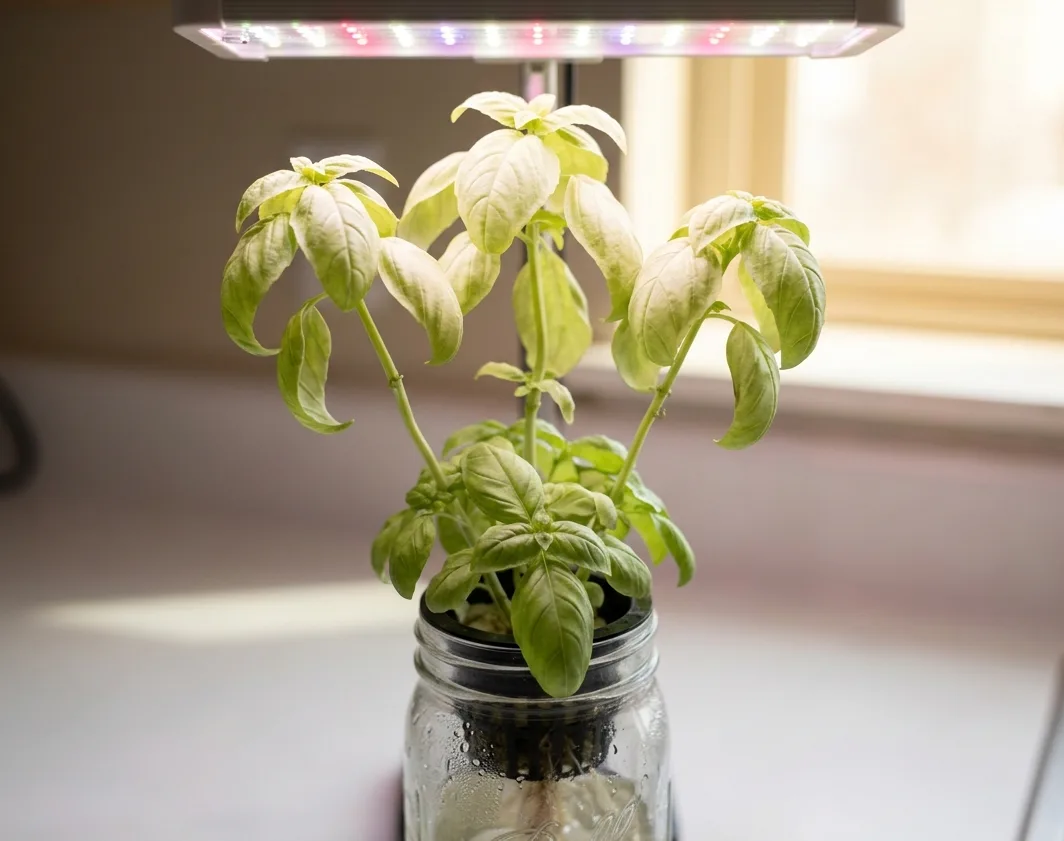
When I set up my first countertop garden in a small studio, I left my cheap LEDs running twenty-four hours a day. I figured more light meant faster growth for my tiny basil seedlings. By day ten, the leaves curled inward and turned a sickly pale yellow color. The stems looked weak, and the roots turned brownish. I learned the hard way that plants need rest just like we do. Providing a proper dark period is a vital habit you’ll build as an indoor gardener.
If you’re just getting started, the complete beginner’s guide to apartment hydroponics covers system setup before you worry about lighting schedules. When apartment growers ask me, do hydroponic herbs need darkness at night, I always share that early failure. In this guide, we’ll cover how to set up the ideal lighting schedule for your space so your plants thrive.
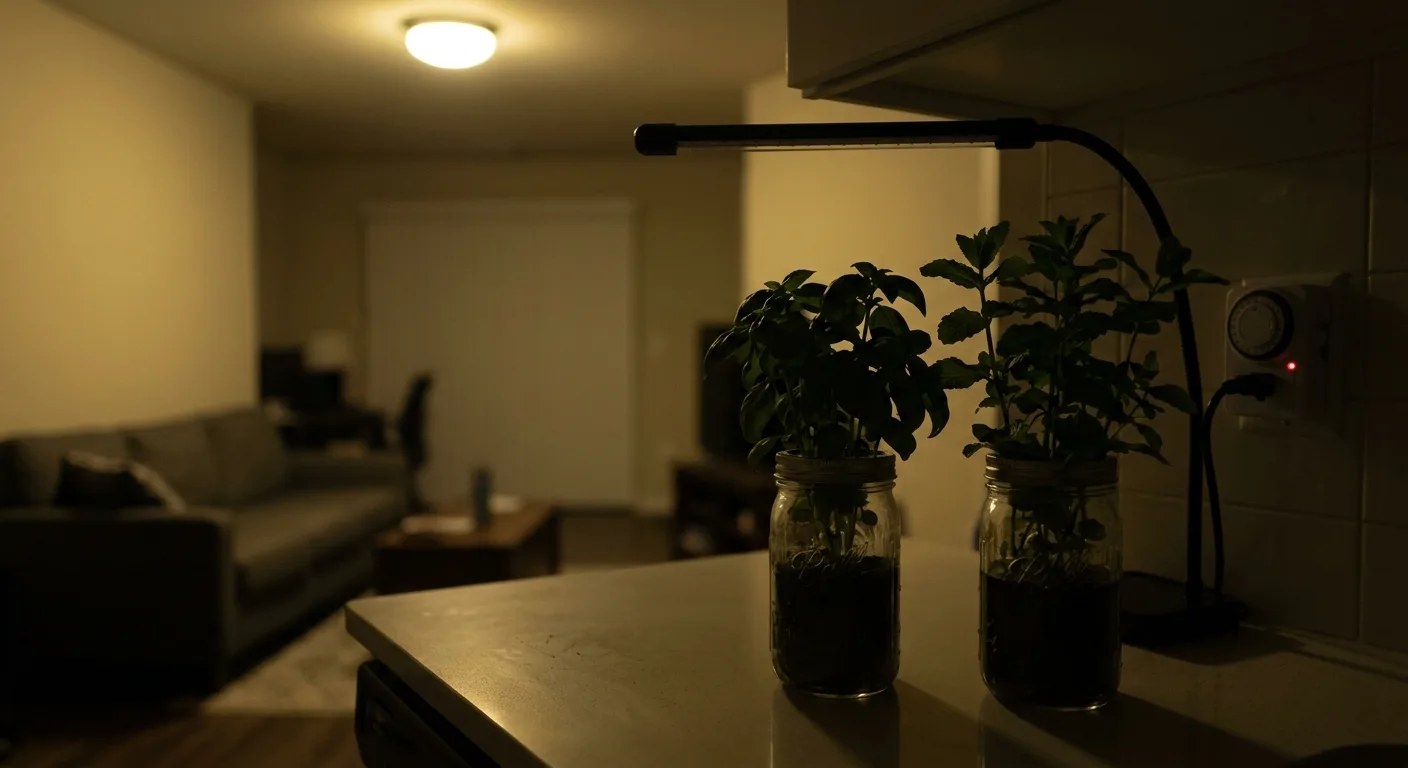
- Herbs require a dedicated resting phase to perform cellular respiration.
- The ideal baseline schedule is 14 hours on and 10 hours off.
- Continuous lighting causes exhaustion and stunted leaf growth in most greens.
- Water temperatures should stay between 65 to 72°F (18 to 22°C) overnight.
- You must keep your air pump running even when the lights turn off.
- You want fast results and vigorous growth → start with Basil or Mint
- You have lower light conditions in your kitchen → start with Lettuce
- You prefer a hands-off, low maintenance crop → start with Chives
- The Science: Do Hydroponic Herbs Need Darkness At Night?
- Setting The Ideal Light Schedule For Your Setup
- Crop-Specific Lighting And Dark Period Needs
- Managing Grow Lights In A Small Apartment Space
- Nighttime Nutrient Uptake And Water Temperature
- Dealing With Power Outages And Timer Failures
- Deep Water Culture Versus Kratky At Night
- Troubleshooting Night Cycle Problems
- What To Do If Your Herbs Stop Growing
- A Word From Sarah
- Frequently Asked Questions
⏱️ The Science: Do Hydroponic Herbs Need Darkness At Night?
When you start growing food indoors, it’s tempting to assume more light equals a better harvest. You might wonder, do hydroponic herbs need darkness at night to survive in a simple jar setup? The short answer is yes. Plants evolved over millions of years to follow a strict daily cycle of sun and shadows. Depriving them of this cycle disrupts their internal biology. If you want bushy greens with strong stems, you’ll need to respect their natural rhythm. I tell every beginner that skipping the dark cycle is the fastest way to ruin a crop.
🍃 Understanding the respiration phase
During the day, your herbs perform photosynthesis to capture light and store energy. When the lights go off, they enter the respiration phase. This is when they convert that stored energy into physical plant matter. They use this quiet time to build new leaf tissue and push their roots deeper into the water. Consequently, skipping the dark period means the plant never gets a chance to process its meals. The sugars build up inside the leaves, but the physical structure stops developing.
To support this nighttime growth, your system must maintain healthy conditions. The roots still need fresh oxygen even when the foliage above is resting.
- Keep your air pump running twenty-four hours a day to prevent stagnation.
- Maintain a steady ambient room temperature so the roots don’t experience thermal shock.
- Avoid moving the plants around or disturbing the water during their resting phase.
🔍 Signs your plants are exhausted
If you run your lights too long, you might already be seeing signs of stress. Continuous lighting leads to a condition called photo-inhibition. This happens when the leaf tissue becomes overloaded with light energy and can’t process it. When this happens, the plant attempts to protect itself by altering its physical shape. It’s common to misdiagnose these symptoms as a basic nutrient deficiency. You’ll want to inspect the leaves closely to confirm the real cause. If the problem is light stress, adding more fertilizer will only make the situation worse.
Look for these clear indicators of light exhaustion:
- Leaves curling downward and away from the light source in a protective shape.
- A bleached or pale yellow appearance spreading across the upper canopy.
- Slowed or stunted leaf growth over several weeks despite proper feeding.
- Crispy leaf edges that crumble apart when you touch them.
💡 Setting The Ideal Light Schedule For Your Setup
Finding the right balance between artificial sun and restful shadow takes a bit of planning. You’ll want to replicate a mild spring day inside your apartment kitchen. How much do hydroponic herbs need darkness at night compared to fruiting crops like tomatoes? Most leafy greens thrive on a very predictable schedule. You won’t need to adjust the timer as they mature from seedlings to full plants. A stable daily rhythm encourages steady harvests without stressing the delicate root zone.
⏳ The fourteen-hour rule
For almost all apartment setups, I recommend providing fourteen hours of light and leaving them off for ten hours. This gives ample energy for robust flavor development in your basil and mint. Additionally, it gives the root system plenty of time to process the daily nutrient intake without rushing.
Maintaining this exact cycle prevents the stems from stretching toward the light panel. You’ll notice thicker stalks and broader leaves within a few weeks of starting this regimen. I prefer this schedule because it aligns well with normal human waking hours.
☀️ Automating your dark cycle
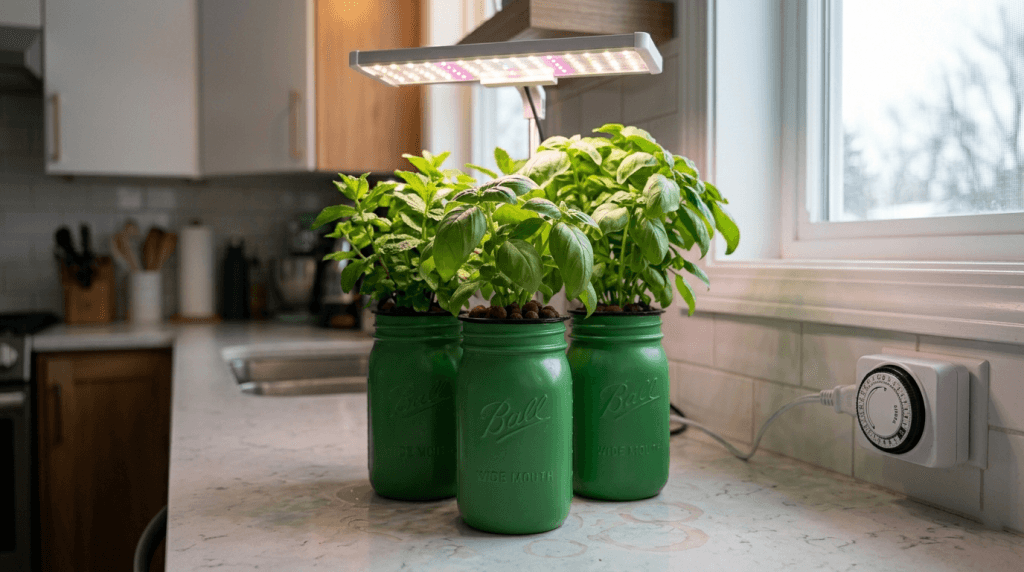
You shouldn’t try to plug and unplug your lights by hand every day. Human memory is flawed, and inconsistent schedules will exasperate your herbs. A mechanical or digital timer is a smart investment for your countertop garden. That said, you must verify the settings often to ensure accuracy. A bump from a curious cat can alter the dial without you noticing. I always tell beginners to automate this process on day one.
To set up an automated schedule:
- Plug your smart plug or analog timer into a safe, grounded wall outlet.
- Connect the grow light power cord into the timer socket.
- Set the ON time to align with your morning coffee routine.
- Program the OFF time for exactly 14 hours later to begin the ten hours of darkness.
Before buying a timer or smart plug, use the hydroponic shopping list builder to plan your full setup including lights, timers, and nutrients in one go.
🔗 Choosing between smart plugs and analog timers
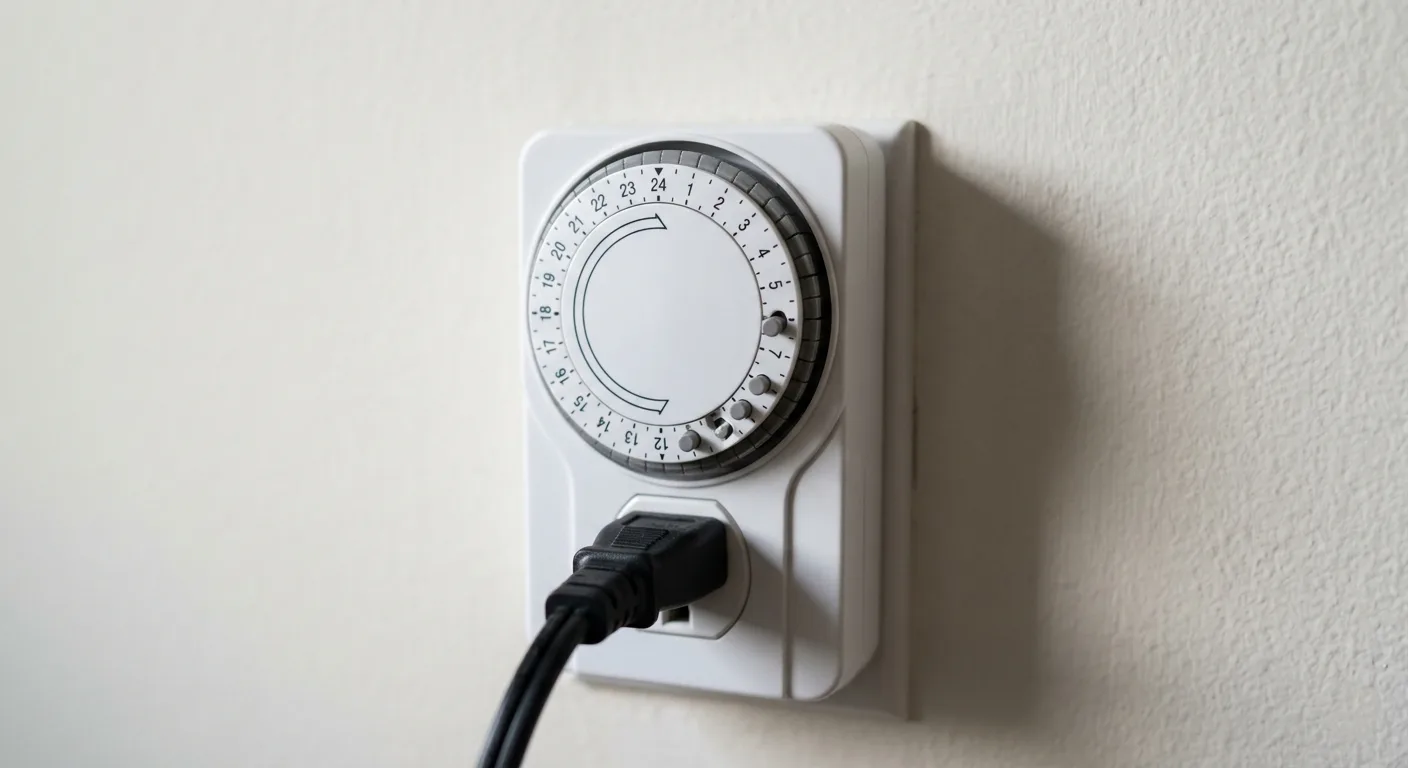
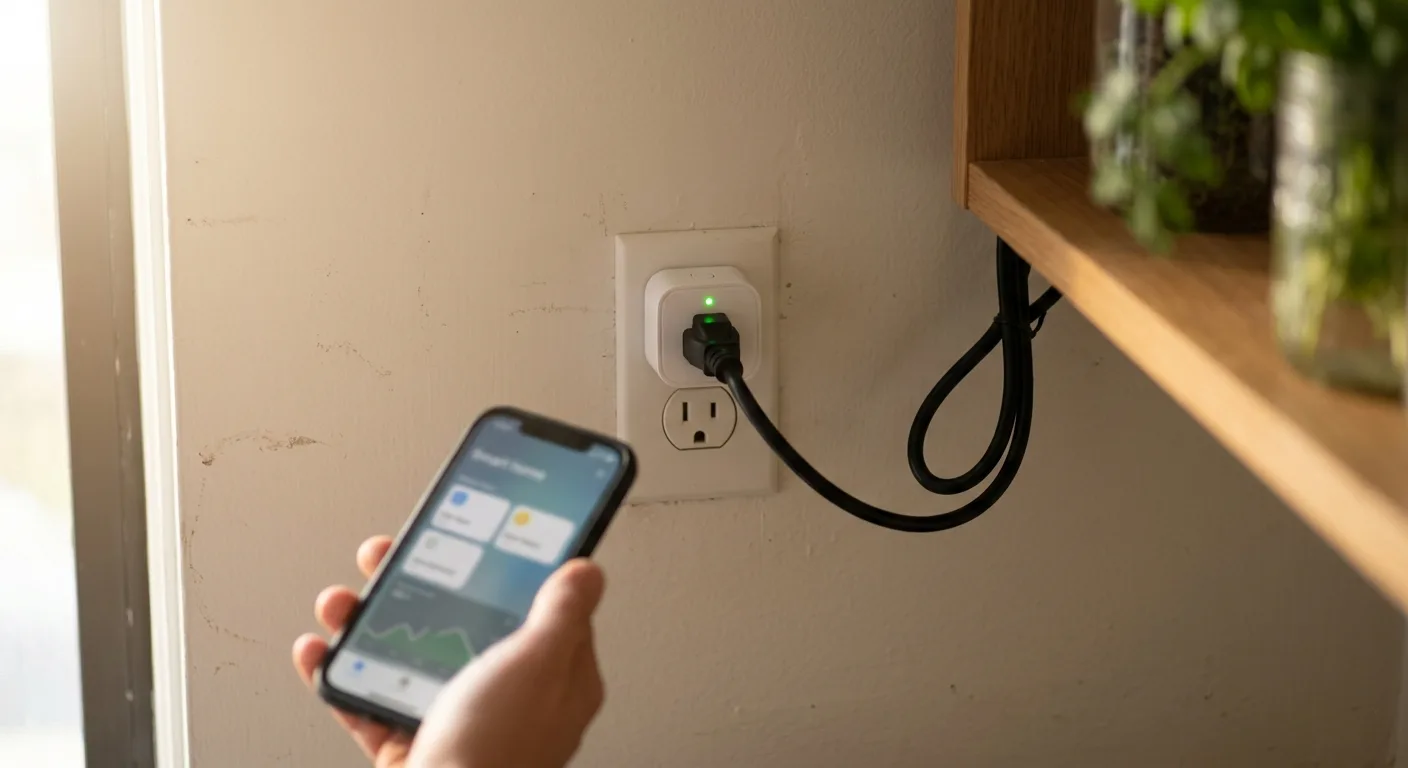
There are two main ways to control your daily light cycle in a small space. Analog timers use a physical dial with push-pins to set the active hours. They’re cheap and reliable, but they make a faint ticking sound that might bother some people. In contrast, smart plugs connect to your phone via Wi-Fi for silent operation. You can adjust the schedule from your couch without touching the wall outlet. This makes them ideal for hard-to-reach shelves or crowded kitchen corners. If your Wi-Fi drops, most smart plugs will remember the last saved schedule anyway.
→ 3 Best LED Grow Lights for Apartment Countertop Hydroponics
→ Can a Clip-On Grow Light Really Grow Hydroponic Herbs in an Apartment?
🌿 Crop-Specific Lighting And Dark Period Needs
Not all plants behave the exact same way under artificial LEDs. Do hydroponic herbs need darkness at night uniformly across all varieties? While the baseline is similar, specific crops exhibit unique quirks. Grouping plants with matching requirements will save you a lot of frustration. If you put a low-light herb next to a high-light herb, one of them will suffer.
🌱 Easy herbs for shared reservoirs
Basil, mint, and chives are fantastic companions in a shared hydroponic container. They tolerate the same 14 hours on cycle without complaining. When growing these together, you should maintain a safe middle ground of EC 1.5 to keep them all happy. The water must stay between pH 5.5 to 6.5 at all times. If the pH drifts outside this range, nutrient lockout will occur regardless of your lighting schedule.
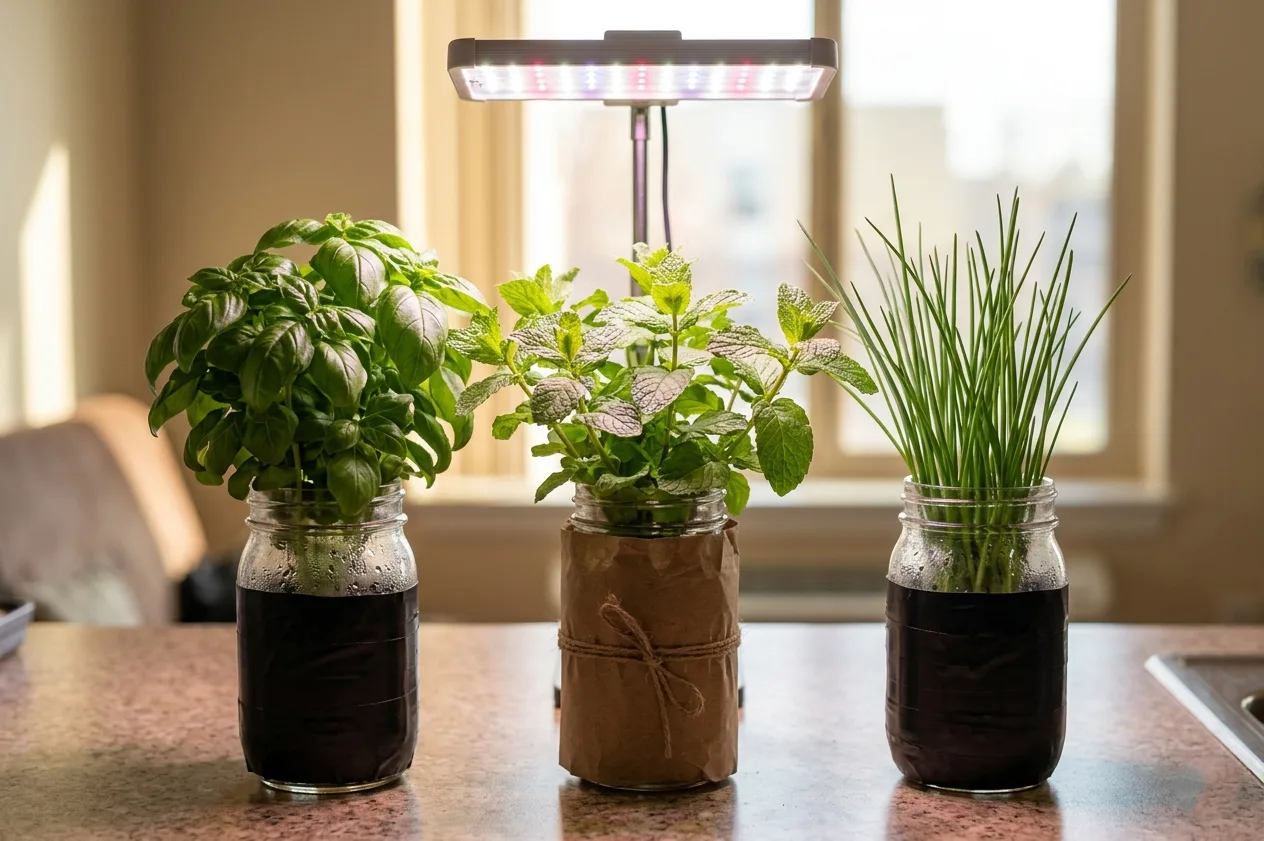
To keep a shared setup thriving:
- Top off daily with plain pH-adjusted water to replace what the plants drank.
- Perform a full reservoir change every 2 weeks to reset the nutrient balance.
- Keep the light panel 6 to 8 inches above the highest leaves.
🥬 Medium difficulty crops
Parsley, cilantro, and oregano present a slight step up in difficulty. Oregano loves intense light, so you might need to drop the panel to 4 to 6 inches above the canopy. On the other hand, cilantro is very sensitive to heat and will bolt if the water climbs above 75°F (24°C). You’ll need to monitor their progress closely using the Seed to Harvest Countdown tool. Even with these specific quirks, they still require ten hours of uninterrupted darkness to grow well.
| Herb Variety | Ideal EC Range | Specific Light Note |
|---|---|---|
| Basil | 1.8 to 2.2 | Grows tall fast, monitor light distance weekly |
| Mint | 2.0 to 2.4 | Vigorous, tolerates brief light interruptions |
| Cilantro | 1.4 to 1.8 | Keep lights high enough to avoid warming the water |
🍅 Transitioning to fruiting plants later
Once you master leafy greens, you might want to try cherry tomatoes or peppers in a larger setup. These advanced crops require higher nutrient levels, usually pushing to EC 2.0 to 3.5 depending on their growth stage. They also demand more intense light to produce fruit. Even so, they still require a resting phase to move sugars from the leaves into the developing tomatoes. You’ll keep them on the same fourteen-hour schedule, but you’ll need a much stronger LED panel to support the heavy blooms.
🩴 Managing Grow Lights In A Small Apartment Space
Growing food in a studio apartment means sharing your living area with your indoor garden. Because of this, managing bright LEDs is a practical quality-of-life issue. Do hydroponic herbs need darkness at night exactly when you sleep? While they don’t care about human clocks, syncing their dark cycle with your bedtime makes life much better. You’ll avoid glaring purple or white lights while trying to relax on the couch in the evening.
🔆 Shielding the light bleed
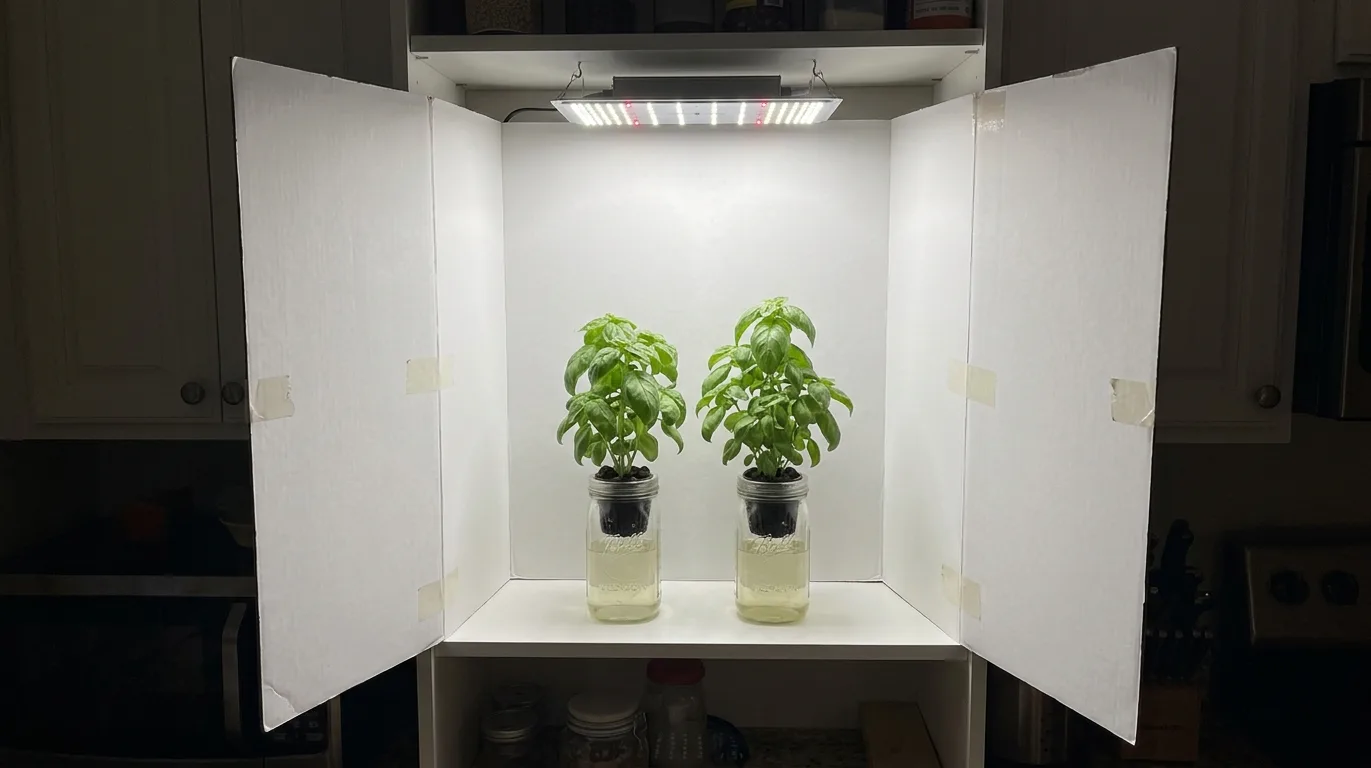
If you work late shifts and need your lights running during the night, light bleed becomes a real nuisance. A bright LED panel can illuminate an entire room. Therefore, you should craft simple physical barriers to keep the light focused on the plants. White poster board is cheap and reflective, making it an excellent material for apartment growers.
To contain the light in a small space:
- Tape white cardboard panels to the sides of your shelving unit to block stray light beams.
- Position the system behind a sofa or bookcase to block direct sightlines from your bed.
- Use a mini grow tent if you have the floor space available in a closet.
💧 Handling noise alongside light
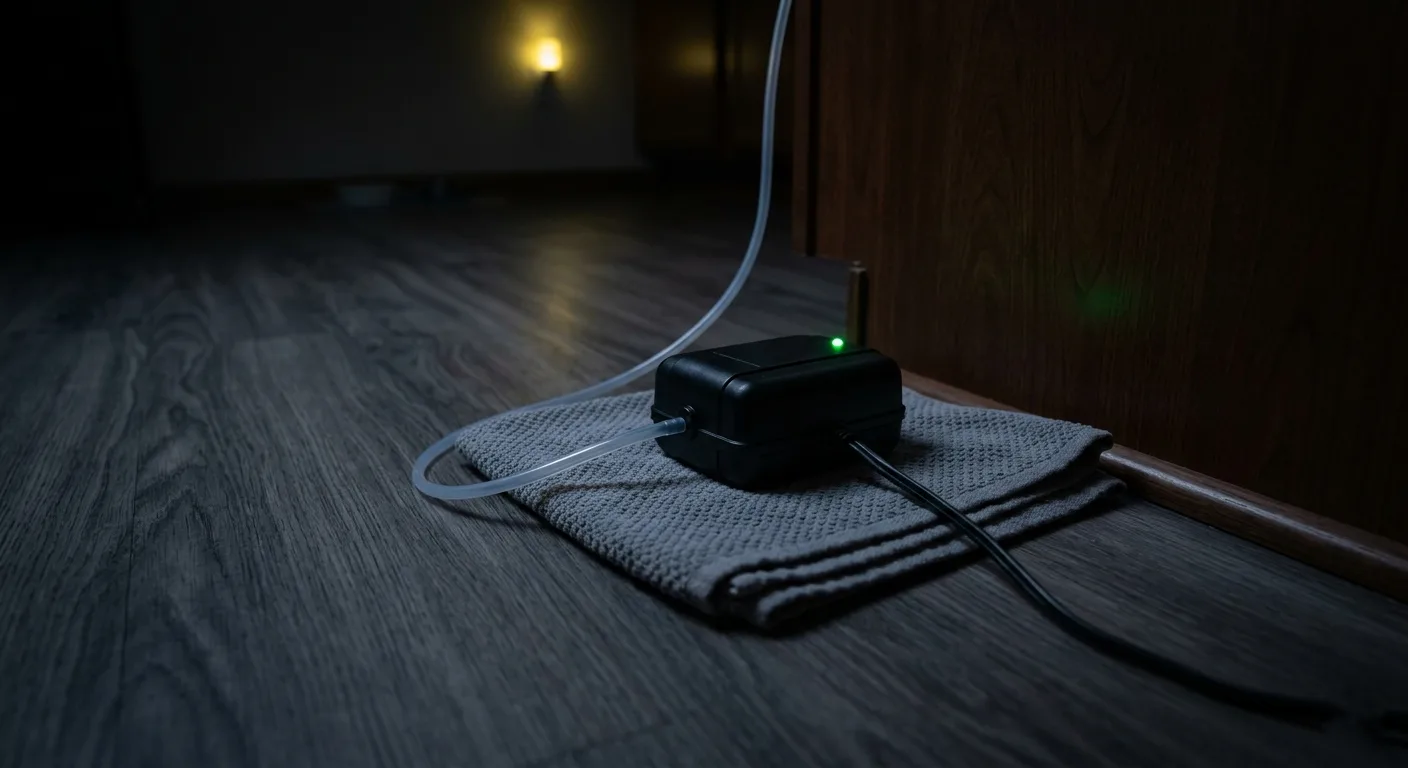
When the lights click off, your apartment gets quiet. This is usually when you’ll notice the hum of your equipment. If you use a Deep Water Culture (DWC) setup, the bubbling noise might be distracting. You must leave the air pump on all the time to prevent root rot, even in the dark. Placing the air pump on a folded towel will absorb the vibrations. It’s a cheap fix that helps muffle the vibration noise while your plants thrive.
🌾 Managing ambient heat buildup
Grow lights produce heat, even efficient LED models. Over a fourteen-hour shift, the air around your shelving unit will warm up. When the timer shuts off, that heat dissipates into the room. You’ll want to ensure this temperature swing isn’t too extreme. Air temperatures should remain between 60 to 70°F (15 to 21°C) in your apartment. If your kitchen gets too cold at night, the sudden chill can shock the root zone and stall morning growth.
→ How To Quiet A Noisy Hydroponic Pump So Your Apartment Stays Relaxing
→ Best Herbs for Small Hydroponics: 7 Varieties That Thrive in Apartments
⚗️ Nighttime Nutrient Uptake And Water Temperature
Many beginners only think about the leaves when asking, do hydroponic herbs need darkness at night? The root zone is just as busy during the off cycle. The way your plants absorb water changes when the sun goes down. Understanding this hidden activity will help you avoid sudden yellowing or leaf tip burn.
🧪 Monitoring pH and EC shifts
At night, herbs often drink more water while leaving the heavier mineral salts behind. This causes the concentration in your jar to spike. I damaged my first mint batch keeping the nutrient strength at EC 2.4 without realizing it was rising overnight. The tips burned brown and papery within ten days. Dropping it to a safer EC 1.8 to 2.2 fixed the new growth within a week. I always use the pH & Nutrient Calculator now to verify my starting numbers.
To keep the root zone stable overnight:
- Test the water level before you go to bed.
- Top off daily with plain water to dilute concentrated salts.
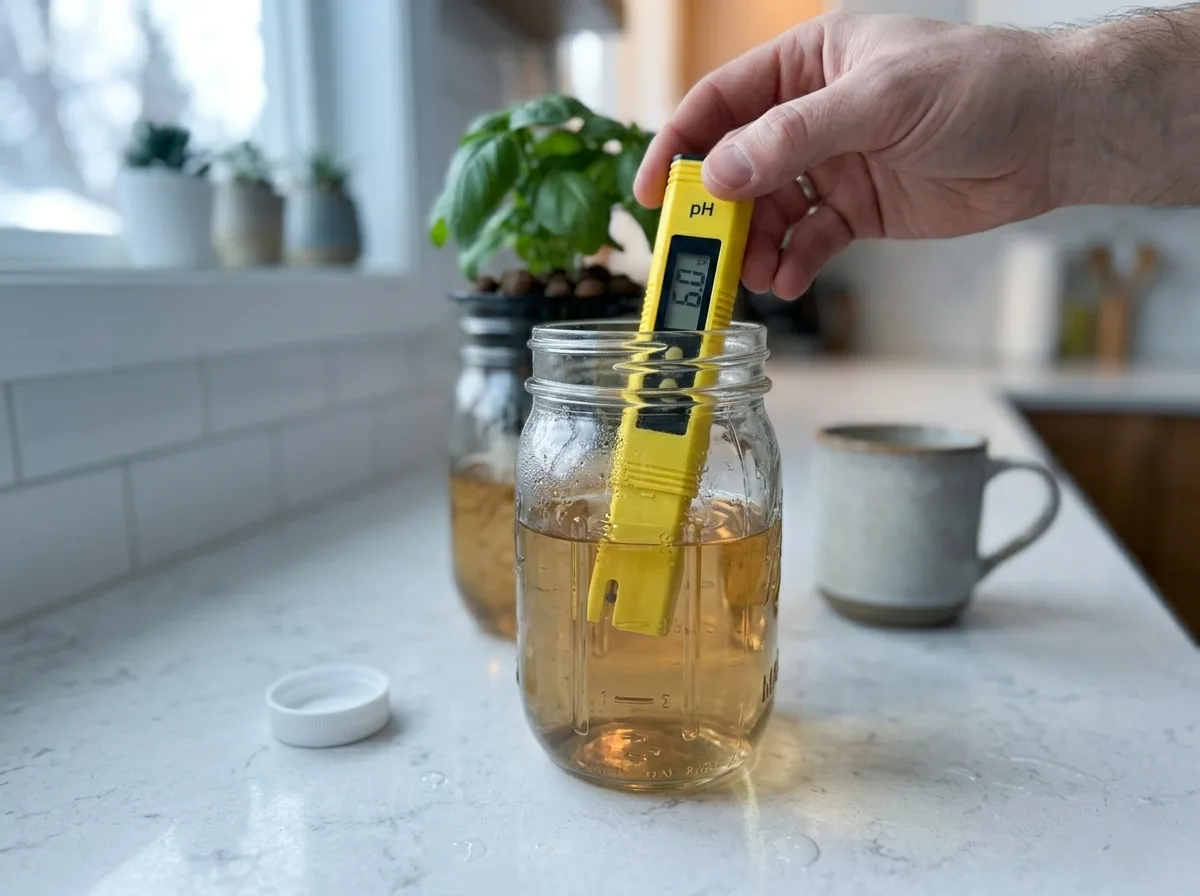
- Check the pH to ensure it remains between pH 5.5 to 6.5.
🌊 Managing temperature drops
LED grow lights emit a small amount of heat that warms the surrounding air. When the timer clicks off, the ambient temperature around your jars will drop. Your water temperature must stay within the safe range of 65 to 72°F (18 to 22°C). If the water gets too cold, nutrient uptake stalls. Placing your jars on a thick kitchen mat can insulate them from cold granite countertops during the winter.
📋 The morning inspection routine
The best time to check your system is right after the lights turn back on. The plants have finished their resting phase and are ready to resume photosynthesis. You’ll get the most accurate reading of what they consumed overnight. Grab your meter and test the reservoir before you drink your morning coffee. If the water level dropped, you’ll know they had an active respiration phase.
🛠️ Dealing With Power Outages And Timer Failures
Living in an apartment means dealing with the occasional tripped breaker or Wi-Fi outage. When you rely on automated systems, a power failure can mess up your carefully planned schedule. Do hydroponic herbs need darkness at night so that a single mistake ruins the crop? Most herbs are resilient, but you’ll want to correct the issue fast to minimize stress.
⚠️ Identifying a broken cycle
Sometimes a timer fails in the “on” position, leaving your plants bathed in light for days. You might not notice until the leaves start curling. A mechanical timer can get stuck if dust builds up in the dial mechanism. On the other hand, a smart plug might lose its connection and default to a constant power state. You’ll want to visually confirm the lights turn off at the correct hour at least once a week.
✅ Resetting the rhythm safely
If your plants endured forty-eight hours of constant light, they’ll be stressed. You shouldn’t panic and leave them in the dark for two days to compensate. Instead, you’ll want to restore the normal timer schedule right away. They need predictability to recover from the exhaustion.
To reset a disrupted plant:
- Unplug the faulty timer from the wall outlet.
- Provide ten hours of darkness to let the plant rest.
- Install a new plug or reset the mechanical dial.
- Resume your normal feeding schedule and check the root zone for signs of stress.
🔆 Battery backups for air pumps
While the lights can stay off during a short power outage, the air pump is a different story. If the power goes out for more than a few hours, the oxygen in the water depletes. This invites root rot. You can buy a small USB-powered air pump with an internal battery to prevent oxygen starvation. It’s a lifesaver for apartment growers who experience frequent winter storms.
🥦 Deep Water Culture Versus Kratky At Night
Your choice of hydroponic method dictates how much maintenance your night cycle requires. The Kratky method uses no pumps and relies on an air gap for oxygen. In contrast, Deep Water Culture requires mechanical aeration. Both methods grow fantastic basil, but they behave differently when the lights go out.
🩺 DWC pump rules overnight
In a DWC setup, the air pump is the heart of the system. You must never turn it off, even during the dark period. Beginners sometimes unplug it to eliminate noise in their studio apartment. When you do this, the oxygen levels plummet within hours. By morning, the roots become stressed and the plant will decline if left uncorrected. You’ll need to find a way to muffle the sound rather than cutting the power.
🦟 Kratky air gaps and water drops
The Kratky method is silent, making it ideal for bedrooms or small living areas. However, it relies on a specific pocket of air above the water line. At night, the plant drinks water, lowering the level in the jar. This exposes more roots to the air. You should never refill a Kratky jar all the way to the top.
- Keep the water level at the halfway mark on the jar.
- Leave the top roots exposed to air so they can breathe.
- Top off daily with plain water in small amounts.
🍃 Preventing algae in silent setups
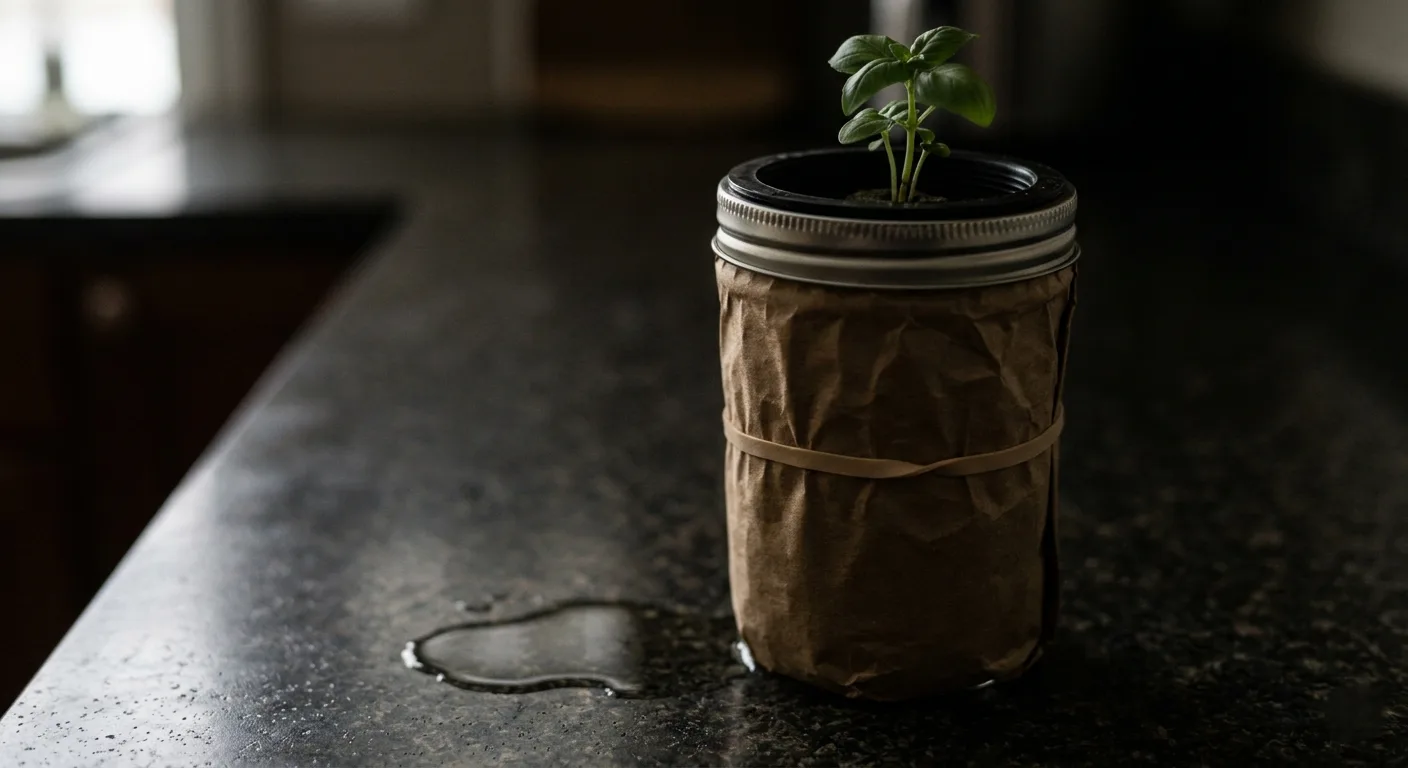
Because Kratky jars sit still without moving water, they’re prone to algae if light sneaks in. During the day, your LEDs shine brightly. If your jar isn’t painted or wrapped, algae will bloom. At night, the algae respires just like your herbs, competing for the limited oxygen. You’ll need to wrap your jars in thick paper or foil tape to block all stray light.
→ Why Algae Keeps Growing In Hydroponic Jars And How To Stop It In An Apartment
→ How Often Should You Change Water In A Small Hydroponic System
🚨 Troubleshooting Night Cycle Problems
Sometimes things go wrong despite your best efforts. A timer fails, a power outage resets your smart plug, or a bright street lamp shines right through your window. When you ask do hydroponic herbs need darkness at night, you also need to know how to fix a disrupted cycle. Quick action is the key to saving stressed plants before the damage spreads.
- Not sure what is wrong yet → start with the Quick diagnosis table below
- You know the cause → jump to adjusting your timer settings
🩹 Light burn versus exhaustion
It’s vital to tell the difference between a light panel that’s too close and a dark cycle that’s too short. Light burn usually affects the top leaves first, turning them white or crispy. Exhaustion affects the overall vigor of the plant, causing drooping and pale colors everywhere. You can usually fix light burn if you raise the light panel. Exhaustion requires a strict reset of the dark period.
🔎 Quick diagnosis table
| What you see | Most likely cause | Check this first |
|---|---|---|
| 🟡 Top leaves turning crispy white | Light burn | Raise the light to 6 to 8 inches |
| 🟡 Whole plant drooping, slow growth | Exhaustion (No dark cycle) | Verify timer is set to 14 hours on |
| 🟡 Lower leaves turning bright yellow | Nutrient lockout | Check pH is between 5.5 and 6.5 |
👉 Dealing with ambient room light
If your herbs sit in a busy living room, they’ll experience ambient light from your television or lamps. Fortunately, herbs are vegetative crops. They’re much less sensitive to minor light pollution than fruiting plants like tomatoes. A dim reading lamp won’t ruin your basil harvest. However, you should try to keep direct, bright beams away from the foliage during the scheduled dark period.
✂️ Pruning damaged foliage
If your plants suffered from a broken timer, you’ll likely see some damaged leaves. Yellow or crispy foliage won’t recover. It’s best to remove it so the plant can focus its energy on new growth. Take a clean pair of scissors and trim away damaged leaves. You’ll notice fresh shoots emerging within a week once the proper dark cycle resumes. You can then reset the smart plug and monitor the recovery.
❌ What To Do If Your Herbs Stop Growing
You set your timer for 14 hours on. You measure the nutrients flawlessly. Your apartment stays at a cozy 68°F (20°C). Yet, your lettuce just sits there, refusing to grow. This stagnation is frustrating, but it’s usually easy to solve once you check the basics.
→ Checking your light distance
Even with a flawless dark cycle, weak light during the day will halt growth. If your panel sits too high, the plants won’t gather enough energy to use during their nighttime respiration. For leafy herbs, keep the light 6 to 8 inches above the canopy. For high-light plants like oregano, drop it to 4 to 6 inches. Use the free grow light calculator to find the exact wattage and distance for your specific panel. If the stems look long and spindly, they’re begging for closer light.
→ How Far Should Grow Lights Be From Hydroponic Herbs On A Small Shelf
→ Why Your Apartment Hydroponic Plants Turn Yellow (And Simple Fixes That Work)
📌 Verifying your pH levels
I always check the pH before assuming anything else is broken. Out-of-range pH causes nutrient lockout even when nutrients are present in the jar. If the water reads pH 6.5 or higher, your plants can’t absorb iron or nitrogen. They’ll turn pale yellow and stop growing.
- Buy a reliable liquid test kit or digital meter.
- Measure the reservoir daily before the lights come on.
- Adjust using tiny drops of pH Down.
- Wait ten minutes before testing the water again.
🐛 Inspecting the root zone for rot
If the light and pH are perfect, the problem usually hides below the water line. Lift the net pot and look at the roots. Healthy roots look white or pale tan. If they look brown, slimy, or smell like a swamp, you have root rot. This happens when the water temperature climbs above 72°F (22°C). You’ll need to clean the system and add a beneficial bacteria product like Hydroguard to save the plant. As a chemical alternative, you can use a diluted hydrogen peroxide soak, though this only provides a temporary fix and can damage delicate root hairs if overused.
💬 A Word From Sarah
I bought a cheap mechanical timer for my first mint crop and pushed the little plastic pins down to set a fourteen-hour cycle. A few weeks later, I accidentally bumped the dial while reaching for a watering can, pushing all the pins down into the active position. The lights stayed on for five days straight while I was busy with work. By the time I noticed, the mint leaves had curled into tight, crispy little tubes and the reservoir had dropped by half. I trimmed away the worst damage, corrected the timer to ten hours of darkness, and the mint bounced back with fresh green shoots within eight days. I now tape a piece of cardboard over my analog timers to prevent accidental bumps.
❓ Frequently Asked Questions
🍃 Do hydroponic herbs need darkness at night?
Yes, hydroponic herbs require a dark period to perform cellular respiration. During this time, they convert stored energy into new leaf and root growth. Running lights without a break causes exhaustion and stunts plant development over time. Setting a simple timer ensures they’ll get this vital rest every night.
💡 Can I leave my grow lights on 24 hours a day?
You should never leave your grow lights on continuously for herbs. Without a resting period, plants experience severe stress, leading to curled leaves and poor nutrient uptake. Always provide a consistent daily rest phase. Even a cheap mechanical dial timer can automate this schedule and protect your crop.
⏳ How many hours of darkness do hydroponic herbs need?
Most indoor herbs thrive with ten hours of darkness every night. A standard schedule of fourteen hours on and ten hours off provides the perfect balance of energy production and healthy resting time. You can set this cycle to align with your own waking hours for convenience.
🔆 Does room light interrupt the dark cycle for herbs?
Standard apartment lighting like a dim lamp or TV screen rarely causes issues for vegetative herbs. However, direct exposure to bright overhead lights during their resting phase can confuse the plant and interrupt its natural cycle. Use a simple cardboard shield if your setup sits near a bright living room light.
🩺 What happens if the water temperature drops at night?
A slight temperature drop is normal when lights turn off. As long as your reservoir stays between 65 to 72°F (18 to 22°C), your roots will remain healthy and continue absorbing nutrients efficiently. Placing a thick mat under your jars helps insulate them from cold winter countertops overnight.
💧 Should I turn off my air pump at night too?
You must leave your air pump running continuously. Roots require constant oxygenation regardless of the lighting schedule. Turning off the pump starves the root zone of oxygen and invites harmful pathogens into the reservoir. If the bubbling noise bothers you, try placing the pump on a folded towel to absorb vibrations.
⏱️ Can I sync the plant light timer with my sleep schedule?
Yes, syncing the dark cycle with your own sleeping hours works very well in small apartments. This prevents glaring purple or white LEDs from disrupting your rest while giving the herbs the downtime they require. Just program your smart plug to shut off right before you normally go to bed.
🛠️ How do I fix plants stressed by too much light?
First, correct your timer to ensure a proper resting phase. Next, check your light distance to prevent leaf burn. Finally, verify your reservoir nutrients are balanced to help the stressed plant recover its strength. Be sure to trim away any dried or crispy leaves so new shoots can emerge.
Happy growing! 🌿
— Sarah, Urban Hydro Space

Sarah is the founder of Urban Hydro Space and an indoor gardening enthusiast dedicated to helping apartment dwellers grow fresh herbs and vegetables in small spaces. With hands-on experience testing hydroponic systems, she shares practical tips and honest product reviews to make indoor gardening accessible for beginners.