⏳ 15 min read · Last updated: March 2026
Knowing exactly how often to change hydroponic water is the secret to keeping indoor plants alive and thriving. I remember staring at my first countertop basil setup, wondering if the slightly cloudy liquid underneath was normal. I kept topping the tank off with plain tap water, which was the right instinct, but I never did a full change. After a few weeks, my basil dropped half its leaves and the roots turned into brown mush. I learned the hard way that a consistent reservoir change schedule is a firm requirement for small apartment systems. Today I want to show you when and how to refresh your reservoir without flooding your kitchen counter.
This guide covers every setup a beginner apartment grower is likely to use, from simple Kratky jars to countertop kits to small DWC buckets. The schedule changes slightly depending on your tank size, but the core rule stays the same throughout.
💧 Why Knowing How Often to Change Hydroponic Water Matters
How often you change hydroponic water is really about managing invisible chemistry. Plants do not drink water and nutrients at the same rate. On a hot day in a stuffy apartment, a basil plant will drink large amounts of plain water to cool itself, leaving the mineral salts behind. Over time that liquid becomes toxic regardless of how full the tank looks.
- All apartment systems need a full water change every 14 days as a baseline rule.
- Between full changes, always top off with plain, pH-balanced water only, never more nutrients.
- If your water smells swampy or turns cloudy, change it immediately regardless of schedule.
- Never use cold tap water straight from the tap. Let it reach 68 to 72°F (20 to 22°C) first.
- Tiny apartment, no electricity → Kratky Mason Jars
- Want plug-and-play simplicity → Countertop Kits
- Fastest growth for larger greens → Small DWC Totes
- Why Knowing How Often to Change Hydroponic Water Matters
- What Happens When You Do Not Change Hydroponic Water
- How Often to Change Hydroponic Water Based On Your Setup
- Sourcing the Right Water for Your Apartment System
- Signs It Is Time to Change Your Hydroponic Water Immediately
- Step-by-Step: How to Actually Change Hydroponic Water
- Topping Off vs Changing Hydroponic Water: The Golden Rule
- Troubleshooting Common Water Change Mistakes
- A Word From Sarah
- Frequently Asked Questions
🫙 The Hidden Cycle of Nutrient Depletion
Your plants are picky eaters. A lettuce plant might consume all the nitrogen in your tank within a week while leaving most of the calcium behind. If you keep adding mixed fertilizer to the old water, the unused calcium builds up fast. This causes a condition known as nutrient lockout. The roots become stressed and the plant declines if left uncorrected, even though the tank looks full and the water looks fine.
🧪 Preventing Wild pH Swings
As plants consume specific minerals, the acidity of your water changes. A healthy reservoir should stay around pH 5.5 to 6.5 for most herbs. Root excretions alter the water chemistry over time as well. When old water sits for a month, the pH will crash or spike, and your herbs lose their ability to absorb nutrients at all. A fresh change resets this balance. Use the free pH and nutrient calculator to dial in the exact adjustment your tap water needs before each new batch.
📉 Restoring Lost Oxygen Levels
Roots need to breathe as much as they need to drink. Fresh tap water contains dissolved oxygen, but as water sits in a warm apartment it loses that oxygen over time. Knowing how often to change hydroponic water helps you replenish that oxygen supply, keeping the root system white, firm, and capable of fast growth. In a warm studio in summer, this process happens faster than most beginners expect.
🥀 What Happens When You Do Not Change Hydroponic Water
Ignoring your reservoir maintenance is a fast track to failure. The issues compound fast in small tanks under a gallon, and by the time leaves show symptoms the damage is already a week old.
🧂 Toxic Salt Accumulation
Every time you add fertilizer, you add salts. When water evaporates, those salts stay behind and concentrate. Eventually the electrical conductivity levels spike, burning the delicate root tips. You will notice the edges of your leaves turning brown and crispy. Flushing the system is the only reliable way to remove these harmful concentrations once they build up.
🦠 Bacterial Blooms and Root Rot
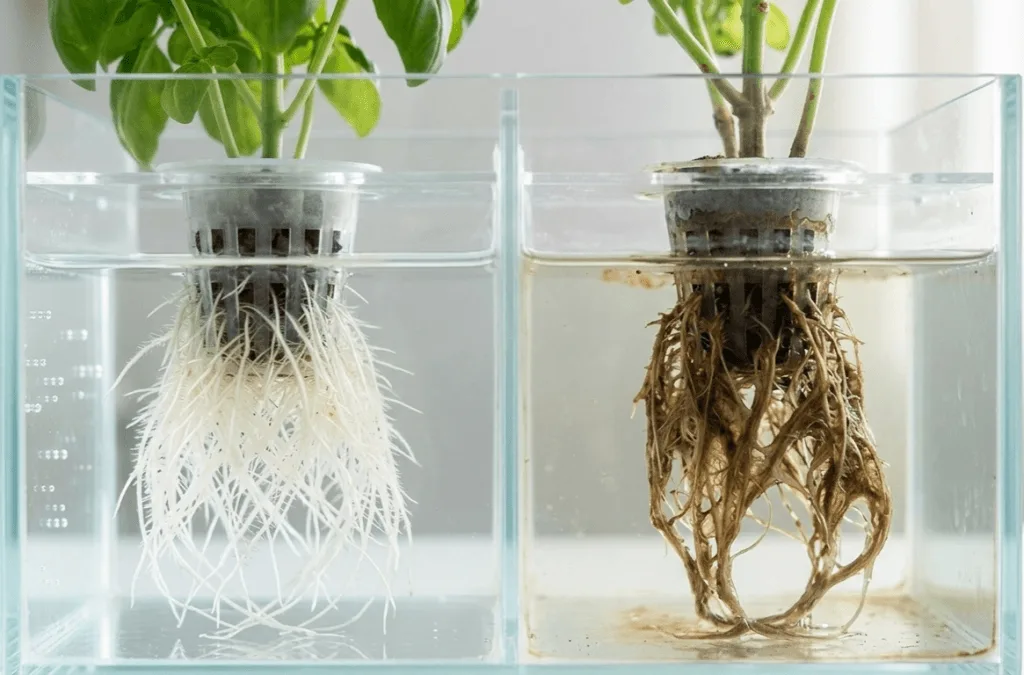
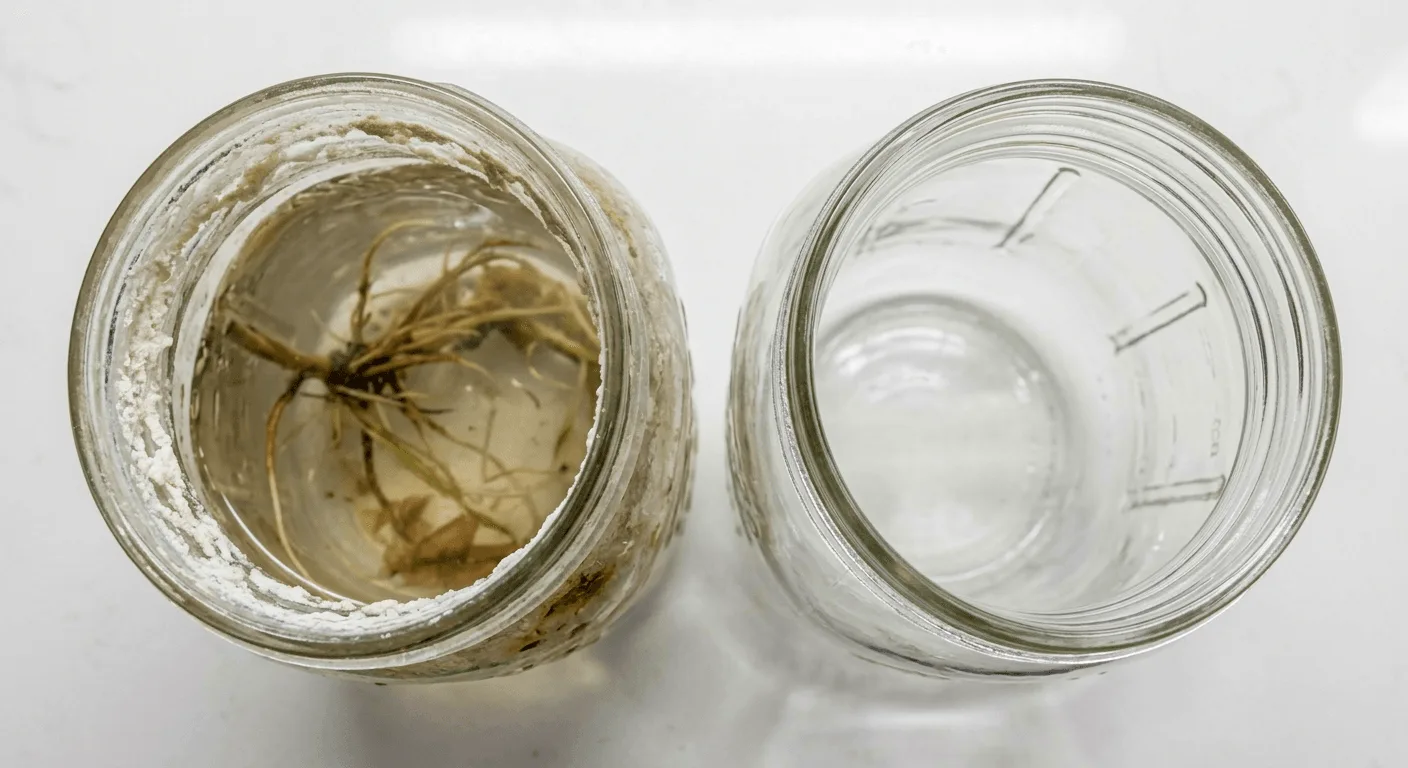
Warm, stagnant water is a breeding ground for bad bacteria. Pythium, the pathogen responsible for root rot, thrives in dirty reservoirs. The roots turn brown, slimy, and emit a foul odor. Staying on top of your change schedule is far easier than trying to save a rotting root system. For a deeper look at prevention, read my guide on preventing root rot in small hydroponic systems before it starts.
🍂 Unexplained Plant Starvation
You might look at a full tank and think your plants are fed. However, if the pH is wrong or the specific minerals they need are depleted, they starve in a sea of plenty. Yellowing lower leaves are a classic sign of this invisible starvation. This is exactly why guessing how often to change hydroponic water leads to poor harvests even when the tank never runs dry.
⏱️ How Often to Change Hydroponic Water Based On Your Setup
The baseline rule for how often to change hydroponic water is the same across all apartment systems: a full reservoir change every 14 days, with plain pH-adjusted water topped off in between. The volume of your tank affects how fast things go wrong between changes, but the 14-day rule protects every setup in the list below.
🪴 Commercial Countertop Kits
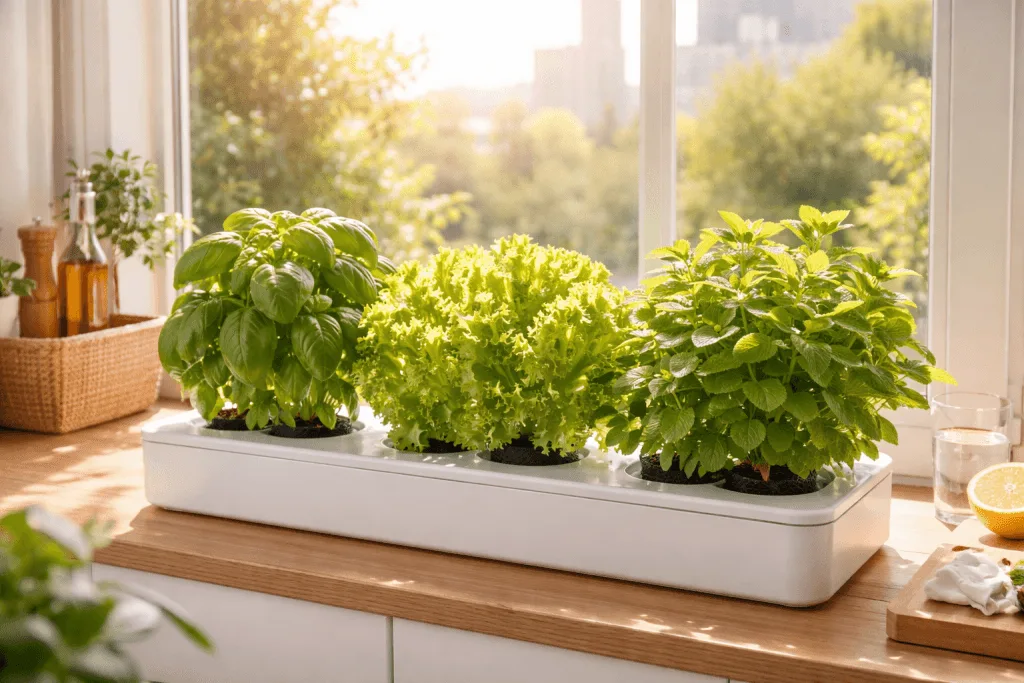
Systems like an AeroGarden or iDOO typically hold between 1 and 2 gallons. The small volume means nutrient fluctuations happen fast. You must change the water every 14 days. In summer, large tomato plants might drain these units in a few days, so check water levels every 2 to 3 days and top off with plain water only. If you haven’t settled on a kit yet, my roundup of the best hydroponic starter kits for apartments compares four popular options side by side.
🫙 Simple Kratky Mason Jars
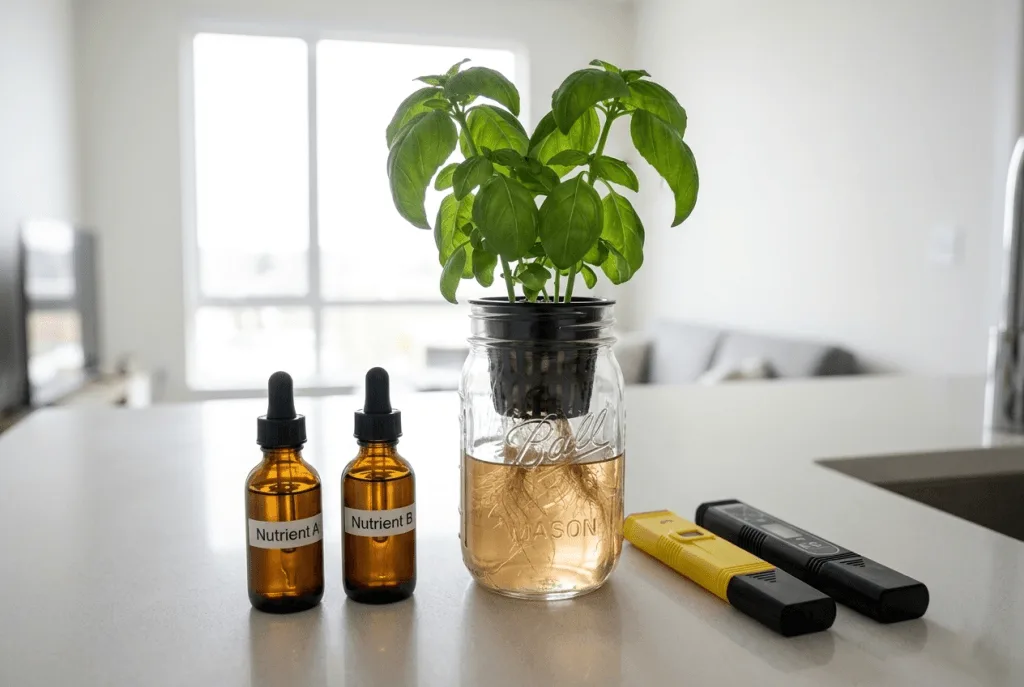
The Kratky method is passive, so the water change rhythm works slightly differently. You let the plant drink the liquid down rather than topping off daily. However, you still need a full change every 14 days, or whenever the jar drops to the last third of liquid, whichever comes first. Waiting longer risks pH drift and salt concentration even in a jar that looks clean. For a full setup walkthrough, see my guide to building a Kratky jar setup for apartments, and if you specifically want to grow lettuce, my step-by-step on growing Kratky lettuce in a jar on a sunny windowsill covers every detail.
🪣 Small Deep Water Culture Bins
Deep Water Culture uses an air pump to bubble oxygen into the roots. A 3-gallon tote acts as a buffer because the larger water volume keeps pH and nutrients stable longer than a small jar. Even so, change the full reservoir every 14 days and check water levels every 2 to 4 days in between. If you are deciding between DWC and Kratky, my comparison of DWC vs Kratky for apartment beginners breaks down exactly which suits your space and budget.
| System Capacity | Full Change Rule |
|---|---|
| Under 1 Gallon (Countertop) | Every 14 days |
| 1 to 3 Gallons (Jars / Small Bins) | Every 14 days |
| 5 Gallons or more (Large Totes) | Every 14 to 21 days |
🚰 Sourcing the Right Water for Your Apartment System
Before you swap your reservoir, you need to know what goes into it. Tap water in many cities contains additives that can affect young roots. Understanding your source water helps you get more from your hydroponic water change schedule, since contaminated or hard water needs flushing sooner than clean filtered water does. My guide to the best hydroponic nutrients for small apartment systems covers which fertilizer formulas work best with different water types.
🚿 Dealing With City Tap Water
Most apartments use municipal tap water treated with chlorine or chloramine. Chlorine will off-gas if you leave a bucket sitting out for 24 to 48 hours before use. Chloramine does not off-gas. If your city uses chloramine, your plants may struggle to take up nutrients. Vitamin C drops or a small carbon filter will neutralize it and are cheap to keep on hand.
🧊 Filtered and Distilled Options
Reverse osmosis or distilled water is a blank slate with zero starting minerals, giving you full control over what your plants eat. If you use RO water, you must add a cal-mag supplement. Without it, your plants will show calcium deficiencies within 2 to 3 weeks regardless of how precise your other nutrients are. It is extra work, but it prevents early reservoir fouling and gives you the cleanest possible baseline between changes.
🌧️ Why Rainwater Is Tricky Indoors
I tried collecting rain on my apartment balcony during my second grow season. City rain collects pollutants and roof dust on the way down, and that batch introduced algae spores into my system within 10 days. The reservoir turned green and I lost two weeks of growth cleaning it out. Stick to filtered tap water for indoor apartment grows. It is the safest, most consistent source you have.
🔍 Signs It Is Time to Change Your Hydroponic Water Immediately
Schedules are helpful, but plants do not follow calendars. Sometimes an issue demands immediate action before your scheduled change day arrives. Knowing how often to change hydroponic water also means knowing when to break the routine.
☁️ Cloudiness and Visual Changes
Healthy nutrient solution should look clear, though perhaps slightly tinted from the fertilizer. If you open your tank and the water looks milky, stop waiting. This cloudiness signals a bacterial bloom. Dump the liquid immediately and sanitize the basin before the infection spreads to the root system.
👃 Swampy or Rotting Smells
Your reservoir should smell earthy, like fresh rain or wet soil. If it smells like sulfur, rotting eggs, or a dirty fish tank, you have an anaerobic bacteria problem. Oxygen levels have dropped too low. Flush the system and inspect your pump to make sure it is circulating water properly.
🐌 Thick Algae Clinging to Roots
Algae loves light and fertilizer. If light leaks into your tank through a loose lid, green slime will coat your roots and compete with your plants for oxygen and food. When you see thick green growth, clean the tank, cover any gaps with dark tape or foil, and change the water to remove the floating spores.
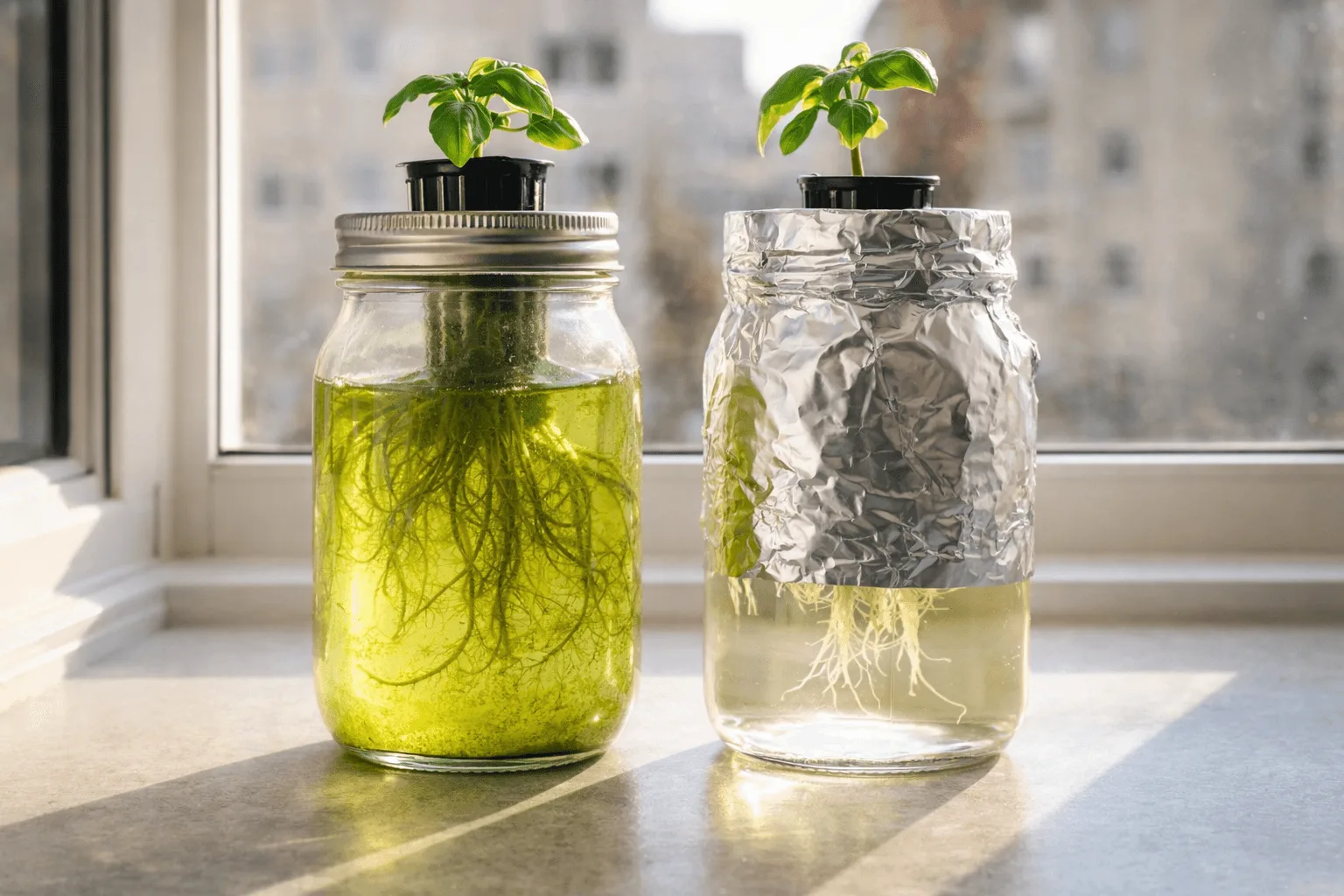
My full guide on why algae keeps growing in hydroponic jars covers every light-blocking method and root-cleaning step.
🛠️ Step-by-Step: How to Actually Change Hydroponic Water
The thought of dismantling an indoor garden can feel overwhelming in a cramped apartment. With a few simple tools, the process takes less than 10 minutes. Getting this routine down makes the question of how often to change hydroponic water much less stressful over time.
🥣 Setting Up Your Prep Station
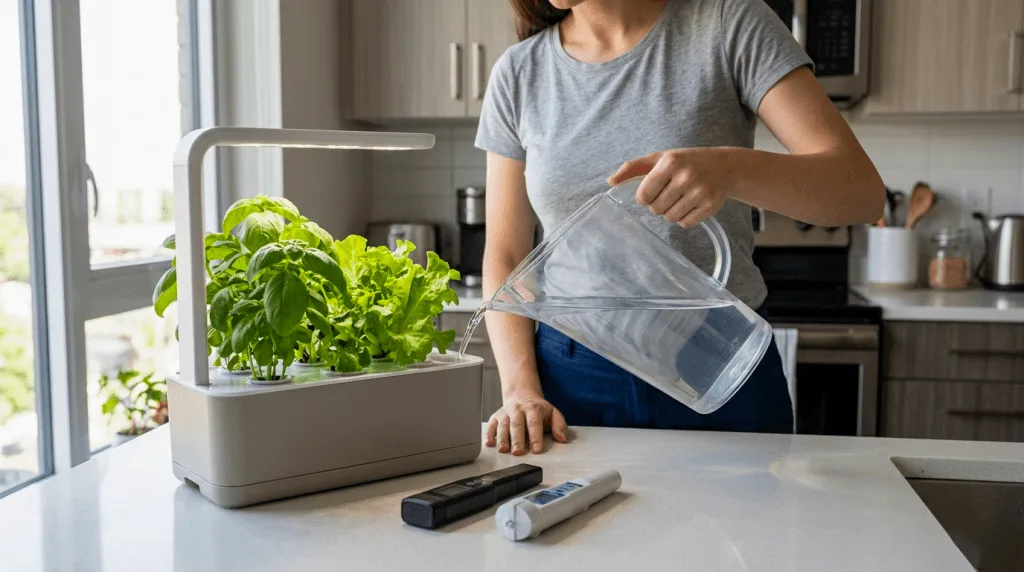
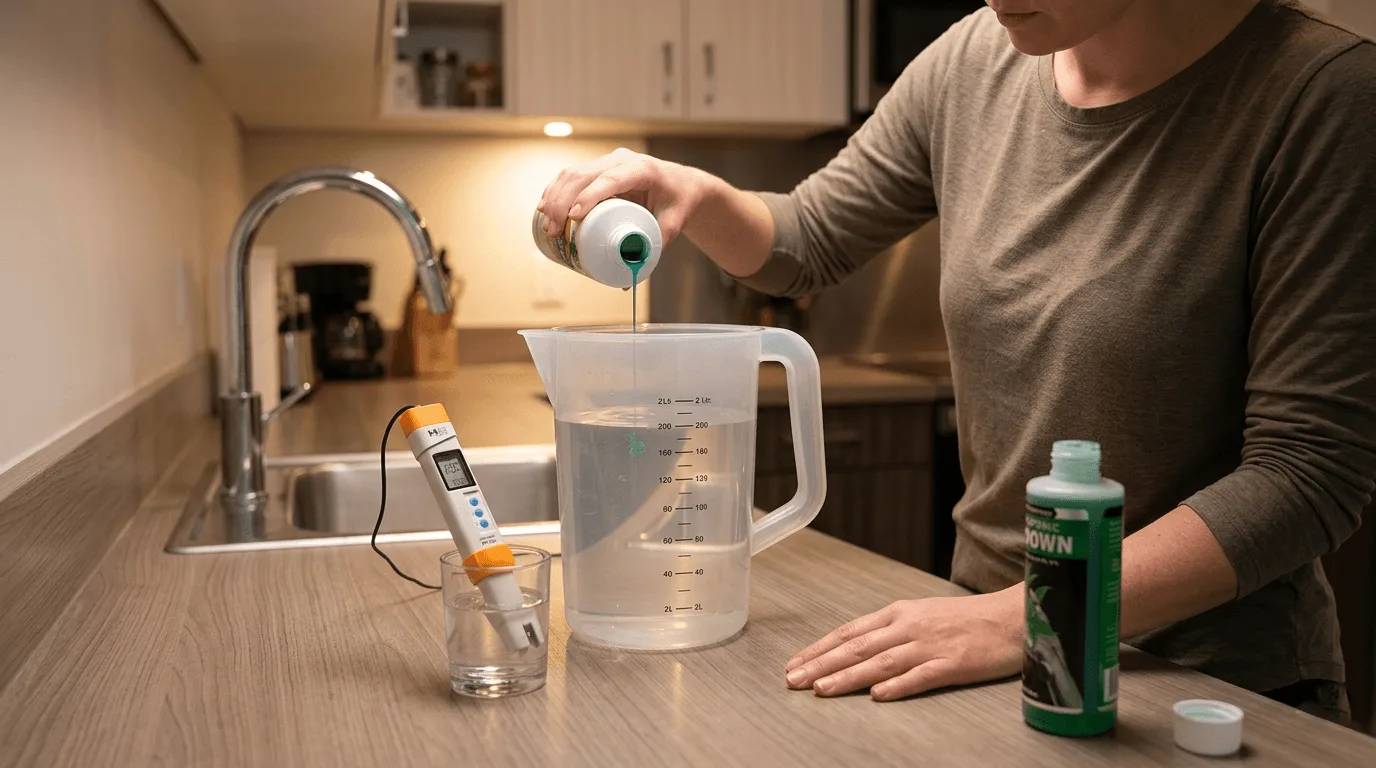
Do not mix nutrients directly inside the live system. Prepare your new batch in a clean plastic pitcher first. This lets you measure and adjust pH without stressing the live plants. Use the hydroponic shopping list builder if you are missing any of the tools below. Follow these steps in order:
- Fill a pitcher with lukewarm tap water and let it sit for 5 minutes.
- Add your liquid nutrients according to the bottle schedule.
- Stir well and wait another 5 minutes before testing.
- Measure the pH and adjust to pH 5.5 to 6.5 before pouring anything in.
🧽 Cleaning the Empty Reservoir
You cannot put fresh water into a dirty tank and expect good results. Once you remove your plants, scrub the basin thoroughly. Many people reach for bleach, but it leaves residues if not rinsed perfectly. Diluted hydrogen peroxide is a safer option that breaks down under light. Scrub the sides with a dedicated sponge to remove salt crusts and biofilm, then rinse twice with clean water before refilling.
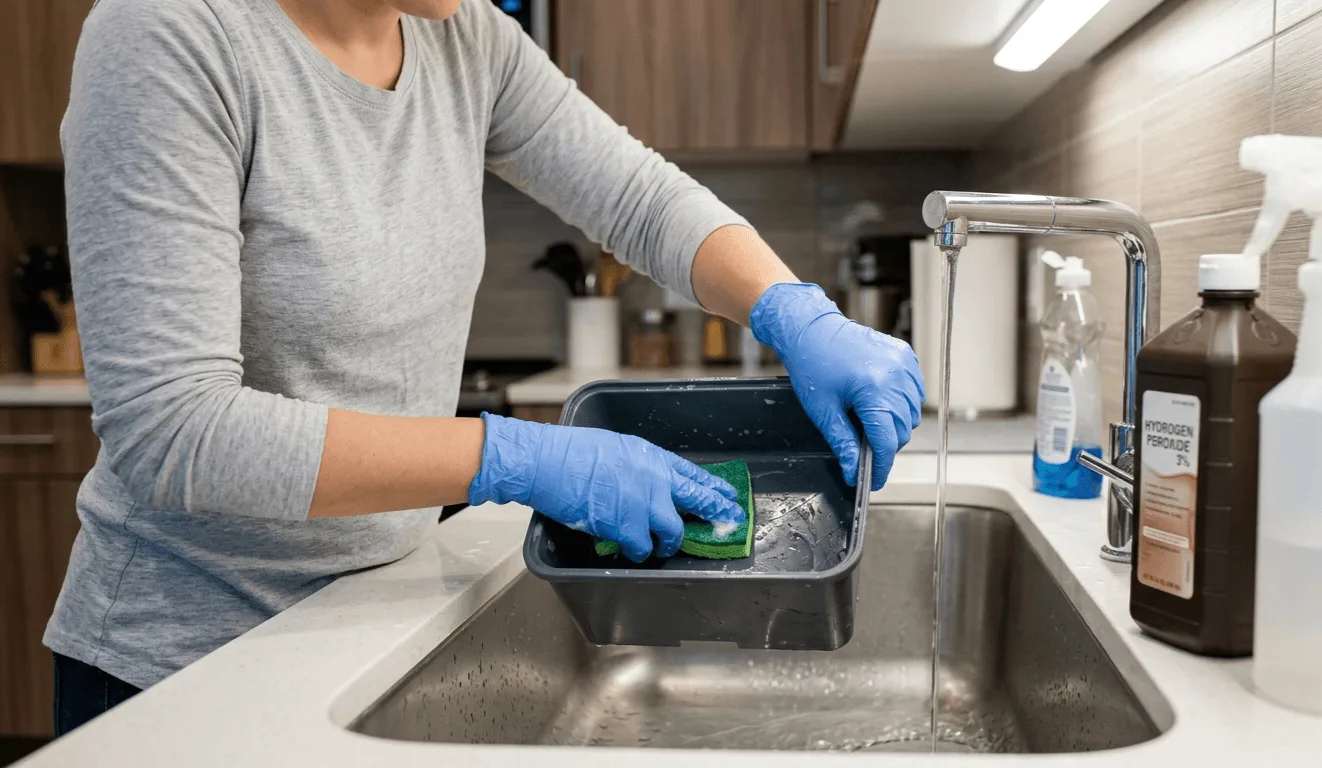
My detailed guide on how to clean a small hydroponic system without making a mess in your apartment walks through the full process step by step.
🌱 Inspecting and Rinsing Roots
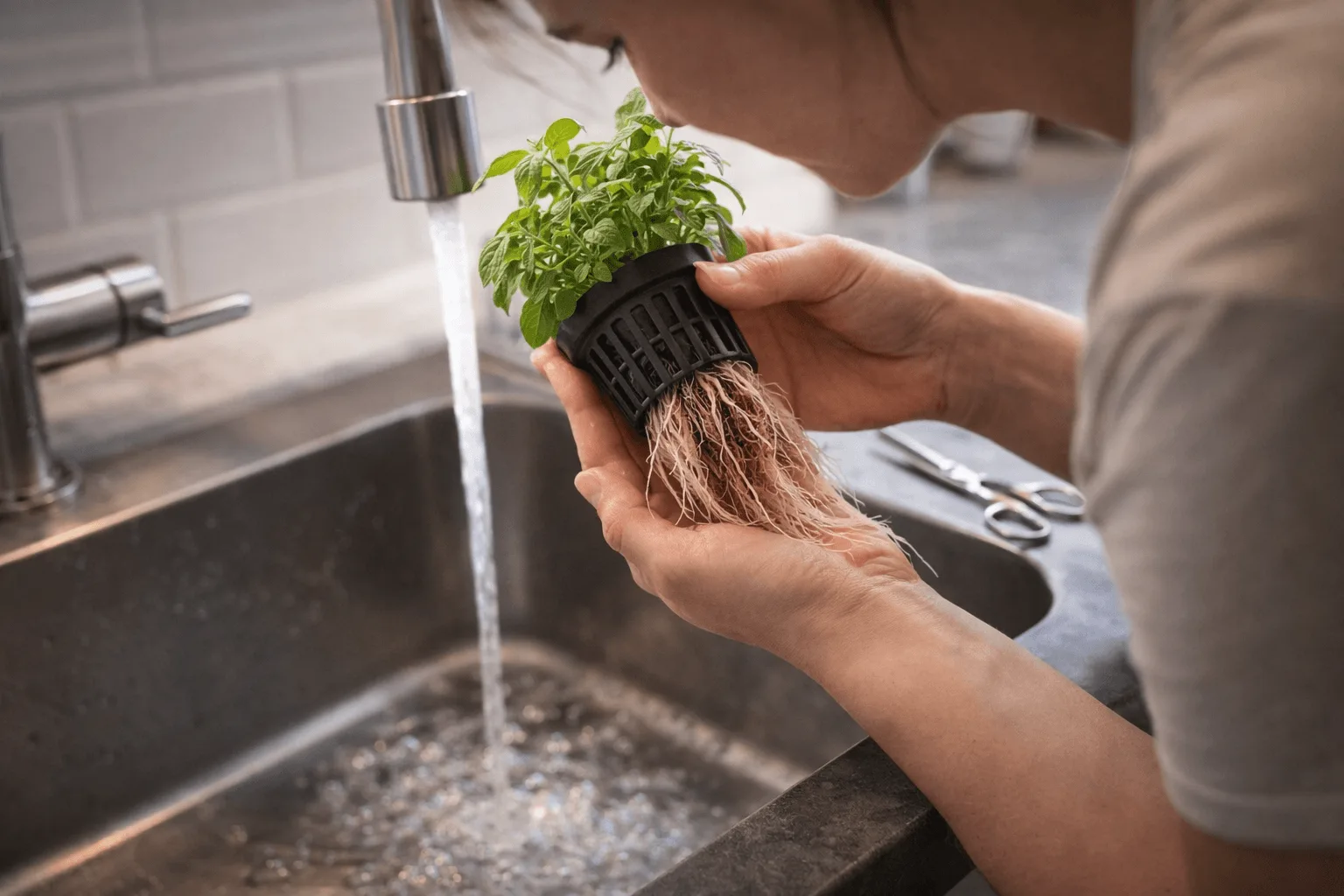
While the plants are out of the tank, rest them in an empty bowl. Healthy roots are white or light tan and firm to the touch. If you see dark, slimy sections, use clean scissors to trim them away. Then rinse roots gently under lukewarm water at your sink to dislodge old salt deposits without shocking the plant.
🗑️ Putting It All Back Together
Once your tank is clean, pour in the freshly mixed, pH-balanced solution. Do not fill the tank too high. Roots need an air gap to breathe, especially in Kratky jars. Leave about 1 to 2 inches of space between the waterline and the bottom of the net cup. Place the grow deck back on top, plug the lights back in, and you’re done.
⚖️ Topping Off vs Changing Hydroponic Water: The Golden Rule
One of the biggest points of confusion is the difference between adding water and changing it. This mistake cost me an entire basil grow in my second month. I was mixing a fresh pitcher of nutrients every time the tank dropped and pouring it straight in. The result was an EC reading of 3.1 after three weeks, more than double the safe limit for basil. The roots burned from the inside out and the plant died despite looking green for another four days.
➕ When to Just Add Plain Water
Between your scheduled full changes, your water level will drop as plants drink. When this happens, top off with plain pH-adjusted water only. Do not add more fertilizer. As plants drink, they leave salts behind in the reservoir. Adding nutrients to an already concentrated tank will burn the roots. The beginner hydroponic nutrients guide for small apartment systems explains exactly how to mix and dose nutrients so you know what goes in on change day versus top-off day.
📊 Watching Your EC Levels
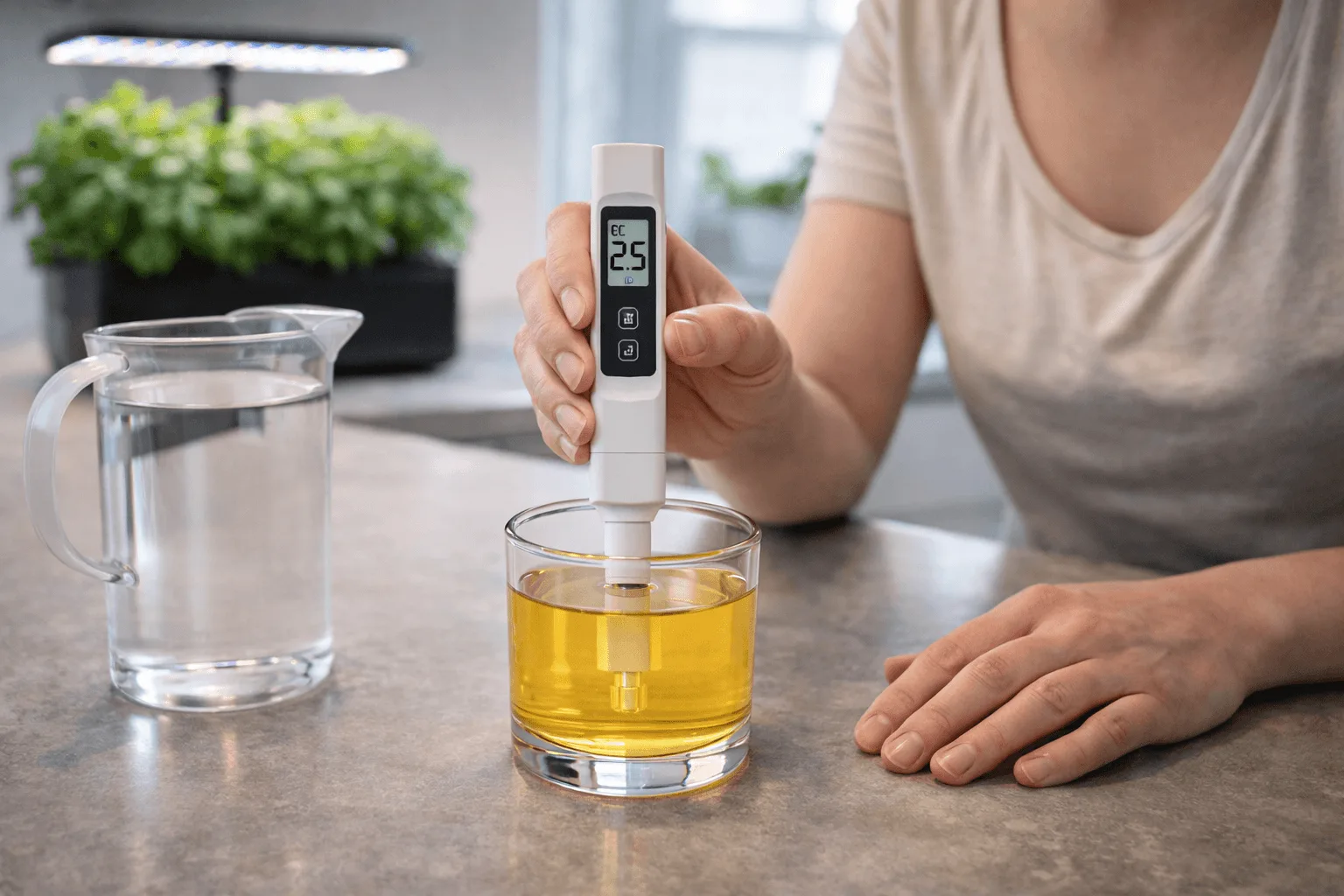
If you want to stop guessing, invest in an EC (Electrical Conductivity) meter. This tool measures the total salt concentration in your tank. For most apartment herbs, a target of EC 1.5 to 2.0 is the right working range. If your tank drops to half full and the EC reads 2.5 or above, the water is too concentrated. Add plain water to dilute it back down.
📆 Setting a Reliable Routine
In a small apartment, the best way to maintain your system is to tie it to another household chore. I do my reservoir changes every other Sunday morning before making coffee. A written log of your water changes helps you spot seasonal patterns. Your basil plants will drink roughly twice as fast in July as they do in December, so the same top-off schedule will not feel the same year-round.
🧯 Troubleshooting Common Water Change Mistakes
Even when you know how often to change hydroponic water, the actual process can trip you up. A simple error during a water change can shock your plants and cause them to wilt within hours. These are the most common mistakes apartment growers make during routine maintenance.
🥶 Shocking Plants With Cold Water
In winter, apartment tap water can come out very cold. If you fill your tank with cold water and drop your plants back in, the roots suffer thermal shock and the leaves will droop within hours. Always let your fresh nutrient mix reach room temperature before adding plants back. The target is around 68 to 72°F (20 to 22°C), which matches the optimal root zone range for most herbs and greens.
🧴 Using Dish Soap to Clean
Never use kitchen dish soap to clean your hydroponic reservoir. Soaps leave invisible films that disrupt root function and alter your pH. If the soap bubbles up into the pump intake, it can damage the motor. Stick to hot water, a dedicated sponge, and a diluted hydrogen peroxide rinse. Your plants will thank you at the next harvest.
✂️ Ignoring Root Pruning
A water change is the perfect time for maintenance. Over time, roots can grow into a dense, tangled mat that suffocates the pump intake and competes with itself for oxygen. While the plants are resting in their bowl, inspect the root mass. You can safely prune the bottom third of an overgrown root system with sterile scissors. This encourages fresh, healthy feeder roots to push through.
→ Penn State Extension: Hydroponic Nutrient Principles and EC Management
→ USDA National Agricultural Library: Hydroponics Resource Guide
💬 A Word From Sarah
When I first started, I obsessed over finding the perfect fertilizer brand and ignored the actual water beneath my plants. I killed my first mint batch running EC at 2.4 in a 1-gallon countertop unit, convinced that more nutrients meant faster growth. Dropping to EC 1.8 and doing a full reservoir flush on a proper 14-day schedule fixed the plant within a week. That experience taught me something I did not expect: the water schedule matters more than the nutrient brand. I have since tested cheap store-brand nutrients on a clean, properly timed schedule and gotten better results than expensive formulas sitting in stale water. The chemistry inside that tank is the garden. Everything else is just shopping.
❓ Frequently Asked Questions
🌿 Can I wait a month to change the water if my plants look fine?
You should not wait that long in a small apartment system. Even if the leaves look green, invisible salt buildups are happening below the surface. A month is too long for any setup under 3 gallons and the pH will crash before then. Stick to a schedule of every 14 days for countertop units and Kratky jars regardless of how the plants appear above the waterline.
🌴 What should I do about water changes if I go on vacation?
Do a full water change the day before you leave and fill the tank to the maximum line. For trips longer than a week, ask someone to top off the reservoir with plain, pH-balanced water only. Never ask a beginner to mix nutrients for you. A slight drop in water level is far safer than an accidental fertilizer overdose in a system they have never seen before.
🌲 Is it safe to use water straight from the bathroom sink?
Yes, bathroom tap water is the same municipal supply as your kitchen sink. You still need to treat it if your city uses high chlorine or chloramine. Always test the pH before pouring it into your system, since older apartment pipes can sometimes leach minerals that shift the acidity slightly.
🌵 Should I let the tank run dry before refilling?
Never let roots dry out. Hydroponic roots have no soil to protect them from open air. If the tank empties, the fine root hairs will die within a few hours. Always top off when the water drops below the halfway mark rather than waiting for the tank to empty. For Kratky systems, change the solution when the jar hits the last third.
🍃 Why does my water turn yellow after just a few days?
Many liquid hydroponic nutrients, especially those containing iron or micronutrients, tint the water yellow, brown, or pink. This is normal and not a sign of contamination. However, if the yellow water also smells bad or turns cloudy, you have a bacterial problem and need a full flush rather than waiting for your scheduled change day.
🎍 Do seedlings need water changes as often as adult plants?
Seedlings drink very little water compared to mature herbs. For the first 3 weeks, you can stretch the top-off schedule slightly since consumption is low. Once the roots reach the water and the plant develops a full set of true leaves, switch to the standard 14-day full-change routine and begin monitoring EC weekly.
🧪 Do I need to re-test pH after every water change?
Yes, always. Mixing nutrients into fresh water almost always shifts the pH, and the direction depends on your tap water and fertilizer brand. Mix your solution, let it sit for 5 minutes, then test and adjust to pH 5.5 to 6.5 before pouring it into your clean reservoir. Skipping this step is one of the most common reasons plants decline in the days following a change.
💧 Do I need a pump to maintain a proper water change schedule?
No. Kratky and other passive systems need no pump at all. The water change schedule applies equally to pump and pump-free setups. Pumps add oxygen between changes, which can slow bacterial growth in DWC systems, but they do not replace the need for a full reservoir change every 14 days. If pump noise is a concern, read the quiet hydroponic pump guide for apartments.
🏠 Can I do this in a studio apartment or one-bedroom?
Yes, and water changes are easier in a small space. Countertop kits and Kratky jars fit on a kitchen shelf or windowsill, and a full change takes under 10 minutes at your kitchen sink. The only things you need are a spare plastic pitcher, a pH meter, and your nutrients. No garden, no balcony, and no special drainage setup required.
🌿 Do hydroponic herbs taste the same as soil-grown herbs?
Most beginner growers are surprised to find that hydroponic herbs taste at least as good as supermarket herbs, and often better because they are harvested fresh. Flavor depends more on light exposure and harvest timing than on the growing method. Basil and mint grown hydroponically under a full-spectrum LED with a consistent 14-hour light schedule tend to be more aromatic than store-bought equivalents harvested days earlier.
Happy growing! 🌿
— Sarah, Urban Hydro Space

Sarah is the founder of Urban Hydro Space and an indoor gardening enthusiast dedicated to helping apartment dwellers grow fresh herbs and vegetables in small spaces. With hands-on experience testing hydroponic systems, she shares practical tips and honest product reviews to make indoor gardening accessible for beginners.