⏳ 15 min read · Last updated: September 2026
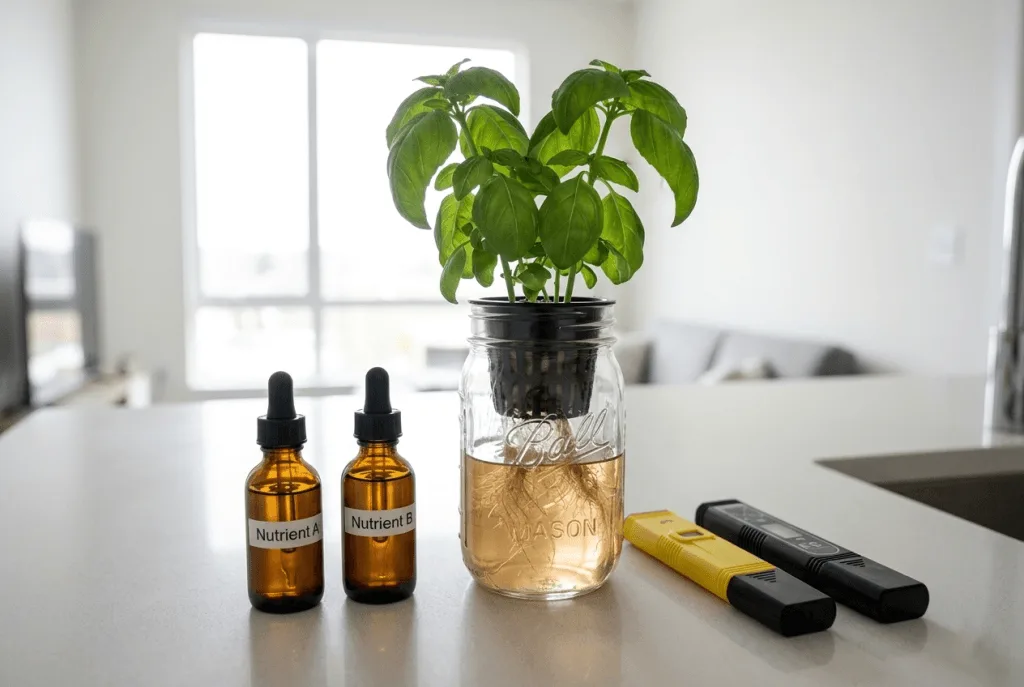
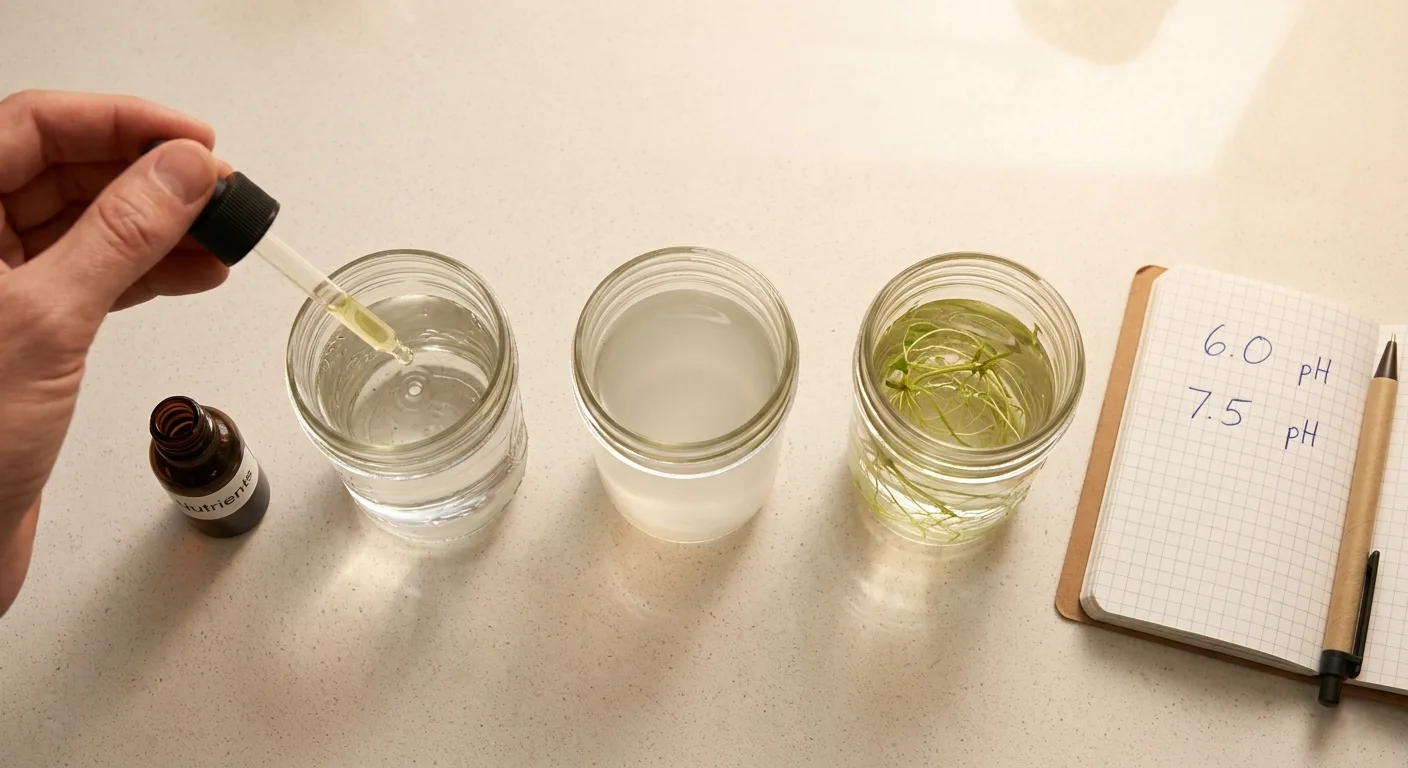
If your hydroponic pH keeps drifting no matter what you do, I know the frustration; my first countertop basil jar did exactly that. I’d adjust the water to pH 6.0 at night. By morning, it was back up to pH 7.5. It felt like a losing battle against invisible forces in my tiny kitchen.
I didn’t understand why the numbers bounced around so much. I assumed my cheap testing drops were broken. In reality, small water volumes react to plant appetite, temperature shifts, and even the air in your apartment. I learned the hard way that when your hydroponic ph keeps drifting your plants suffer from nutrient lockout. When I understood the triggers, I stopped fighting the water and started working with it. I’ll show you exactly how to stabilize your countertop garden today.
✅ Key Takeaways
- Small reservoirs drift faster than large ones because there’s less water to dilute chemical changes.
- Plants eating nutrients will naturally cause the pH to rise over 3 to 5 days.
- A full reservoir change every 2 weeks resets the chemical balance when drift gets out of hand.
- Adding too much adjuster at once causes a harsh bounce-back effect the next morning.
- Fast growth with high forgiveness → grow basil
- Low light requirements → grow lettuce
- A woody herb for cooking → grow thyme
- Not sure what is wrong yet → start with Why Your Hydroponic pH Keeps Drifting
- You know the cause → jump to Step-By-Step Fixes When Hydroponic pH Keeps Drifting
- Why Your Hydroponic pH Keeps Drifting In Small Setups
- How Temperature Swings Cause Hydroponic pH Drift
- Microbes That Drive Hydroponic pH Drift
- The Algae Factor In Clear Containers
- Mistakes When Adding Adjustment Drops
- Step-By-Step Fixes When Hydroponic pH Keeps Drifting
- A Word From Sarah
- Frequently Asked Questions
🔍 Why Your Hydroponic pH Keeps Drifting In Small Setups
In a tiny apartment system, there isn’t much water to absorb chemical changes. After all, a single quart jar reacts to environmental shifts much faster than a large commercial tub. When your hydroponic ph keeps drifting it’s usually a natural response to plant growth or tap water buffers. Understanding these factors also saves you from dumping out good nutrients.
🔎 Quick diagnosis table
| What you see | Most likely cause | Check this first |
|---|---|---|
| 🟡 pH rises slowly over a week | Plants eating acidic nutrients | Top off with pH-adjusted water |
| 🟡 pH spikes overnight | Tap water buffers pulling it up | Let tap water sit before mixing |
| 🟡 pH drops suddenly | Root rot or dead algae | Inspect roots for brown slime |
💧 The hidden role of tap water alkalinity
For example, municipal water often contains calcium and magnesium to protect city pipes. These minerals act as a buffer, so they resist changes to the water chemistry. When you add a few drops of acid, the buffers fight back. By the next morning, however, the buffers win, and the number climbs back up.
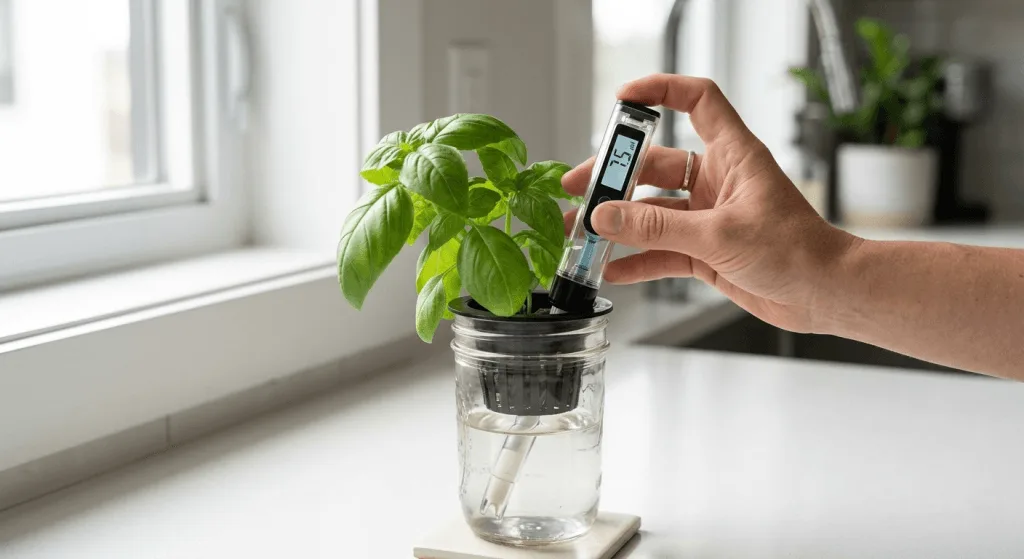
Because of this, I used to chase my target number twice a day. It frustrated me when I’d wake up and my hydroponic ph keeps drifting back to an alkaline state. Letting your tap water sit out for 24 hours allows trapped gases to escape, so the initial swings are smaller. You’ll still need a reliable meter to test it.
🌿 How growing plants change the water
Plants don’t absorb water and food at the same rate. On a hot day near a sunny window, for example, a basil plant will drink large amounts of plain water just to cool its leaves. When this happens, the minerals left behind in the jar become concentrated. This uneven absorption forces the chemistry to shift.
Your herbs also absorb different elements depending on their growth stage. This selective feeding eventually creates imbalances in the water.
- During early vegetative growth, herbs consume nitrogen, which naturally raises the pH.
- When herbs prepare to flower or bolt, they intake more potassium, shifting the balance again.
- When a plant drinks water faster than it takes up nutrients, the remaining salts concentrate and the pH can drift.
If you notice the hydroponic ph keeps drifting downward, your plant might be leaving acidic fertilizer salts behind. Conversely, if it eats the acidic nitrogen but leaves the water, the pH goes up. Watch the EC level alongside the pH so you know exactly what the plant is consuming.
→ Apartment Hydroponics: The Complete Beginner’s Guide
☀️ How Temperature Swings Cause Hydroponic pH Drift
Your apartment’s climate plays a huge role in water stability. Liquids hold different amounts of dissolved solids and gases depending on how warm they are. When the sun hits your countertop jars, the internal temperature climbs fast. This invisible change forces the chemistry to fluctuate.
🌊 Warm water loses its balance
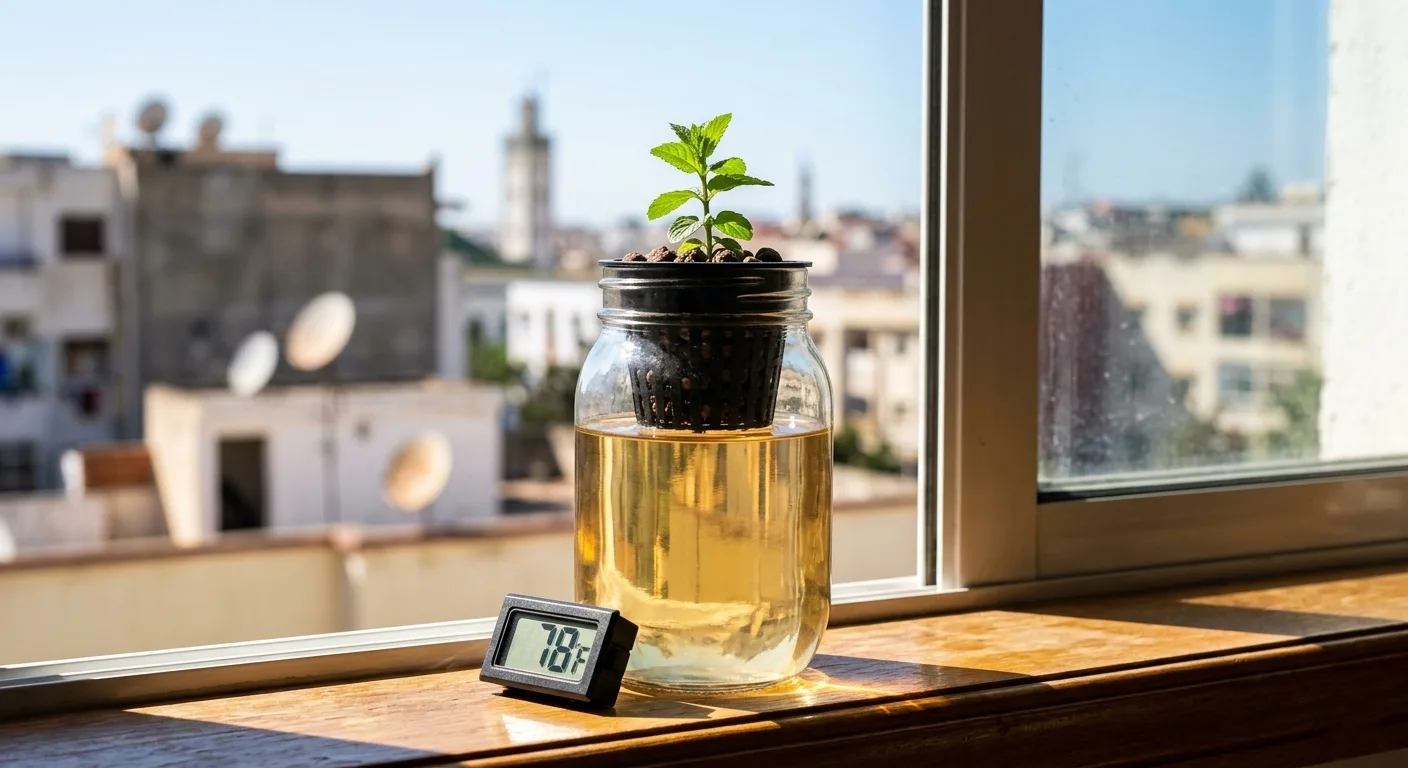
Warm water holds less dissolved oxygen than cold water. As the root zone heats up above 75°F (24°C), the oxygen drops and the roots struggle to breathe. This stress alters how the plant absorbs minerals. As a result, your hydroponic ph keeps drifting erratically throughout the afternoon.
To prevent this chain reaction, monitor the reservoir environment closely. Keeping the water within 65 to 75°F (18 to 24°C) is the best defense against heat-induced drift. Cilantro is especially sensitive and will bolt if the water exceeds 75°F (24°C).
⚠️ Protecting small jars from heat
When you live in a small space, you can’t always control the ambient room temperature. You can shield your water from direct sunlight. Wrapping your containers in reflective material or painting them opaque keeps the sun from baking the liquid inside.
To keep your reservoirs cool in a sunny apartment:
- Wrap your clear jars in aluminum foil or thick paper.
- Move the containers at least 6 to 8 inches back from hot window glass.
- Position a small desk fan so air circulates around the plant canopy.
- Top off with cool, pH-adjusted water on hot afternoons, rather than ice-cold water straight from the fridge.
💡 Managing pump heat and grow lights
When you run an air pump in a small deep water culture setup, the motor itself generates heat. The pump also pulls in warm apartment air and pushes it directly into your nutrient solution. This warms the jar from the inside out.
Placing the pump on a cool tile floor therefore helps reduce this heat transfer. To keep your apartment quiet, sit the pump on a soft sponge, which absorbs the vibrations without insulating the motor too much. Also, ensure your grow lights are set to 14 hours on a timer, so the system gets a chance to cool down at night.
🐛 Microbes That Drive Hydroponic pH Drift
A hydroponic reservoir is a living ecosystem. Even if you don’t see them, microscopic organisms are swimming around in your nutrient solution. Some of these microbes are helpful, while others cause problems. While they multiply and consume resources, they excrete byproducts that shift your numbers.
🩺 Spotting bad bacteria early
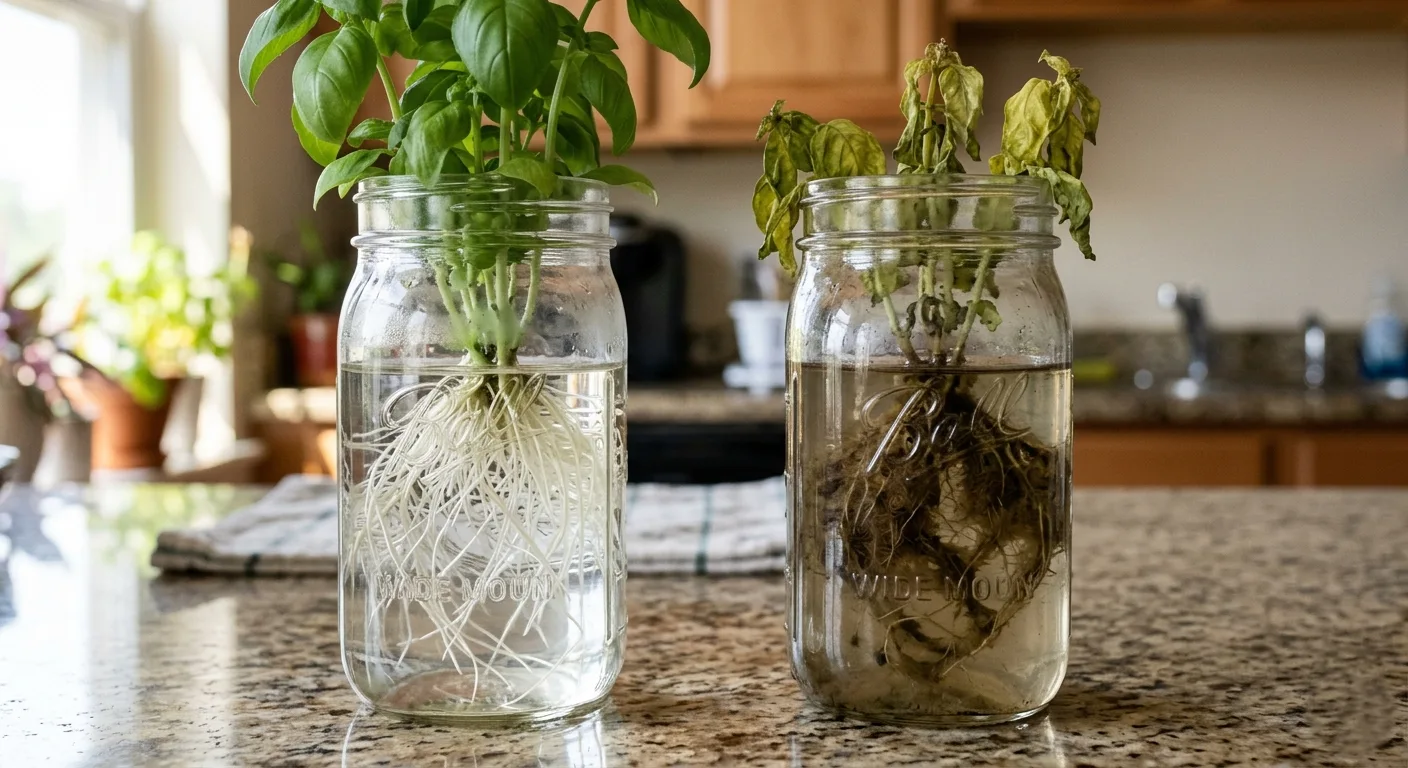
If your hydroponic ph keeps drifting downward suddenly, you might have a pathogen issue. Root rot is a fungal and bacterial infection that destroys plant tissue. When the roots decay, they release acidic organic matter into the water. This drops your pH out of the safe zone fast.
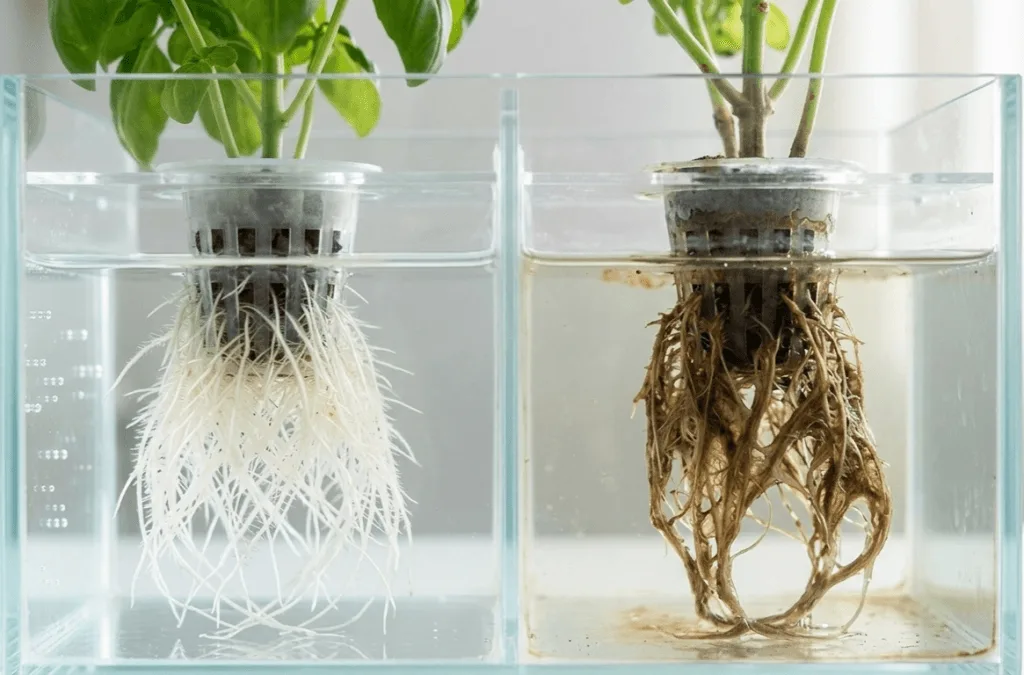
You’ll notice the roots turning brown and slimy long before the plant dies. When this happens, the plant stops drinking water. The EC level will spike while the water evaporates, leaving the salts behind.
To identify if microbes are causing your drift, look for these specific symptoms:
- A sudden, unexplained drop in pH despite normal feeding schedules.
- Murky or cloudy water that blocks light from passing through.
- Foul odors emanating from the jar when you lift the net cup.
- Slimy brown sludge clinging to the otherwise white roots.
🍃 Adding beneficial root protection
In contrast to the harmful pathogens, beneficial bacteria like those found in Hydroguard help protect the roots and stabilize the environment. When the good microbes establish a colony, the water chemistry becomes far more resilient to sudden swings. They eat the decaying organic matter before it can acidify your jar.
I dose my reservoirs with a tiny splash of beneficial bacteria every time I do a water change. It acts as an insurance policy in small apartment setups where temperatures fluctuate daily.
🧪 When to use hydrogen peroxide
If you catch a bacterial bloom early, you can treat it before the roots die. Hydrogen peroxide adds an oxygen boost to the water while killing off the weak, harmful pathogens.
To treat an infected jar with peroxide:
- Lift the plant and inspect the root mass for brown discoloration.
- Smell the water to confirm the presence of foul odors.
- Add one teaspoon of diluted food-grade hydrogen peroxide per quart of water.
- Monitor the jar for light foaming, which indicates the peroxide is working.
- Perform a full reservoir change every 2 weeks to ensure the infection doesn’t return.
→ How Often Should You Change Water In A Small Hydroponic System
🔆 The Algae Factor In Clear Containers
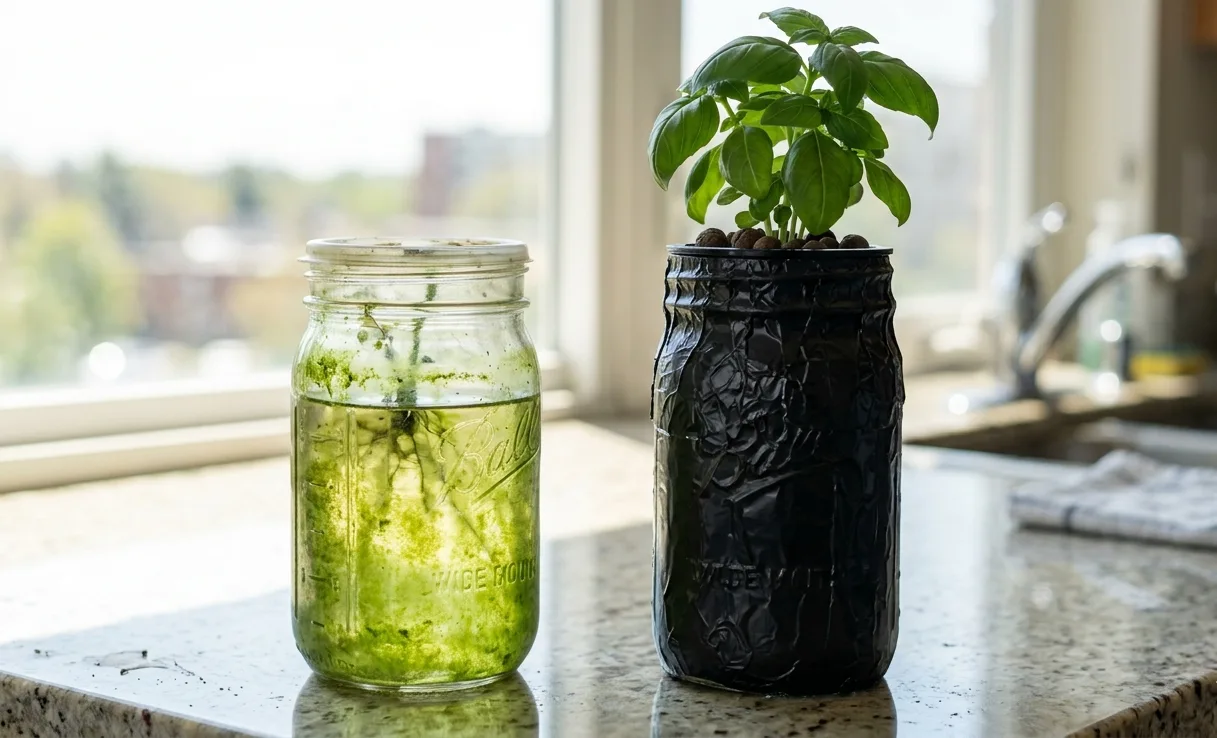
Algae is a stealthy enemy of stable water chemistry. It thrives in the exact same conditions as your plants: water, nutrients, and light. If you use the Kratky method in a clear mason jar, algae will move in. While the green sludge grows, it alters the pH of your system daily.
🩹 How light leaks consume acid
During the day, algae photosynthesizes and consumes dissolved carbon dioxide from the water. Because carbon dioxide acts as a mild acid in liquid, removing it causes the pH to rise. At night, the process reverses. The algae respires, releasing carbon dioxide back into the jar, which drops the pH.
So your hydroponic ph keeps drifting in a predictable daily loop. You’ll never achieve stability as long as algae is living in your reservoir. The only long-term fix, therefore, is to block all light from entering the water.
📋 Wrapping and shielding your system
Even a tiny sliver of light passing through the top edge of a net cup is enough to trigger an algae bloom. When you use a countertop smart garden, check the unused pods. They must be covered with opaque caps so the LEDs cannot reach the water below.
For DIY jar setups, you have a few good shielding options:
- Slip a dark, thick sock over the outside of the jar.
- Wrap the glass in two layers of heavy duty aluminum foil.
- Paint the exterior with a base coat of black, followed by a top coat of white to reflect heat.
🛠️ Safe cleaning methods
If algae has already taken hold, you can’t just wrap the jar and hope for the best. The dying algae will decompose, dropping your pH. You need to clean the environment out completely before it destabilizes the whole jar.
To clean a system infected with algae:
- Remove the plant and set it on a clean towel.
- Scrub the jar with a dedicated bottle brush and hot tap water.
- Use an old toothbrush to clean the tiny slits in the plastic net cup.
- Rinse all components twice to remove any loose green debris.
- Refill the system with fresh nutrients set to EC 1.5.
⚗️ Mistakes When Adding Adjustment Drops
Knowing why the water changes is only half the battle. You also need a practical routine to keep things steady in a small apartment. When your hydroponic ph keeps drifting reacting blindly makes it worse. You’ll need to use precise adjustments and stick to a schedule.
| Current pH Level | Recommended Action | Observation Time |
|---|---|---|
| Above 6.5 | Add 2 drops of pH Down, stir well | Wait 30 minutes before retesting |
| 5.5 to 6.5 | Do nothing, target zone achieved | Check again in 3 days |
| Below 5.5 | Dilute with fresh tap water | Wait 30 minutes before retesting |
❌ The dangerous bounce-back effect
Beginners often squeeze adjustment fluid directly into the root zone. This shocks the plant and creates a concentrated pocket of acid. The buffers in the water react, neutralizing the acid over the next few hours. By the next day, the number bounces right back to where it started.
High salts combined with harsh acid drops burn tender roots, so chasing pH swings in a strong reservoir does double damage. Keep the EC inside the crop’s range while you correct pH, and always dilute your adjuster before it touches the plants.
✂️ Diluting adjusters the right way
Never squeeze raw acid into a tiny jar. The localized concentration will burn any root tissue it touches before it disperses. Use a secondary mixing vessel to temper the chemicals first.
To safely adjust a small system:
- Extract half a cup of water from your main reservoir.
- Add your required drops of pH Down into this small cup.
- Stir the small cup vigorously until the liquid is mixed.
- Pour the diluted mixture back into your main jar slowly.
- Wait thirty minutes for the chemistry to settle before testing again.
⚗️ Chemical safety and natural alternatives
Commercial adjusters use phosphoric acid, which is effective but requires care. Wear gloves when handling concentrated acid in a cramped apartment kitchen. If you spill it, wipe it up with a wet rag right away to protect your countertops.
If you prefer a safer alternative, food-grade citric acid powder will lower your numbers. However, citric acid breaks down in the water much faster than phosphoric acid. You’ll likely need to readjust the water more frequently to hold the balance.
🛠️ Step-By-Step Fixes When Hydroponic pH Keeps Drifting
A scattered testing schedule gives you scattered data. You’ll need to establish a firm routine. Consistency is your best tool against drift. If you check your water at random times, you’ll misread the natural daytime swings.
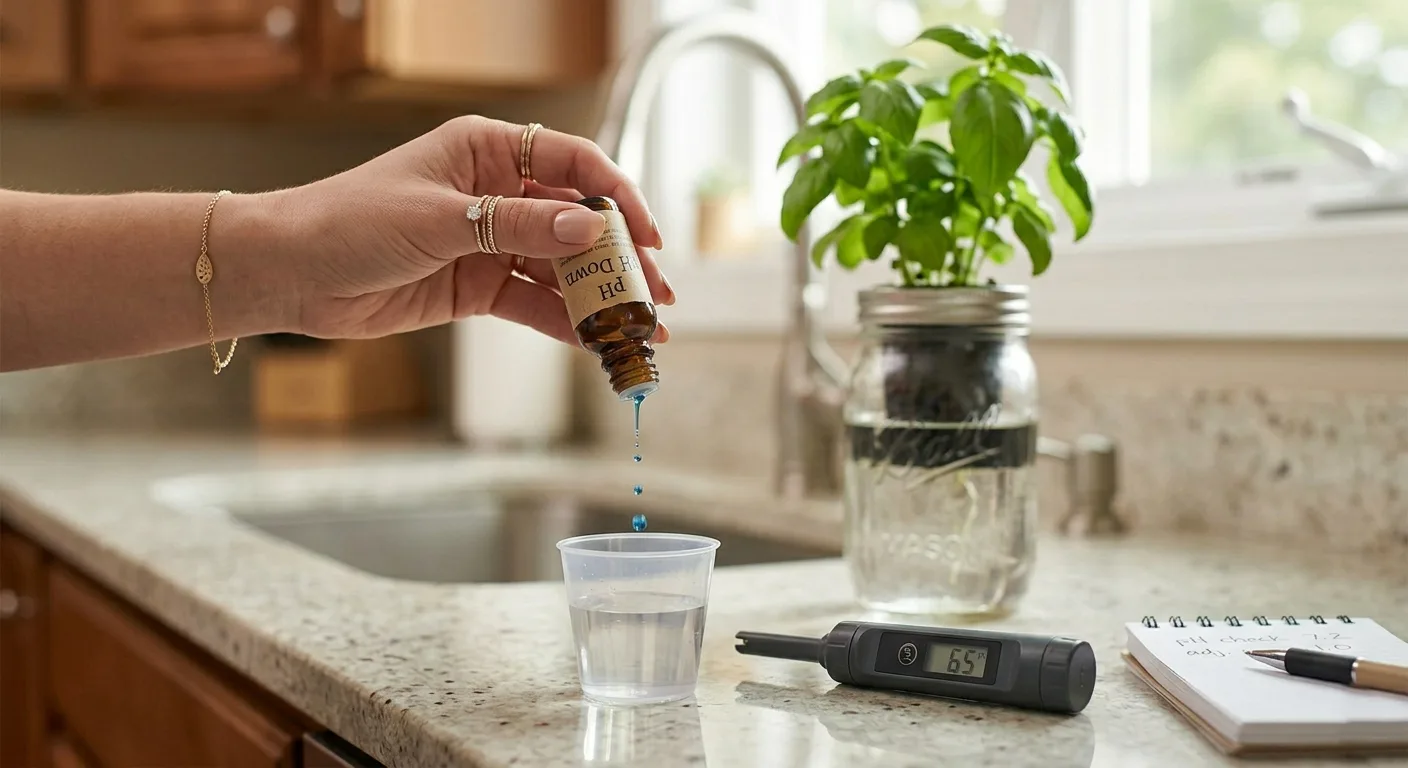
⏱️ Building a reliable daily routine
Plants drink more during their daylight cycle under the grow lights. Testing at the same time every evening gives you a much clearer baseline for how the system is performing.
To build a bulletproof maintenance routine:
- Turn on your grow lights and wait a few hours for the plants to wake up.
- Top off daily with plain water to replace overnight evaporation. Use the free pH and nutrient calculator to keep your mix ratios accurate when refilling.
- Stir the reservoir gently with a clean spoon to mix the fresh liquid.
- Test the water and log the numbers in a notebook.
- Wait ten minutes before taking a final reading.
✅ Knowing when to dump the water
Sometimes, no amount of adjustment will fix a stubborn jar. The old fertilizer salts build up, creating an invisible wall that prevents you from reaching your target numbers. When this happens, it’s safer to start fresh rather than chasing the chemistry in circles.
Perform a full reservoir change every 2 weeks to flush out these old salts. If you add fresh nutrients to old water, you risk raising the EC beyond safe limits. Dumping the jar resets the baseline. To see which way your pH drifts and how fast, log one reading a day on the printable hydroponics tracker.
🔗 Tracking your feeding calendar
As your plants grow larger, they’ll consume nutrients at a faster pace. A tiny basil seedling barely makes a dent in a quart jar. In contrast, a mature basil bush will drain the same jar in three days. You’ll need to anticipate these shifts.
Use the Seed to Harvest Countdown to track where your plant is in its lifecycle. Knowing when a plant enters its heavy feeding phase lets you predict pH drops before they happen. That foresight keeps you one step ahead of nutrient lockout.
💬 A Word From Sarah
The moment that changed how I grow was realizing my cilantro died not from poor lighting, but from my attempt to use aquarium pH buffers. I bought a liquid meant for fish tanks, thinking it would lock my numbers in place. The aquarium product contained heavy phosphates. Within two days, the jar grew a massive coat of green slime and the chemistry crashed to pH 4.0 shocking my herbs. I almost threw the whole setup into the trash. Now, I only use adjusters made for hydroponics, and my system stays stable.
❓ Frequently Asked Questions
🌱 Why does my hydroponic pH keep going up?
In small systems, pH often rises because plants consume acidic nutrients faster than they drink water. Tap water alkalinity also pulls the pH upward over time. You’ll need to use a dedicated pH Down product to counteract this natural buffering effect and keep your herbs in the target zone.
⏳ Is it normal for hydroponic pH to fluctuate daily?
Minor fluctuations of 0.2 to 0.4 are normal as plants feed. However, if your hydroponic pH keeps drifting by a full point or more within 24 hours, you likely have an undersized reservoir, a temperature spike, or a bacterial issue in the root zone that needs attention.
❌ Can I use vinegar to lower hydroponic pH?
Vinegar lowers pH temporarily, but it breaks down fast. Within a day, your hydroponic pH keeps drifting right back up. Vinegar also feeds unwanted bacteria in the reservoir. It’s always safer to use commercial phosphoric acid designed for indoor growing and follow the dilution steps carefully.
📋 How often should I check pH in a Kratky jar?
During the first week of a new setup, check it daily. Once the reservoir stabilizes, testing every three days is sufficient. Always check the pH again an hour after topping off the container with fresh water or adding new nutrients to confirm the reading is accurate.
💧 Does reverse osmosis water stop pH drift?
No, reverse osmosis water has zero buffers. Without natural minerals to hold the chemistry steady, a tiny drop of adjustment fluid causes wild swings. Mixing half RO water with half filtered tap water creates a much more stable environment for your herbs and reduces overcorrection swings.
✅ What is the safest pH range for indoor herbs?
Most indoor greens and herbs thrive between pH 5.5 and 6.5. This range ensures all essential minerals remain dissolved and available. If the pH strays outside this window, the plant roots can’t absorb the food, leading to yellowing leaves and stunted growth even when nutrients are present.
⚠️ Does a dirty reservoir affect my water pH?
Yes, organic buildup and algae consume nutrients and release waste byproducts. This microbial activity alters your water chemistry fast. If your hydroponic pH keeps drifting despite your best efforts, scrubbing the container and refreshing the solution usually solves the underlying problem within a few days.
🧪 What is the quickest way to fix a large pH swing?
When pH has swung more than 1.5 points, a partial water change is faster than chasing it with drops. Remove half the reservoir volume, refill with fresh pH-adjusted water, and retest after 30 minutes. This dilutes the chemical imbalance quickly without overshooting your target with concentrated acid.
Happy growing! 🌿
Sarah, Urban Hydro Space

Sarah Whitfield is the founder of Urban Hydro Space and an indoor gardening enthusiast dedicated to helping apartment dwellers grow fresh herbs and vegetables in small spaces. She researches hydroponic systems carefully from real specifications and verified buyer feedback, and shares practical tips and honest, clearly labeled product picks to make indoor gardening accessible for beginners.