⏳ 17 min read · Last updated: March 2026
Disclosure: This post contains affiliate links. If you purchase through these links, I may earn a small commission at no extra cost to you. Thank you for supporting Urban Hydro Space!
The best grow lights for apartment hydroponics do not have to cost a fortune, and I learned that the hard way. When I first started hydroponics, I killed my first 3 batches of basil. My tap water pH was 7.8 and I had no clue about grow lights. Finding a reliable light setup for a tiny apartment on a budget felt impossible. But you do not need a huge setup or a lot of cash to give your plants the light they need.
- For under $50, full-spectrum LED bar lights are your best bet, providing balanced light for herbs and leafy greens.
- Aim for 14 to 16 hours of light per day for most leafy greens and herbs using a simple outlet timer.
- Position lights 6 to 12 inches (15 to 30 cm) above leafy greens and seedlings to prevent legginess or burn.
- Always check your tap water pH — mine was 7.8, which starved my first basil crops even with good lights. Yellow leaves in hydroponic plants are often the first sign of pH imbalance, not a light problem.
- No lights yet → start at Choosing the Best Grow Lights Under $50
- Have a light but plants are leggy or burned → jump to Troubleshooting
- Want to see a full working setup → skip to My Personal Setup
- Why the Best Grow Lights for Apartment Hydroponics Are Worth Every Dollar
- Choosing the Best Grow Lights Under $50
- How to Position Your Grow Lights
- Understanding Light Spectrum
- Power Consumption and Running Costs
- Troubleshooting Common Grow Light Issues
- My Personal Setup for Year-Round Harvests
- A Word From Sarah
- Frequently Asked Questions
🌿 Why the Best Grow Lights for Apartment Hydroponics Are Worth Every Dollar
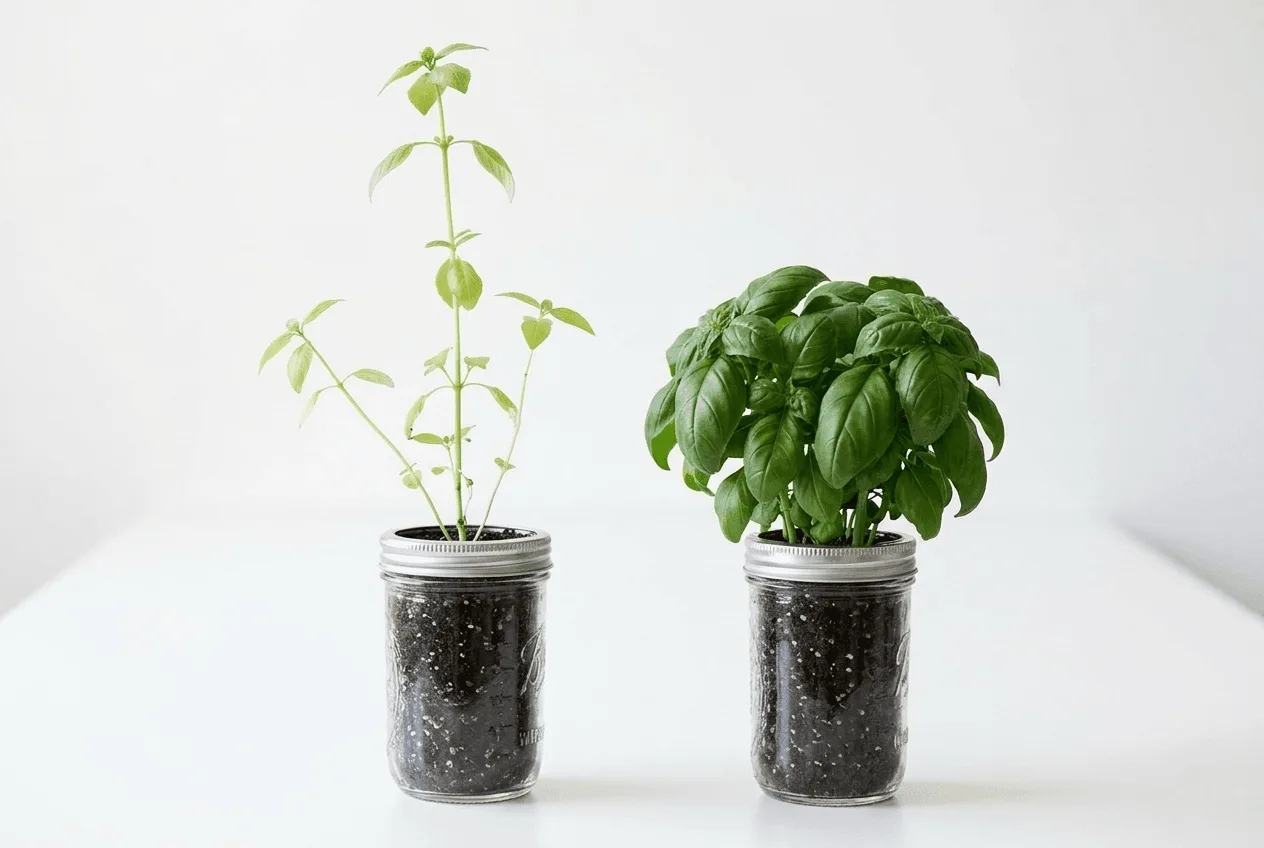
Light is the energy source for your plants. Without enough of it, or the right kind, your plants will struggle no matter how perfect your nutrients or pH are. In an apartment with limited natural light, however, relying on a windowsill alone leads to disappointing results. My first basil seedlings stretched themselves thin, reaching for sun that was not there.
🔬 Understanding PAR and DLI
PAR stands for Photosynthetically Active Radiation. This covers the specific wavelengths of light (400 to 700 nanometers) that plants use for photosynthesis. In other words, it is not about how bright the light looks to your eyes — it is about how much usable light energy your plants are receiving.
DLI, or Daily Light Integral, measures the total PAR a plant receives over a 24-hour period. Think of it as a plant’s daily calorie intake from light. Here is a quick reference:
For a deeper scientific explanation of PAR and DLI, the University of Minnesota Extension guide on lighting indoor plants is an excellent reference.
⚠️ Common Light Problems in Apartments
North-facing windows, shaded balconies, and short winter days leave plants starving for photons. The most visible result is legginess: tall, weak stems with sparse leaves as the plant reaches toward a light source that is not strong enough. In addition, slow growth and a lack of flowering or fruiting are other common signs. My mint would grow but never thrive until I added a dedicated light. As a result of the weak light, the leaves were pale and growth was painfully slow.
💡 Choosing the Best Grow Lights Under $50
For under $50, you can get a setup that makes a real difference for apartment hydroponics. There are three main types worth knowing, each suited to a slightly different situation. Use the free shopping list builder to pull together a complete kit — it lists lights alongside every other piece you need for your specific setup.
🌿 Full-Spectrum LED Bar Lights (My Top Pick)
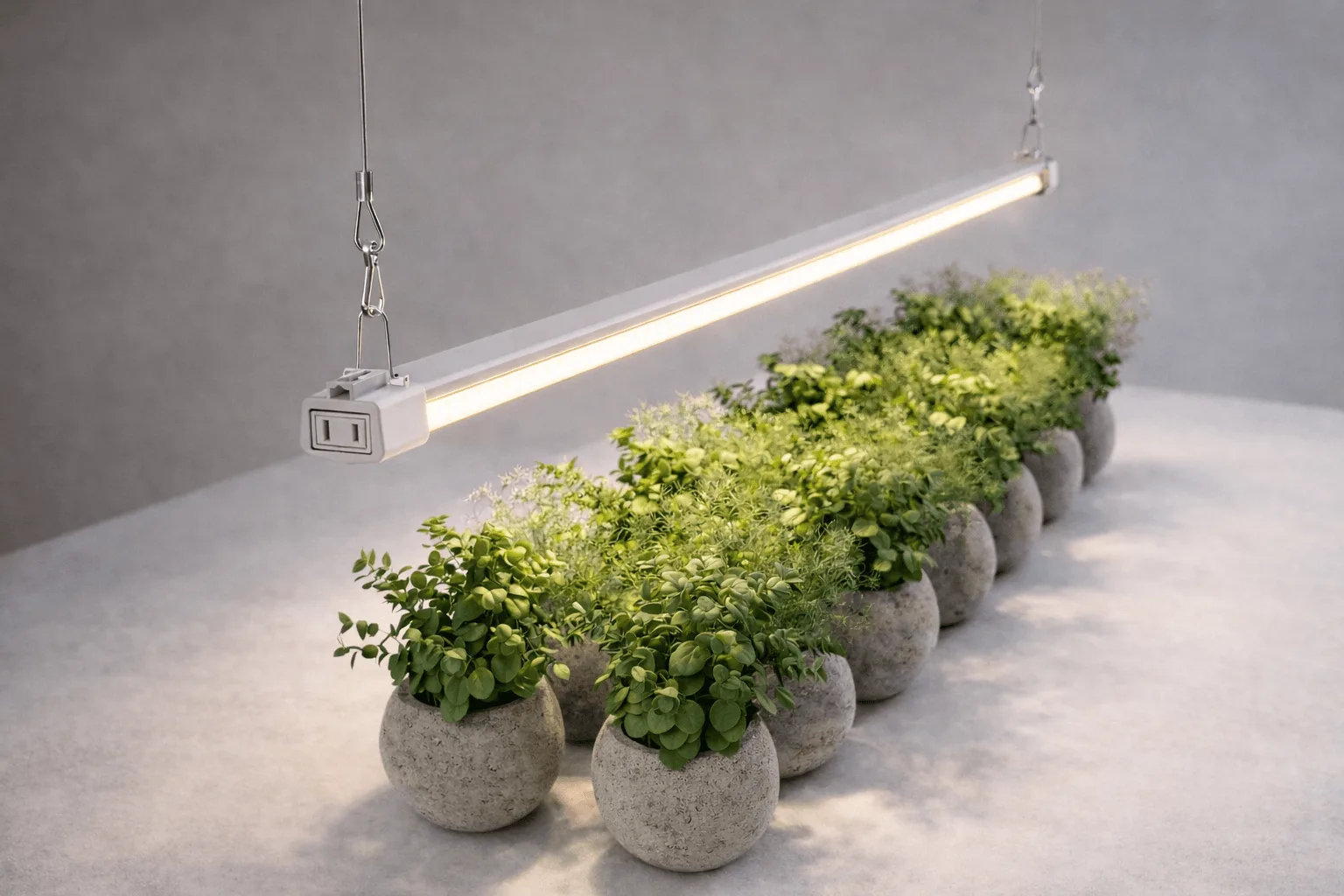
Full-spectrum LED bar lights are my go-to for beginners. They come as slim rectangular fixtures with built-in stands or hanging kits. They emit a balanced white light that mimics natural sunlight and supports all stages of growth, from seedling to harvest.
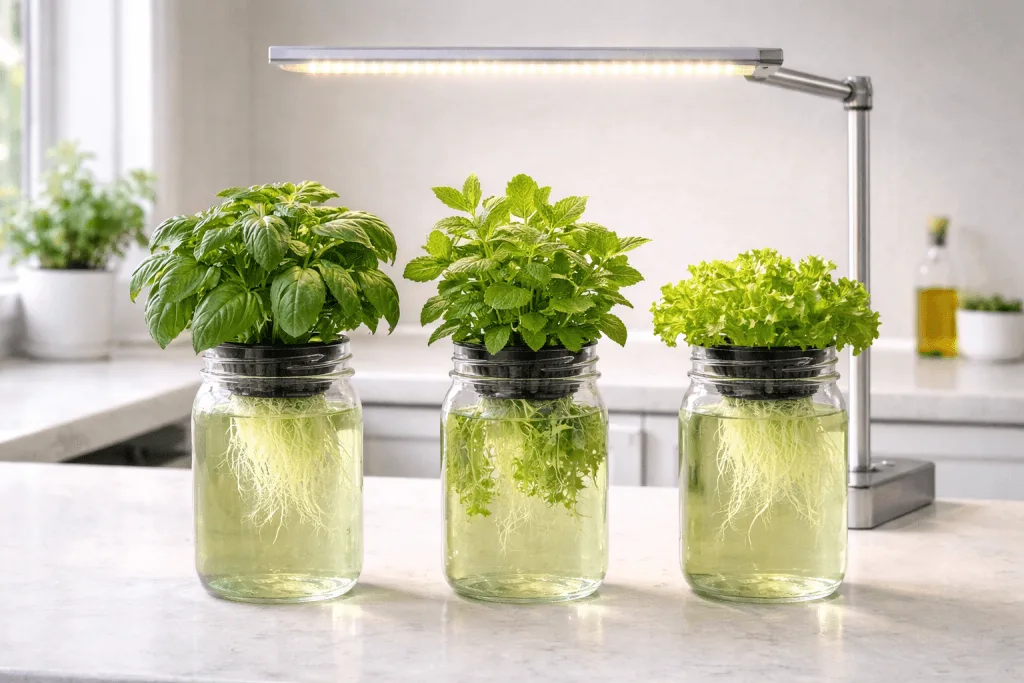
I use these for my lettuce and spinach in a Kratky setup. A 2-foot (60 cm) bar at 20 to 30 watts covers a single tray of leafy greens perfectly. You can find packs of 2 to 4 for around $30 to $45. Because they run so cool, low heat output is a real bonus in a small apartment. Look for a color temperature around 4000K to 5000K for general vegetative growth. For more context on pairing lights with a passive system, see my guide to setting up a Kratky lettuce jar.
💡 LED Grow Bulbs (E26/E27 Socket)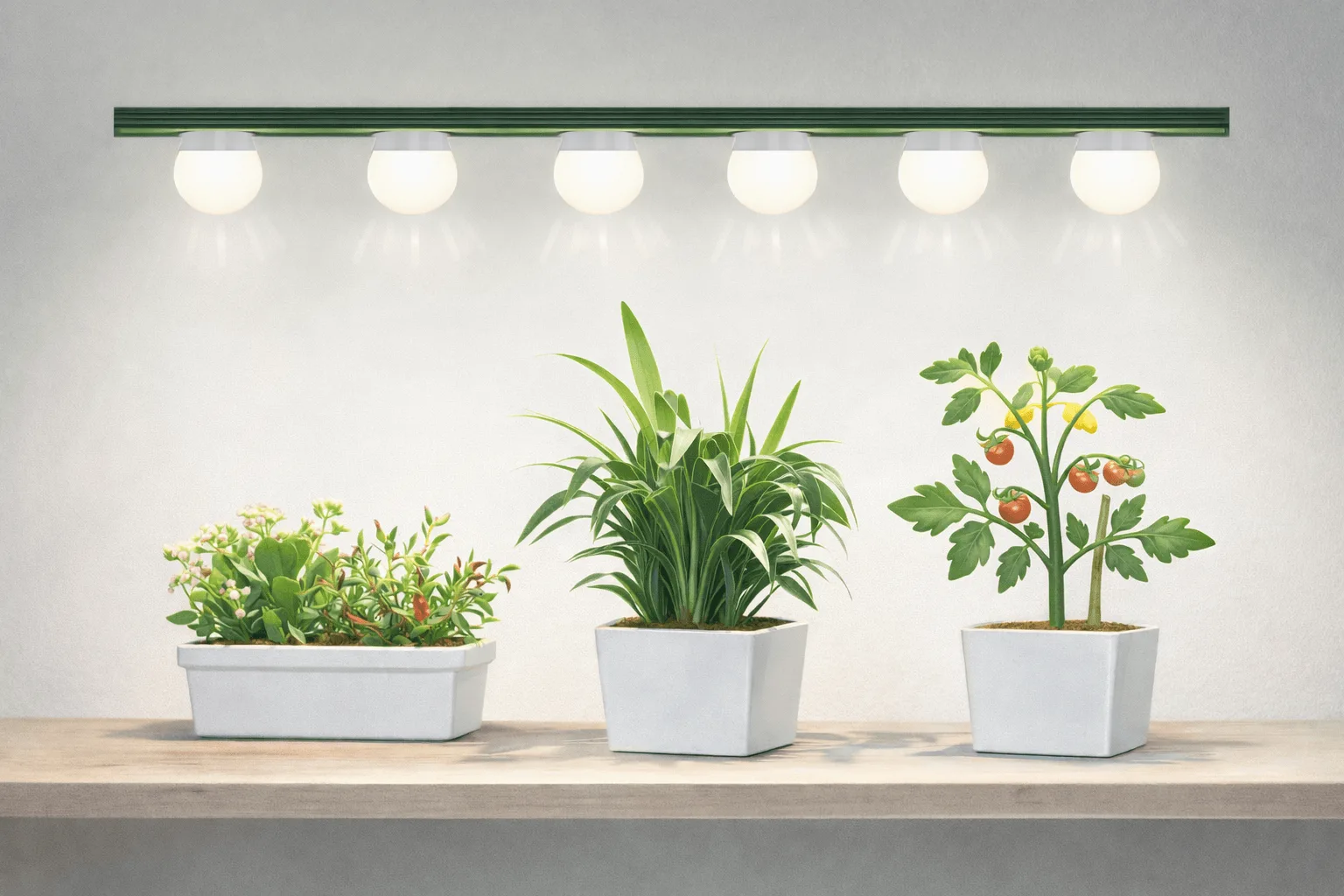
If you already have a lamp with a standard E26 or E27 socket, an LED grow bulb is the cheapest entry point. Screw it in and you have a dedicated grow light right away. Good for single plants or small clusters like one basil plant or a pot of mint. Decent 9 to 15 watt full-spectrum bulbs run $10 to $20 each.
The downside, however, is limited coverage. Intensity drops toward the edges, so you will need multiple bulbs for a wider setup. For a single Kratky jar on a desk, though, they are perfect. I started with a 10-watt bulb in a desk lamp after my first failures, and that basil grew steadily for 6 weeks straight.
🌞 LED Strip Lights (For Small Spaces)
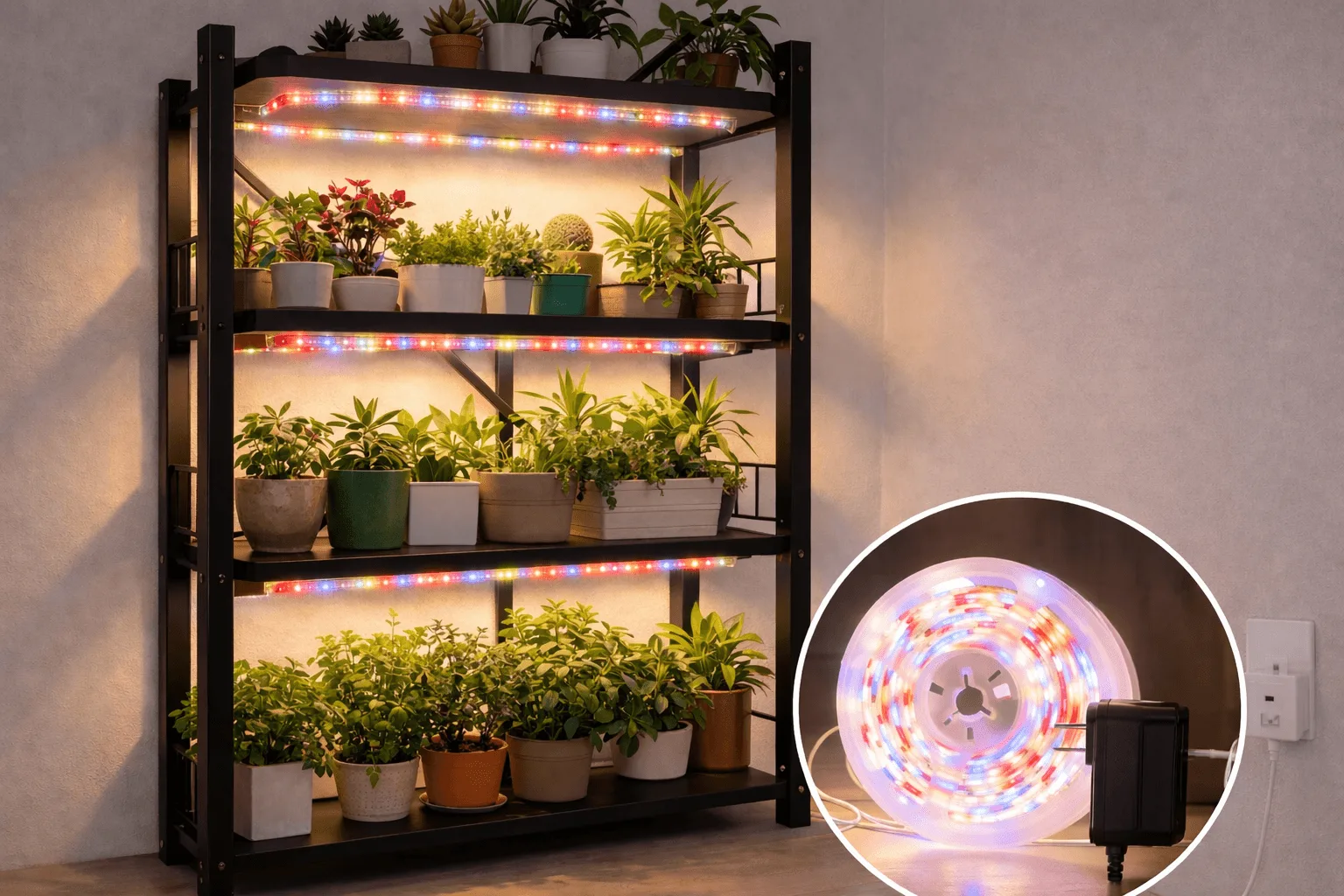
For compact setups or supplemental light in tight spots, LED strip lights are a clever option. These flexible strips adhere to shelves, cabinet undersides, or the edges of a growing area. They typically run 5 to 10 watts per foot (30 cm) and are excellent for seedlings, microgreens, or boosting light for plants already getting some natural sun.
A 16-foot (5-meter) roll of full-spectrum strip costs around $20 to $35. While they will not replace a proper bar light as a primary source, they are great for filling in gaps and reaching lower shelves. I use them on the bottom tier of my growing rack where my spinach sits.
📏 How to Position Your Grow Lights
Getting the right light is only half the job. Positioning it correctly matters just as much. If the light is too close, you burn your plants. If it is too far, they stretch into weak, spindly stems. With LEDs the margin for error is more forgiving than older, hotter lights, but precision still pays off. Use the free grow light calculator to get the exact wattage, PPFD target, and hang height for your specific shelf size and crop — it takes under a minute.
⬆️ Light Height by Plant Type
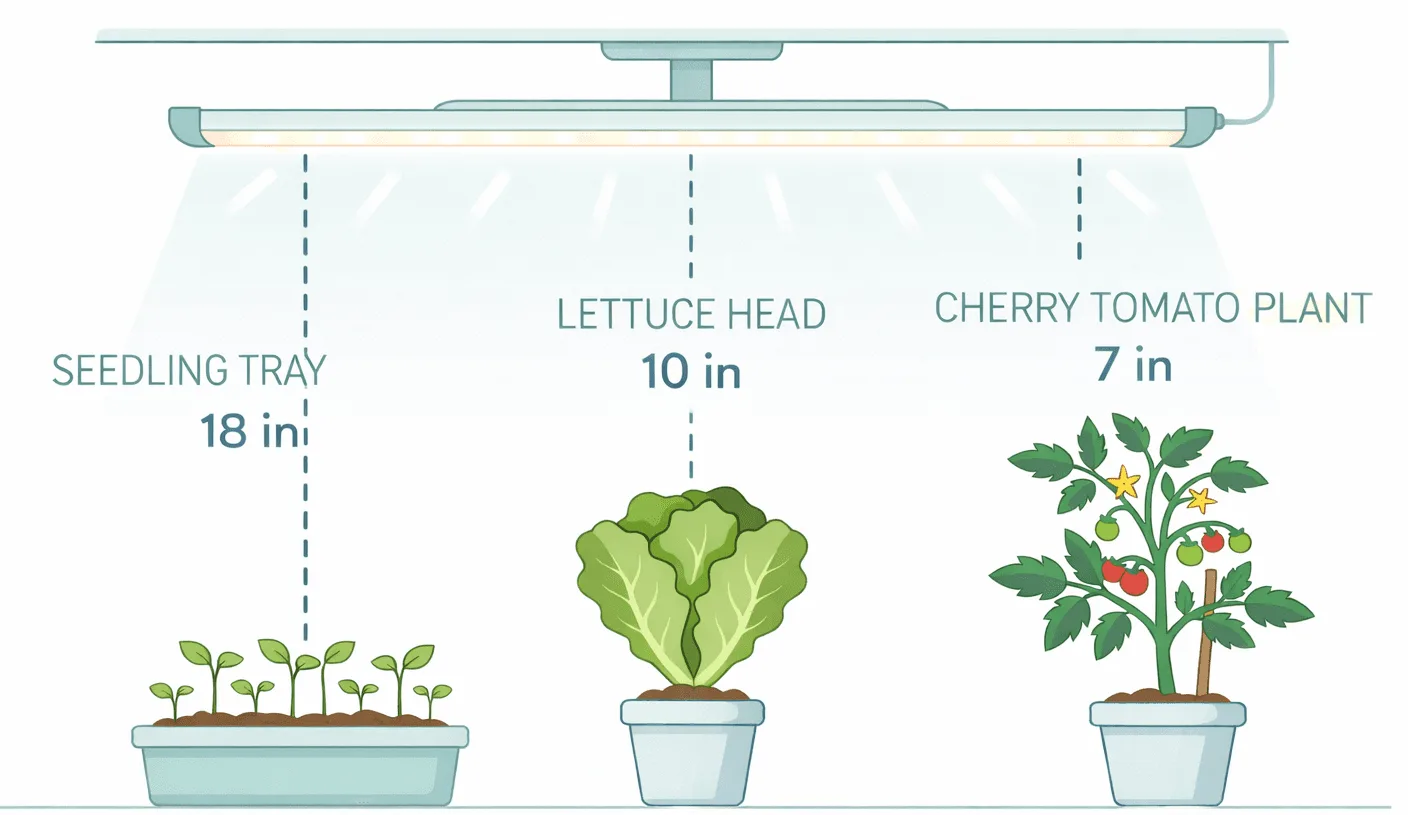
Always watch your plants. Stretching means the light is too far away. Crispy or bleached edges on top leaves means it is too close. Adjust by 1 to 2 inches (2.5 to 5 cm) at a time and wait 24 to 48 hours before making another change. For a full breakdown of height rules by herb type, see my guide on grow light distance for hydroponic herbs on a shelf.
⏰ Setting Up a Light Timer
Consistency is everything for plant growth. A simple mechanical outlet timer or a digital timer costs $10 to $15 and is non-negotiable for any hydroponic setup.
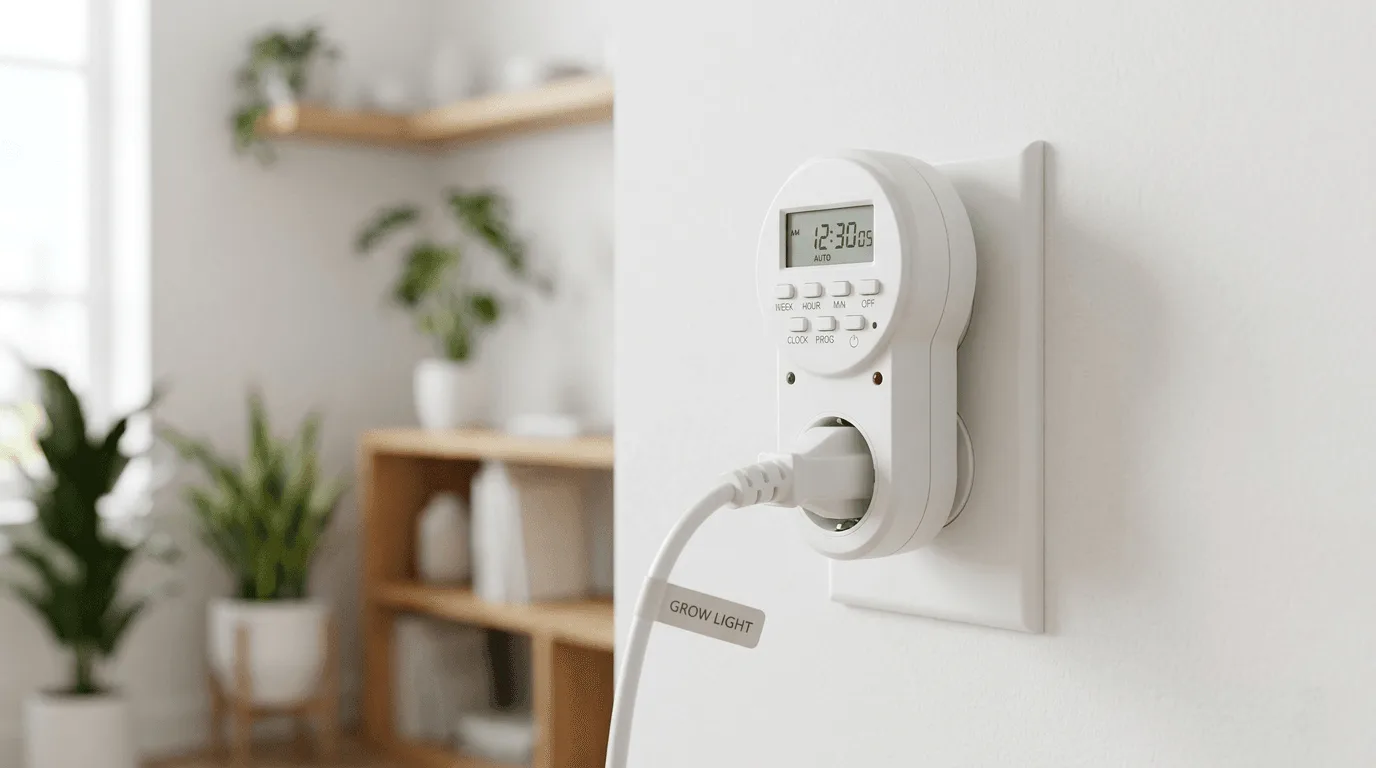
Most leafy greens and herbs need 14 to 16 hours of light per day followed by 8 to 10 hours of darkness. That dark period is not wasted time — in fact, it is when plants process sugars and carry out vital metabolic functions. For fruiting plants like cherry tomatoes, push to 16 to 18 hours of light. For a complete schedule broken down around a 9-to-5 workday, see my dedicated apartment hydroponic light schedule guide.
I run all my systems on digital timers. My basil gets exactly 15 hours of light every day, even when I am away. Setup takes less than 5 minutes and removes every ounce of guesswork from your daily routine.
🧪 Understanding Light Spectrum
Light is a spectrum, and each color range plays a different role in plant development. Full-spectrum lights are the easiest all-in-one solution for beginners, but understanding what each color does helps you make smarter buying decisions.
⚡ Power Consumption and Running Costs
One of the biggest practical advantages of LED grow lights for apartment growers is energy efficiency. Because LEDs draw so little power, the running costs are low. Here is exactly what costs look like at a typical US electricity rate of $0.15 per kWh:
💰 Monthly Cost Breakdown
Running 3 to 4 LED bar lights for a full apartment setup costs under $6 a month. That is year-round fresh herbs and salads for less than a single grocery trip. As a result, the initial investment in LEDs pays itself back within the first growing cycle.
💡 Why LEDs Beat Older Bulbs
Older fluorescent tubes draw five times the wattage of a modern LED bar for the same coverage area. Beyond the electricity savings, however, LEDs also run cooler — which means less heat stress on plants in a small apartment and no risk of burning leaves that drift too close to the fixture.
📋 Troubleshooting Common Grow Light Issues
Even with good lights, problems come up. Most of them are quick to diagnose and fix once you know what to look for.
🌱 Leggy Plants
Problem: Plants are tall, thin, and stretched with sparse leaves and weak stems.
Cause: Not enough light. Because the plant is reaching for a source that is too far away or too dim, the stems elongate.
Fix: Lower the light. For seedlings, bring it to 12 to 18 inches (30 to 45 cm). For established leafy greens, aim for 6 to 12 inches (15 to 30 cm). If it is already close, add a second light. I had a whole batch of basil go leggy in my Kratky jars because one light bar was not enough for 4 plants. Adding a second bar fixed it within a week.
🔥 Burnt or Bleached Leaves
Problem: Crispy brown edges or washed-out spots on top leaves, closest to the light.
Cause: Light is too close or too intense. LEDs still cause light stress if the fixture is too near the canopy.
Fix: Raise the light by 2 to 4 inches (5 to 10 cm) and monitor for a few days. If you are running the light for more than 18 hours, reduce the cycle by an hour or two as well.
🦠 Algae Growth
Problem: Green slime or film appears on the growing medium, reservoir, or roots.
Cause: Light is reaching your nutrient solution. Algae thrive in light and moisture.
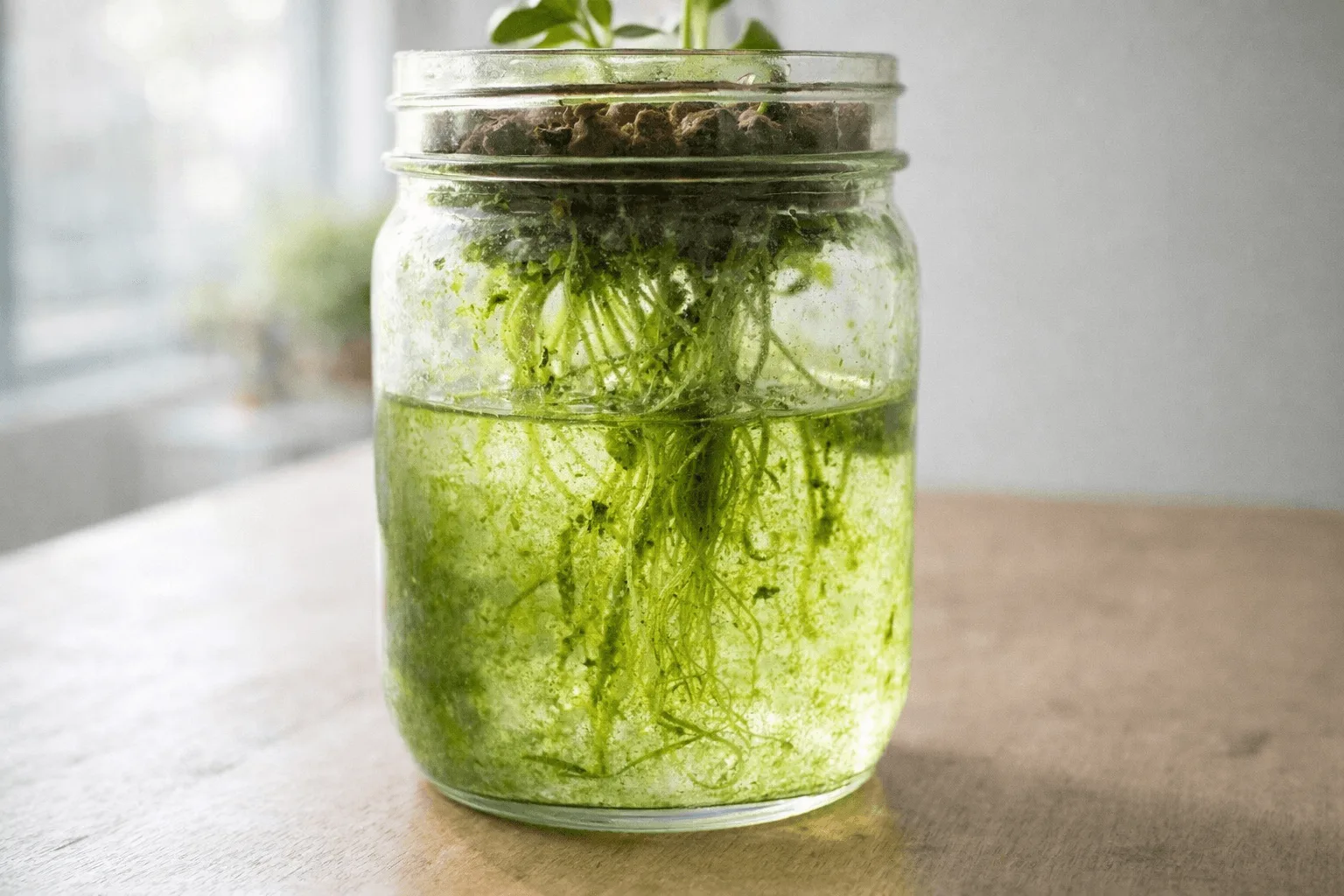
Fix: Block all light from reaching the nutrient solution. Use opaque containers or wrap clear jars in foil or black paint. My first Kratky jar used clear glass with a thin layer of foil. Within 5 days the water was green and my basil roots were coated. Once I painted the jar black, however, the algae disappeared within a week. My full guide on why algae keeps growing in hydroponic jars covers every cause and fix in detail.
🏡 My Personal Setup for Year-Round Harvests
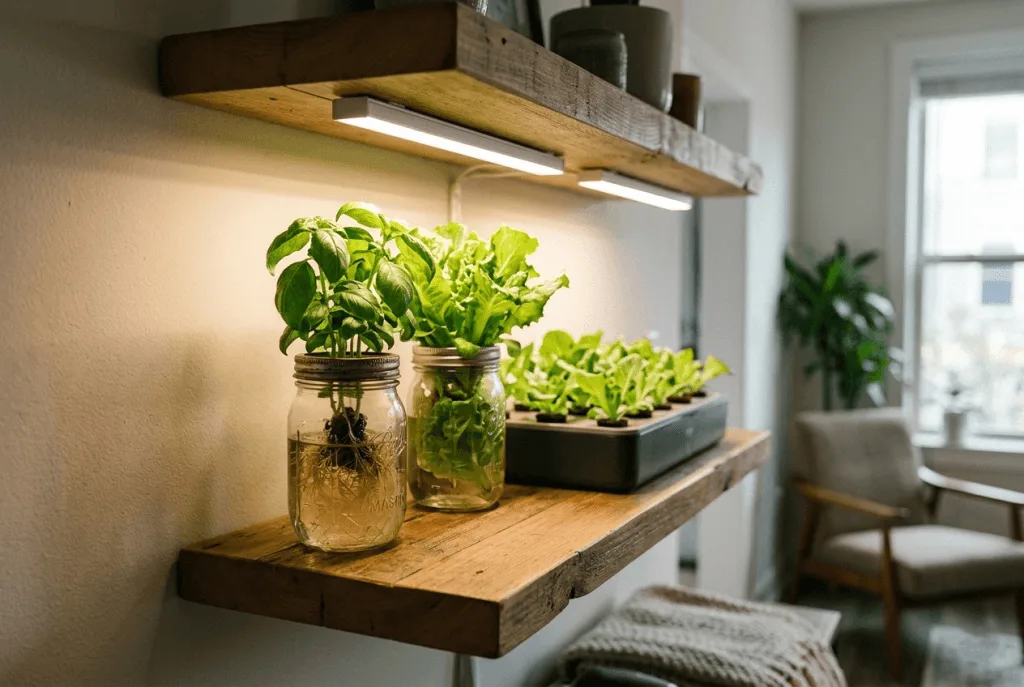
I grow basil, lettuce, mint, spinach, and cherry tomatoes year-round in a one-bedroom apartment. My main setup uses two 2-foot (60 cm) full-spectrum LED bar lights, each drawing about 25 watts, mounted under the shelves of a wire shelving unit. Two growing levels. Total monthly electricity cost for both: under $4.
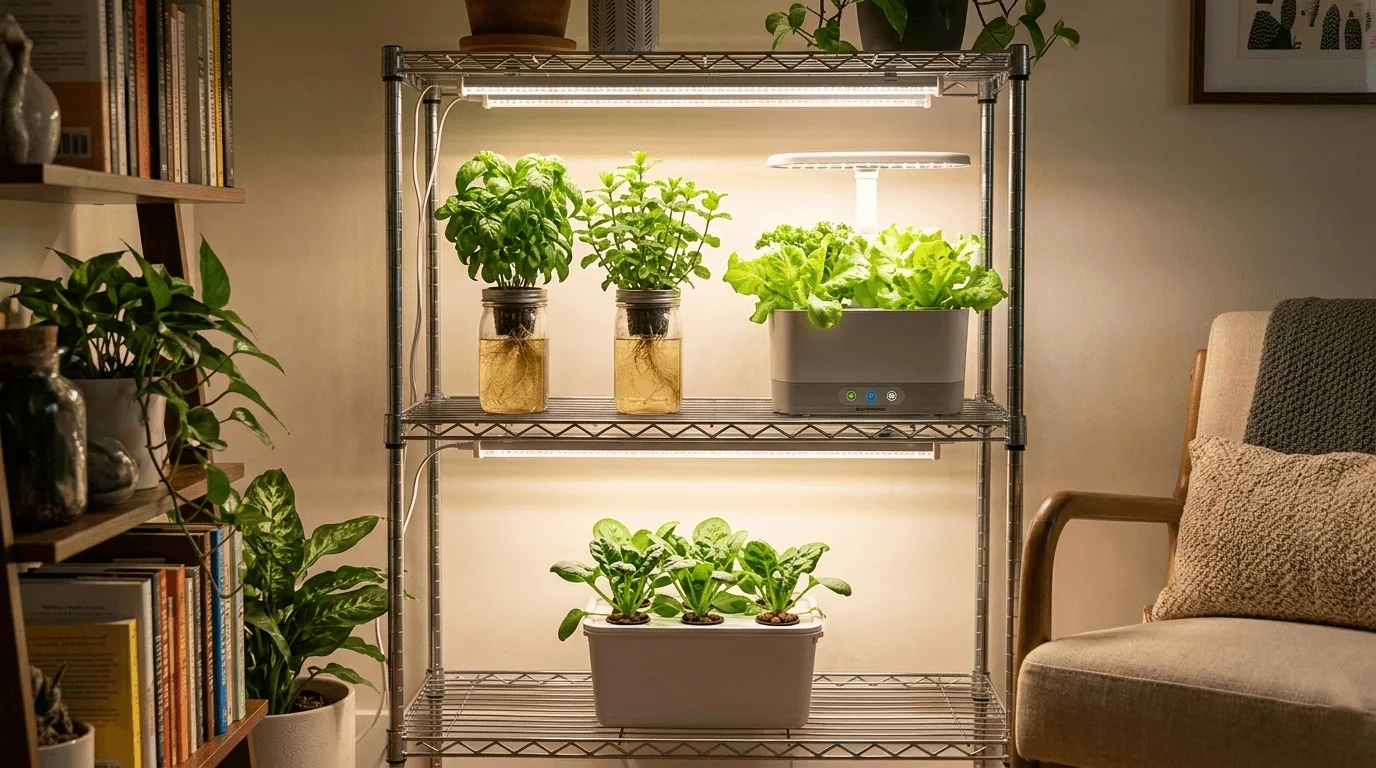
📷 Top Shelf
Top shelf: Two Kratky mason jars for basil and mint, plus a small iDOO system for lettuce. The LED bar hangs 8 inches (20 cm) above. Light runs 15 hours a day. Lettuce is harvest-ready in about 4 weeks. Basil stays bushy and fragrant.
📷 Lower Shelf
Lower shelf: A small DWC system for spinach and occasional cherry tomatoes. For a full comparison of Kratky vs DWC for apartment setups, my guide on DWC vs Kratky for apartment beginners breaks down exactly which suits your space. Spinach sits at 10 inches (25 cm) from the light. When I grow tomatoes, I lower it to 6 inches (15 cm) during flowering and fruiting, and I swap to a slightly warmer spectrum fixture to encourage fruit development.
If you want step-by-step Kratky setup details, see the 3 best countertop hydroponic systems for apartment beginners. For the full basil growing breakdown, see the foolproof guide to growing hydroponic basil in a small apartment.
In total, this entire setup cost under $120 to build from scratch, lights included. You do not need fancy equipment to get results like this.
→ University of Minnesota Extension — Lighting for Indoor Plants
→ Penn State Extension — Hydroponic Systems and Plant Nutrition
💬 A Word From Sarah
My first successful grow light purchase was a $12 LED bulb screwed into a desk lamp I already owned. That single bulb turned a dead basil streak into 6 weeks of continuous harvests. I have since upgraded to bar lights and a full two-tier shelf setup, but I still think about that desk lamp whenever someone tells me they cannot afford to start. You do not need to spend much. You just need to start.
❓ Frequently Asked Questions
💡 What are the best grow lights for apartment hydroponics on a budget?
Full-spectrum LED bar lights are the best option for most apartment growers on a budget. A pack of two to four 20-watt bars costs between $30 and $45 and covers a full shelf of herbs or leafy greens. They run cool, consume very little electricity, and require no special wiring. A single LED grow bulb in an existing desk lamp is the cheapest starting point if you only need to cover one plant.
📏 How far should grow lights be from hydroponic plants?
For seedlings and young plants, keep the light 12 to 18 inches away. For established leafy greens like lettuce, basil, and mint, 6 to 12 inches works well — I keep mine at 8 inches for the densest results. Fruiting plants like cherry tomatoes do best at 6 to 10 inches. If the plant stretches upward, the light is too far. If the top leaves bleach or crisp, it is too close.
⏱️ How many hours of light do hydroponic herbs need per day?
Most hydroponic herbs and leafy greens need 14 to 16 hours of light per day. The remaining 8 to 10 hours of darkness are not wasted — that dark period is when plants process sugars and complete metabolic functions that support the next day’s growth. Fruiting plants like cherry tomatoes benefit from 16 to 18 hours. Always use a timer so the schedule stays consistent even when you are away from home.
🌈 Do I need a full-spectrum LED for hydroponic herbs?
Yes, full-spectrum is the right choice for most apartment growers. Blue light drives vegetative growth and prevents legginess, red light supports flowering and fruiting, and white full-spectrum light delivers both in a balanced way. Lights that emit only red and blue (the “blurple” purple lights) can work but are harder to manage for beginners and make it difficult to spot early problems in leaf color. Full-spectrum white LEDs are safer and easier to use.
🔌 Can I use a regular LED bulb as a grow light for hydroponics?
A standard household LED bulb will not provide enough intensity or the right spectrum for hydroponic plants. You need a bulb specifically labelled as a grow light or full-spectrum plant light. These are purpose-built with the correct color temperature and output for photosynthesis. A 9 to 15-watt full-spectrum grow bulb in an E26 or E27 socket costs $10 to $20 and works well for a single plant or a small Kratky jar on a desk.
⚡ How much does it cost to run LED grow lights per month?
A single 20-watt LED bar light running 16 hours a day costs about $1.44 per month at a typical US electricity rate of $0.15 per kWh. Running four bar lights for a full two-tier shelf setup costs around $5.76 per month total. The energy savings compared to older fluorescent bulbs drawing 100 watts each make LEDs the clear choice for any long-term apartment hydroponic setup.
🌿 Why are my hydroponic plants growing tall and spindly under my grow light?
Tall, spindly growth (called etiolation) almost always means the light is too far away or too dim. The plant stretches toward the light source because it is not receiving enough intensity where it currently sits. Lower your light to 6 to 12 inches above leafy greens and make sure it is positioned directly above the canopy, not to the side. If the light is already close and intensity is still low, add a second bar light rather than trying to stretch one light across too many plants.
Happy growing! 🌿
— Sarah, Urban Hydro Space

Sarah is the founder of Urban Hydro Space and an indoor gardening enthusiast dedicated to helping apartment dwellers grow fresh herbs and vegetables in small spaces. With hands-on experience testing hydroponic systems, she shares practical tips and honest product reviews to make indoor gardening accessible for beginners.