⏳ 15 min read · Last updated: March 2026
Setting up a hydroponic spinach apartment garden is the perfect next step after you master basic lettuce. I started growing greens indoors because store-bought bags kept turning to mush in my fridge before I could eat them. My first attempt at growing spinach indoors failed because the room was too warm. However, a few tweaks turned my tiny kitchen counter into a daily salad bar.
Space in a small flat forces you to be creative. As a result, you learn how to maximize every square inch of your windowsill or countertop. Managing a hydroponic spinach apartment setup requires attention to detail, but the reward of fresh, crisp leaves makes the effort worthwhile. Therefore, I put together this guide to help you bypass the common beginner mistakes I made.
- Keep ambient temperatures between 60 and 70°F to prevent early bolting.
- Maintain a target pH 5.5 to 6.0 for optimal nutrient absorption.
- Provide 12 to 14 hours of light daily using full-spectrum LEDs.
- Use the cut-and-come-again harvest method to extend the lifespan of your plants.
🔎 Quick diagnosis table
| What you see | Most likely cause | Check this first |
|---|---|---|
| 🟡 Lower leaves turning yellow | Nitrogen deficiency or high pH | Test reservoir pH and adjust to 5.8 |
| 🤢 Plant stretching tall and flowering | Bolting from heat or excess light | Check room temperature and light hours |
| 🟤 Roots turning brown and slimy | Root rot from lack of oxygen | Ensure air pump is running and water level is correct |
| 🍂 Brown, crispy leaf edges | Nutrient burn or light too close | Lower EC levels and raise grow lights |
To help you choose the right seeds, let us look at the best varieties for indoor environments. Not all spinach grows well under artificial lights. Some types handle the confined space of a hydroponic spinach apartment garden better than others.
- First-time grower → Space (fastest results)
- Warm room → Bloomsdale Long Standing (resists bolting)
- Prefer crispy salads → Carmel
- Why Growing Hydroponic Spinach In An Apartment Makes Sense
- Choosing The Best Spinach Varieties For Indoors
- Starting Spinach Seeds In Rockwool
- Best Setup Options For A Hydroponic Spinach Apartment Garden
- Getting The Light And Temperature Right
- Nutrients And pH: My Biggest Beginner Mistake
- Troubleshooting Yellow Leaves And Root Rot
- Dealing With Pests Indoors
- Harvesting Your Indoor Spinach Crop
- A Word From Sarah
- Frequently Asked Questions
🌿 Why Growing Hydroponic Spinach In An Apartment Makes Sense
Growing food indoors changes how you view your kitchen space. A hydroponic spinach apartment setup requires only a small corner or a dedicated shelf. You do not need a backyard or a balcony to harvest fresh greens for your morning smoothie. Additionally, controlling the climate indoors protects your plants from unpredictable outdoor weather.
Soil gardens attract unwanted pests and require heavy bags of dirt. Indoor water systems eliminate the mess associated with traditional gardening. Because of this, you can keep your kitchen pristine while growing a continuous food supply.
🌱 Space-saving benefits for tiny kitchens
Urban living usually means sacrificing floor space. However, hydroponics utilizes vertical room well. You can stack multiple trays of spinach on a modest wire rack. This vertical stacking allows you to grow more food per square foot.
The indoor growing environment also means you never deal with weeds. Without weeds competing for nutrients, you can plant spinach closer together than in an outdoor garden. Consequently, a single shelf can produce enough leaves for a weekly salad.
⏱️ Faster harvests than soil setups
Water-grown plants bypass the process of searching for nutrients in dirt. The roots absorb dissolved minerals directly from the reservoir. This direct access speeds up the vegetative growth phase. In fact, you can often reach a mature harvest in just 35 to 40 days.
Frequent harvests help reduce food waste in your household. Instead of buying plastic bags of greens that rot in the crisper drawer, you cut exactly what you need. This immediate transition from plant to plate preserves flavor and nutritional value.
🎍 Choosing The Best Spinach Varieties For Indoors
Seed selection dictates the success of your hydroponic spinach apartment project. Outdoor varieties often struggle in the controlled, constant environment of an indoor room. You need cultivars bred for disease resistance and compact growth. I prefer sourcing seeds labeled for container or indoor farming.
Different textures serve different culinary purposes. Whether you want delicate leaves for a salad or robust greens for cooking, your choice matters. Therefore, I divide my indoor crops based on how I plan to eat them.
🧬 Smooth-leaf varieties
Smooth-leaf spinach grows flat, broad leaves that clean up fast. These varieties perform well in tight spaces because their canopy remains uniform. The lack of deep crinkles means dust and debris cannot get trapped on the surface.
I recommend the Space variety for absolute beginners. It germinates reliably and reaches maturity faster than most others. You can use our shopping list builder to gather everything you need to start these seeds.
🥗 Savoy types for texture
Savoy spinach features heavily crinkled, curled leaves. These thick leaves hold up well in hot pans and dense stews. They also carry a stronger, slightly more bitter flavor profile than smooth types.
Bloomsdale Long Standing represents the classic savoy choice. This heirloom variety resists bolting better than modern hybrids. Consequently, it handles the ambient heat of a small kitchen with ease.
🌱 Starting Spinach Seeds In Rockwool
Spinach seeds have a reputation for poor germination rates. Their hard outer shell requires consistent moisture to break open. Rockwool provides the perfect medium because it holds water while maintaining air pockets. However, you must prepare the cubes correctly to prevent failure.
Never plant seeds directly into your main hydroponic spinach apartment system. Starting them in a separate tray gives you control over humidity. Once the roots emerge from the bottom of the cube, they are ready for the reservoir.
🧽 Preparing your cubes
Rockwool naturally holds a high, alkaline pH. You must condition the material before sowing seeds. Skip this step, and your seeds will stall and rot. Follow these steps for preparation:
- Fill a clean bowl with filtered water.
- Adjust the water to a pH of 5.5 using a few drops of pH Down.
- Submerge the rockwool cubes in the solution for 30 minutes.
- Remove the cubes and gently shake them. Never squeeze rockwool, as this destroys the internal air pockets.
💧 Watering without damping off
Damping off occurs when a fungus attacks the base of young seedlings. It happens when the rockwool remains saturated without airflow. The stems become weak, pinch at the soil line, and the plant collapses overnight.
To avoid damping off, only water the cubes when the top feels slightly dry to the touch. Keep a small fan running nearby to circulate the air. For more details on this process, read my guide on how to start hydroponic seeds in rockwool.
🏺 Best Setup Options For A Hydroponic Spinach Apartment Garden
You do not need massive plumbing to grow leafy greens. A hydroponic spinach apartment setup thrives in compact containers. Spinach has a shallow root system compared to tomatoes or peppers. Because of this, you can use small reservoirs that fit on a windowsill.
The choice between active and passive systems depends on your budget and available outlets. Passive systems use no electricity, while active systems require a pump. Both methods produce good harvests if managed properly.
→ Small-scale hydroponics guide (University of Minnesota Extension)
🏺 Kratky jars for total beginners
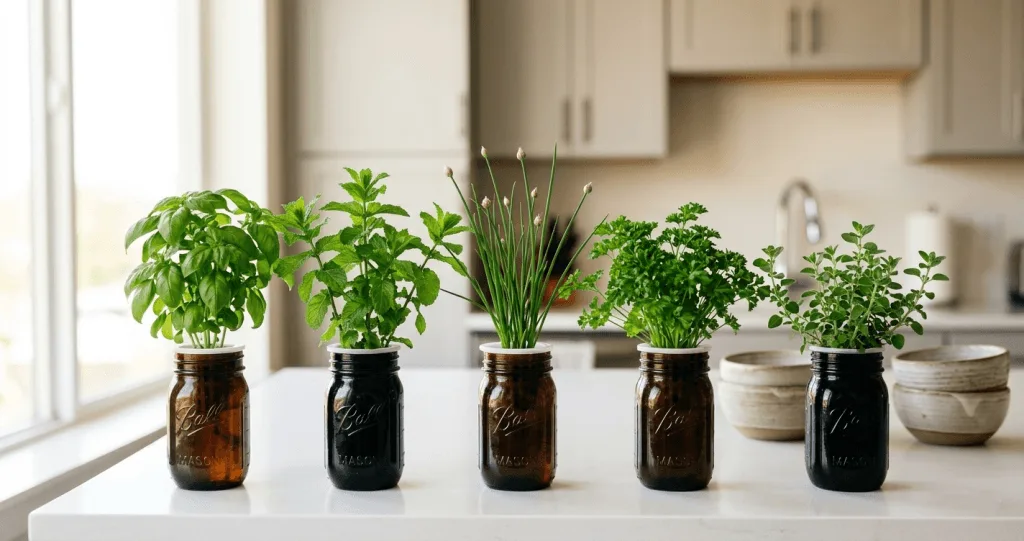
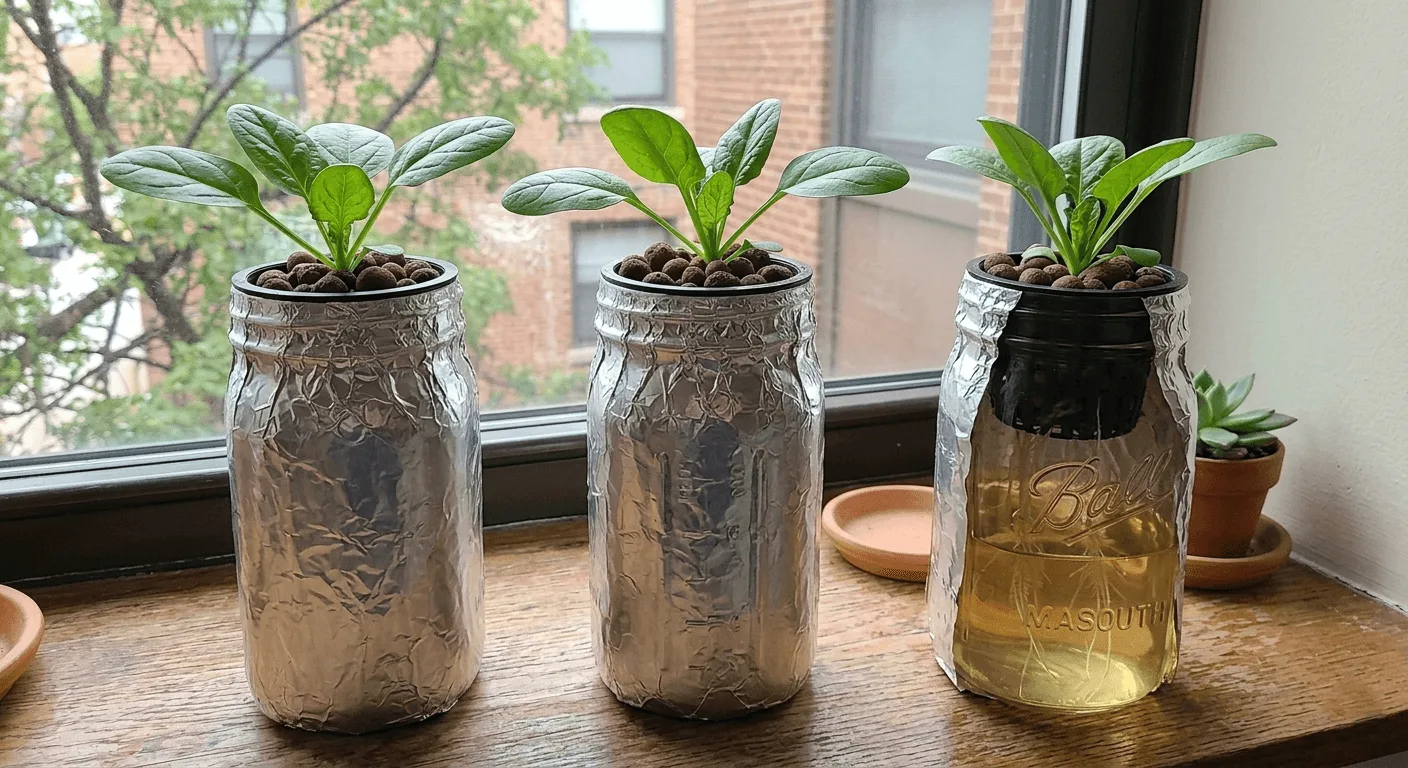
The Kratky method represents the simplest form of hydroponics. You fill a container with nutrient water and suspend the plant above it. As the plant drinks, the water level drops. This falling water line creates an air gap, allowing the roots to breathe oxygen.
I suggest using 1 quart mason jars for single spinach plants. You must wrap the jars in foil or paint them black to block light. If light hits the water, algae will consume your nutrients. You can find detailed instructions in my post on Kratky jar setups for apartments.
🌊 Small deep water culture systems
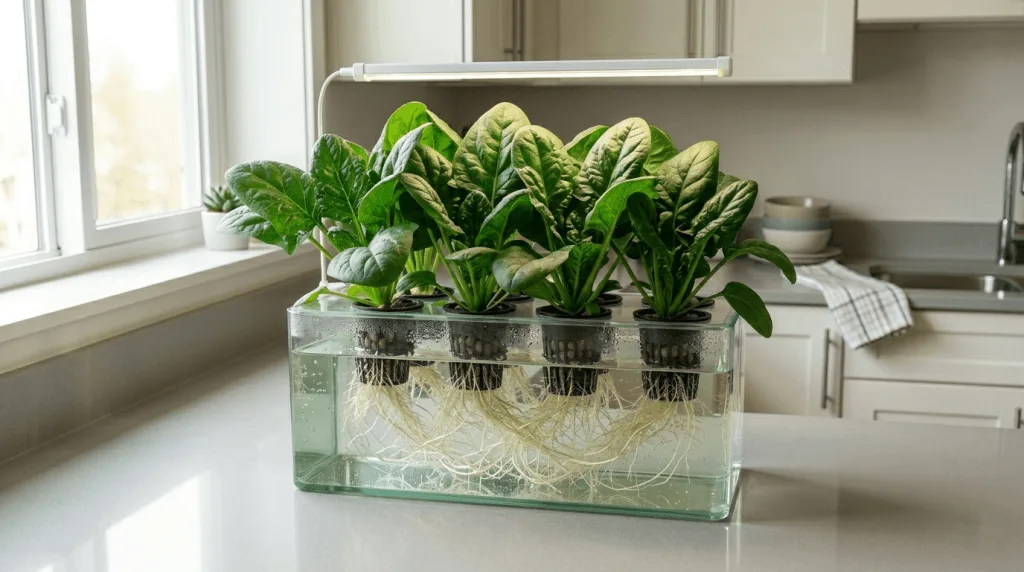
Deep Water Culture (DWC) uses an air pump to bubble oxygen into the reservoir. This constant aeration allows you to keep the water level high at all times. The bubbling action encourages fast growth. The main drawback is finding an electrical outlet for the pump.
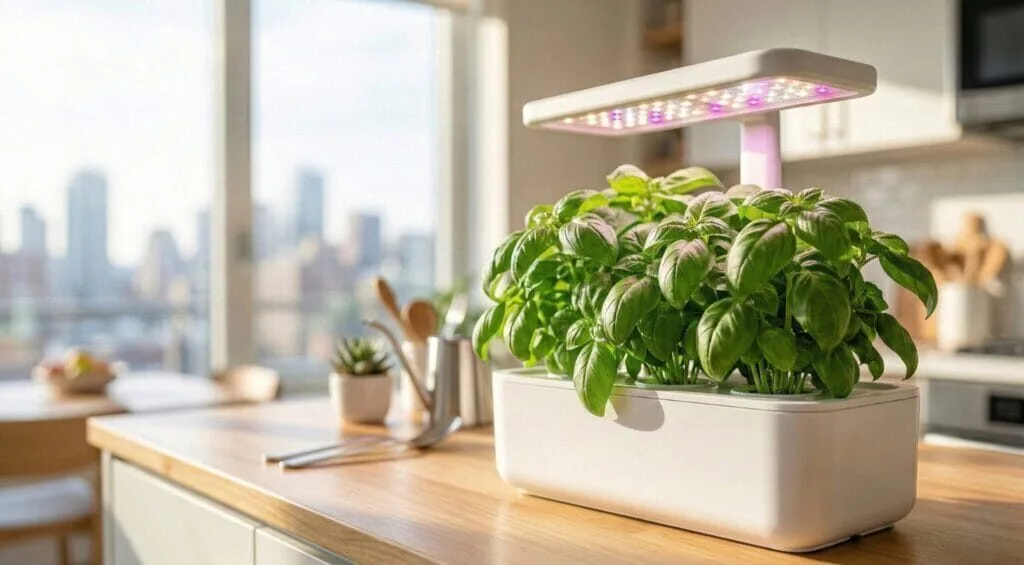
If you prefer a pre-built option, you can buy countertop units that incorporate a water pump and grow lights. These are ideal for tight spaces. If you are comparing options, look at my review of the best countertop systems for beginners.
💡 Getting The Light And Temperature Right
Spinach is a cool-weather crop. Replicating autumn conditions inside a heated apartment poses a real challenge. If the room gets too warm, the plant assumes summer has arrived and begins to flower. This flowering ruins the flavor of the leaves.
Balancing intense light with cool air requires careful placement. Keep your hydroponic spinach apartment setup away from radiators and heating vents. A cool spot near an east-facing window often provides the best ambient temperature.
🔆 Grow light distance and timing
Insufficient light causes spinach stems to stretch and become spindly. To build thick, robust leaves, you need a strong LED grow light. Position the light panel roughly 6 to 8 inches above the plant canopy. As the greens grow taller, adjust the light upward.
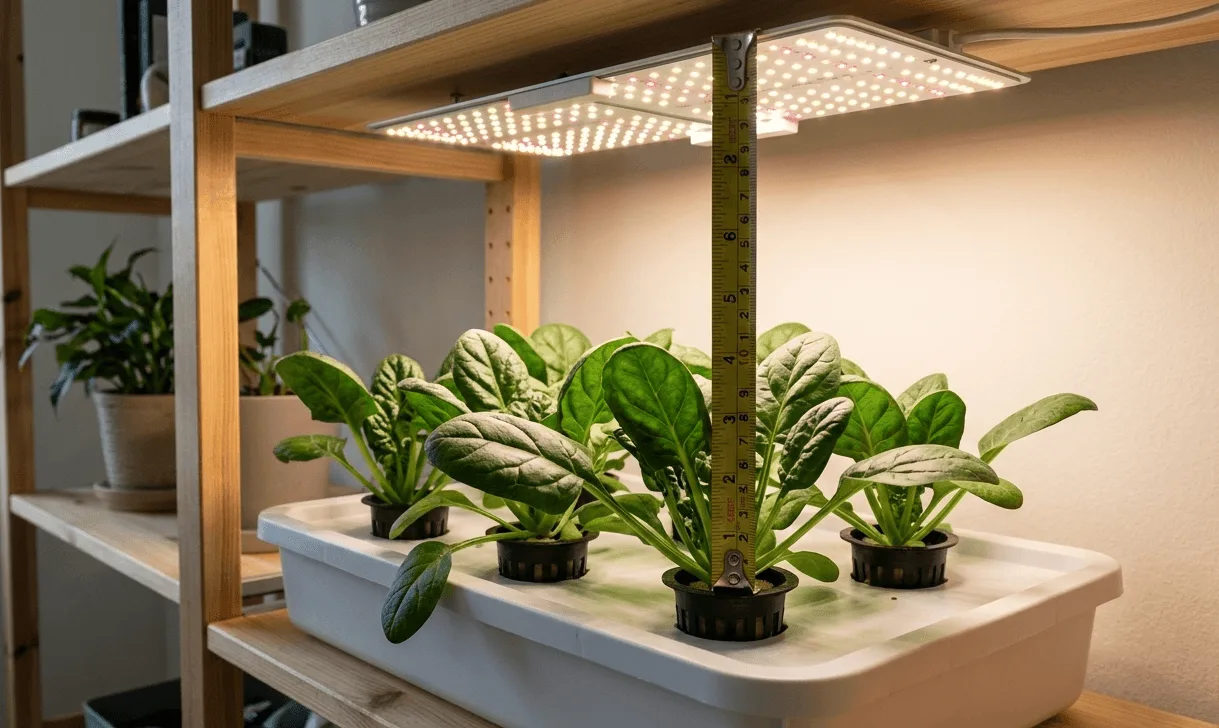
Set your timer for 12 to 14 hours of light per day. Giving them more than 14 hours can trigger the bolting phase. If you need help calculating your exact wattage, use our grow light calculator to find the right output for your shelf space.
→ The Easiest Light Schedule For Apartment Hydroponics
→ How Far Should Grow Lights Be From Hydroponic Herbs
🌡️ Preventing bolting in warm rooms
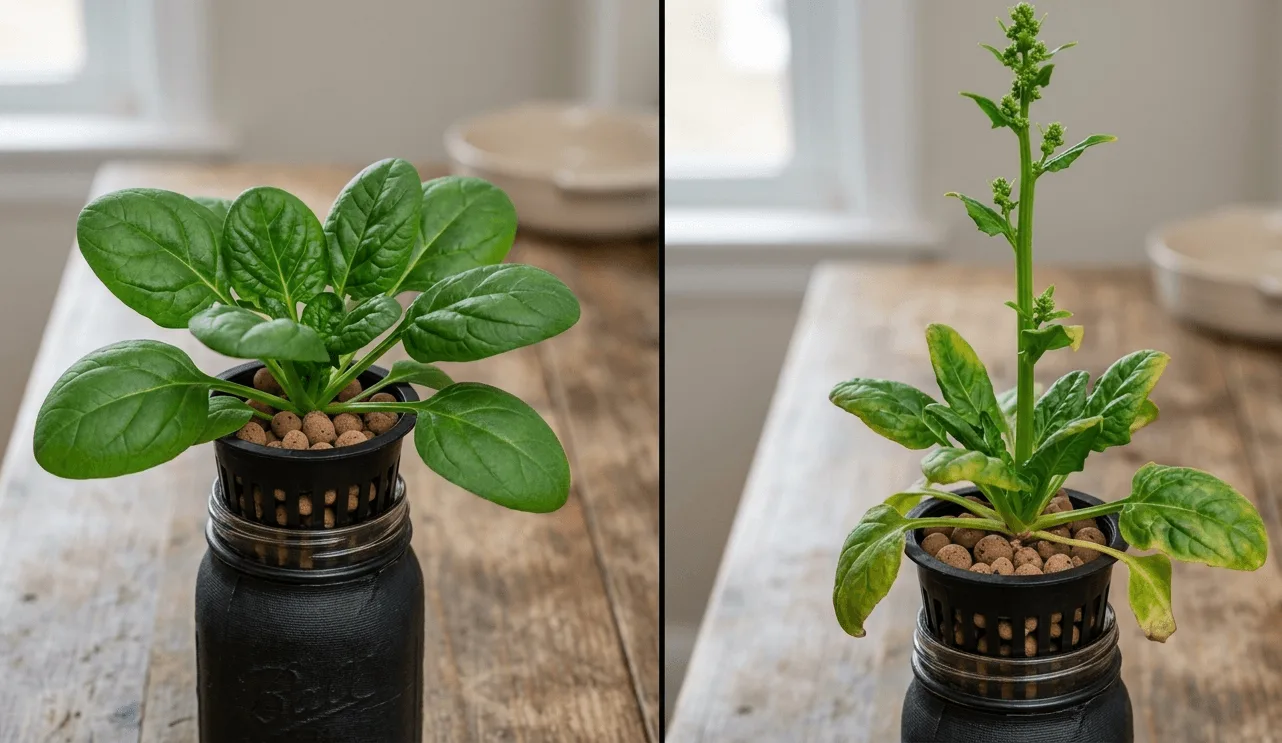
Bolting happens when the center stem suddenly shoots upward and produces seeds. Once a spinach plant bolts, the leaves become bitter and tough. The main trigger for bolting in a hydroponic spinach apartment setup is high temperature.
Aim to keep your ambient room temperature below 70°F. If your kitchen runs hot, consider running a small clip fan to blow cool air across the canopy. You can also try dropping a single ice cube into the reservoir on hot days to chill the root zone.
🧪 Nutrients And pH: My Biggest Beginner Mistake
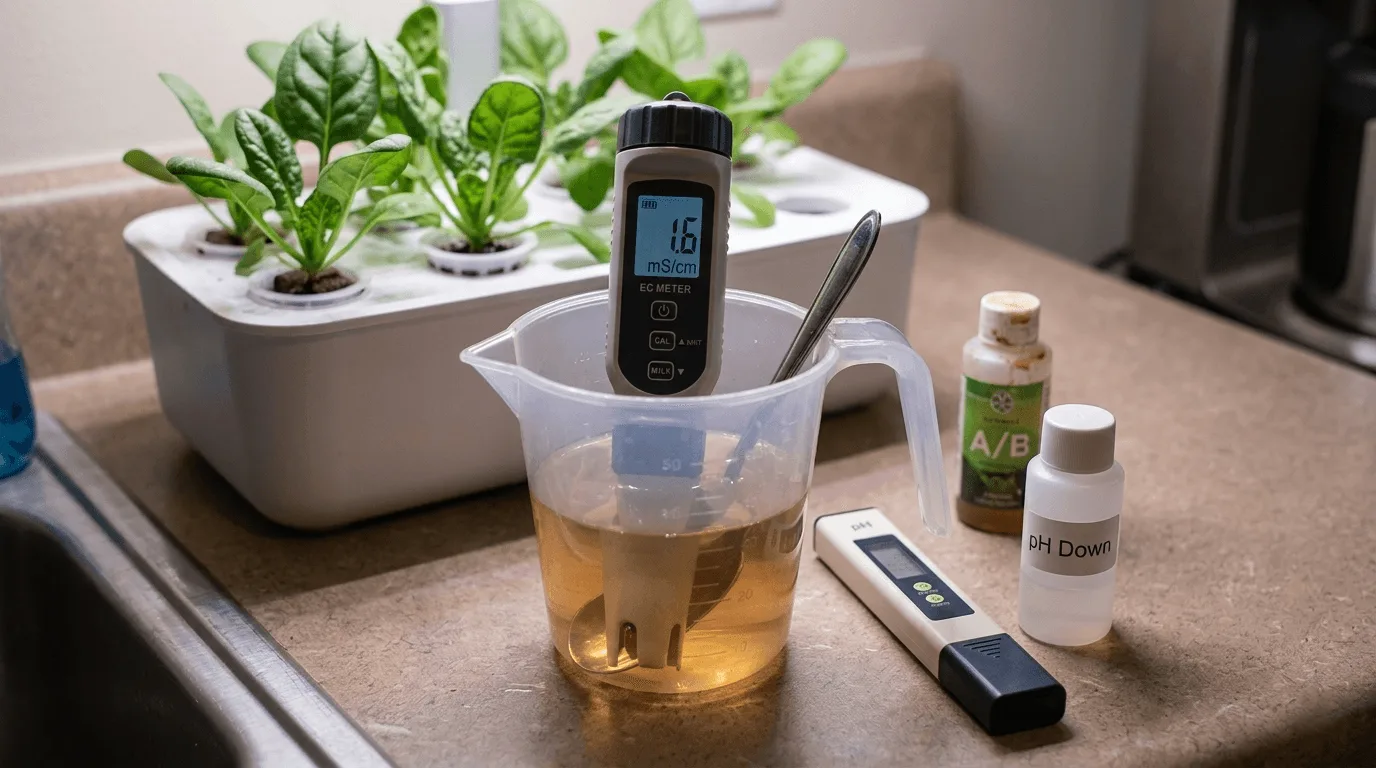
Feeding indoor greens requires a delicate touch. Soil buffers mistakes, but water exposes plants to raw chemical changes. You must measure your nutrient concentration using an Electrical Conductivity (EC) meter. Guessing the dosage leads to burned leaves and stunted growth.
In the beginning, I assumed more fertilizer meant faster growth. I killed my first spinach crop keeping my EC at 2.4. The leaves burned, turned crispy at the edges, and curled inward within a week. Dropping the target to EC 1.6 fixed the issue for my next batch.
→ Hydroponic nutrient principles (Penn State Extension)
⚖️ Mixing the perfect hydroponic spinach apartment solution
Spinach demands a nitrogen-heavy blend for vegetative growth. A generic lettuce formula works well for this crop. Always fill your reservoir with fresh water before adding the liquid fertilizer. Stir thoroughly after pouring in each separate component.
Next, use our free pH and nutrient calculator to determine your exact dosage. After mixing the food, test the water. Use pH Up or pH Down to hit the sweet spot of pH 5.8. For a full feeding schedule, consult my beginner hydroponic nutrients guide.
| Growth Stage | Target EC Range | Target pH |
|---|---|---|
| Seedling (First 2 weeks) | 0.8 to 1.2 | 5.5 to 6.0 |
| Vegetative (Weeks 3+) | 1.4 to 1.8 | 5.5 to 6.0 |
🧂 Avoiding nutrient lockout
Nutrient lockout happens when the pH drifts too high or too low. Even if the water contains plenty of fertilizer, the plant roots cannot absorb the minerals. The spinach will turn yellow and stop growing. Iron deficiency presents as yellowing between the veins on new leaves.
To avoid lockout, do a full reservoir change every 2 weeks and top off daily with plain pH-adjusted water between changes. Do not keep topping off for months without a full reset. A complete refresh removes salt buildup and restores balance to the environment.
🩺 Troubleshooting Yellow Leaves And Root Rot
Indoor gardens are not immune to problems. A hydroponic spinach apartment setup relies on you for everything. When things go wrong, the signs appear fast. Learning to read your plant’s leaves saves you from losing the entire crop.
Most issues stem from water quality. Poor oxygen levels or dirty equipment invite fungal diseases. Catching these symptoms early makes treatment straightforward.
🪱 Checking your roots weekly
Healthy spinach roots should look crisp and white, resembling cooked spaghetti. If you lift the net cup and see brown, slimy strands, you have a problem. This slime indicates root rot, a fungal infection caused by warm, stagnant water.
If you spot rot, act fast. Trim away the dead tissue with sterilized scissors. Rinse the remaining roots under lukewarm water.
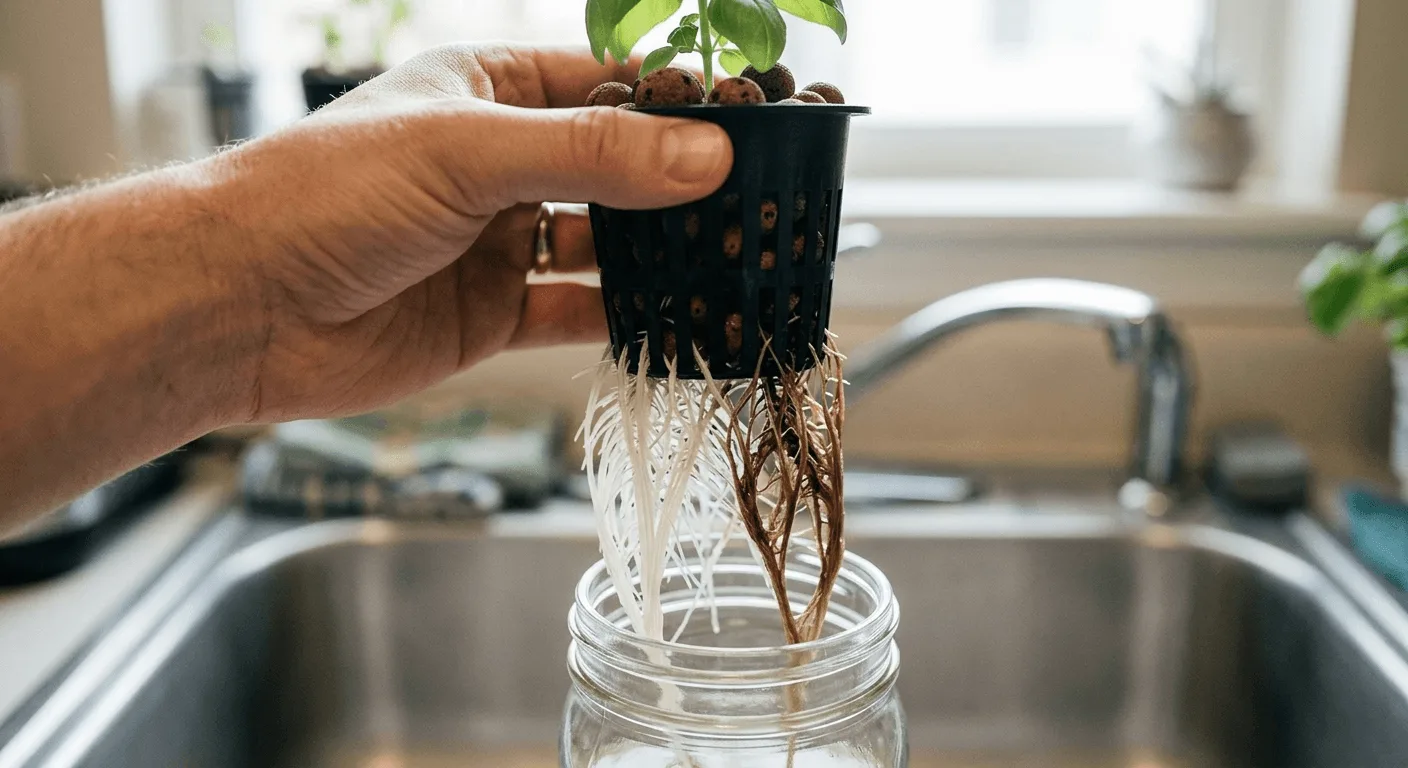
Read my guide on how to prevent root rot. You might also notice foliage issues. If so, check out my tips for fixing yellow leaves.
🚨 What to do if your pump fails
If you use a DWC system, equipment failure creates an emergency. Without bubbles, the roots consume all available oxygen in a few hours. The plants will begin to droop and look wilted.
If your water pump stops working, check the impeller for caught roots. If your air pump breaks, manually stir the reservoir water with a spoon every few hours until you get a replacement. Also, air pumps vibrate. To quiet a noisy pump, place a small piece of yoga mat underneath the unit to absorb the sound.
🧯 Dealing With Pests Indoors
Bugs find their way inside even on the top floor of a high-rise. They catch a ride on your clothes or slip through open window screens. In a hydroponic spinach apartment setup, pests multiply without natural predators to stop them.
You must inspect the underside of the leaves during every water change. Look for tiny webs or small black specks. Catching an infestation early prevents it from spreading to your other houseplants.
🦟 Fungus gnats in your media
Fungus gnats look like tiny fruit flies hovering around the base of your plant. They lay eggs in damp rockwool. The larvae then hatch and chew on the delicate root hairs, stunting the plant’s growth.
To combat gnats, place yellow sticky traps near the base of the container. If the rockwool remains soaked, cover the top of the cube with a layer of dry clay pebbles. You can also review my notes on why algae grows in jars, as algae often attracts these gnats.
🕷️ Spotting spider mites early
Spider mites thrive in dry, warm indoor air. They suck the sap from spinach leaves, leaving behind a stippled, speckled pattern. If you see fine webbing between the stems, the infestation is already severe.
Never rely on a single chemical pesticide to clear mites. A mild neem oil spray works well for minor issues, but you must also wipe the leaves manually. Stronger insecticidal soaps can burn young leaves if applied under bright grow lights. Always isolate the affected plant in another room while treating it.
✂️ Harvesting Your Indoor Spinach Crop
The best part of a hydroponic spinach apartment setup is harvest day. Knowing exactly when and how to cut the leaves ensures the plant keeps producing. Do not rip the leaves off by hand. Tearing damages the main stem and invites disease.
Spinach tastes best when harvested early in the morning before the lights heat up the room. The leaves store more sugars during the dark cycle, making them crisp and sweet.
🔪 The cut and come again method
You do not need to chop down the entire plant to enjoy a salad. The cut-and-come-again technique extends your yield for weeks. Use clean, sharp micro-snips to do the work.
Always harvest the outer leaves first. These are the oldest and largest leaves on the plant. Leave the crown intact with at least four small leaves in the center. The plant uses these remaining leaves to generate energy for the next growth spurt.
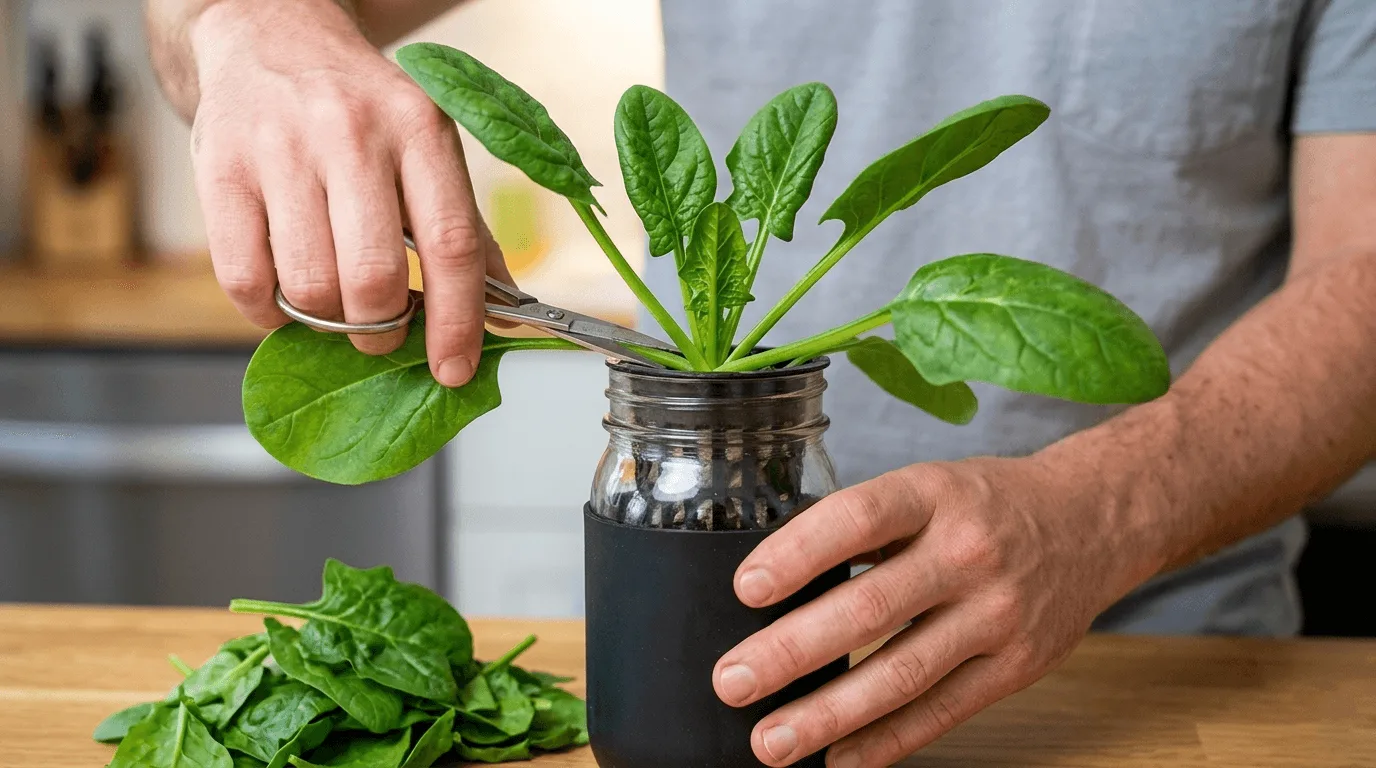
You can track your timeline with our seed to harvest countdown.
🧡 Storing fresh greens
Hydroponic spinach contains more water than field-grown greens. If you toss damp leaves into a sealed plastic bag, they will turn to mush in two days. You must manage moisture to keep them crisp.
After cutting, gently pat the leaves dry with a paper towel. Place them in a hard plastic container lined with a dry paper towel to absorb excess humidity. Store in a breathable bag or crack the container lid slightly. Before planting your next round of seeds, make sure to clean your small system to prevent lingering bacteria.
💬 A Word From Sarah
Growing my first successful batch of spinach felt like a real turning point in my tiny kitchen. I remember making a simple garlic saute with leaves I had cut just five minutes earlier. The texture was crisp, and the flavor carried a mild sweetness you never get from plastic clamshells at the grocery store. Keeping my apartment cool enough was a learning curve, but seeing those vibrant green leaves next to my sink every morning makes the effort worthwhile. You can do this.
❓ Frequently Asked Questions
💧 How often should I change the water for hydroponic spinach?
Do a full reservoir change every 2 weeks and top off daily with plain, pH-balanced water between changes. This prevents nutrient buildup and salt accumulation in a small apartment setup. If the water smells off or the roots look stressed, do the full change sooner.
☀️ Does hydroponic spinach need direct sunlight?
No, indoor spinach thrives under LED grow lights without any natural sunlight. Provide 12 to 14 hours of artificial light per day on a timer. Keep the lights about 6 to 8 inches above the canopy to prevent the plants from stretching toward the source.
🧪 What is the best pH level for indoor spinach?
Aim for a pH between 5.5 and 6.0. Spinach prefers a slightly acidic environment to absorb nitrogen and iron properly. Check your reservoir every few days and adjust with pH Up or pH Down as needed. Drifting above 6.5 causes nutrient lockout even when the water is full of fertilizer.
🥙 Can I grow spinach in a small mason jar?
Yes, the Kratky method works well in wide-mouth mason jars. Paint the glass black or wrap it in foil to block light and stop algae growth. Leave a small air gap between the water line and the net cup so the upper roots can breathe. A 1 quart jar suits a single spinach plant well.
✂️ How do I prune spinach without killing the plant?
Harvest the oldest, outermost leaves first using clean scissors. Always leave at least four young leaves in the center crown intact. This cut-and-come-again method allows the plant to keep producing fresh greens for several weeks before it exhausts itself and needs replacing.
🌡️ Why is my hydroponic spinach growing tall and flowering?
This is called bolting. It happens when the room temperature climbs too high or the light cycle runs longer than 14 hours. Keep ambient temperatures below 70°F and set your timer to a maximum of 14 hours. Once a plant bolts, the leaves turn bitter and the crop is effectively done.
🐛 How do I get rid of bugs on my indoor spinach?
Place yellow sticky traps near the base of the container to catch adult fungus gnats. For spider mites, wipe the leaves with a mild insecticidal soap solution and isolate the affected plant immediately. Always test a small leaf first to confirm the treatment does not cause burns under your grow lights.
Happy growing! 🌿
— Sarah, Urban Hydro Space

Sarah is the founder of Urban Hydro Space and an indoor gardening enthusiast dedicated to helping apartment dwellers grow fresh herbs and vegetables in small spaces. With hands-on experience testing hydroponic systems, she shares practical tips and honest product reviews to make indoor gardening accessible for beginners.