⏳ 10 min read · Last updated: March 2026
Learning to grow hydroponic lettuce countertop style completely changed how I think about apartment gardening. My first setup was noisy, messy, and way too annoying for a tiny kitchen. Once I switched to a simpler approach, I finally started getting crisp lettuce without leaks, cords, or constant frustration. If you want fresh greens without hauling soil into your cooking space, this guide will show you exactly how to grow hydroponic lettuce countertop style in a clean, beginner-friendly way. I will walk you through the setup, the weekly care, the harvest routine, and the most common mistakes that cause trouble in small apartments.
☘️ Why Grow Hydroponic Lettuce Countertop Style
Most apartment kitchens do not have space for bulky trays, loud pumps, or messy soil bins. A small passive setup is much easier to live with when your counter still needs to function like a normal kitchen. Passive methods are also quieter, cheaper, and easier to maintain than many active beginner systems. If you are deciding between passive and active methods, read DWC vs Kratky for Apartments: A Beginner’s Complete Guide for a clearer comparison.
🌱 Key Takeaways
- Passive setups are usually easier to manage than pump-based systems in small kitchens.
- Lettuce prefers a gentle nutrient mix, steady light, and a healthy air gap.
- Overfilling the container is one of the fastest ways to stress the roots.
- Harvesting outer leaves first keeps the plant producing longer.
- Just starting out → go to What You Need and read in order
- Setup done, need care tips → jump to Weekly Care
- Ready to harvest → skip to Harvest Tips
- Something looks wrong → go to Common Mistakes
🔎 Quick-start table
| What | Target | Why it matters |
|---|---|---|
| 💧 pH | 5.5 to 6.0 | Helps roots absorb nutrients properly. |
| ⚡ EC | 0.8 to 1.2 mS/cm | Lettuce prefers a milder feed than heavier crops. |
| 🌞 Light | 14 to 16 hours daily | Keeps indoor lettuce compact instead of stretched. |
| 🌬️ Air gap | About 1 to 1.5 inches | Gives roots access to oxygen as the water level falls. |
📖 Table of Contents
📋 What You Need
Keep the gear simple
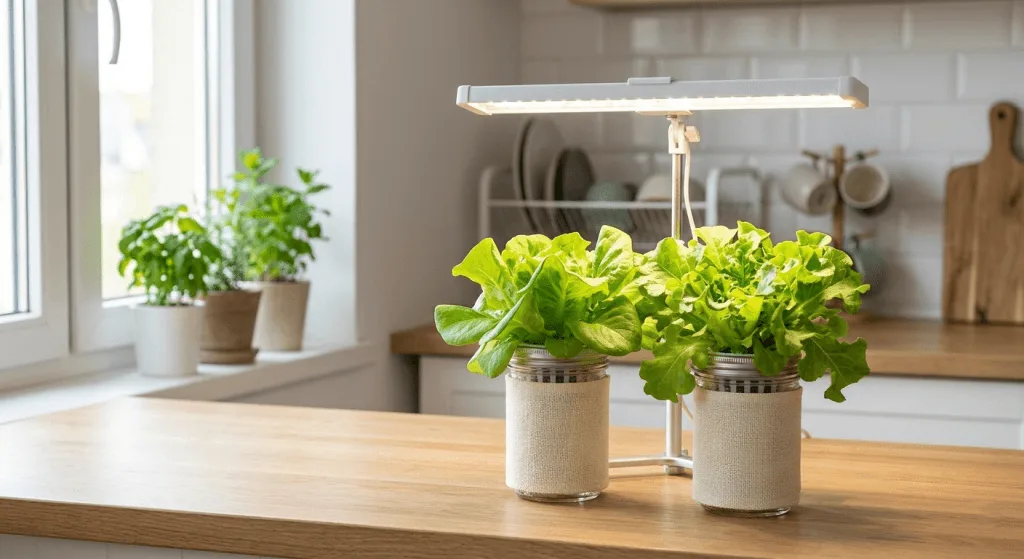
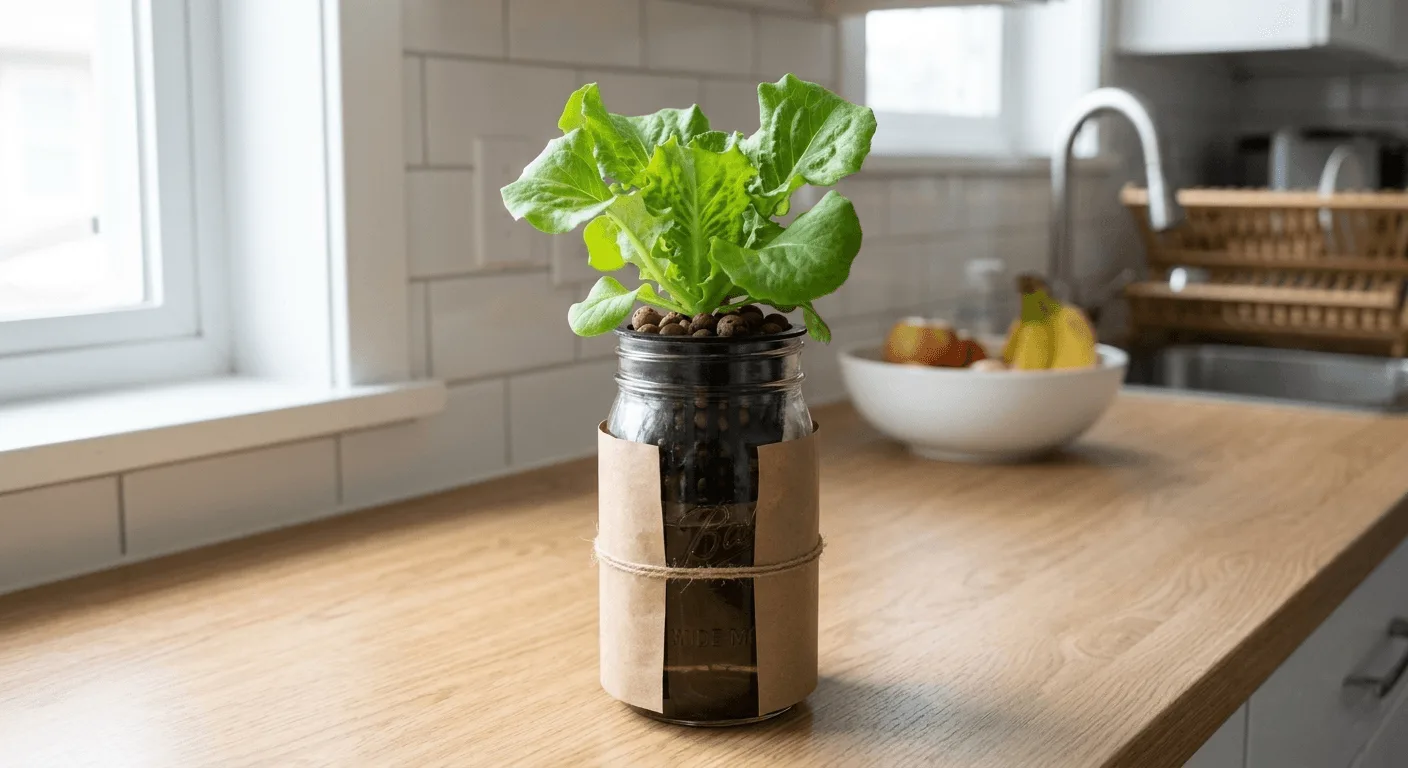
You only need a few basics: a lightproof jar or container, a net cup, a starter plug, lettuce seeds, and a gentle nutrient solution. That is enough to start growing without turning your kitchen into a project bench. If you would prefer a ready-made system that handles most of the setup for you, see my picks for the 3 best countertop hydroponic systems for apartment beginners.
Water and nutrients matter more than gadgets
Lettuce grows better with a consistent, lighter feed than with aggressive nutrient strength. Keep EC between 0.8 and 1.2 mS/cm, maintain pH between 5.5 and 6.0, and avoid the beginner urge to add more nutrients every time something looks slightly off. If you want help with the feeding side, read the Beginner Hydroponic Nutrients Guide for Small Systems. For specific nutrient brand recommendations that work well with lettuce, see my best hydroponic nutrients for small systems post.
📌 Note: Oklahoma State Extension explains that pH and EC management are central to hydroponic nutrient control, which becomes even more important in small reservoirs that can drift quickly.
✅ How to Grow Hydroponic Lettuce Countertop Style
Start seeds without soil
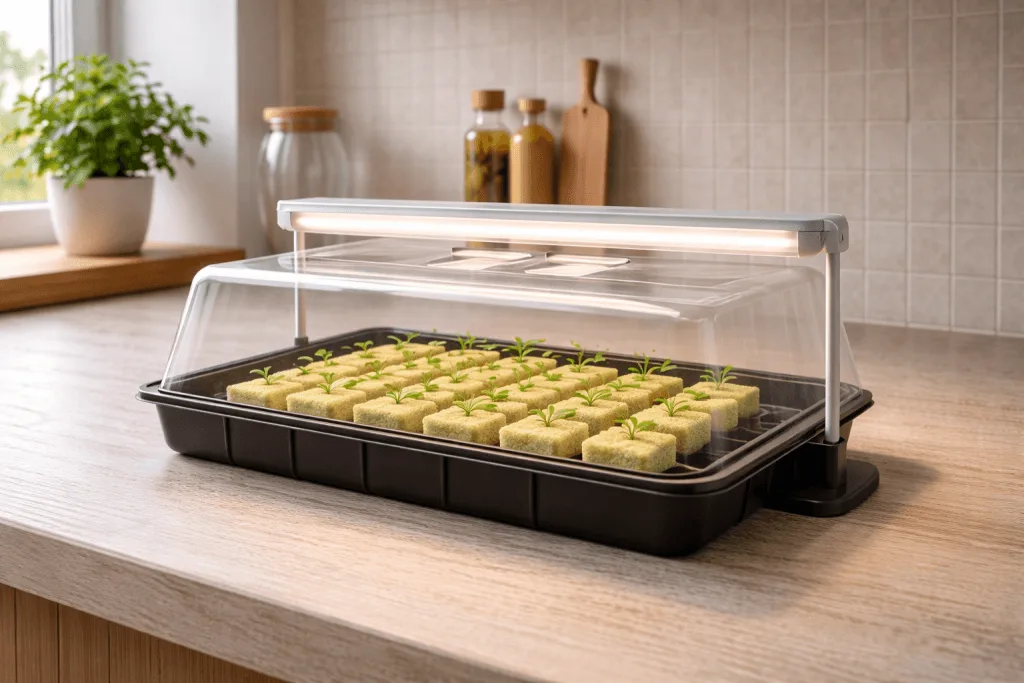
Use a clean starter plug like rockwool or coco, moisten it, and place one or two lettuce seeds inside. Keep the plug damp until you see roots coming through the bottom or sides.
Set the water level correctly
When the roots appear, place the seedling into the net cup over your nutrient solution. At first, the solution should just reach the bottom of the plug or net cup so the roots can find water quickly. As the plant grows, let the water level fall naturally. That small drop creates the air gap that helps passive lettuce roots breathe instead of drowning.
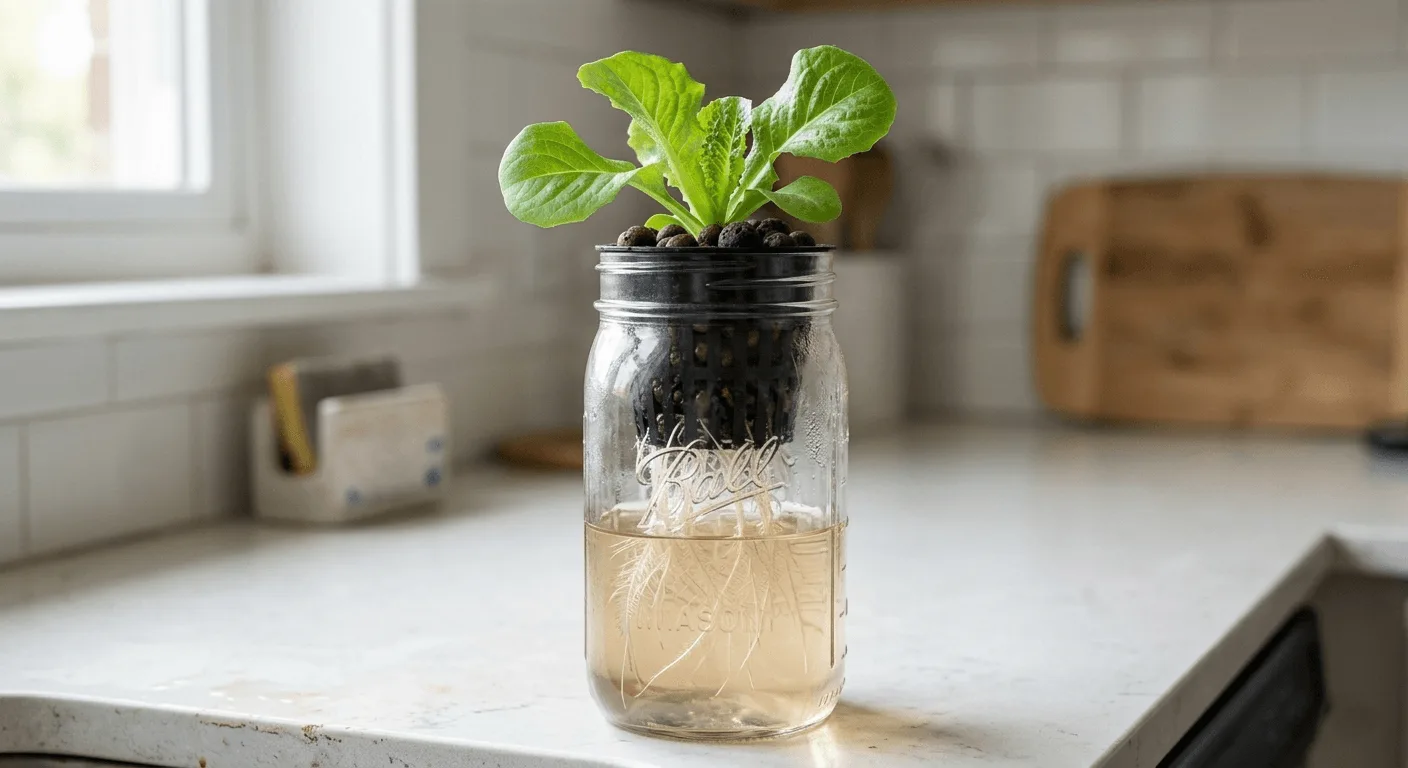
If you want to see a full jar example in action, read the Kratky Lettuce Jar: Easy Windowsill Hydroponics Guide.
| Growth phase | Light hours | Feeding approach |
|---|---|---|
| Seedling | 12 to 14 hours | EC 0.5 to 0.8 mS/cm |
| Early growth | 14 to 16 hours | EC 0.8 to 1.0 mS/cm |
| Harvest phase | 14 to 16 hours | EC 1.0 to 1.2 mS/cm |
📅 Weekly Care When You Grow Hydroponic Lettuce Countertop Style
Check the water before feeding more
In tiny containers, plants often drink water faster than they use nutrients. Topping off with plain pH-adjusted water is usually safer than automatically adding more plant food every time the level drops. Change the full nutrient solution every 7 to 14 days rather than endlessly topping off.
Use a consistent light routine
Countertop lettuce usually needs supplemental light indoors, especially in apartments with weak window exposure. A timer makes that routine much easier to keep consistent. For scheduling help, read the Apartment Hydroponic Light Schedule for Your 9-to-5 Job. If your leaves are stretching or the light feels too weak, read the Grow Light Distance for Herbs: A Shelf Hydroponics Guide for distance tips. For a solid budget light recommendation, see the 3 best LED grow lights for apartment countertop hydroponics.
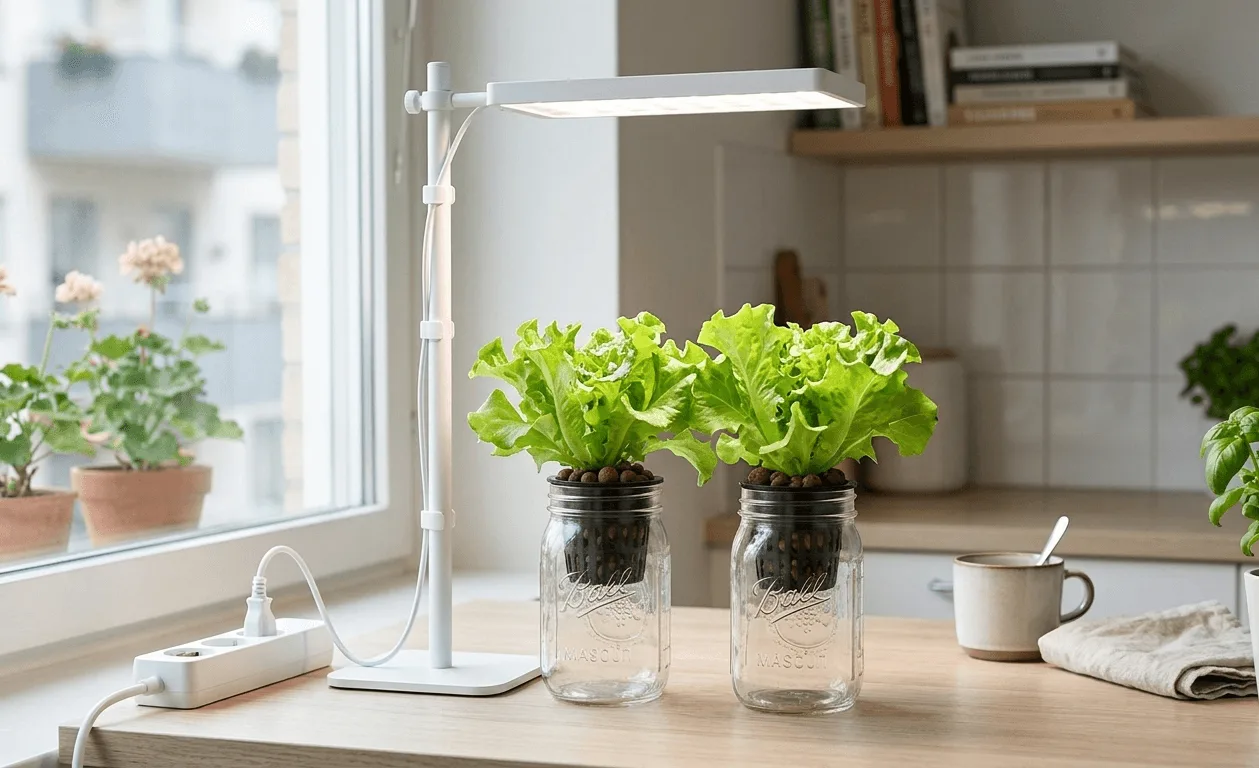
💡 Pro tip: A cheap outlet timer is one of the best upgrades for countertop lettuce because it removes one more thing you have to remember every day.
✂️ Harvest Tips for Countertop Lettuce
Take the outer leaves first
When you grow hydroponic lettuce countertop style, the easiest way to extend your harvest is to snip the outer leaves and leave the center alone. That lets the plant keep pushing fresh growth instead of ending the harvest all at once.
Store harvested leaves the easy way
After cutting, pat the leaves dry, wrap them loosely in a paper towel, and keep them in a partially open container or bag. This simple habit keeps them crisp longer in a crowded apartment fridge and reduces food waste.
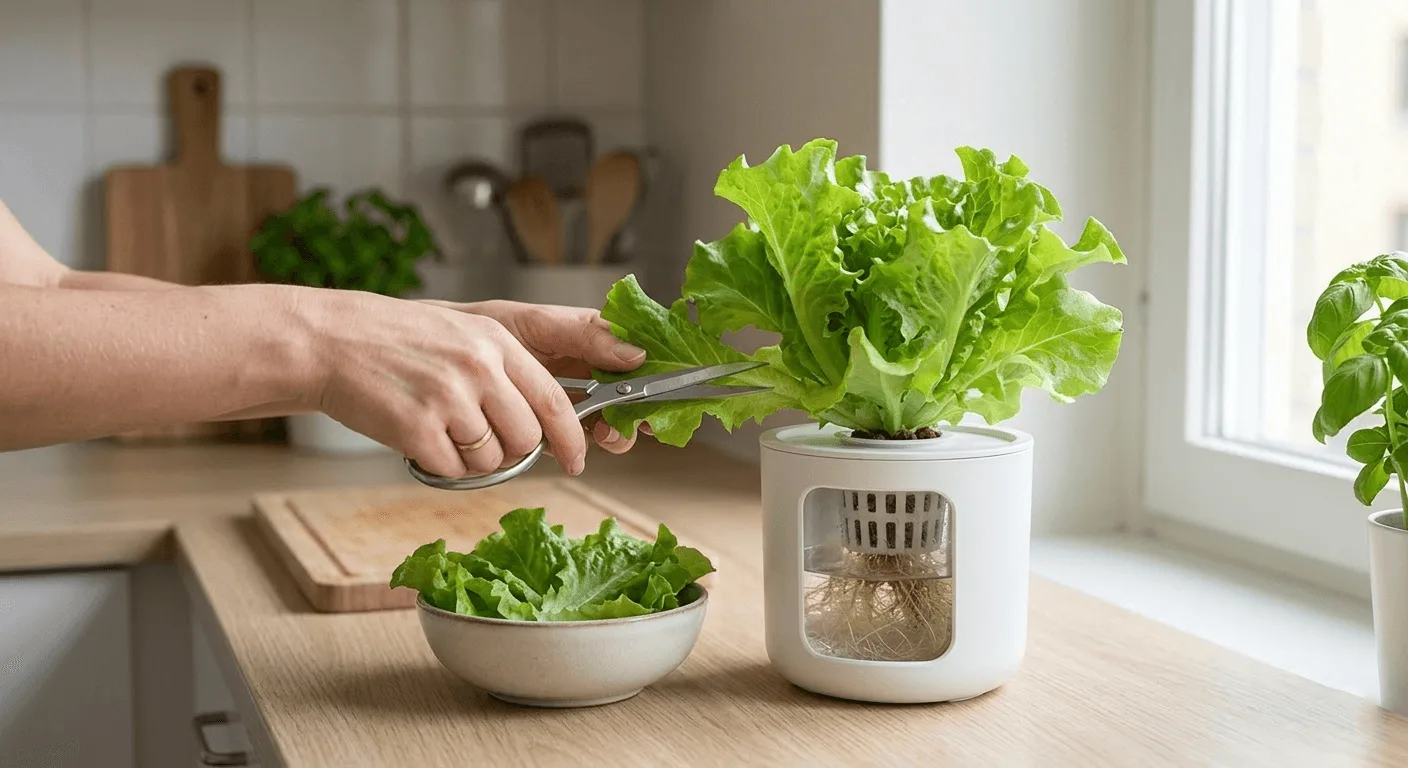
⚠️ Warning: Do not cut the center crown of the lettuce plant. Damaging that center usually stops future growth.
⚠️ Common Mistakes in Small Kitchens
Overfilling the reservoir
If you keep refilling the container to the very top, the roots lose the air gap they need. Root stress can build up quickly in a small passive setup, so always let the level drop naturally before topping off.
Ignoring leaf discoloration
Yellow leaves can point to pH drift, stale nutrient solution, weak feeding, poor light, or root trouble. For a deeper troubleshooting checklist, read Apartment Hydroponics Yellow Leaves: Causes and Simple Fixes.
Waiting too long to react to bad roots
If the roots start looking brown, slimy, or smelly, act quickly. This guide will help you catch the problem early: How To Prevent Root Rot In Small Hydroponic Systems Before It Starts.
🔗 Helpful references
→ Oklahoma State University: Electrical Conductivity and pH Guide for Hydroponics
→ University of Florida IFAS: Growing Lettuce in Small Hydroponic Systems
→ University of Hawaii CTAHR: A Simple Hydroponic Growing Kit for Short-Term Vegetables
📚 Read next
💬 A Word From Sarah
I love countertop lettuce because it makes fresh food feel doable even in a tiny apartment. You do not need a balcony, a grow room, or fancy gear. Start with one simple container, learn the rhythm, and let that first success build your confidence. The first time you snip fresh lettuce straight onto a plate you made yourself, you will understand why this hobby is so addictive.
❓ Frequently Asked Questions
⏱️ How long does it take to grow hydroponic lettuce countertop style?
With a loose-leaf variety, you can usually start harvesting outer leaves in about 4 to 6 weeks from planting. Full heads take a bit longer depending on the variety, light, and temperature. Consistent light at 14 to 16 hours per day and stable EC between 0.8 and 1.2 mS/cm will give you the fastest, most reliable results in a small apartment setup.
🚰 Can I use tap water for countertop hydroponic lettuce?
Often yes, but if your tap water is very hard or heavily chlorinated, you may get better results by filtering it or letting it sit uncovered overnight before mixing nutrients. Always check and adjust pH to the 5.5 to 6.0 range after adding nutrients, regardless of the water source. Hard water can also raise EC before you even add nutrients, so test it first.
🟡 Why are my lettuce leaves turning yellow?
The most common causes are pH drift outside the 5.5 to 6.0 range, weak or stale nutrient solution, root stress from lack of oxygen, or insufficient light. Before adding more fertilizer, check pH first. A drifted pH locks out nutrients even when they are present in the water. If pH is fine, check that the solution is fresh and the EC is between 0.8 and 1.2 mS/cm.
🔇 Do I need a pump to grow lettuce on a countertop?
No. A passive method works very well for lettuce, especially in a small apartment where quiet and simplicity matter more than maximum speed. The key is maintaining the right air gap between the water surface and the net cup as the plant drinks down the reservoir. A pump adds complexity and noise without a meaningful yield benefit for lettuce specifically.
🟢 How do I stop algae growth in my jar?
Block all light from reaching the nutrient solution. Use an opaque container, wrap a clear jar in dark tape or a sleeve, or slide it inside a dark fabric cover. Never leave a clear jar sitting uncovered in direct or bright indirect light. Keeping the reservoir clean and changing the solution every 7 to 14 days also prevents algae from establishing before it becomes a problem.
📏 What is the ideal EC for hydroponic lettuce in a small system?
Lettuce prefers a lighter feed than most other crops. Start seedlings at EC 0.5 to 0.8 mS/cm, then increase to 0.8 to 1.0 mS/cm in early growth, and maintain 1.0 to 1.2 mS/cm through the harvest phase. Going above 1.6 mS/cm with lettuce often causes tip burn and slows growth rather than speeding it up, especially in small countertop containers.
🥬 Which lettuce varieties work best for countertop hydroponics?
Loose-leaf varieties like butterhead, oak leaf, and romaine work exceptionally well in small countertop setups because they grow quickly and respond well to cut-and-come-again harvesting. Avoid iceberg and heading varieties in small systems since they need more space and take longer to mature. Butterhead is particularly forgiving for beginners because it tolerates minor pH and EC fluctuations better than most other types.
Happy growing! 🌿
— Sarah, Urban Hydro Space

Sarah is the founder of Urban Hydro Space and an indoor gardening enthusiast dedicated to helping apartment dwellers grow fresh herbs and vegetables in small spaces. With hands-on experience testing hydroponic systems, she shares practical tips and honest product reviews to make indoor gardening accessible for beginners.