⏳ 12 min read · Last updated: March 2026
If you are comparing DWC vs Kratky for apartments, you are already asking the right question. Many beginners wonder which method fits their space, budget, and schedule before committing to any equipment. I know this feeling well. I started my hydroponics journey in a tiny one-bedroom apartment with absolutely no gardening experience, and my first system was a simple Kratky mason jar growing basil on a windowsill. By the end of this guide, you will know exactly which method fits your life. If you want to explore more apartment-friendly systems later, the Growing Guides hub brings together all my crop-specific tutorials for apartment growers.
⚠️ Common Beginner Mistakes in Apartments
When you are just starting with hydroponics in an apartment, it is easy to get overwhelmed. You buy the seeds, the nutrients, set everything up, and then your plants just do not grow. Or worse, they die. Many new growers make common errors without realizing it. They follow all the setup instructions but miss critical details that really matter in small indoor systems.
🎯 Who This Guide Is For
Best for studio and one-bedroom apartments, complete beginners, and anyone choosing their very first hydroponic method in a small space.
- The Kratky method is ideal for beginners due to its passive nature and minimal equipment, requiring no electricity.
- Deep Water Culture (DWC) offers faster growth and higher yields but requires an air pump and more active management.
- Maintain your nutrient solution pH between 5.5 and 6.5 for most plants, regardless of the method.
- Change your hydroponic solution every 7 to 14 days to prevent nutrient lockout and keep plants healthy.
- Complete beginner with no experience → start at The Kratky Method and read in order
- Already tried Kratky and want more yield → jump to Deep Water Culture
- Just want the quick comparison → skip to Head-to-Head Comparison
- Ready to decide right now → go to Making Your Decision
- Common Beginner Mistakes in Apartments
- The Kratky Method: Simple, Passive, Apartment-Friendly
- Deep Water Culture (DWC): Active Growth, Bigger Yields
- DWC vs Kratky for Apartments: Head-to-Head Comparison
- Is DWC or Kratky Better for Small Apartments?
- Making Your Decision: DWC vs Kratky for Your Space
- Essential Tips for Either Method in a Small Apartment
- A Word From Sarah
- Frequently Asked Questions
🧪 The pH Problem I Discovered
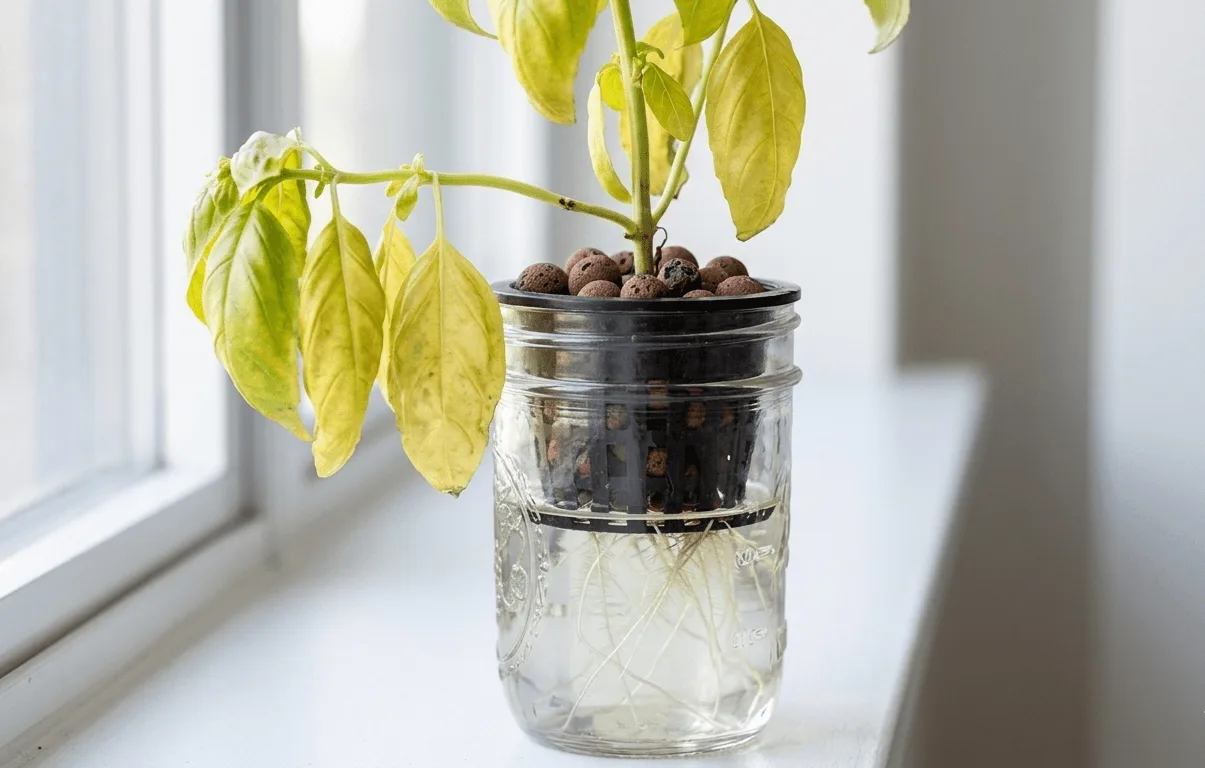
My biggest early mistake was using plain tap water for my first Kratky setup. I live in an area with particularly hard water. I just filled the mason jar and added nutrients, expecting magic. My basil started showing classic signs of yellowing leaves in week 2. I had no idea why. After killing two batches of basil, I finally learned that my tap water was sitting at a sky-high pH of 7.8. That one mistake taught me more than any guide I had read. This is why understanding water quality is so important and why I always recommend beginners get comfortable with pH meters early. For more on dialing in pH and EC, my Beginner Hydroponic Nutrients Guide is written specifically for small apartment systems.
🤦♀️ Overcomplicating Things
Another common pitfall for beginners is overthinking the system. There are so many fancy hydroponic setups out there, from NFT channels to elaborate aeroponics. It is easy to get drawn into complex systems. However, simplicity is your friend when you are learning. Start small. Learn the basics. You can always expand later. This approach keeps the learning curve gentle and prevents unnecessary frustration in your apartment.
🌿 The Kratky Method: Simple, Passive, Apartment-Friendly
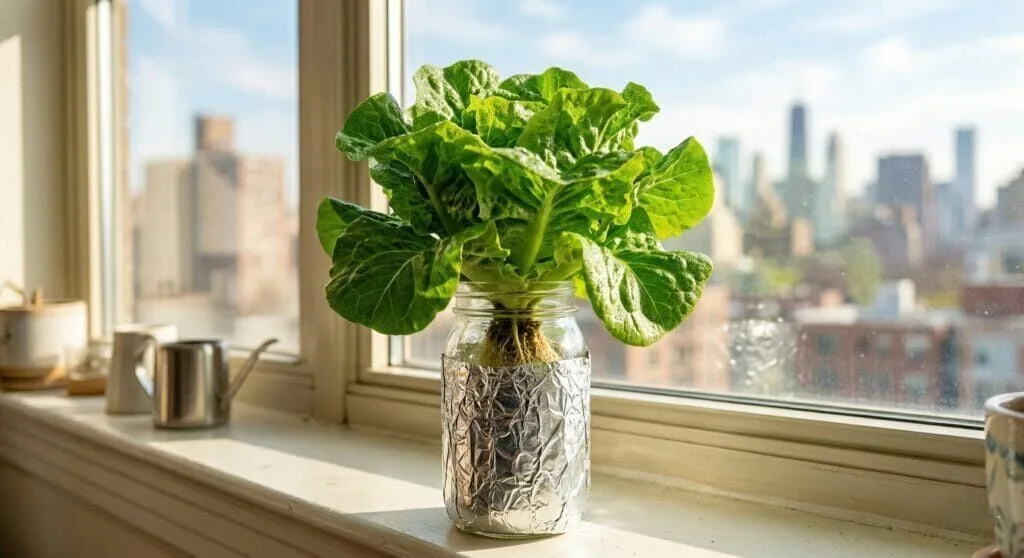
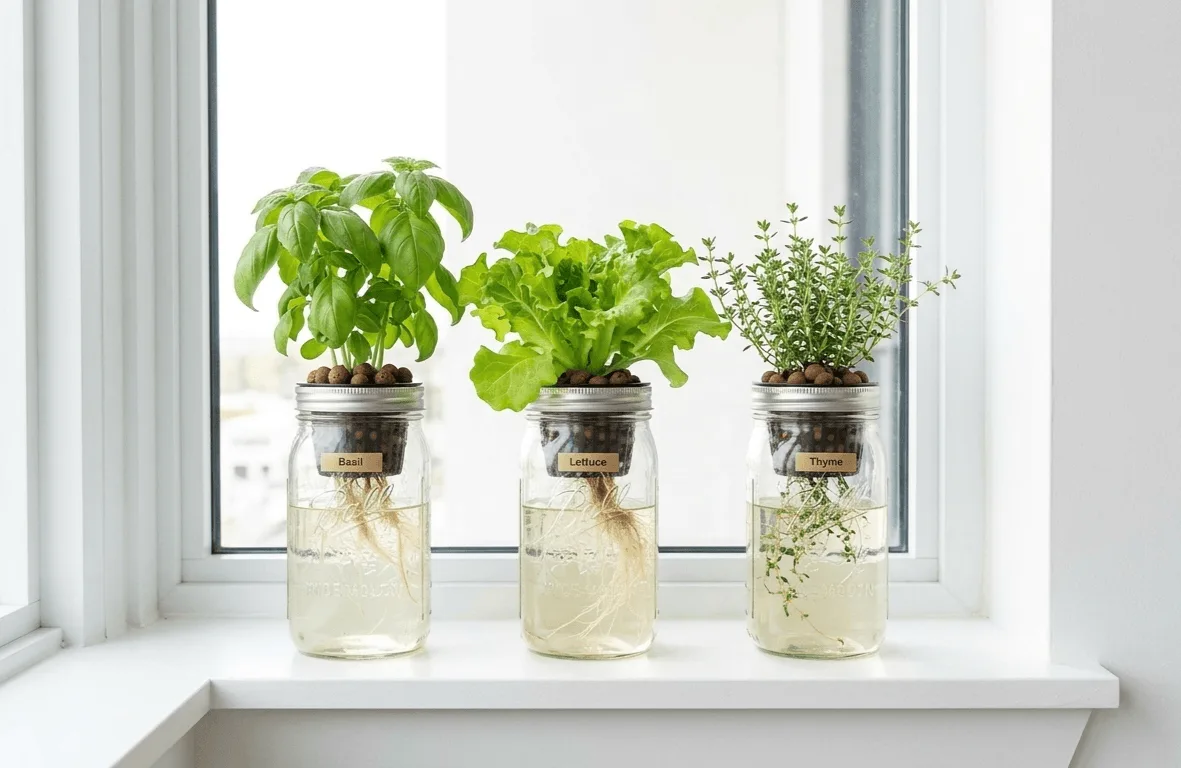
The Kratky method is often hailed as the simplest hydroponic system, and for good reason. It is a passive hydroponic technique, meaning it requires no electricity, no pumps, and no moving parts. Plants sit in a nutrient solution, and as they consume water, an air gap naturally forms above the roots. This air gap provides the necessary oxygen for root health. It is perfect for apartment dwellers who want quiet, low-maintenance hydroponics.
✅ Kratky Advantages for Small Spaces
The main appeal of Kratky is its simplicity. You only need a container, net pots, growing medium, seeds, and nutrient solution. There is no noise from pumps, which is great for quiet apartment living. It is also incredibly low maintenance. Once you set up your system, you essentially set it and forget it until it is time to refill or harvest. This method is ideal for quick-growing leafy greens and herbs. Many people start with a simple Kratky lettuce jar setup.
❌ Kratky Limitations to Consider
While wonderfully simple, Kratky does have its drawbacks. It is generally less suitable for larger, long-term plants or those with heavy water demands, like fruiting vegetables. You also cannot easily top off the nutrient solution whenever you like, meaning you often wait until the reservoir is almost empty before refilling. Adding fresh solution too early can drown the developing air roots. This is especially important when growing hydroponic basil in a small apartment, which is very sensitive to root stress. Without active aeration, the risk of root rot can also be slightly higher than in an aerated system if conditions get too warm or stagnant.
💧 Deep Water Culture (DWC): Active Growth, Bigger Yields
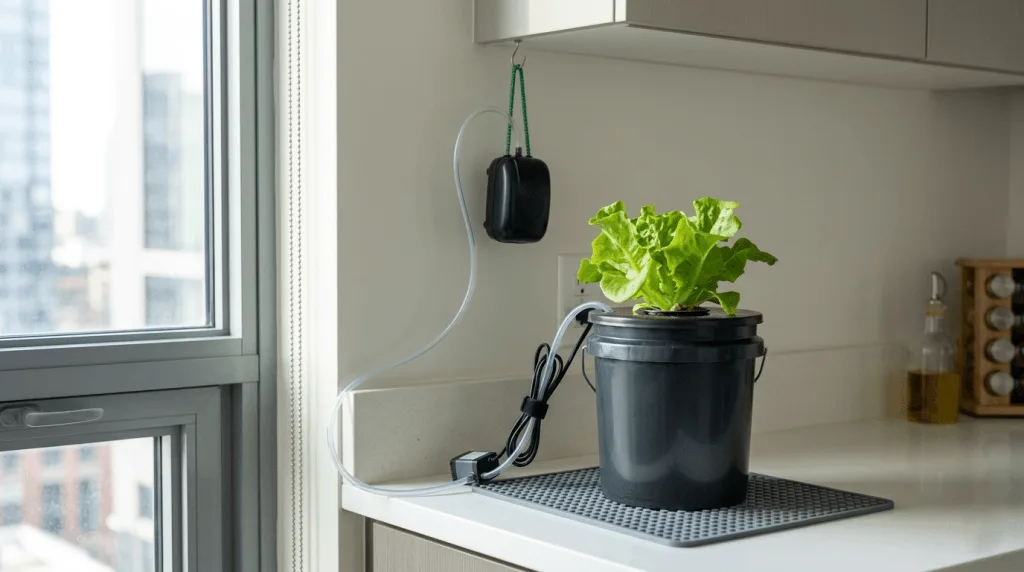
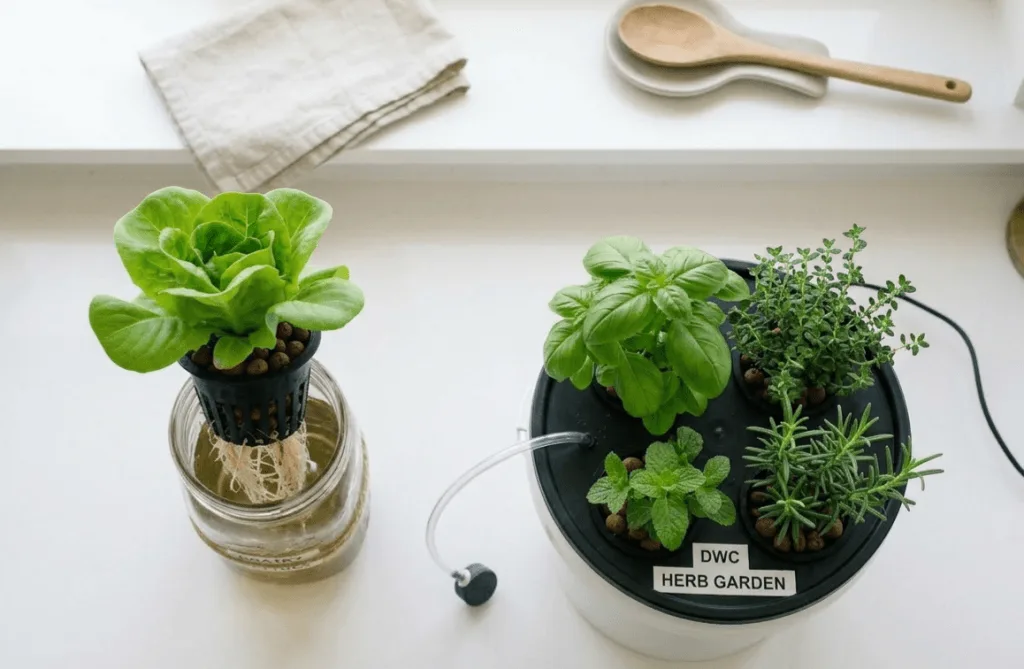
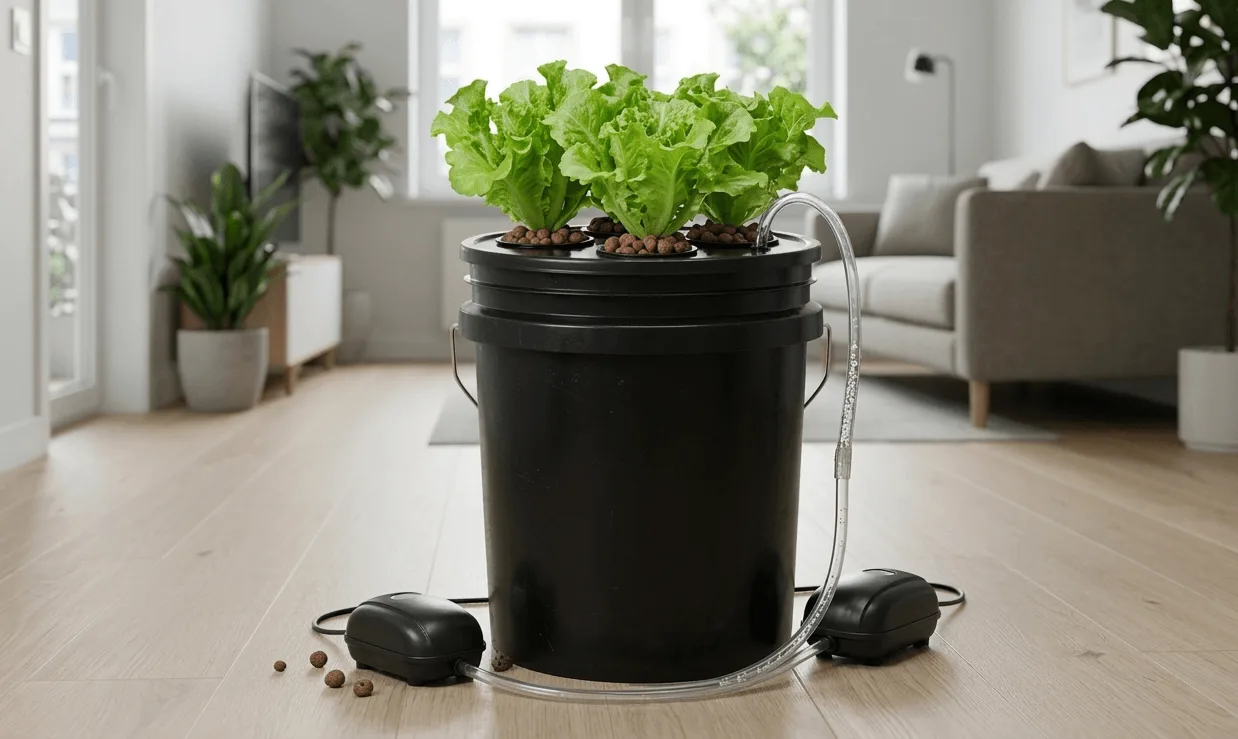
Deep Water Culture, or DWC, is another popular hydroponic method, especially for beginners ready to step up their game. In a DWC system, plant roots are constantly submerged in a nutrient-rich solution. Unlike Kratky, DWC uses an air pump and an air stone to provide continuous oxygen to the roots. This active aeration is what makes DWC so effective. It promotes vigorous growth and larger yields, even in compact setups.
💪 DWC Benefits for a Thriving Apartment Garden
With constant oxygenation, DWC plants typically grow much faster and produce more abundantly than Kratky plants. This is because the roots have a consistent supply of oxygen and nutrients. DWC systems are excellent for a wide range of plants, including lettuce, basil, mint, spinach, and even cherry tomatoes. You can easily top off the reservoir with fresh water and nutrients as needed, which helps maintain stable nutrient levels. Plus, the constant water movement helps prevent stagnant conditions.
🚧 DWC Challenges for Apartment Growers
The main challenge with DWC is the added complexity of equipment. You need an air pump and air stone, which means an electrical outlet and a slight hum from the pump. This noise might be a factor in a small apartment if you are sensitive to sound. Also, maintaining consistent water temperature is crucial. Warmer water holds less oxygen, increasing the risk of root rot. Keep water temperatures between 65 to 72°F (18 to 22°C). I highly recommend reading up on how to prevent root rot in small hydroponic systems if you choose DWC. You also need to monitor pH and nutrient levels more diligently because of the faster plant growth.
🎯 DWC vs Kratky for Apartments: Head-to-Head Comparison
Choosing between these two methods can be tough, especially when space and ease of use are priorities. Here is a direct comparison focusing on what matters most to beginners in small spaces.
🔎 Quick comparison table
| Factor | Kratky in apartments | DWC in apartments |
|---|---|---|
| 🧰 Setup complexity | Very low, no electricity, minimal parts. | Moderate, needs pump, tubing, and air stone. |
| 💸 Upfront cost | Very budget-friendly, jars and small tubs. | Higher upfront because of equipment. |
| 🔊 Noise | Completely silent. | Low hum from air pump. |
| 🌿 Best for | Herbs, lettuce, short cycles, ultra-low maintenance. | Larger plants, faster growth, higher yields. |
| 🧪 Maintenance | Mostly set-it-and-forget-it for one grow cycle. | Check pH and levels every 2 to 3 days, top off often. |
| 🥬 Plant versatility | Great for leafy greens and herbs you harvest quickly. | Supports longer cycles and fruiting plants like tomatoes. |
🛠️ Setup Complexity and Cost
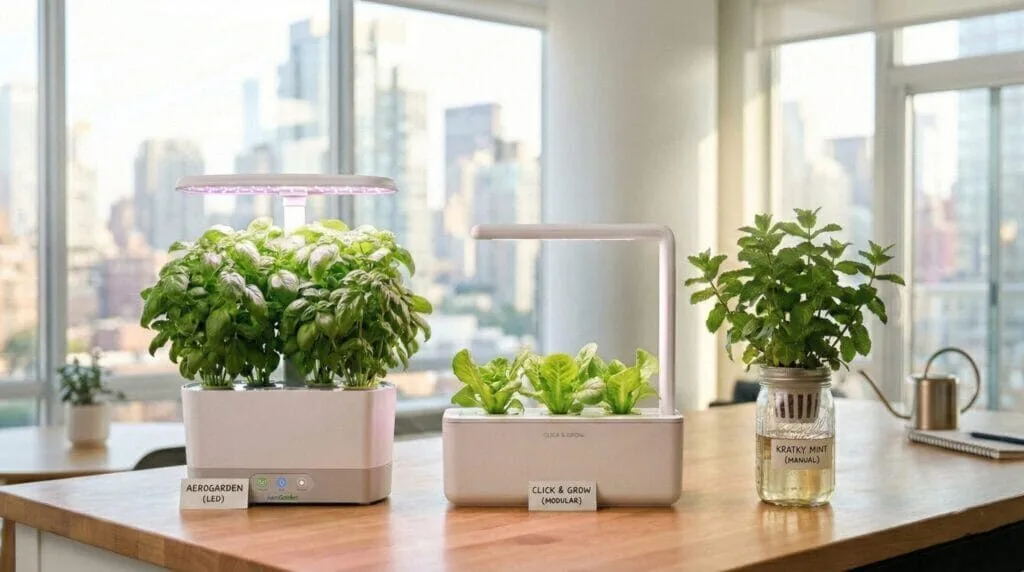
Kratky is the clear winner here. It involves minimal setup: a container, net pot, growing medium, and nutrients. The cost is incredibly low, often just a few dollars for a mason jar setup. DWC requires an air pump, air stone, and tubing in addition to the basic components. This increases both the initial cost and the setup time, although it unlocks more growth potential. If you want a ready-made countertop system that handles most of the setup for you, check the 3 best countertop hydroponic systems for apartment beginners.
🪴 Maintenance and Monitoring Needs
Kratky is truly set it and forget it for short-cycle plants. You fill the reservoir once and let the plant grow until harvest. However, precise pH monitoring is still essential. DWC demands more active maintenance. You will need to check pH and nutrient levels (EC/TDS) regularly, perhaps every 2 to 3 days. You will also top off the water frequently as your plants drink it down.
📏 Space Requirements and Plant Versatility
Both methods are compact. Kratky is perfect for windowsill herbs and small shelves. DWC systems can range from small countertop units to slightly larger containers like 5-gallon buckets or storage totes. Kratky is generally better for smaller leafy greens and herbs that you harvest quickly. DWC is more versatile and can support larger plants, longer growing cycles, and heavier feeders like cherry tomatoes or peppers.
🌱 Growth Rate and Yield Potential
DWC typically results in much faster growth rates and higher yields. The constant oxygen supply allows for rapid nutrient uptake. If you are looking to maximize your harvest in an apartment, DWC is the way to go. Kratky growth is generally slower but still perfectly adequate for personal consumption of herbs and lettuce.
🤔 Is DWC or Kratky Better for Small Apartments?
For small apartments, Kratky is better if you want the simplest, quietest, and most budget-friendly start, especially for herbs and lettuce. DWC is better if you care more about speed, yield, and growing a wider range of plants and do not mind a small pump running. In other words, choose Kratky for ease, and choose DWC for performance.
📌 Quick-start suggestions
- If you want the easiest, lowest-maintenance start: use 1 to 3 Kratky mason jars on a sunny windowsill.
- If you want maximum yield and faster growth: use a compact 5-gallon DWC bucket or small tote with an air pump.
🧠 Making Your Decision: DWC vs Kratky for Your Space
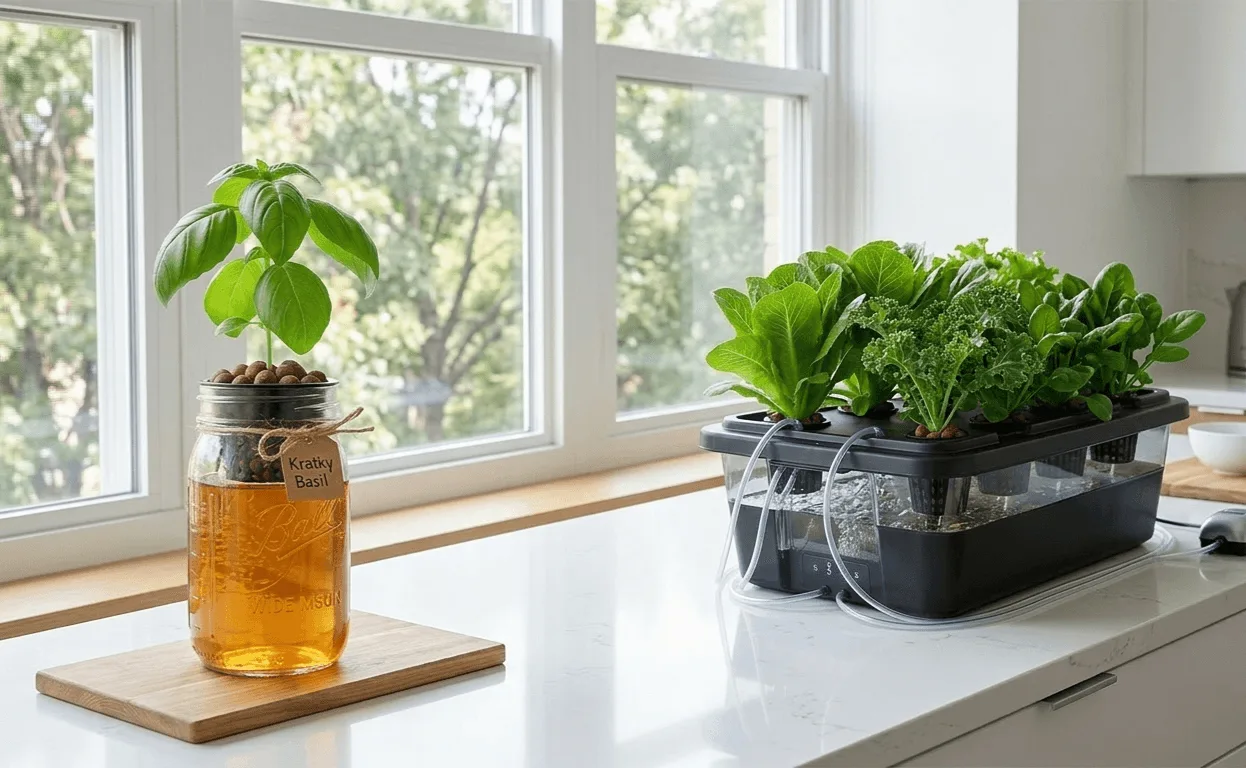
Your choice between DWC vs Kratky for apartments really depends on your goals, budget, and how much time you are willing to commit. There is no single best method. It is about finding what fits your lifestyle and what will actually keep you excited to keep growing.
When Kratky Is Your Best Bet
If you are an absolute beginner with zero gardening experience and you just want to try growing a few herbs or lettuce plants without any fuss or electricity, Kratky is perfect. It is also ideal if you have very limited space like a sunny windowsill and prefer a silent setup. Think of it as your entry point into the world of hydroponics. You will learn the basics of nutrients and pH without needing to worry about pumps or electricity.
When to Step Up to DWC
If you have had some success with Kratky, or you are ready for a slightly more involved system that offers faster growth and greater yields, DWC is a fantastic next step. I started with Kratky, but soon wanted to grow more and desired faster plant growth. The difference after switching to DWC for my lettuce and spinach was truly remarkable.
DWC is great if you want to grow a wider variety of plants including fruiting vegetables, and do not mind the hum of an air pump. Pair it with a proper light schedule for apartment hydroponics and your results will improve dramatically. If you are working with a tight budget, the guide to the best grow lights for low-light apartment hydroponics under $50 pairs nicely with either method.
💡 Essential Tips for Either Method in a Small Apartment
No matter which method you choose, some fundamental principles remain constant for successful indoor hydroponics. Adhering to these will help ensure your plants thrive in a small space.
🌡️ Managing Water Temperature
This is often overlooked, especially in apartments where ambient temperatures fluctuate. Keep your reservoir water temperature between 65 to 72°F (18 to 22°C). Temperatures outside this range can stress roots, reduce oxygen solubility, and encourage pathogens. For warm apartments, a frozen water bottle in the reservoir can help lower temperatures temporarily without extra gear.
🧪 Monitoring Your Nutrients and pH
Regular monitoring is key to success. Use a reliable pH meter and adjust your solution as needed to stay within the ideal range of 5.5 to 6.5. For leafy greens and herbs, I aim for 5.8 to 6.2. Also, track your nutrient concentration (EC or TDS) using a meter. Start seedlings at an EC of 0.8 to 1.0 mS/cm and gradually increase as they mature, up to 1.2 to 1.6 mS/cm for lettuce or 1.6 to 2.4 mS/cm for fruiting plants.
For a full breakdown of feeding schedules and when to change your solution, check out the Beginner Hydroponic Nutrients Guide for small apartment systems. For specific product recommendations, see the best hydroponic nutrients for small systems.
🌬️ Air Circulation Is Key
Even for Kratky, good air circulation around your plants helps prevent mold and strengthens stems. For DWC, the air pump is crucial, but also consider a small oscillating fan alongside your compact LED grow lights for your grow space. A gentle breeze is enough. It helps with transpiration and prevents stagnant air, which supports healthier growth overall.
💬 A Word From Sarah
Choosing between DWC vs Kratky for apartments is the first big step on your hydroponic journey. Both methods offer unique advantages for apartment dwellers. Remember, every thriving hydroponic garden started with someone who had no idea what they were doing and figured it out anyway. Start with one jar or one bucket, learn as you go, and do not be afraid of small mistakes. You have got this, and you will love harvesting your own fresh produce right from your home.
❓ Frequently Asked Questions
🍅 Can I grow fruiting plants with Kratky in an apartment?
While possible, it is generally not recommended for beginners. Fruiting plants like tomatoes or peppers are heavy feeders and require more consistent nutrient levels and often larger root systems. Kratky’s set-it-and-forget-it nature can lead to nutrient fluctuations that stress these plants. DWC is far more forgiving and effective for fruiting plants, allowing for more precise control over nutrients and water levels throughout the longer growing cycle.
🔄 How often should I change the nutrient solution for DWC vs Kratky?
For both DWC and Kratky, changing the entire nutrient solution every 7 to 14 days is a good practice. In DWC, you can top off with plain pH-adjusted water between changes to keep the level stable. For Kratky, you typically wait until the reservoir is nearly empty before refilling with a completely fresh solution, because topping off too early can drown the air roots that have already formed in the gap.
🧪 What pH range is best for most common apartment hydroponic plants?
Most common hydroponic plants, including leafy greens like lettuce and herbs like basil and mint, thrive in a pH range of 5.5 to 6.5. For optimal nutrient absorption, I usually aim for the slightly narrower range of 5.8 to 6.2. Always test your water and adjust with pH Up or pH Down solutions as needed. pH drift is the most common reason beginner plants look hungry even when nutrients are present in the reservoir.
🥬 Is DWC or Kratky better for growing lettuce and herbs in apartments?
Both are excellent for lettuce and herbs. Kratky is simpler and more hands-off, making it ideal for absolute beginners or those with very little time. DWC gives faster growth and larger harvests due to constant aeration. If you prioritize speed and yield, DWC is better. If you prioritize ease and minimal effort, Kratky is better. Most beginners start with Kratky and switch to DWC once they are comfortable with the basics.
💰 What does a basic Kratky or DWC setup cost for an apartment beginner?
A basic Kratky setup costs as little as $10 to $20 total, covering a mason jar, net cup, grow medium, and a small bottle of nutrients. A simple DWC setup using a 5-gallon bucket runs around $30 to $50 once you add an air pump, air stone, and tubing. If you prefer a ready-made countertop system that includes everything, expect to spend $60 to $150 depending on the brand and pod count.
🔊 Is the air pump in a DWC system too noisy for apartment living?
Most air pumps designed for small hydroponic setups produce a very low hum rather than loud noise. For a single 5-gallon bucket, a small aquarium pump is typically quiet enough to be in a kitchen or living room without being distracting. If you are very noise-sensitive or the system is near your bedroom, Kratky is the better choice since it is completely silent. Many apartment growers use DWC in the kitchen with no issues at all.
🌱 Which method is better if I am a complete beginner with no gardening experience?
Kratky is the better starting point for absolute beginners. There is no electricity, no pump to maintain, and no daily top-off routine to remember. You set up the jar, plant the seed, and check on it every few days. The only skill you genuinely need from day one is pH testing, which takes about two minutes. Once you have completed one or two successful Kratky grows, you will have enough confidence and knowledge to move into DWC without feeling overwhelmed.
Happy growing! 🌿
— Sarah, Urban Hydro Space

Sarah is the founder of Urban Hydro Space and an indoor gardening enthusiast dedicated to helping apartment dwellers grow fresh herbs and vegetables in small spaces. With hands-on experience testing hydroponic systems, she shares practical tips and honest product reviews to make indoor gardening accessible for beginners.