⏳ 10 min read · Last updated: March 2026
Disclosure: This post contains affiliate links. If you purchase through these links, I may earn a small commission at no extra cost to you. Thank you for supporting Urban Hydro Space!
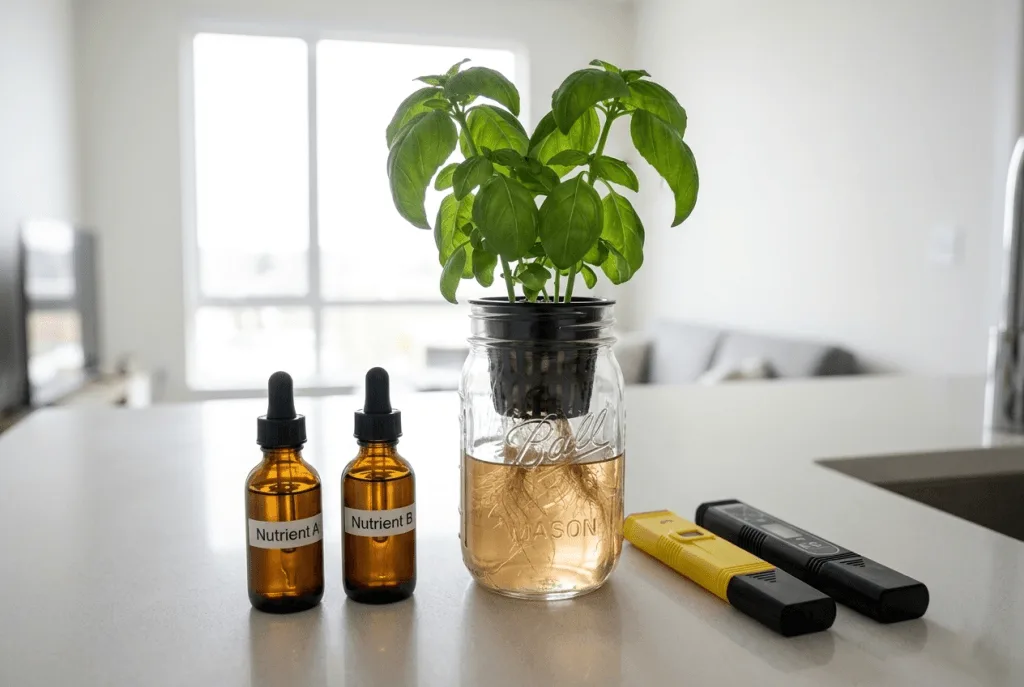
Finding the best hydroponic nutrients for small systems took me longer than I expected when I first started growing herbs in a tiny apartment setup. I assumed any plant food labeled for fast growth would work fine, but small reservoirs are much less forgiving than big systems. One heavy-handed feeding can throw everything off fast.
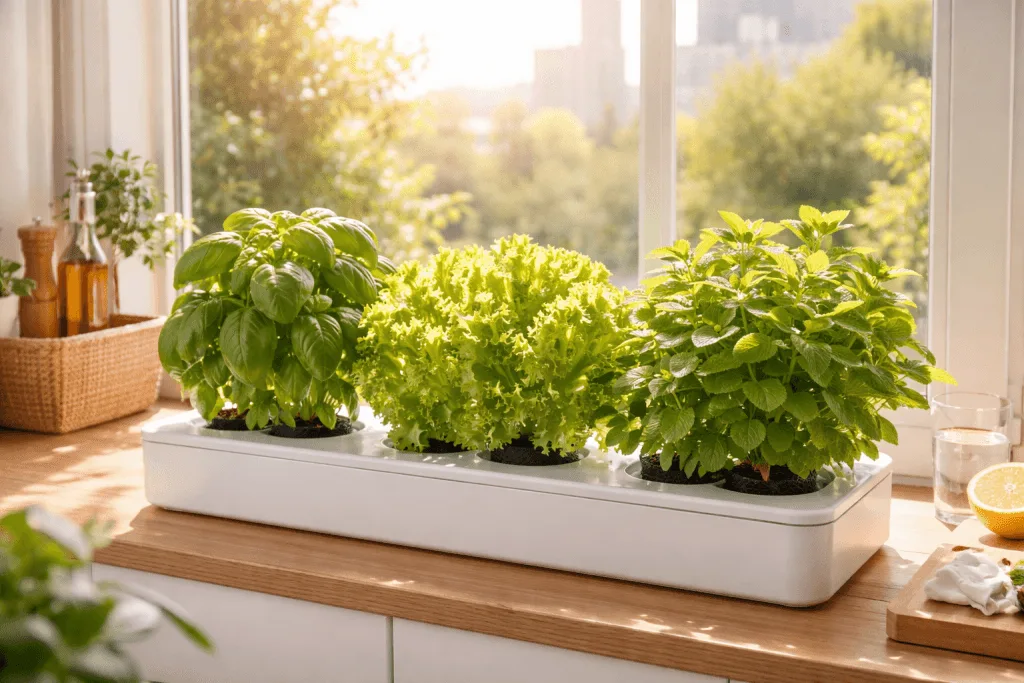
If you are growing lettuce, basil, mint, parsley, or other compact crops indoors, choosing the right nutrients can make the difference between steady growth and constant nutrient burn. The picks below work best for apartment growers who want something easy to measure, easy to mix, and easy to repeat every week.
⚡ Best Hydroponic Nutrients for Small Systems: Quick Picks
- 🏆 Best Overall: Miracle-Gro AeroGarden Liquid Plant Fertilizer for beginners who want the simplest liquid option.
- ⭐ Best for Control: General Hydroponics FloraSeries 3-Part Bundle for growers who want to adjust feeding by plant stage.
- 💸 Best Budget Dry Pick: General Hydroponics MaxiGro for growers who want a concentrated powder that stores easily.
🌱 Key Takeaways
- One-part nutrients are usually the easiest choice for apartment beginners.
- Three-part systems give you more control, but they also give you more room to make mixing mistakes.
- Dry nutrients can save money and storage space, but they work best when you dissolve them fully before adding them to the reservoir.
🔎 Quick-start table
| What to check | Beginner target | Why it matters |
|---|---|---|
| 💧 pH | 5.5 to 6.5 | Helps roots absorb nutrients properly instead of locking them out. |
| ⚡ Feeding strength | Start light, then adjust | Small reservoirs get concentrated quickly when the water level drops. |
| 🧪 Mixing style | Simple and repeatable | A clean routine makes it easier to avoid overfeeding and beginner mistakes. |
- Just starting out and not sure what to buy → read How to Choose first
- Want the fastest answer → jump to Side-by-Side Comparison
- Already have nutrients but plants are suffering → go to Feeding Tips
📖 Table of Contents
- Best Hydroponic Nutrients for Small Systems: Quick Picks
- Best Hydroponic Nutrients for Small Systems Compared
- How to Choose the Best Hydroponic Nutrients for Small Systems
- Best Hydroponic Nutrients for Small Systems Reviewed
- How to Use Hydroponic Nutrients in Small Systems Without Overfeeding
- A Word From Sarah
- Frequently Asked Questions
📊 Best Hydroponic Nutrients for Small Systems Compared
📌 Note: The best hydroponic nutrients for small systems are the ones you can measure consistently without making feeding day stressful. Ease of use matters just as much as the formula itself in a tiny apartment setup.
💚 Sarah’s favorite pick
If I were helping a total beginner choose the best hydroponic nutrients for small systems, I would start with Miracle-Gro AeroGarden Liquid Plant Fertilizer. It is the easiest one to measure, the least intimidating to use, and the best fit for tiny countertop gardens where simplicity matters more than total control.
For most apartment growers raising basil, lettuce, mint, or parsley, that simple one-bottle routine is a huge relief. You can always move to FloraSeries later if you want more flexibility, but AeroGarden is the safest first pick for keeping things easy and consistent.
📋 How to Choose the Best Hydroponic Nutrients for Small Systems
Small systems are all about margin for error. In a large reservoir, a slightly strong mix might not show up right away. In a tiny countertop tank, it can show up on your leaves almost immediately. According to the University of Minnesota Extension’s small-scale hydroponics guide, nutrient concentration management is one of the most common failure points for beginner home growers.
Choose simplicity first
If you want a fast weekly routine that feels easy to repeat, a one-part liquid is usually the best fit. If you enjoy tweaking and tracking, a three-part system gives you much more flexibility but also more ways to make mistakes early on.
Think about storage space
This matters more in apartments than people admit. A small bottle or compact bag is easier to store in a cabinet than several bulky containers, especially if your hydroponic setup already lives in the kitchen or living room.
Start lighter than you think
When you are testing hydroponic nutrients for small systems, always remember that tiny reservoirs become concentrated faster than most beginners expect. It is easier to add a little more later than it is to reverse nutrient stress after the leaves start burning.
☘️ Best Hydroponic Nutrients for Small Systems Reviewed
Miracle-Gro AeroGarden Liquid Plant Fertilizer
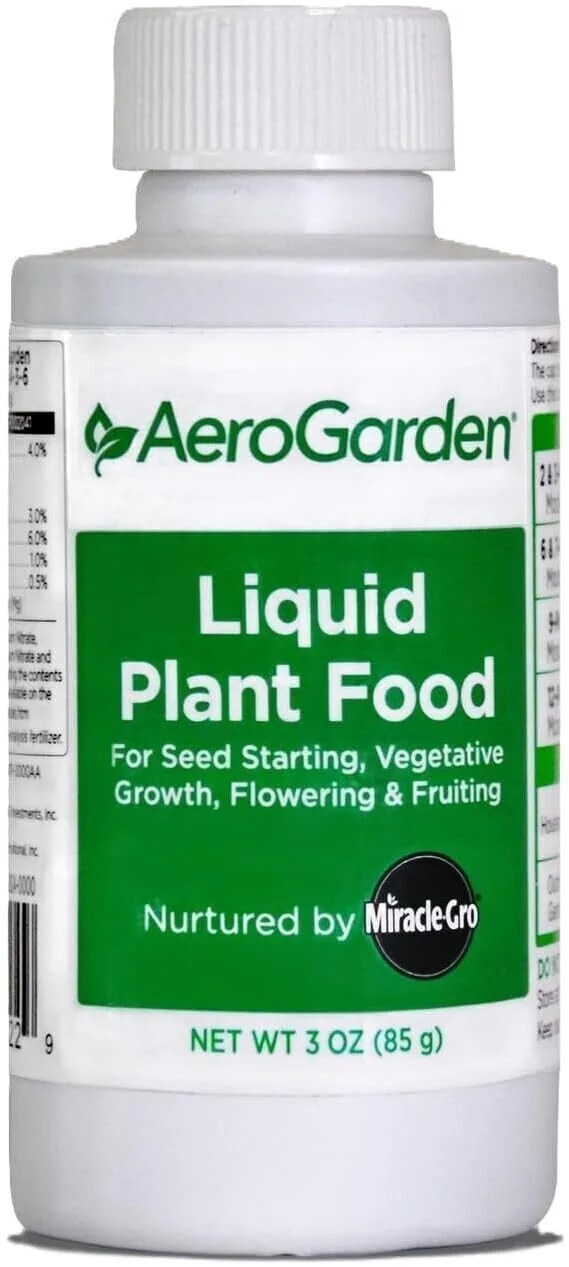
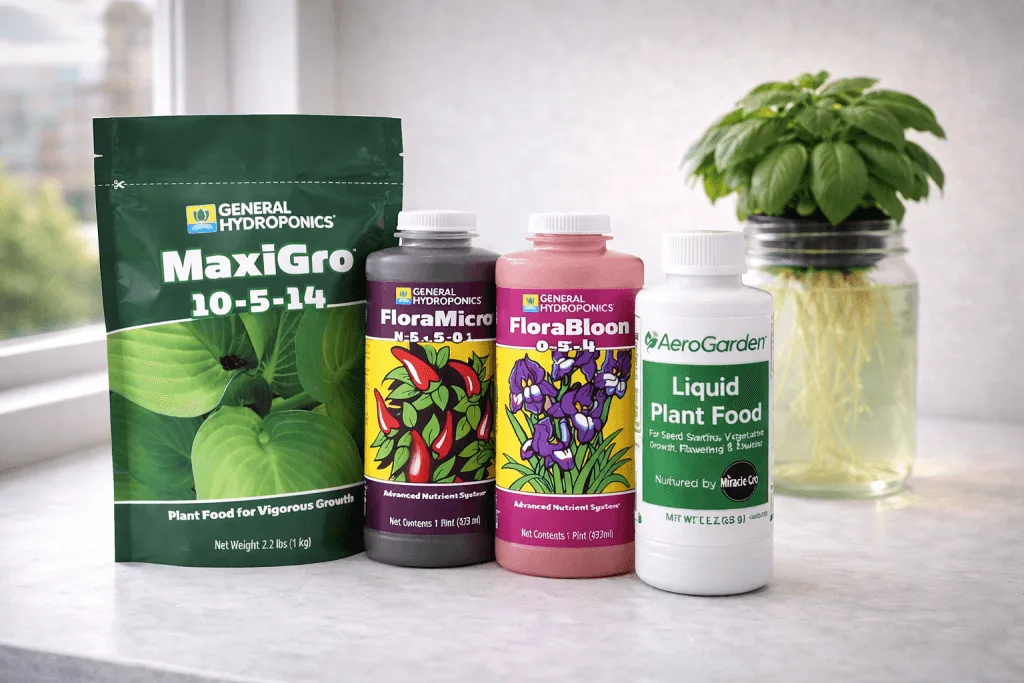
This is the easiest option here for a true beginner. It is a one-part liquid, the bottle is compact, and the whole routine feels simple from the first feeding. That matters when your setup is living on a kitchen shelf and you do not want nutrient day to feel like a science experiment.
I like this pick most for herbs, baby greens, and countertop gardens where convenience matters more than fine-tuning. If your goal is to keep things simple and repeatable, this is the most beginner-friendly place to start.
General Hydroponics FloraSeries Advanced Nutrient System
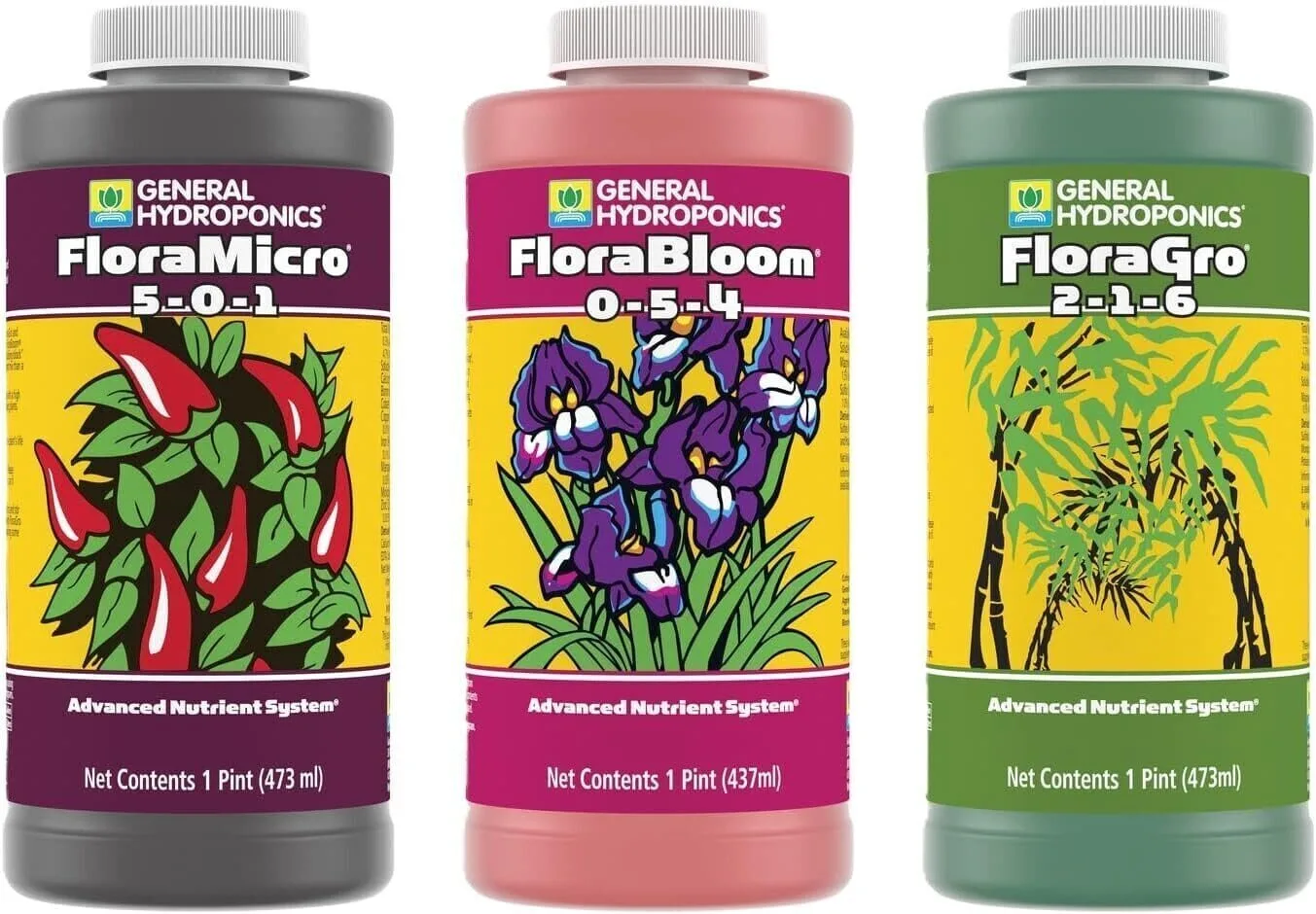
FloraSeries is the pick for growers who want more control. Instead of one bottle, you get FloraMicro, FloraGro, and FloraBloom, which lets you adjust feeding based on whether your plants are focused on leafy growth or flowering and fruiting.
This is a strong option if you enjoy dialing things in and following a more detailed routine. It is not the most beginner-proof product on the list, but it is the most flexible.
General Hydroponics MaxiGro
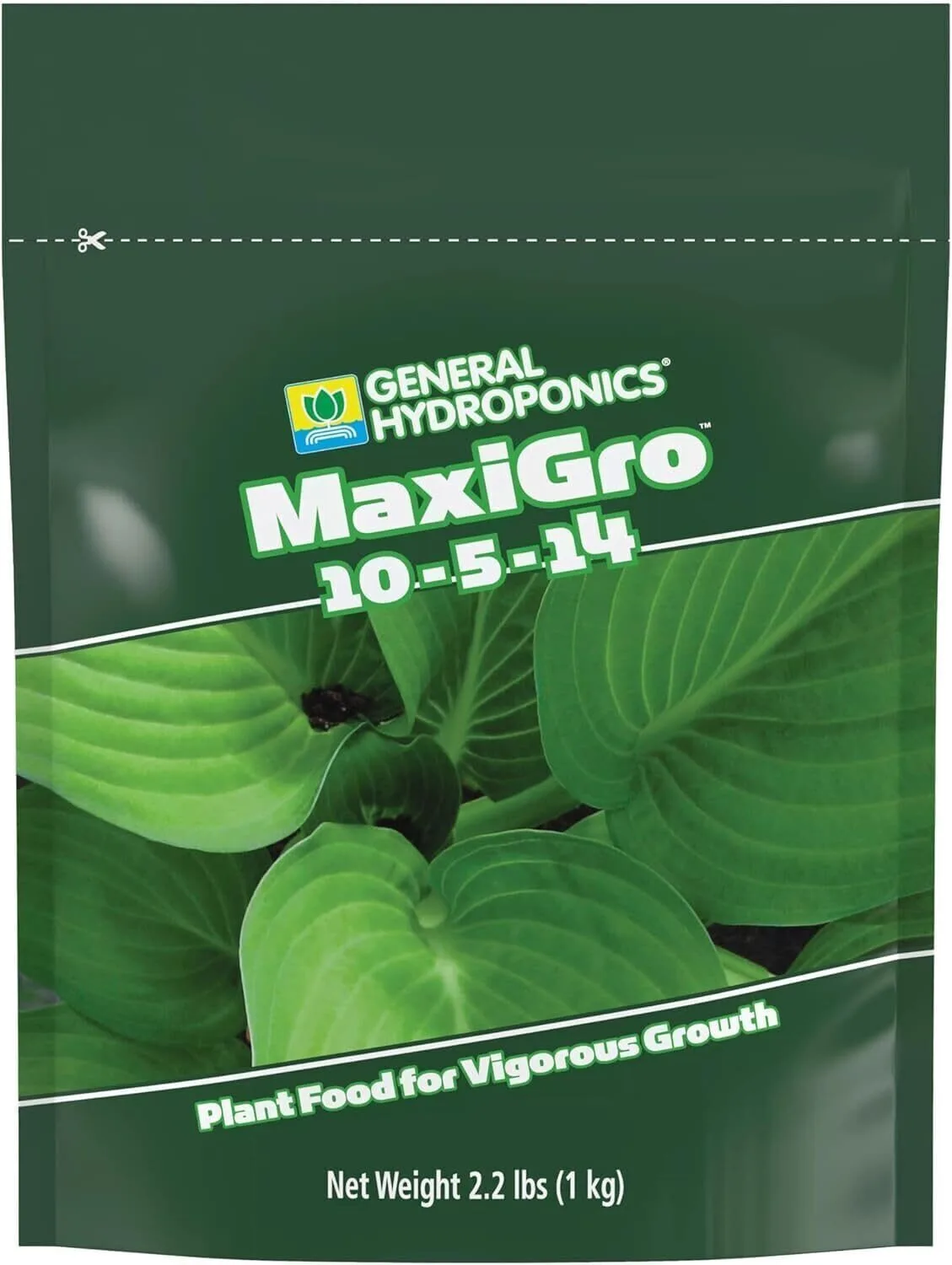
MaxiGro makes a lot of sense for growers who want strong value without taking up much space. It is a dry, water-soluble concentrate, so a single bag goes a long way compared with small liquid bottles. Dissolve it fully in water first, then add it to the system slowly. That extra step is the only real tradeoff for the savings you get.
I like this one for repeat growers who do not mind one extra step. The best hydroponic nutrients for small systems are often the ones that keep your feeding routine simple instead of turning it into guesswork, and MaxiGro does that well once you have the dissolving habit down.
💡 Pro Tip: In a small hydroponic system, topping off with plain pH-adjusted water before adding more nutrients can save you from a lot of crispy leaf tips and nutrient burn.
🧪 How to Use Hydroponic Nutrients in Small Systems Without Overfeeding
You do not need a complicated routine to grow healthy herbs and greens indoors. You just need a routine that stays consistent. Tiny systems reward simple habits more than anything else.
Check the water level before adding more food
If the water level has dropped, the remaining solution may already be stronger than you think. In most small systems, topping off with plain water first is smarter than automatically adding more nutrients.
Watch the leaves, but confirm with pH
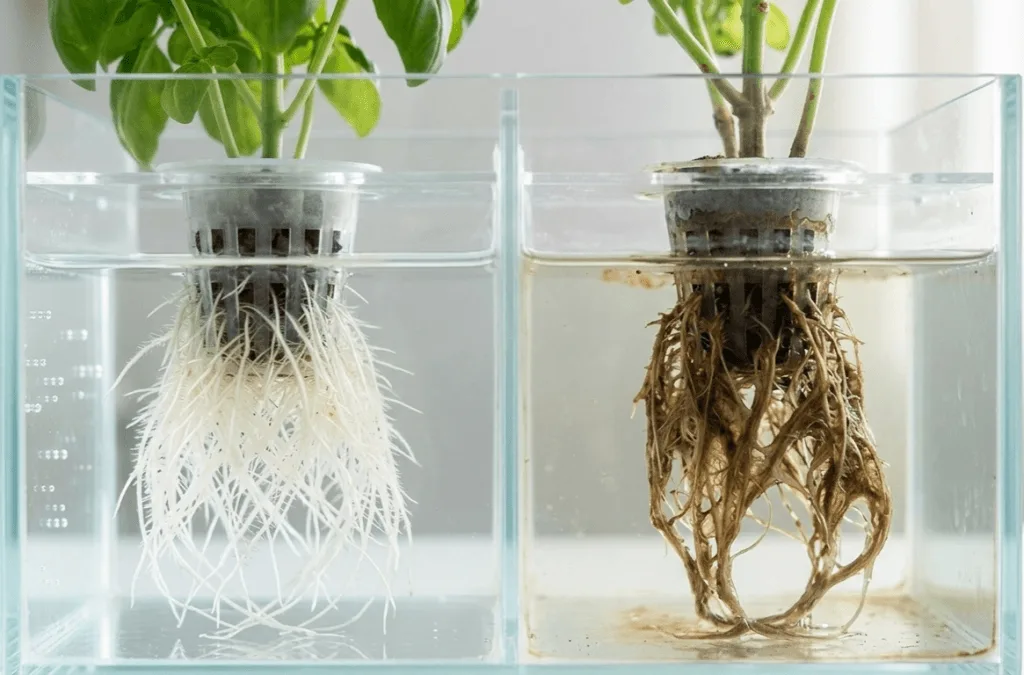
Yellowing leaves do not always mean your plants are hungry. Sometimes the nutrient is already in the water, but the pH drifted enough that the roots cannot use it properly. Always test pH before adjusting the feed.
Keep your routine boring
For most apartment growers, the best hydroponic nutrients for small systems are the ones you can measure consistently without turning feeding day into a chemistry project. Use the same measuring spoon, cup, or syringe every time, and you will learn your plants much faster.
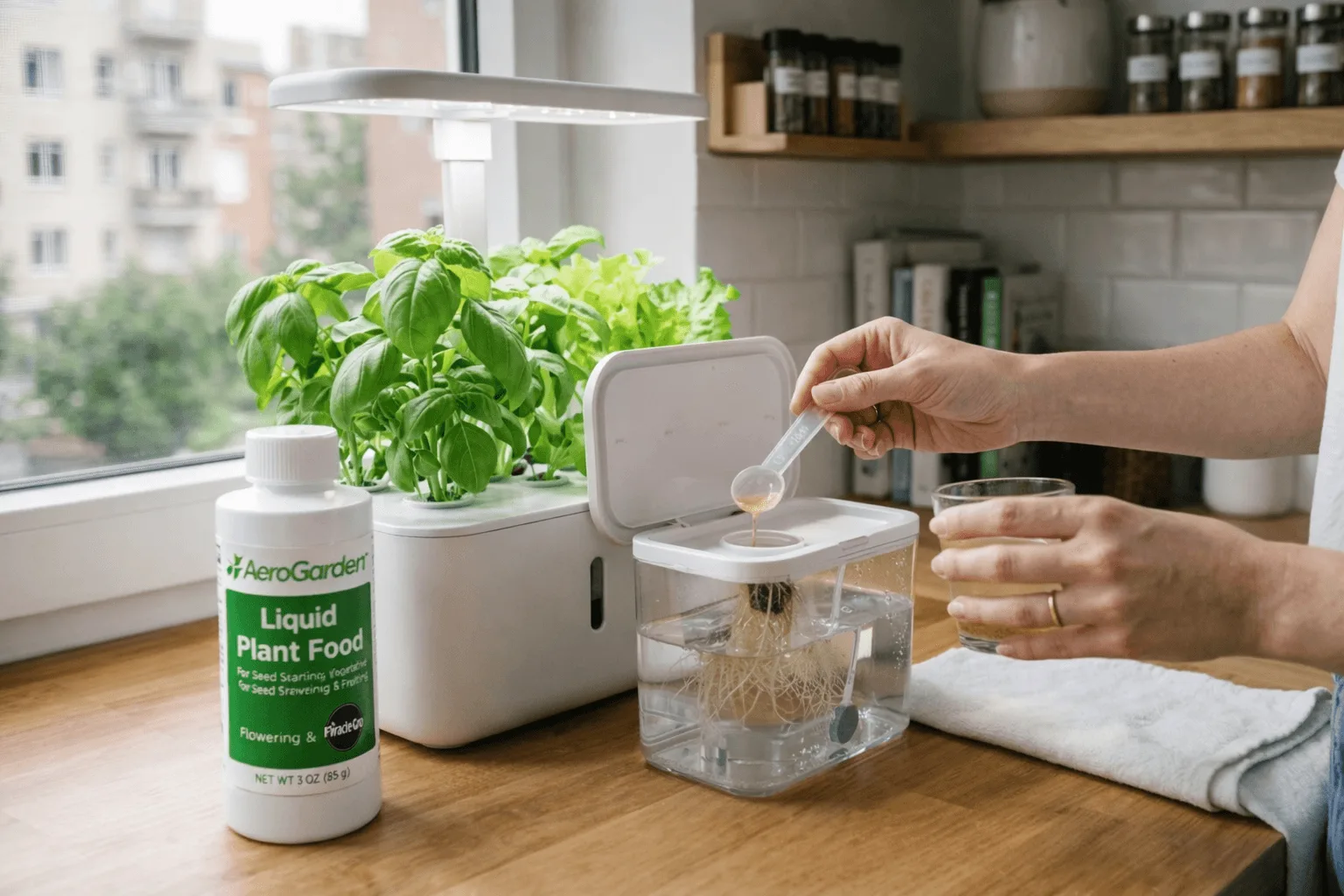
| Task | Simple routine |
|---|---|
| Check pH | Every 2 to 3 days |
| Top off with plain water | Whenever the water line drops |
| Refresh the reservoir | About every 2 to 4 weeks |
📚 Read next
💬 A Word From Sarah
When I first started growing in tiny indoor systems, I thought the secret was buying the strongest nutrient line I could find. What helped much more was choosing something I could measure consistently and use without stress. In a small apartment setup, simple habits beat complicated feeding charts every single time.
❓ Frequently Asked Questions
🌿 What are the best hydroponic nutrients for small systems?
For most apartment growers, the best hydroponic nutrients for small systems are the ones that are easy to measure, easy to mix, and easy to repeat week after week. That usually means a one-part liquid like AeroGarden fertilizer for pure simplicity, or a dry concentrate like MaxiGro if you want better long-term value without taking up much cabinet space.
⭐ Is FloraSeries better than a one-part nutrient for apartment hydroponics?
It can be, but only if you actually want the extra control. FloraSeries is better for growers who enjoy adjusting feeding by growth stage and do not mind measuring three separate bottles. For pure ease of use and fewer opportunities to make mistakes, a one-part formula is usually the better choice for small apartment setups and complete beginners.
🥬 Is MaxiGro a good choice for lettuce and leafy greens in hydroponics?
Yes, MaxiGro can be a very strong value option for leafy growth, especially if you grow regularly and want a dry nutrient that stores easily in a small kitchen cabinet. Just make sure you dissolve it fully in a small cup of warm water before adding it to the reservoir, and always start with a gentle mix rather than full strength in small systems.
🔥 How do I avoid nutrient burn in a small hydroponic system?
Start with a lighter feeding strength than the label recommends, top off with plain pH-adjusted water whenever the water level drops, and check pH every two to three days. In tiny systems, overfeeding shows up much faster than most beginners expect. If you see crispy brown leaf tips, remove 50% of your reservoir water and replace it with plain water immediately before making any other changes.
💧 How often should I change the nutrient solution in a small hydroponic system?
For most small apartment systems, a full reservoir change every 2 to 4 weeks is a practical starting point. Between changes, top off with plain pH-adjusted water only. Never add more nutrients when topping off, because the nutrients stay in the water while only the water evaporates, which means the concentration is already rising even without adding anything extra.
🧪 Can I use regular plant fertilizer in a hydroponic system?
No. Standard houseplant fertilizers rely on soil microbes to break down the nutrients into a form roots can absorb. Those microbes do not exist in a sterile hydroponic reservoir. Using soil fertilizer in water will not feed your plants and can quickly turn the reservoir cloudy, smelly, and prone to root rot. Always use a formula specifically labeled for hydroponic or water-based systems.
📦 Are dry hydroponic nutrients harder to use than liquid ones?
Slightly, but not by much. Dry nutrients like MaxiGro need one extra step: dissolving the powder in a small amount of warm water before adding it to the reservoir. If you skip that step and add powder directly, it can clump and create uneven concentration in the water. Once you build that dissolving habit into your routine, dry nutrients are just as easy to use as liquids and save significantly more money over time.
Happy growing! 🌿
— Sarah, Urban Hydro Space

Sarah is the founder of Urban Hydro Space and an indoor gardening enthusiast dedicated to helping apartment dwellers grow fresh herbs and vegetables in small spaces. With hands-on experience testing hydroponic systems, she shares practical tips and honest product reviews to make indoor gardening accessible for beginners.